
rocketfuel, Author at LaunchUX - Page 2 of 28

Author: rocketfuel

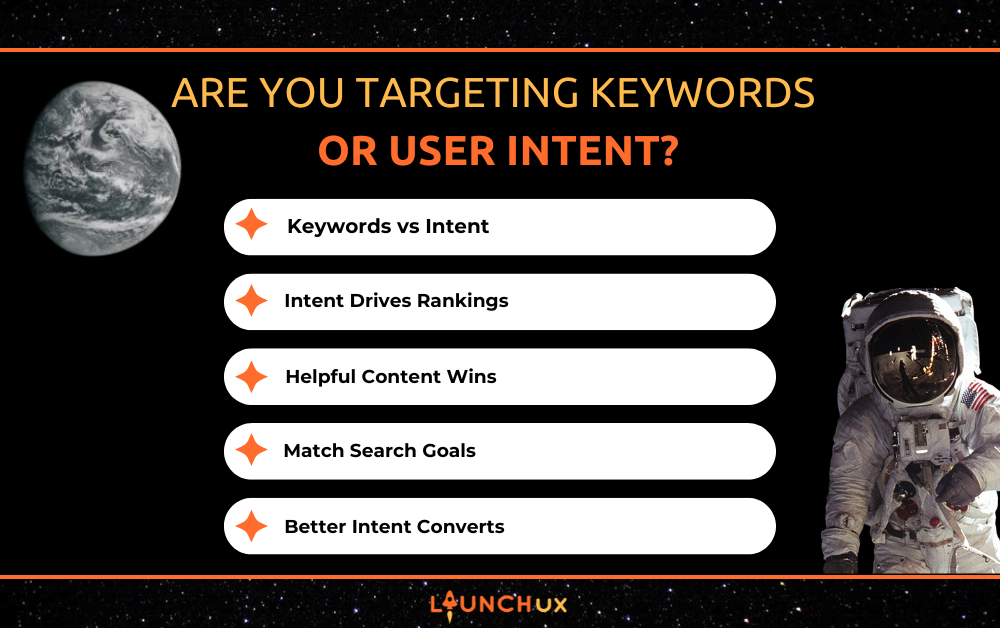
Are You Targeting Keywords or User Intent?

For years, SEO strategies focused heavily on keywords. Businesses tried to rank by placing exact phrases throughout a page as many times as possible. While keywords still matter, search engines have evolved far beyond simple keyword matching.

Today, Google also focuses on user intent.

That means search engines are trying to understand why someone is searching, not just what they typed into the search bar.

This shift has changed the way successful SEO works. Ranking well is no longer about stuffing keywords into content. It is about creating content that matches what users actually want to find.

Understanding the difference between targeting keywords and targeting user intent is essential for modern SEO success.

What Is User Intent in SEO?

User intent, sometimes called search intent, refers to the purpose behind a search query.

In other words, what is the user trying to accomplish?

Someone searching:

  • “What is SEO?”
    …is looking for information.

Someone searching:

  • “SEO agency near me”
    …is likely looking to hire a company.

Even though both searches involve SEO, the intent behind them is completely different.

Search Engines Are Designed to Understand Intent

Google’s algorithms have become extremely advanced at understanding context and meaning.

Instead of simply matching keywords, Google evaluates:

  • the type of content users engage with
  • what users click on
  • how long they stay on pages
  • whether the search result satisfies the query

The goal is to deliver the most useful result possible.

This is one reason user intent has become such a major ranking factor.

Why User Intent Matters More Than Ever

AI-powered search experiences are making intent even more important.

Users are searching with:

  • longer phrases
  • conversational questions
  • detailed requests

Search engines and AI systems now rely heavily on understanding the context behind those searches.

Businesses that optimize content around real user intent are better positioned for:

  • higher rankings
  • stronger engagement
  • better conversions
  • AI search visibility

The Difference Between Keywords and User Intent

Keywords Identify the Topic

Keywords tell search engines what your content is about.

For example:

  • “web design”
  • “SEO services”
  • “Google Ads”

Keywords are still important because they help search engines categorize content.

User Intent Explains the Goal Behind the Search

Intent explains what the user actually wants.

For example:

  • “Best CRM software” suggests research intent
  • “Buy CRM software” suggests purchase intent
  • “CRM software pricing” suggests comparison intent

The keywords may overlap, but the intent behind the searches changes the type of content users expect.

Similar Keywords Can Require Completely Different Content

A page targeting:

  • “What is PPC advertising?”

…should look very different from a page targeting:

  • “PPC agency for small business”

One search requires educational content. The other requires service-focused content.

If your content does not match the user’s expectations, rankings become much harder to achieve.

The Main Types of User Intent

Understanding the different types of user intent helps businesses create more effective content.

Informational Intent

The user wants to learn something.

Examples:

  • “What is SEO?”
  • “How does PPC work?”

Blogs and educational guides work well for informational searches.

Navigational Intent

The user wants a specific website or brand.

Examples:

  • “LaunchUX SEO services”
  • “Google Search Console login”

These searches are focused on finding a known destination.

Transactional Intent

The user is ready to take action.

Examples:

  • “Hire SEO company”
  • “Web design agency near me”

These searches often lead to service pages, contact forms, or purchases.

Commercial Investigation Intent

The user is comparing options before making a decision.

Examples:

  • “Best SEO agency for small business”
  • “SEO vs PPC”

Comparison blogs and review-style content work well here.

Why Targeting Only Keywords Hurts SEO

Keyword Stuffing No Longer Works

Older SEO strategies often focused on repeating keywords excessively.

Modern search engines prioritize:

  • usefulness
  • readability
  • relevance
  • user experience

Overusing keywords can actually hurt content quality and make pages less helpful.

Mismatched Intent Leads to Poor Engagement

If users click on a page expecting one thing and find something else, they leave quickly.

For example:

  • A user searching for “how to improve SEO” probably does not want a sales page immediately.

Poor engagement signals can negatively affect rankings over time.

Rankings Alone Do Not Guarantee Conversions

Some pages rank well but fail to generate leads because they attract the wrong audience.

Traffic without intent alignment often results in:

  • high bounce rates
  • low engagement
  • poor conversion rates

The goal is not just traffic. The goal is attracting the right traffic.

How Google Uses User Intent to Rank Content

Google Studies Search Behavior

Google evaluates how users interact with search results.

This includes:

  • click behavior
  • time on page
  • search refinements
  • engagement patterns

These signals help Google determine whether content satisfies user intent.

AI Search Is Increasing Intent Recognition

AI search tools are making intent even more important because users interact with them conversationally.

People now search using natural questions like:

  • “What is the best SEO strategy for a local business?”

This provides far more context than short keyword phrases.

Content that clearly answers these questions becomes easier for AI systems to understand and surface.

Helpful Content Aligns With User Intent

Google consistently emphasizes creating helpful, people-first content.

The most successful pages:

  • answer questions clearly
  • solve problems
  • provide useful information
  • stay focused on the user’s goal

This aligns directly with intent-driven SEO.

How to Optimize Content for User Intent

Understand What the User Wants

Before creating content, ask:

  • Is the user researching?
  • Looking to buy?
  • Comparing options?
  • Trying to solve a problem?

The answer should shape the content structure.

Match Content Format to Intent

Different intent types require different content formats.

Examples:

  • Blogs for informational searches
  • Service pages for transactional searches
  • Comparison pages for commercial investigation searches

Matching format to intent improves both rankings and conversions.

Use Clear Structure and Helpful Answers

Intent-focused content should be easy to navigate.

Helpful formatting includes:

  • clear headings
  • bullet points
  • concise explanations
  • FAQ sections

This improves readability for both users and search engines.

Focus on Solving Problems

The best SEO content helps users accomplish their goal quickly and clearly.

Instead of asking:

  • “How many times can I use this keyword?”

Modern SEO asks:

  • “Does this content genuinely help the user?”

Why User Intent Matters for Conversions Too

Better Intent Matching Creates Better Leads

Not all traffic is valuable.

Intent-focused SEO helps attract users who are more likely to:

  • contact your business
  • request services
  • make purchases

Intent Helps Build Trust

Users stay engaged when content clearly answers their questions and meets their expectations.

Helpful content builds credibility and trust over time.

SEO and Conversion Optimization Work Together

Good SEO gets users to your website.

Good intent alignment helps turn those visitors into customers.

The two work together to create stronger long-term results.

The Future of SEO Is Intent-Driven

AI-powered search is reinforcing the importance of intent optimization.

Search engines are becoming increasingly sophisticated at understanding:

  • context
  • meaning
  • behavior
  • relevance

Businesses that continue focusing only on keywords while ignoring user intent will struggle to compete.

The future of SEO belongs to businesses that truly understand what their audience wants and create content designed to help them.

Great SEO Starts With Understanding What Users Actually Want

Keywords still matter. However, user intent is what determines whether content truly succeeds.

Modern SEO is no longer about manipulating algorithms with keyword repetition. It is about creating helpful, relevant content that matches the user’s goal.

Businesses that understand user intent create:

  • stronger rankings
  • better engagement
  • higher-quality traffic
  • improved conversions

If you want to build an SEO strategy focused on both rankings and real user behavior, LaunchUX can help create content designed to attract the right audience and drive meaningful results. Contact LaunchUX today to get started.
How Long Does It Take to See SEO Results?

You invested in SEO, updated your website, and started publishing new content. A few weeks later, you check your traffic and rankings, expecting to see a noticeable jump, but little has changed. It is easy to wonder whether your strategy is working or whether you are wasting your budget. The truth is that SEO results take time, and the exact timeline depends on your website, competition, goals, and starting point. Understanding what happens during the first several months can help you recognize progress and set realistic expectations. 

When Can You Expect to See SEO Results?

Most businesses can expect to see early SEO results within three to six months. These initial results may include increased search impressions, improved keyword rankings, and gradual growth in organic website traffic. However, generating a steady increase in qualified leads and conversions can take longer.

The exact timeline depends on where your website is starting. An established website with useful content and a strong technical foundation may gain traction sooner than a new website with little authority. If your site has technical problems, outdated content, or limited visibility, more foundational work may be necessary before significant improvements appear.

Competition also affects how quickly SEO works. A local service business targeting less competitive searches may see progress sooner than a company competing nationally for high-volume keywords. Search engines need time to crawl updated pages, evaluate new content, and determine whether your website deserves greater visibility.

SEO should be viewed as a long-term strategy rather than a quick fix. Early improvements are encouraging, but sustainable SEO results develop through consistent optimization, content creation, performance monitoring, and strategic adjustments. The goal is not simply to achieve a temporary ranking increase. It is to build lasting visibility that continually attracts relevant visitors and potential customers.

What Factors Affect Your SEO Timeline?

There is no universal timeline for SEO results because every website starts from a different position. Several factors determine how quickly search visibility, traffic, and leads may improve.

Website Age and Authority

Established websites often have an advantage because search engines already have information about their content, history, and credibility. A new website typically needs more time to establish authority and earn competitive rankings.

Website Health

Technical problems can prevent search engines from properly accessing, understanding, or indexing a website. Slow loading times, broken links, mobile usability issues, and poor site structure may delay SEO results until those problems are corrected.

Existing Content

A website with detailed, helpful, and properly optimized content may progress faster than one with thin or outdated pages. Creating strong service pages and answering common customer questions gives search engines more opportunities to connect the website with relevant searches.

Keyword Competition

Highly competitive keywords generally take longer to rank for because many established businesses are targeting them. A balanced strategy may include competitive long-term keywords alongside more specific phrases that offer earlier opportunities for visibility.

Target Market

Local SEO and national SEO can have very different timelines. A company targeting customers in one geographic area may face less competition than a business trying to rank across the country. However, competition levels still vary by service and location.

Consistency of the Strategy

SEO requires continued attention. Technical improvements, content creation, internal linking, performance monitoring, and strategy adjustments all contribute to long-term growth. Businesses that invest in consistent SEO work are more likely to build sustainable SEO results than those that make occasional updates.

What Happens During the First Few Months of SEO?

SEO involves much more than adding keywords to a website. The first several months are typically spent building a stronger foundation, improving important pages, and gathering performance data. Although the process varies by website, most SEO strategies follow a similar progression.

Month 1: Research and Evaluation

The first month focuses on understanding the website’s current performance and identifying opportunities for improvement. This may include:

  • Completing a technical website audit
  • Reviewing current keyword rankings
  • Researching competitors
  • Identifying valuable search terms
  • Evaluating existing content
  • Confirming that analytics and conversion tracking work correctly

This research helps create an SEO strategy based on the company’s goals, target audience, services, and competition.

Months 2–3: Optimization and Content

Once the initial research is complete, the focus shifts to implementation. Technical issues may be corrected, existing pages may be optimized, and new content may be created to target relevant searches.

During this stage, SEO work may include improving page titles, headings, internal links, service pages, website speed, and mobile usability. Search engines must then crawl and evaluate these changes, so rankings may not improve immediately.

Months 4–6: Growth and Refinement

By months four through six, businesses may begin seeing more noticeable SEO results. Search impressions may increase, keyword rankings may improve, and organic traffic may begin reaching more important service pages and blog posts.

The SEO strategy should also be refined using real performance data. Pages that show potential can be strengthened, underperforming content can be updated, and new keyword opportunities can be targeted. This ongoing evaluation helps turn early progress into sustainable growth.

How Can You Tell Whether SEO Is Working?

SEO results involve more than reaching the first position for a single keyword. A successful strategy should improve your overall search visibility while attracting relevant visitors who are more likely to become customers. Tracking several performance indicators provides a more accurate view of your progress.

Important SEO metrics include:

  • Search impressions: An increase means your website is appearing in more search results, even if users are not clicking yet.
  • Keyword rankings: Movement toward the first page shows that search engines are beginning to view your pages as more relevant.
  • Organic traffic: More visitors arriving through unpaid search results can indicate greater visibility.
  • Non-branded searches: Ranking for terms beyond your business name shows that new audiences can discover your company.
  • Page engagement: Time spent on important pages and other interactions can reveal whether visitors find your content useful.
  • Conversions: Phone calls, contact forms, quote requests, purchases, and scheduled appointments show whether organic traffic is producing business opportunities.

You may notice impressions and keyword rankings improve before traffic and conversions increase. This is normal because SEO progress often develops in stages. Your website may first appear more frequently, then move higher in search results, and eventually earn more clicks.

Rankings are valuable, but they do not tell the entire story. A lower-volume keyword that generates qualified leads may be more valuable than a high-volume keyword that attracts visitors with little interest in your services. Meaningful SEO results should connect increased visibility with measurable business growth.

Why Long-Term SEO Produces Better Results

SEO becomes more valuable as your website builds authority, relevance, and trust. Each optimized page, helpful blog post, internal link, and technical improvement strengthens your online presence and creates more opportunities to appear in search results.

Long-term SEO also provides valuable performance data. By tracking which keywords, pages, and topics generate traffic and leads, your strategy can be adjusted to focus on what works best.

The strongest SEO results are not temporary ranking increases. They are sustainable improvements in visibility, qualified traffic, and conversions. Consistent SEO helps your business maintain its progress while continuing to uncover new growth opportunities.

Build Sustainable SEO Growth With LaunchUX

Most businesses begin seeing early SEO results within three to six months, but the exact timeline depends on the website, competition, target keywords, and consistency of the strategy. Tracking search visibility, organic traffic, and conversions can help you recognize progress as your website builds authority.

LaunchUX develops customized SEO strategies designed to improve rankings, attract qualified visitors, and support lasting business growth. Contact LaunchUX to learn how a consistent SEO strategy can help your business achieve meaningful results.

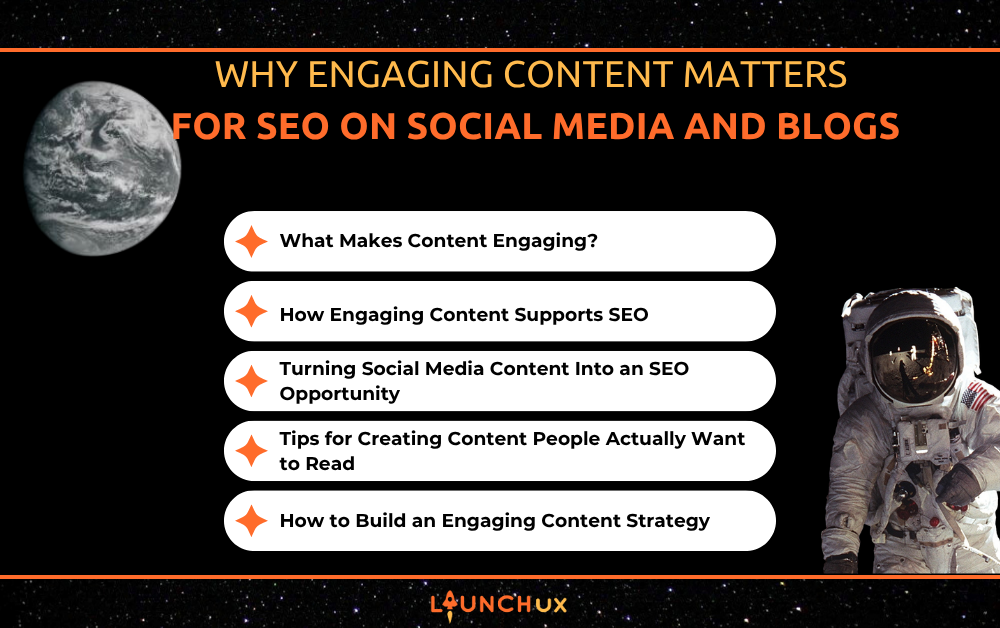
Why Engaging Content Matters for SEO on Social Media and Blogs

Think about the last time a blog post, social media caption, or website page actually held your attention. Maybe it answered a question you had, made you laugh, taught you something useful, or simply explained a complicated topic in a way that finally made sense. You probably kept reading. You may have even clicked another page, shared the post, or bookmarked the site.

That is the power of engaging content.

For business owners, creating content is no longer just about filling a blog calendar or posting something on Facebook three times a week. Your content needs to give people a reason to stop scrolling, keep reading, and interact with your brand. At the same time, it needs to help search engines have a better understanding of what your business offers and why your website deserves visibility.

At LaunchUX, businesses can turn their digital presence into a stronger marketing tool by combining thoughtful content with smart SEO strategies. The key is understanding that SEO and engagement are not competing goals. In many cases, they work best when they work together.

What Makes Content Engaging?

Engaging content is content that makes people want to do something next. That might mean reading another paragraph, watching a video, clicking a link, leaving a comment, sharing a post, or visiting another page on your website.

The important part is that engagement starts with the audience—not the algorithm.

Before writing a blog or creating a social media post, think about what your audience actually wants to know. What questions do your customers ask? What problems are they trying to solve? What information would make their lives easier?

Strong content usually has a clear purpose. Instead of writing a generic article because you have not posted a blog in a few weeks, create something that answers a specific question or addresses a real concern.

For example, a landscaping company could write “How Often Should You Water a New Lawn?” rather than publishing a vague post about the importance of lawn care. Both relate to the business, but the first gives readers a clear reason to click.

Engagement also comes from presentation. Long paragraphs, complicated terminology, and walls of text can make even valuable information difficult to digest. Break information into manageable sections, use descriptive headings, include examples, and write the way you would speak to an actual customer.

How Engaging Content Supports SEO

SEO is often treated like a technical checklist involving keywords, title tags, links, and metadata. Those elements matter, but there is a much bigger picture.

Search engines want to equip users with worthwhile results. If you were to search for “how to improve website speed,” they do not want a page that repeats the phrase “website speed” 30 times without actually answering the question. They want useful information that solves their problem.

That is where engaging content becomes important.

When visitors discover that your content is useful, they are more likely to spend time exploring your page and potentially visit other parts of your website. High-quality content can also earn backlinks, generate social shares, and build your brand’s credibility.

Keywords still have an important role. However, they should fit naturally into useful content rather than being forced into every sentence. Search engines have become much better at understanding context, meaning you can focus on covering a topic thoroughly instead of trying to manipulate rankings through keyword repetition.

A good rule of thumb is simple: give people a reason to read before giving search engines a reason to rank you.

That approach can help you create content that feels natural while still giving search engines the information they need to understand your page.

Turning Social Media Content Into an SEO Opportunity

Social media and SEO are not exactly the same thing. A social media post does not automatically rank in Google simply because it contains your target keyword. However, social media can still play an important role in your broader content strategy.

Think of social media as a distribution channel.

You might spend several hours creating an in-depth blog post, but that does not mean your work is finished once the article is published. Turn the key ideas from that article into social media posts that inspire people to visit your website.

For example, a blog about choosing the right commercial roofing material could become several social posts. One could highlight common mistakes, another could explain the differences between materials, and another could ask followers which roofing concern matters most to them.

This approach gives your content more mileage while creating multiple opportunities to send people back to your website.

Social media is also an excellent place to discover what your audience cares about. Pay attention to questions in comments, recurring conversations, and posts that receive unusually high engagement. Those interactions can provide ideas for future blogs and website content.

In other words, your audience can help tell you what to write next.

Tips for Creating Content People Actually Want to Read

Creating engaging content does not require becoming a professional comedian or turning every blog post into a dramatic story. It simply requires understanding what makes information useful and interesting.

Start with a strong opening. Your introduction should quickly explain why the topic matters. If readers have to wade through several paragraphs before discovering what the article is actually about, they may leave before reaching the good stuff.

You should also make your content easy to scan. Most people do not read online content from beginning to end in a perfectly straight line. They skim headings, look for bolded ideas, read the first sentence of a paragraph, and decide whether something deserves their attention.

A few practical ways to improve engagement include:

  • Use clear, specific headlines that tell readers what they will learn.
  • Include real examples instead of relying entirely on general statements.
  • Break complex subjects into smaller ideas that are easier to understand.
  • Add relevant internal links that guide readers toward helpful information.
  • End blog posts and social media captions with a clear next step.

Another important strategy is to avoid writing exclusively about your business. Customers do not want every blog post to feel like an advertisement.

Instead of constantly saying how great your company is, demonstrate your expertise by helping people solve problems. Teach them how something works. Explain their options. Address common concerns your customers may hesitate to bring up.

When your content consistently provides value, your business becomes a resource rather than just another company trying to make a sale.

How to Build an Engaging Content Strategy

Consistency matters, but consistency does not mean publishing as much content as possible.

A business that publishes one genuinely useful blog every month may accomplish more than a business that publishes four rushed articles filled with generic information.

Start by identifying the issues most relevant to your customers. From there, create content around their questions, challenges, interests, and purchasing decisions.

You can organize your strategy around different stages of the customer journey. Educational content can introduce people to a problem, comparison-based content can help them evaluate solutions, and service-focused pages can help people take the next step.

Then, look for opportunities to connect your content.

Suppose you own an HVAC company. A blog explaining signs of a failing furnace could link to a furnace repair page. Another article about improving indoor air quality could link to information about HVAC maintenance. Social media posts can then highlight useful points from both articles.

This creates a connected content ecosystem rather than a collection of unrelated pages.

Most importantly, measure what happens after you publish. Look at which pages attract traffic, which topics generate engagement, and which content leads visitors toward inquiries or purchases. Over time, these insights can help you create more of what your audience actually values.

The Bottom Line: Engagement and SEO Work Better Together

SEO is not simply about getting people to your website. It is about getting the right people there and giving them a reason to stay.

That is why engaging content should be at the center of your social media and blogging strategy. Useful, readable, relevant content can attract attention, answer questions, strengthen your authority, and encourage visitors to explore your website further.

The strongest content strategies do not chase search rankings at the expense of the reader. They create resources that people genuinely want to consume while using SEO best practices to make those resources easier to discover.

If your current content feels repetitive, fails to generate engagement, or is not producing the SEO results you expected, it may be time to rethink your strategy. LaunchUX can help you develop a stronger digital content and SEO approach designed around your business goals and your audience.

Ready to make your content work harder for your business? Contact LaunchUX today to start building a more engaging, search-friendly digital presence.

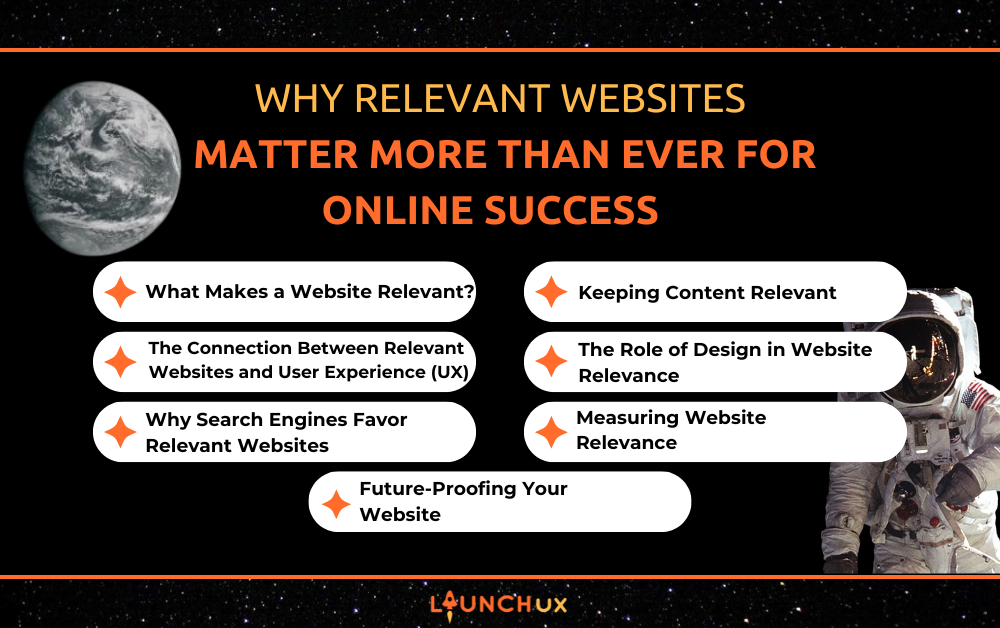
Why Relevant Websites Matter More Than Ever for Online Success

Simply having a website is no longer enough; creating a meaningful online presence requires intentional design, valuable content, and continuous improvement. Businesses, professionals, and organizations must ensure they create and maintain relevant websites that align with the needs, expectations, and behaviors of their target audience. As search algorithms improve and online audiences become more selective, relevance has become one of the most significant factors influencing website performance.

At LaunchUX, we often see businesses invest significant resources into website design and development, only to overlook whether their content, structure, and user experience remain relevant to the people they want to reach. A visually appealing website can certainly attract attention, but long-term success depends on delivering meaningful value to visitors.

What Makes a Website Relevant?

The concept of relevance extends far beyond keywords and search engine optimization. A relevant website consistently provides information, resources, products, or services that align with what visitors are actively seeking.

When users land on a website, they typically have a goal in mind. They may be researching a service, comparing solutions, looking for answers to a question, or evaluating a company before making a purchasing decision. A relevant website helps users accomplish those goals quickly and efficiently.

Relevance Starts With Understanding Your Audience

Every effective website begins with a clear understanding of its intended audience. Businesses that take time to identify customer needs, challenges, interests, and expectations are often better positioned to create content that resonates.

Audience research can reveal valuable insights such as:

  • Common questions customers ask
  • Frequently encountered problems
  • Desired products or services
  • Industry trends and concerns
  • Preferred communication styles

When website content is built around these insights, visitors are more likely to find the information useful and engaging.

Relevance Evolves Over Time

Many website owners treat their sites as completed projects rather than ongoing resources. However, user expectations, technology, and industry trends are constantly changing.

What felt relevant two years ago may no longer meet today’s standards. Regular updates help ensure your website continues to provide value and remains competitive within your industry.

The Connection Between Relevant Websites and User Experience (UX)

UX plays a considerable role in deciding whether guests stay on a website or leave.

Relevant websites anticipate user needs and present information in an intuitive, accessible way. Visitors should not have to work hard to find what they need.

Clear Navigation Supports Relevance

Navigation is one of the first elements visitors interact with when they arrive on a website. If important information is difficult to locate, users may become frustrated and leave.

A logical navigation structure helps visitors move naturally through the site while discovering the content most relevant to their goals. Organized menus, descriptive page labels, and intuitive pathways all contribute to a stronger user experience.

Content Should Match User Intent

One of the most overlooked aspects of relevance involves understanding user intent.

For example, someone searching for information about website design may be looking for educational content, examples of successful projects, pricing information, or professional services. Websites that align their content with those expectations tend to perform more effectively.

Matching content to user intent creates a smoother experience and improves the likelihood that visitors will continue exploring the website.

Why Search Engines Favor Relevant Websites

Search engines have become increasingly effective at evaluating whether content genuinely satisfies user needs.

Rather than simply looking for keyword usage, modern algorithms assess factors such as content quality, topical depth, user engagement, and overall usefulness.

High-Quality Content Builds Authority

Content remains one of the strongest indicators of website relevance.

Comprehensive articles, informative guides, case studies, videos, and educational resources help demonstrate expertise while providing meaningful value to visitors.

When users consistently find useful information on a website, they are more likely to trust the brand that owns it. This trust can lead to improved engagement, repeat visits, and more powerful search visibility over time.

Topical Relevance Strengthens Search Performance

Search engines evaluate how thoroughly a website covers specific subjects.

For example, a company specializing in web design may publish content about:

This depth of coverage helps establish topical authority and demonstrates expertise within the field.

Keeping Content Relevant

Even well-written content can lose effectiveness if it becomes outdated.

Information that was accurate when published may no longer reflect current industry standards, technologies, or consumer expectations.

Regular Content Audits Are Essential

A content audit involves reviewing existing pages to evaluate their accuracy, performance, and usefulness.

This process often includes:

  • Updating outdated information
  • Improving readability
  • Adding new insights
  • Refreshing statistics
  • Expanding thin content
  • Removing obsolete material

Regular audits help ensure that visitors continue receiving accurate and valuable information.

Fresh Content Signals Activity

Consistently publishing new content demonstrates that a website remains active and engaged with its audience.

Fresh content can include:

  • Blog articles
  • Industry insights
  • Case studies
  • Company updates
  • Educational resources

These additions provide opportunities to address emerging topics and maintain relevance within your industry.

The Role of Design in Website Relevance

Content is critical, but design also influences whether visitors perceive a website as relevant and trustworthy.

An outdated design can create negative impressions even when the underlying information remains valuable.

Modern Design Supports Credibility

Users often associate website quality with business quality. Clean layouts, professional visuals, responsive functionality, and intuitive navigation contribute to a stronger perception of credibility.

A modern design communicates that a company is actively invested in its online presence and committed to providing a positive user experience.

Mobile Optimization Is No Longer Optional

A substantial piece of internet traffic now comes from smartphones and tablets.

Relevant websites must deliver consistent experiences across all devices. Mobile users expect fast loading times, readable content, and easy navigation regardless of screen size.

Responsive design helps meet these expectations while improving overall usability.

Measuring Website Relevance

Website relevance is not based solely on assumptions. Analytics and performance data provide valuable insights into how users interact with your content.

Key Metrics to Monitor

Several metrics can help evaluate website relevance:

  • Time on page
  • Bounce rate
  • Pages per session
  • Conversion rates
  • Organic traffic
  • Return visitors

These indicators help identify which content resonates with users and which areas may require improvement.

User Feedback Provides Valuable Insights

Analytics reveal what users do, but direct feedback can help explain why they behave that way.

Surveys, contact forms, reviews, and customer conversations often uncover opportunities to improve content, navigation, and overall website effectiveness.

Listening to users is one of the most reliable ways to maintain long-term relevance.

Future-Proofing Your Website

The digital landscape will continue to evolve, making adaptability increasingly important.

Businesses that prioritize relevance are often better equipped to react to modifications in technology, consumer behavior, and search engine expectations.

Future-proofing a website involves:

  • Monitoring industry trends
  • Updating content regularly
  • Improving user experience
  • Maintaining technical performance
  • Expanding valuable resources
  • Responding to audience needs

These ongoing efforts help ensure that a website remains useful and competitive over time.

Conclusion

Creating relevant websites requires more than attractive visuals and occasional content updates. It involves understanding your audience, aligning content with user intent, maintaining a strong user experience, and continually adapting to changing expectations. Relevance serves as the foundation for stronger engagement, improved search visibility, and greater trust among visitors.

Businesses that focus on providing meaningful value through relevant content and thoughtful design will be better positioned for long-term success. At LaunchUX, we help organizations create websites that not only look professional but also remain relevant, useful, and effective for their audiences.

If your website isn’t generating the engagement, traffic, or conversions you’d like to see, it may be time to evaluate its relevance. Contact LaunchUX today to learn how strategic design, user-focused content, and ongoing optimization can help create a website that connects with your audience and supports your business goals.

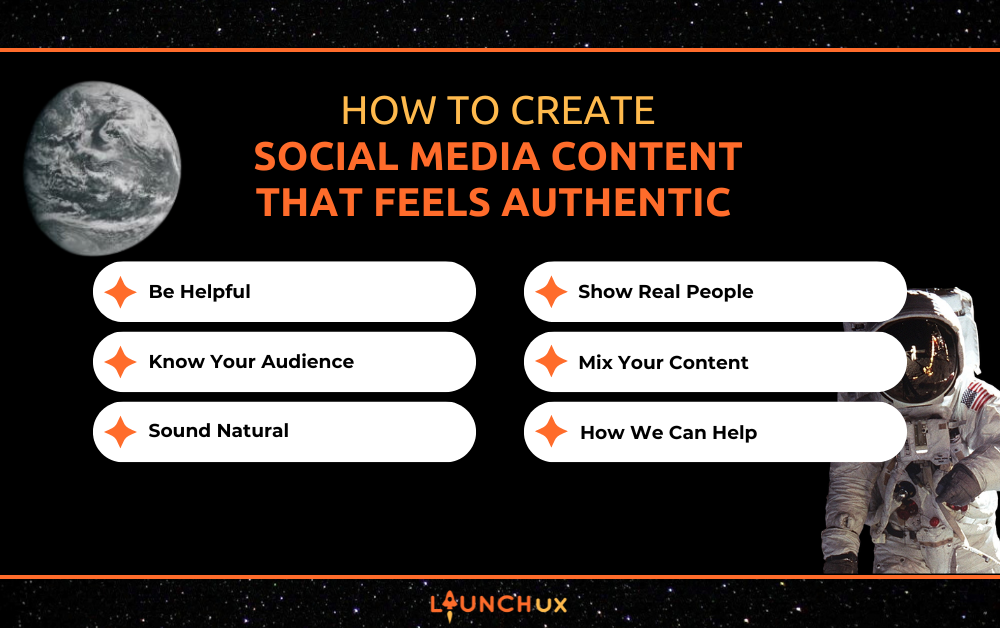
How to Create Social Media Content That Feels Authentic

Social media can be one of the easiest ways for customers to get a feel for your business before they ever visit your website, call your office, or schedule a service. But for that to happen, your posts need to feel real. If your content sounds too generic, too polished, or too focused on selling, people may scroll right past it.

Authentic social media content helps your business sound more human. It gives your audience a better sense of who you are, what you do, and why they should trust you. Whether you are sharing helpful tips, answering common questions, showing your team, or highlighting your work, the goal is to create content that feels useful, honest, and connected to your brand.

Why Authentic Social Media Content Matters

Authentic social media content matters because people want to connect with businesses that feel real, helpful, and trustworthy. When your posts sound like they were written for actual customers instead of a broad audience, they become easier to relate to and more likely to hold someone’s attention.

For many businesses, social media is not just about getting likes or posting to stay active. It is a way to build familiarity over time. Someone may not need your services today, but when they continue seeing helpful, consistent, and genuine content from your business, they are more likely to remember you when they are ready to take the next step.

Authentic Content Builds Trust

Trust is built through small, consistent interactions. A helpful tip, a quick answer to a common question, a behind-the-scenes post, or a real customer story can all help your audience feel more comfortable with your business. Over time, these posts show that you understand your customers and care about more than just making a sale.

It Makes Your Brand Easier to Remember

People are exposed to a lot of content every day, so generic posts are easy to forget. Social media content that reflects your brand’s personality, values, and real work gives people something more memorable to connect with. The more familiar your business feels, the easier it becomes for customers to think of you when they need your products or services.

Start With What Your Audience Actually Cares About

Authentic social media content should begin with your audience, not your sales pitch. Before deciding what to post, think about what your customers actually want to know. What questions do they ask before buying? What problems are they trying to solve? What would make them feel more confident about choosing your business?

When you create content around real customer needs, your posts naturally feel more helpful and less forced. Instead of posting just to fill a calendar, you are giving your audience information they can use.

A few strong content sources include:

  • Common customer questions
  • Seasonal reminders
  • Service explanations
  • Helpful tips
  • Problems customers may not realize they have

For example, a roofing company could post about signs of storm damage, a local restaurant could share behind-the-scenes kitchen prep, and a web design company could explain why an outdated website may be hurting conversions. These posts work because they are rooted in real customer interests.

The goal is to make your social media content feel useful, relevant, and connected to the people you want to reach. When your audience sees that your business understands their needs, they are more likely to pay attention and engage.

Use a Brand Voice That Sounds Natural

A business can be professional without sounding stiff. In fact, some of the best social media content feels like a natural conversation between the business and its audience. Your posts should still be clear, polished, and on-brand, but they should not sound like they were copied from a brochure.

A natural brand voice makes your content feel more approachable. Do not try to impress people with complicated wording. Avoid generic marketing phrases, too. Focus on being helpful, clear, and easy to understand. Think about how you would explain something in person. Then, bring that same tone into your captions and posts.

Write Like You Would Speak to a Customer

Your audience should be able to read your post and immediately understand the point. Use simple language, keep the message focused, and avoid making the caption more complicated than it needs to be.

For example, instead of saying, “We provide comprehensive solutions designed to optimize your digital presence,” you could say, “We help businesses improve their websites, show up online, and connect with more customers.” The second version feels more direct, human, and easy to follow.

Avoid Generic Marketing Phrases

Phrases like “best in the business,” “your trusted solution,” or “we go above and beyond” can sound empty if they are not supported by real details. Instead of relying on broad claims, show what makes your business different through examples, stories, tips, and proof.

Your brand voice should make people feel like there is a real team behind the post. When your social media content sounds natural, your audience is more likely to trust the message and connect with your business.

Show the Real People and Stories Behind the Business

People connect with people. That is why authentic social media content often comes from real business moments. Team photos, project updates, customer stories, milestones, and behind-the-scenes content can show the people behind your brand.

This type of content works because it gives your business more personality. Instead of only telling people what you offer, you are showing them who you are, how you work, and what matters to your team. That can make your business feel more familiar and trustworthy before someone ever reaches out.

Content Ideas That Feel More Human

You do not need a major announcement to create meaningful content. Simple, everyday moments can often make the strongest posts. Share a quick look at your team working on a project, highlight an employee, show a before-and-after, celebrate a customer win, or post about a local event your business is part of.

Real photos can also make your content feel more authentic than stock images. They do not have to be perfect. Clear, honest visuals from your office, jobsite, storefront, or team can help your audience feel more connected to your business.

Balance Helpful, Personal, and Promotional Content

Authentic social media content does not mean you should avoid promoting your business. Promotion still has a place in your strategy, but it should not be the only thing your audience sees. If every post is focused on selling, your content can start to feel repetitive or disconnected from what your audience actually wants.

A stronger approach is to balance promotional posts with content that educates, informs, and gives people a better sense of your business. This makes your social media presence feel more natural while still supporting your marketing goals.

How LaunchUX Can Help With Social Media Content

Creating authentic social media content takes time, planning, and consistency. Many business owners know they should be posting more often, but it can be difficult to come up with new ideas, write captions, choose visuals, and keep everything aligned with the rest of their marketing.

That is where LaunchUX can help. Our team creates social media content that reflects your brand, supports your goals, and helps your business stay active online. Instead of posting just to post, we help build a strategy around what your audience cares about and how your business can show up in a more meaningful way.

Conclusion

Creating authentic social media content does not mean every post has to be personal, casual, or perfectly unique. It means your content should feel true to your business, helpful to your audience, and connected to the way real customers think, ask questions, and make decisions.

When your posts use a natural voice, focus on customer needs, show real people, and balance helpful content with promotion, your social media presence becomes more than a place to stay active. It becomes a way to build trust, stay visible, and give people a reason to remember your business. LaunchUX can help you create social media content that feels genuine, consistent, and aligned with your larger digital marketing goals.

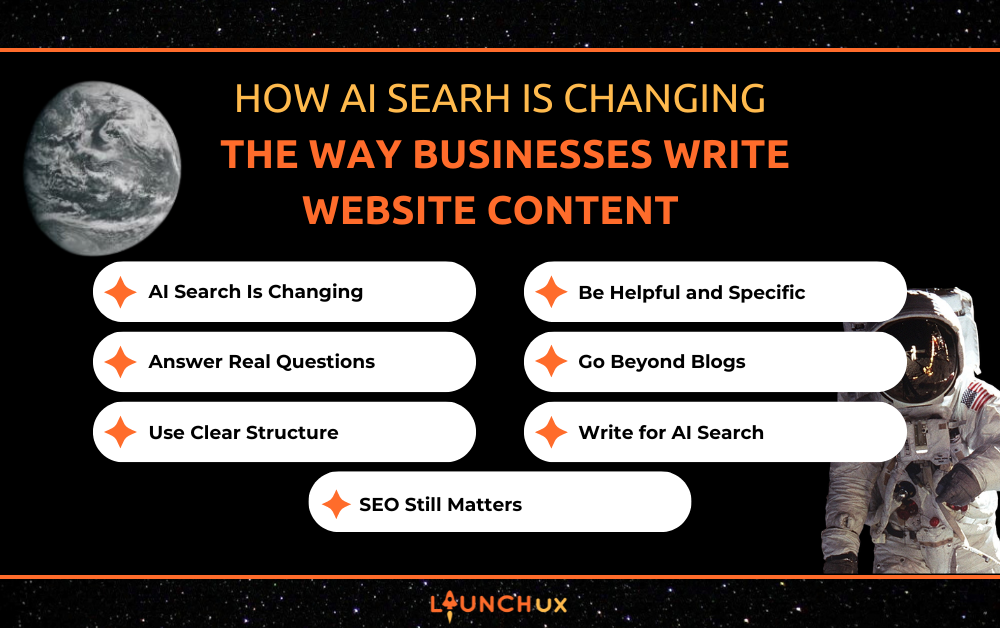
How AI Search Is Changing the Way Businesses Write Website Content 

AI search is changing how people find information online. Instead of typing short keywords and scrolling through a long list of links, users are asking full questions and expecting quick, helpful answers. Search engines and AI tools now look for content that clearly explains a topic, answers user intent, and gives people the information they need without unnecessary fluff.

That shift means businesses need to rethink how they write website content. It is no longer enough to place keywords on a page and hope it ranks. Your content needs to be clear, useful, structured, and written around the real questions your customers are asking. For businesses that rely on their website to bring in leads, AI search makes strong content strategy more important than ever.

Why AI Search Changes the Way People Find Answers

AI search is changing the way people interact with search engines. Instead of searching a few words like “best website content” or “SEO tips,” users are more likely to ask detailed questions such as “How should my business write website content for AI search?” or “What makes content more likely to show up in AI search results?” These searches are more conversational, which means businesses need content that answers specific questions clearly.

AI-powered search tools also summarize information quickly. In some cases, users may see an answer before they ever click through to a website. This makes it even more important for businesses to publish helpful, well-organized content that search engines can understand and trust.

For business owners, the goal is not only to rank for a keyword. The goal is to become a useful source of information. When your website content explains topics clearly, answers common questions, and supports the next step in the customer journey, it has a better chance of helping both search engines and potential customers understand what your business offers.

Website Content Needs to Answer Real Questions

AI search puts more focus on intent. That means businesses need to think beyond what people are typing and consider what they actually want to know. Someone searching for help with a website may not only want a general service page. They may want to understand what makes content effective, how SEO works, what questions customers need answered, or how to decide whether their current website needs improvement.

Strong website content should address those questions directly. Instead of writing broad, generic pages, businesses should create content that helps users make decisions. This may include explaining services, comparing options, answering common concerns, and showing people what to expect before they contact your team.

For example, a business can make its content more helpful by answering questions like:

  • What problem does this service solve?
  • Who is this service best for?
  • How does the process work?
  • What should someone know before getting started?
  • What makes one provider different from another?

When content answers real questions, it becomes more useful for both people and search engines. It also helps build trust because users can see that your business understands their needs before they ever fill out a form or make a call.

Clear Structure Matters More Than Ever

AI search depends on clear information. If a page is difficult to follow, vague, or poorly organized, search engines may have a harder time understanding what the content is about. That is why structure matters. Headings, subheadings, short paragraphs, internal links, and FAQ sections all help organize information in a way that supports both users and search engines.

A well-structured page should guide visitors from one idea to the next. The main heading should make the topic clear, while each section should answer a specific part of the user’s question. This makes the page easier to scan and helps readers find the information they need faster.

Strong website content should also avoid hiding important details in long paragraphs. Businesses should make key points easy to find by using clear section titles, helpful lists when needed, and direct answers near the top of each page. When content is organized well, it creates a better user experience and gives AI search tools clearer context about what the business offers.

AI Search Rewards Helpful, Specific Website Content

Generic content is becoming less effective as AI search continues to improve. A page that says the same basic things as every competitor may not give search engines or users a strong reason to trust it. Businesses need content that gives clear answers, useful details, and a better explanation of the topic.

Helpful content should show that your business understands the customer’s problem. That may include examples, local context, service details, common concerns, and next steps. Instead of making broad claims like “we offer great service,” your website should explain what that service includes, how your process works, and why that matters to the customer.

Businesses can make website content more specific by including details such as:

  • Common problems customers face
  • Clear service explanations
  • Local market or service area details
  • Process steps
  • FAQs
  • Internal links to related pages
  • Case studies, reviews, or project examples

The more useful and specific your content is, the easier it becomes for people to understand your value. It also gives search engines more context, which can help your business appear for searches that match what your customers actually need.

Businesses Should Think Beyond Blog Posts

Blog posts can help answer common questions and support SEO, but they are only one part of a strong content strategy. AI search can pull information from many areas of a website, which means businesses should also pay close attention to their core pages. Your home page, service pages, location pages, about page, and FAQ sections all play a role in how clearly your business explains what it does.

Service pages are especially important because they often connect directly to high-intent searches. If someone is looking for a specific solution, they need more than a short description. They need to know what the service includes, who it helps, what problems it solves, and why your business is a strong choice.

Businesses should review important website pages and ask:

  • Does this page clearly explain the service?
  • Does it answer common customer questions?
  • Does it include helpful next steps?
  • Does it connect to related pages or resources?
  • Does it show why someone should trust this business?

When businesses improve content across the entire website, they create a stronger foundation for search visibility. Blogs can support that strategy, but the main website pages should also provide clear, useful, and well-structured information.

How to Make Website Content More AI-Friendly

Making website content more AI-friendly starts with writing for people first. Search engines and AI tools are looking for content that explains a topic clearly, answers real questions, and helps users take the next step. That means businesses should avoid vague copy and focus on information that is useful, accurate, and easy to understand.

A strong page should have a clear purpose. Before writing or updating content, businesses should know what question the page needs to answer and what action the user should take next. This helps keep the content focused instead of filling the page with general information.

To make website content more useful for AI search, businesses should:

  • Use clear H2s and H3s that match real search questions.
  • Answer important questions directly near the top of the page.
  • Add FAQs to service pages when they help explain common concerns.
  • Include specific details about services, locations, processes, and next steps.
  • Use internal links to guide visitors to related services or helpful resources.
  • Update older content so it stays accurate and relevant.
  • Avoid keyword stuffing and write in a natural, helpful way.

AI-friendly content does not mean writing for robots. It means creating content that gives search engines enough context while still making sense to real people. When businesses focus on clarity, structure, and helpful information, their website becomes more valuable for both users and search visibility.

Why SEO Still Matters in an AI Search World

AI search is changing how people find information, but it does not replace SEO. Businesses still need strong technical foundations, optimized pages, clear content, and a website that loads quickly and works well on every device. Without those pieces in place, even helpful content may struggle to perform.

SEO also helps search engines understand which pages are most relevant for specific topics, services, and locations. That includes using the right keywords naturally, organizing pages properly, improving internal links, and making sure each page supports a clear search intent. For businesses, this means SEO and website content need to work together.

The goal is not only to bring more people to a website. The goal is to attract the right visitors and help them take action. When businesses combine helpful content with a strong SEO strategy, they can improve visibility, build trust, and create a better path from search to lead.

Conclusion

AI search is changing the way businesses need to approach website content. Instead of writing pages only around keywords, businesses need to focus on clear answers, helpful structure, and content that reflects what customers actually want to know. The websites that perform well will be the ones that make information easy to find, easy to understand, and easy to trust.

For businesses that rely on their website to generate leads, this shift creates an important opportunity. By improving service pages, blogs, FAQs, and other core website content, your business can create a stronger online presence for both traditional search and AI-powered search. If your website needs better content, stronger SEO, or a clearer strategy, LaunchUX can help you build a site that supports how people search today.

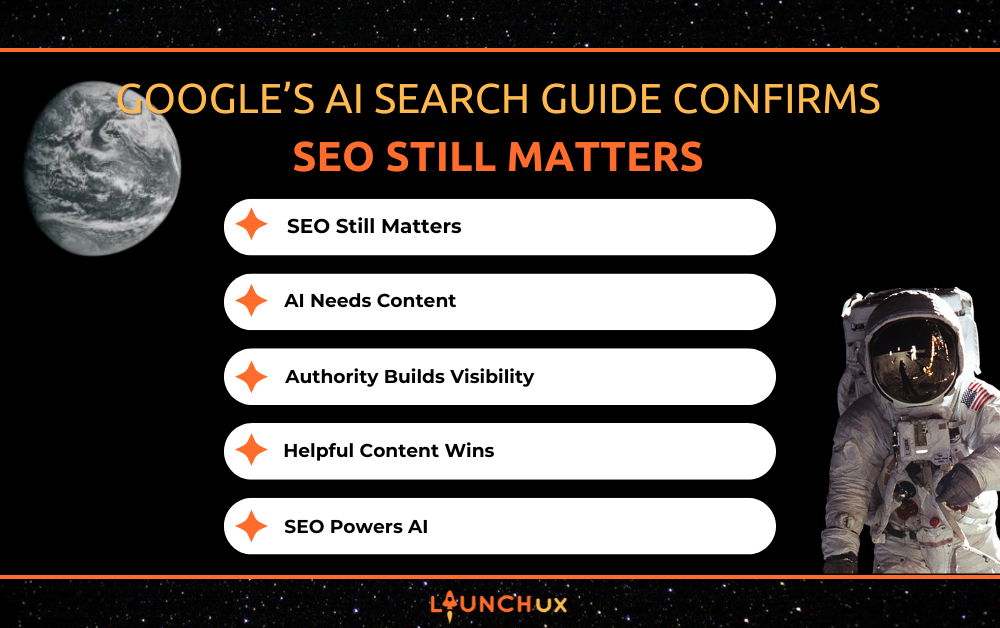
Google’s AI Search Guide Confirms SEO Still Matters

Artificial intelligence is rapidly changing how people search for information online. Tools like Google AI Overviews, ChatGPT, and other generative search experiences are reshaping the way users interact with search engines.

Because of this shift, many businesses are asking an important question:

Does SEO still matter?

According to Google’s own AI search guidance, the answer is yes.

In fact, Google’s AI optimization documentation reinforces something SEO professionals have said for years. Strong SEO foundations remain essential for visibility online, including in AI-powered search experiences.

While AI search is changing how information is presented, it is not replacing the core fundamentals of search engine optimization. Instead, it is building on them.

What Google’s AI Search Guide Actually Says

Google recently published guidance explaining how websites can succeed in AI-powered search environments. One of the clearest takeaways is that traditional SEO best practices still apply.

Google emphasizes that businesses should continue focusing on:

  • Helpful content
  • Strong technical SEO
  • Crawlability
  • Structured information
  • User experience
  • Authority and trustworthiness

This is important because many marketers are pushing the idea that GEO, AI optimization, or AI search strategies somehow replace SEO entirely. Google’s own documentation says otherwise.

AI systems still rely heavily on the same infrastructure that powers traditional search.

That means websites still need to be crawled, indexed, understood, and trusted before they can appear in AI-generated answers.

Why SEO Still Matters in the Age of AI Search

AI Tools Still Need Content to Pull From

AI-generated answers do not appear out of nowhere. AI systems rely on information published across the web.

If your content is not visible, accessible, or authoritative, AI systems are far less likely to use it when generating responses.

This is one reason SEO still matters so much. SEO helps ensure search engines can discover and understand your content in the first place.

Without strong SEO, your content may never become visible enough to influence AI-generated search experiences.

Authority Signals Matter More Than Ever

Google’s AI systems favor content that appears trustworthy and authoritative.

This includes signals like:

  • Consistent topic coverage
  • Quality backlinks
  • Clear expertise
  • Helpful content
  • Strong site structure

These are all foundational SEO principles.

Businesses that invest in long-term SEO strategies naturally build stronger authority online, making their content more likely to appear in both traditional search results and AI-generated responses.

Technical SEO Still Powers Discoverability

Technical SEO remains one of the most important parts of online visibility.

AI systems still rely on search infrastructure that depends on:

  • Crawlable websites
  • Internal linking
  • Fast load times
  • Mobile-friendly design
  • Proper indexing
  • Structured content

If search engines struggle to access or understand your website, AI systems will likely struggle as well.

This means businesses chasing “AI optimization” while ignoring technical SEO are building on a weak foundation.

What AI Search Is Changing About SEO

While SEO still matters, AI search is influencing how businesses should structure and present content.

Search Is Becoming More Conversational

Users increasingly search using full questions instead of short phrases.

Instead of searching:

  • “SEO agency”

Users now ask:

  • “How do I choose the best SEO agency for my business?”

This means content should answer questions naturally and clearly.

Businesses that create detailed, conversational content are more likely to align with both traditional search intent and AI-generated search experiences.

Clear Structure Matters More

AI systems prefer content that is easy to interpret.

Content with:

  • clear headings
  • concise explanations
  • bullet points
  • organized sections

…is easier for AI systems to analyze and summarize.

This does not mean stuffing content with keywords. It means creating content that is genuinely useful and easy to understand.

Topical Authority Is Becoming More Important

Publishing a single blog post about a topic is no longer enough.

Search engines and AI systems increasingly reward websites that consistently cover related topics in depth.

For example, a company that regularly publishes content about:

  • SEO
  • web design
  • PPC
  • AI search
  • content strategy

…builds stronger topical authority than a website that posts randomly across unrelated subjects.

This is another reason SEO still matters. Long-term content strategies create the authority signals AI systems rely on.

Common Misconceptions About GEO and AI Optimization

GEO Does Not Replace SEO

Generative Engine Optimization, often called GEO, focuses on increasing visibility within AI-generated responses.

However, GEO depends on strong SEO foundations.

Before AI systems can reference a website, search engines still need to:

  • crawl the site
  • index the content
  • evaluate authority
  • understand relevance

Without SEO, GEO becomes extremely difficult.

AI Search Is Not a Shortcut Around SEO

Some businesses are searching for “AI hacks” or shortcuts to visibility.

Google has made it clear that low-quality, manipulative AI content does not align with its recommendations.

The focus remains on:

  • originality
  • usefulness
  • expertise
  • people-first content

Businesses trying to bypass SEO fundamentals often create content that lacks value and fails to build long-term authority.

Helpful Content Still Wins

One of the strongest themes throughout Google’s AI guidance is the importance of helpful content.

Google consistently encourages businesses to create content that:

  • answers questions clearly
  • demonstrates expertise
  • provides real value
  • prioritizes users over algorithms

This aligns directly with modern SEO best practices.

In other words, the same content strategies that improve SEO also improve AI visibility.

What Businesses Should Focus on Instead of AI “Tricks”

Businesses preparing for the future of search should focus less on shortcuts and more on strong digital foundations.

Build Strong SEO Foundations

This includes:

  • technical SEO
  • site speed
  • internal linking
  • proper indexing
  • mobile optimization

Without these fundamentals, visibility becomes difficult in both traditional and AI search.

Create Helpful, Structured Content

Content should:

  • answer real questions
  • use clear formatting
  • provide useful information
  • stay focused on user intent

The easier content is to understand, the easier it becomes for both search engines and AI systems to use.

Build Topical Authority Over Time

Consistency matters.

Businesses that regularly publish quality content around their industry create stronger authority signals over time.

This improves:

  • search rankings
  • AI visibility
  • brand credibility
  • long-term discoverability

Why Businesses That Ignore SEO Will Fall Behind

AI search may change how users receive information, but it does not remove the need for SEO.

In many ways, AI search makes SEO even more important.

Why?

Because AI systems need reliable sources to reference. Websites with poor SEO foundations are less likely to become those sources.

Strong SEO helps businesses appear in:

  • traditional search results
  • featured snippets
  • AI Overviews
  • generative search answers

Businesses that continue investing in SEO today will be better positioned as AI search evolves.

Google’s AI Search Guide Reinforces What Good SEO Has Always Been

Google’s AI search guidance sends a clear message:

SEO still matters.

AI search is changing how users interact with information online, but the core principles of discoverability remain the same. Helpful content, technical optimization, authority, and user experience continue to drive visibility.

Businesses that focus on long-term SEO strategies instead of chasing AI shortcuts will be in the strongest position moving forward.

The future of search is not SEO versus AI. It is SEO and AI working together.

If your business wants to strengthen its visibility in both traditional search and emerging AI-driven experiences, LaunchUX can help you build an SEO strategy designed for the future of search. Contact LaunchUX today to get started.
The Elements of an Effective Personal Website Design

A personal website serves as more than a simple online presence; it provides a dedicated space where professionals, freelancers, entrepreneurs, and creatives can showcase their expertise, strengthen their personal brand, and connect with valuable opportunities. While social media platforms and networking sites can support your online visibility, a personal website gives you complete control over how you present yourself and your work.

At LaunchUX, we understand that effective website design goes beyond aesthetics. A successful personal website combines thoughtful structure, intuitive navigation, compelling content, and strategic design choices to create a memorable experience for visitors. When these elements work together, they help establish credibility, encourage engagement, and support long-term professional growth.

Understanding the Purpose of a Personal Website

Before exploring design elements, it is important to understand what a personal website is meant to accomplish. Every design decision should support a specific goal.

For some individuals, the goal may be attracting clients or employers. Others may want to build authority within their industry, showcase creative work, or create a platform for sharing ideas and insights. Regardless of the objective, the website should provide visitors with a clear understanding of who you are, what you do, and how they can connect with you.

An effective personal website aligns design, content, and functionality around those goals, creating a seamless experience that guides visitors toward meaningful action.

Creating a Strong First Impression

Visitors often form opinions about a website within seconds of arriving. The initial impression can influence whether they continue exploring or leave the site altogether. Because of this, the visual presentation and organization of your personal website should immediately communicate professionalism, credibility, and purpose. 

Design Consistency Matters

Consistency produces a sense of professionalism and trust. Fonts, colors, spacing, and visual elements should work together to establish a cohesive identity.

A consistent design helps visitors focus on your message rather than becoming distracted by competing visual elements. It also reinforces your personal brand throughout the browsing experience.

Prioritize Clarity Over Complexity

Many personal websites fall into the trap of trying to impress visitors with elaborate animations, excessive graphics, or unconventional layouts. While creativity has its place, clarity should remain the priority.

A clean, organized design helps visitors quickly understand your expertise, navigate the site, and find the information they need.

Strategic Navigation and Information Architecture

Navigation plays a critical role in usability. Even the most visually appealing website can frustrate visitors if information is difficult to find.

Keep Navigation Simple

A streamlined navigation menu helps users move through your website effortlessly and reduces the frustration that can come from searching for important information. Clear navigation acts as a roadmap, guiding visitors toward the pages that matter most. Rather than overwhelming users with numerous menu items and dropdowns, focus on organizing content into a handful of logical categories. This approach creates a cleaner interface while helping visitors understand your website’s structure almost immediately. 

Common navigation items include:

  • Home
  • About
  • Portfolio or Work
  • Blog
  • Contact

These sections provide a familiar structure that most visitors can navigate without confusion.

Limit Decision Fatigue

When users encounter too many navigation options, decision-making becomes more difficult. Simplifying choices helps visitors stay focused on their objectives and encourages deeper engagement with your content.

An organized navigation system creates a smoother user experience and helps visitors locate important information more efficiently.

Designing an Effective Homepage

The homepage serves as the digital front door of a personal website. It should communicate your value clearly and immediately.

Establish a Clear Value Proposition

Visitors should quickly understand who you are, what you do, who you help, and why your expertise matters. This information should appear prominently near the top of your homepage so users do not have to scroll extensively to understand your purpose. A strong value proposition creates immediate relevance and helps visitors determine whether your skills, services, or experience align with their needs. The more clearly you communicate your value, the easier it becomes to build trust and encourage further engagement. 

Visitors should quickly understand:

  • Who you are
  • What you do
  • Who you help
  • Why your expertise matters

A concise headline paired with supporting text often works better than lengthy introductory paragraphs.

Use Strategic Visual Hierarchy

Visual hierarchy guides visitors through information in a logical order.

Effective hierarchy can be achieved through:

  • Larger headings
  • Contrasting colors
  • Strategic spacing
  • Prominent calls to action
  • Organized content sections

These elements naturally direct attention to the most important information on the page.

Include Strong Calls to Action

Every homepage should encourage visitors to take the next step.

Examples include:

  • Contact Me
  • View My Work
  • Schedule a Consultation
  • Read My Blog
  • Download My Resume

Clear calls to action help transform passive visitors into engaged users.

The Importance of High-Quality Content

Even exceptional design cannot compensate for weak content. The information presented on a personal website plays a considerable part in building credibility and trust.

Develop an Authentic About Page

The About page is often one of the most visited sections of a personal website.

Rather than simply listing accomplishments, use this space to share your professional journey, values, and expertise in a way that feels authentic and engaging. Visitors are often interested in understanding the person behind the website, not just the qualifications. Explaining how you developed your skills, what motivates your work, and the unique perspective you bring to your industry can help create a stronger connection with your audience. An effective About page builds credibility while making your story more memorable. 

Balance Personality and Professionalism

An effective About page feels genuine without becoming overly casual. Professional achievements should be presented alongside personal insights that help establish a human connection.

This balance often makes your website more memorable and relatable.

Showcase Your Work Effectively

Whether you are a designer, writer, developer, consultant, or entrepreneur, examples of your work provide tangible proof of your capabilities.

Include:

  • Project descriptions
  • Case studies
  • Measurable outcomes
  • Testimonials
  • Visual examples when applicable

Detailed project presentations help visitors understand not only what you accomplished but also how you approach problem-solving.

Mobile Responsiveness Is Essential

People access online content through various devices throughout the day, making cross-device functionality more important than ever. 

A personal website must function seamlessly across all screen sizes.

Responsive Design Improves Accessibility

Responsive design automatically adjusts layouts and content to fit different devices, ensuring that visitors have a consistent experience regardless of how they access your website. With mobile traffic continuing to account for a significant portion of web usage, a site that performs well on smaller screens is no longer optional. Responsive design helps maintain readability, functionality, and visual appeal while reducing the likelihood that users will abandon the site due to usability issues. 

This ensures visitors can:

  • Read content comfortably
  • Navigate menus easily
  • Complete forms without difficulty
  • Engage with your website regardless of device

Search Engines Favor Mobile-Friendly Sites

Mobile usability influences search visibility. Websites that perform well on mobile devices often provide stronger user experiences, which can positively impact search engine rankings.

Responsive design therefore supports both usability and discoverability.

Performance and Loading Speed

Website speed directly affects visitor satisfaction. Slow-loading pages can disrupt the user experience and decrease the possibility that visitors will engage with your content. 

Even a few additional seconds of loading time can increase bounce rates and reduce engagement.

Optimize Images and Media

Large image files frequently contribute to slow performance.

Best practices include:

  • Compressing images
  • Using modern image formats
  • Implementing lazy loading
  • Reducing unnecessary media files

These optimizations help improve page speed without sacrificing visual quality.

Minimize Technical Friction

Users should never have to wait unnecessarily for content to load.

Fast-loading pages create a smoother experience, support better engagement, and contribute to stronger overall website performance.

Building Trust Through Design

Trust is one of the most valuable outcomes a personal website can generate. Visitors are more likely to engage when they feel confident in your credibility and expertise. 

Visitors are more likely to engage when they feel confident in your credibility.

Include Social Proof

Social proof helps validate your expertise and experience.

Effective examples include:

  • Client testimonials
  • Professional certifications
  • Industry awards
  • Published work
  • Media mentions

These elements provide independent confirmation of your capabilities.

Make Contact Information Easy to Find

Visitors should never have to search extensively for ways to contact you.

Contact forms, email addresses, social links, and scheduling tools should be accessible throughout the website. Easy communication reduces friction and encourages meaningful connections.

Accessibility Enhances User Experience

Accessibility is often overlooked but remains a critical component of effective website design. An accessible personal website enables individuals with diverse abilities to navigate and interact with its content successfully. 

An accessible personal website enables individuals with diverse abilities to navigate and interact with its content successfully.

Accessibility Best Practices

Consider incorporating:

  • Readable font sizes
  • Sufficient color contrast
  • Alternative text for images
  • Keyboard-friendly navigation
  • Clear heading structures

These improvements benefit all users while making your website more inclusive.

Accessibility Supports Long-Term Success

Beyond compliance considerations, accessibility contributes to better usability, broader audience reach, and a stronger overall user experience.

Designing for accessibility demonstrates professionalism and consideration for diverse audiences.

Conclusion

An effective personal website combines thoughtful design, clear navigation, compelling content, responsive functionality, and strong performance. While visual appeal plays an important role, true effectiveness comes from creating an experience that helps visitors understand who you are, what you offer, and how they can connect with you.

The most successful personal websites balance technical best practices with authentic storytelling, allowing users to build trust as they navigate the site with ease. By focusing on usability, accessibility, and strategic design principles, you can create a website that supports your goals and continues to provide value for years to come.

At LaunchUX, we help individuals create websites that blend professional design with meaningful user experiences, ensuring their online presence reflects both their expertise and their unique personal brand.

Whether you’re launching your first site or improving an existing one, the right design strategy can make all the difference. Contact LaunchUX today to create a personal website that showcases your strengths, engages visitors, and helps you achieve your professional goals.

Why Website Copywriting Services Are Essential for Online Success

A well-designed website can attract attention, but words are what persuade visitors to take action. Every headline, service description, call to action, and landing page contributes to how potential customers form impressions of a business and decide to engage with it. While many companies focus heavily on website design, the quality of the content often determines whether a website generates leads, sales, and long-term growth.

At LaunchUX, we understand that compelling website content is an important component of a successful online presence. Professional website copywriting services help businesses communicate their value clearly, connect with their target audience, and convert website visitors into customers. Effective copy is more than filling pages with words—it is a strategic tool that supports marketing goals and drives measurable results.

What Are Website Copywriting Services?

Website copywriting services involve creating, optimizing, and refining content specifically designed for websites. The objective is to communicate a company’s message in a way that is engaging, persuasive, and easy to understand while also supporting search engine optimization efforts.

Professional website copywriters develop content that aligns with a brand’s voice, addresses customer needs, and encourages visitors to take action. Whether the objective is generating leads, increasing online sales, or building brand awareness, effective copy plays a major role in achieving those outcomes.

More Than Just Writing

Many people assume website copywriting simply involves writing paragraphs about products and services. In reality, successful copywriting requires research, strategy, audience analysis, and an understanding of consumer behavior.

Professional copywriters consider how visitors interact with a website, what questions they may have, and what information they need before making a decision. Every word is chosen with a purpose, helping move potential customers closer to conversion.

Why Content Matters on Every Website

Even the most aesthetically appealing website can struggle if the content fails to communicate effectively. Visitors need clear, relevant information to comprehend what a business offers and why they should choose it over competitors.

First Impressions Influence Decisions

Website visitors often form opinions about a business within seconds of landing on a page. Strong copy immediately communicates professionalism, credibility, and expertise. Weak or confusing content can create uncertainty and cause users to leave before exploring further.

Professional website copywriting services ensure that visitors quickly understand the value a business provides. Clear messaging helps establish trust and encourages users to continue engaging with the website.

Content Guides the User Journey

Website content serves as a roadmap that guides visitors through the decision-making process. From the homepage to service pages and contact forms, every section should lead users toward a desired action.

When content is strategically organized, visitors can navigate the content smoothly and know the appropriate next steps. This improves user experience while increasing the likelihood of conversion.

Messaging Builds Brand Authority

Consistent, well-written content helps establish authority within an industry. Businesses that communicate confidently and clearly are more likely to be viewed as trusted experts.

Professional copywriting strengthens a brand’s voice and ensures messaging remains consistent across all pages. This consistency contributes to stronger brand recognition and credibility.

The Benefits of Professional Website Copywriting Services

Investing in professional copywriting provides numerous advantages that extend beyond simple content creation.

Improved Search Engine Optimization

Search engines rely heavily on content to comprehend what a website is about. Well-written, optimized content helps improve visibility in search results while providing valuable information to users.

Professional website copywriting services incorporate relevant keywords naturally throughout the content. This supports SEO efforts without sacrificing readability or user experience.

Effective optimization includes:

  • Strategic keyword placement
  • Relevant page titles and headings
  • Content organization
  • Internal linking opportunities
  • User-focused writing practices

When these components work together, businesses can attract more qualified traffic through organic search.

Higher Conversion Rates

Traffic alone does not generate results. Visitors must be persuaded to take action, whether that involves making a purchase, submitting a form, scheduling a consultation, or contacting the business.

Strong copy addresses customer concerns, highlights benefits, and provides compelling reasons to move forward. Professional writers understand how to create persuasive messaging that encourages action without sounding overly aggressive.

Better User Engagement

People are more likely to stay engaged with a website when the content is engaging and easy to consume. Long blocks of text, confusing language, and poorly organized information can quickly drive users away.

Professional copywriters structure content to improve readability and encourage visitors to continue exploring. This increased engagement can contribute to improved conversion rates and stronger overall website performance.

Key Elements of Effective Website Copy

Not all website content delivers the same results. Successful copy contains several essential components that work together to communicate value and drive action.

Clear Headlines

Headlines are often the first pieces of content visitors read. They play a major role in determining whether users continue exploring the page.

Strong headlines immediately communicate benefits, address customer needs, or capture attention. Professional website copywriting services focus heavily on headline development because it can significantly impact engagement and conversions.

Customer-Focused Messaging

One of the most common mistakes businesses make is focusing too heavily on themselves. While company achievements and experience are important, customers are primarily interested in how products or services will benefit them.

Effective copy shifts the focus toward solving problems and delivering value. This customer-centered approach helps create stronger connections and improves the effectiveness of the messaging.

Strong Calls to Action

Every page should have a clear purpose and encourage visitors to take a specific action. Calls to action guide users toward the next step in the customer journey.

Examples may include:

  • Request a quote
  • Schedule a consultation
  • Contact our team
  • Learn more
  • Get started today

Well-crafted calls to action remove uncertainty and help increase conversion opportunities.

How Website Copywriting Supports Digital Marketing

Website content serves as the foundation for many digital marketing initiatives. Without strong copy, even the most effective marketing campaigns may struggle to produce results.

Supporting SEO Strategies

Quality content is a foundational element of successful SEO strategies. Search engines prioritize websites that deliver practical, relevant knowledge to users.

Professional website copywriting services help businesses create content that satisfies both search engine requirements and user expectations. This balanced approach contributes to improved rankings and increased visibility.

Enhancing Paid Advertising Performance

Paid advertising campaigns often direct users to landing pages on a website. If the content on those pages fails to align with the advertisement or address visitor expectations, conversion rates can suffer.

Strong website copy ensures consistency between advertisements and landing page content. This constructs a more seamless user experience and can improve campaign performance.

Strengthening Brand Messaging

Businesses often communicate across multiple channels, including websites, social media, email campaigns, and advertising. Constant messaging helps develop a cohesive brand identity.

Professional copywriters ensure that website content supports broader marketing objectives and reinforces key brand messages.

Common Website Copywriting Mistakes

Many businesses attempt to write their own website content but encounter challenges that limit effectiveness.

Using Industry Jargon

Technical terminology may make sense internally, but it can confuse potential customers. Visitors should not have to decipher complex language to understand what a business offers.

That’s why professional copywriters simplify information while maintaining accuracy. This makes content accessible to an even wider audience.

Focusing on Features Instead of Benefits

Customers care less about features and more about outcomes. Simply listing product specifications or service details may not effectively communicate value.

Effective website copywriting services emphasize benefits and explain how offerings solve problems or improve customers’ situations.

Neglecting Content Updates

Businesses evolve, and website content should evolve as well. Outdated information can damage credibility and reduce customer confidence.

Regular content reviews help ensure accuracy, relevance, and alignment with current business goals.

Choosing the Right Website Copywriting Partner

Selecting the right copywriting provider is an important decision. Businesses should look for professionals who understand marketing, customer psychology, SEO, and brand messaging.

An effective copywriting partner will thoroughly research your business, market, competitors, and ideal customers. This research helps create content that accurately reflects your brand while supporting business objectives.

Experience, communication, strategic thinking, and measurable results should all be considered when evaluating potential providers. The best copywriting partnerships focus on long-term business growth rather than simply delivering words on a page.

Conclusion

A website’s content directly impacts how visitors perceive a business and whether they choose to take action. Clear, persuasive, and strategically developed messaging can improve search visibility, strengthen brand credibility, increase engagement, and drive more conversions.

Professional website copywriting services help businesses communicate their value effectively while supporting broader marketing and growth objectives. At LaunchUX, we create content that not only informs but also persuades, helping businesses build stronger connections with their audiences and achieve measurable online success.

Ready to Improve Your Website Content?

If your website is not generating the leads, engagement, or conversions you expect, professional website copywriting services can make a significant difference. Contact LaunchUX today to learn how strategic website content can strengthen your online presence, attract more qualified visitors, and turn more website traffic into customers.

What Is Technical Debt on a Website? 

A website can look clean and professional on the surface while still having hidden issues behind the scenes. Over time, quick fixes, outdated plugins, messy code, old design choices, and skipped maintenance can build up and make the site slower, harder to manage, and more difficult to improve.

This buildup is often called technical debt. Like financial debt, technical debt usually grows when it is ignored. The longer it sits, the more likely it is to affect website speed, security, SEO, user experience, and future updates. For businesses that rely on their website to bring in leads or sales, understanding technical debt is an important part of keeping the site healthy.

What Is Technical Debt?

Technical debt refers to the hidden issues that build up when short-term website fixes are chosen over cleaner, more sustainable solutions. Sometimes this happens because a business needs a fast update, a quick repair, or a temporary workaround. Other times, it happens because a website has been managed by different people over several years without a clear structure.

On a website, technical debt can include things like outdated plugins, bloated code, unused pages, broken links, poor site structure, confusing backend organization, old tracking scripts, or features that were patched instead of properly fixed. These issues may not be obvious to visitors right away, but they can make the website harder to update, optimize, and maintain.

Technical debt does not always mean a website was built poorly. In many cases, it builds up naturally as a business grows, changes services, adds content, updates designs, or installs new tools. The problem starts when those changes are not cleaned up over time. Eventually, the website may become slower, less secure, harder to manage, and less effective at supporting business goals.

How Does Technical Debt Build Up?

Technical debt usually builds up slowly. One quick fix may not cause a major issue, but repeated shortcuts can create a website that becomes harder to update, improve, and scale. What starts as a temporary solution can eventually become part of the website’s structure.

For example, a business may add a plugin to solve one small problem, create a new page without thinking about the site structure, or leave outdated content in place because it is easier than reviewing it. Over time, these small decisions can lead to bloated code, duplicate content, plugin conflicts, broken links, and a confusing backend.

Technical debt can also build up when a website changes hands between different developers, agencies, or internal team members. Without clear documentation or a long-term plan, each person may make changes in a different way. This can leave the website with inconsistent layouts, unnecessary tools, outdated tracking codes, or features that are difficult to maintain.

Common causes of technical debt include:

  • Rushing a website launch
  • Adding plugins instead of building better solutions
  • Ignoring updates or security warnings
  • Keeping old pages that no longer serve a purpose
  • Making design changes without considering site structure
  • Adding tracking scripts without removing outdated ones
  • Changing developers or agencies without proper documentation
  • Patching problems instead of fixing the root issue

Technical debt is common, especially on older websites. However, it becomes a bigger problem when it starts affecting performance, security, SEO, or the ability to make future improvements.

Why Is Technical Debt a Problem?

Technical debt becomes a problem when it starts making your website slower, harder to manage, less secure, or less effective for users. What may have started as a small shortcut can eventually create bigger issues that affect both the website’s performance and the business behind it.

For visitors, technical debt can show up as slow-loading pages, broken forms, confusing navigation, outdated content, or features that do not work correctly. These problems can make people leave the site before they take action, especially if they are trying to contact your business, request a quote, or make a purchase.

Behind the scenes, technical debt can make routine updates more difficult. A simple content change may take longer than expected. Plugin updates may break parts of the site. New features may require extra development work because the existing setup is disorganized or outdated.

Technical debt can lead to problems such as:

  • Slower page speed
  • Poor mobile performance
  • Security vulnerabilities
  • Broken forms or features
  • Harder content updates
  • Plugin conflicts
  • Higher maintenance costs
  • More frequent website errors
  • Poor user experience
  • Difficulty adding new features

The longer technical debt goes unaddressed, the more expensive and time-consuming it can become to fix. For businesses that depend on their website for leads, sales, or customer trust, those hidden issues can directly affect growth.

How Can Technical Debt Hurt SEO?

Technical debt can make it harder for search engines to crawl, understand, and rank your website. Even if your content is helpful, technical problems can limit how well that content performs in search results.

For example, slow page speed can create a poor user experience. Broken internal links can prevent visitors and search engines from reaching important pages. Duplicate or outdated content can make it harder for search engines to know which page should rank. Redirect chains, missing metadata, poor heading structure, and indexing issues can also weaken SEO performance over time.

SEO is not only about keywords. A technically healthy website gives search engines a clearer path to important pages and gives visitors a better experience once they arrive. When technical debt gets in the way, your website may struggle to earn the visibility it deserves.

How Do You Know If Your Website Has Technical Debt?

Many businesses do not realize their website has technical debt until something breaks, rankings drop, or a simple update becomes harder than expected. Since technical debt often builds behind the scenes, the warning signs are not always obvious at first.

Some common signs of technical debt include:

  • The website loads slowly
  • Plugins, themes, or software are frequently outdated
  • Small changes take longer than they should
  • Pages or features break after updates
  • Forms stop sending notifications
  • The backend feels confusing or disorganized
  • The site has duplicate or outdated content
  • Mobile performance is poor
  • Analytics or tracking data seems unreliable
  • Developers hesitate to make changes without a deeper review

If your website has several of these issues, it may be time for a technical audit. Identifying technical debt early can help you fix the most important problems before they affect leads, rankings, security, or long-term website performance.

How Can You Reduce Technical Debt?

Reducing technical debt starts with understanding what is causing the biggest problems. Not every issue needs to be fixed at once, but the most important problems should be prioritized based on risk, performance, SEO impact, and business goals.

Start With a Technical Website Audit

A technical website audit is often the best place to begin. This can help identify outdated plugins, broken links, slow pages, duplicate content, tracking issues, security concerns, and backend problems that may be affecting the site. Once those issues are clear, they can be organized by priority instead of handled randomly.

Clean Up What No Longer Serves the Website

Many websites carry old tools, pages, files, and scripts that are no longer needed. Removing unused plugins, outdated tracking codes, duplicate content, and unnecessary backend clutter can make the site easier to manage. It can also reduce the risk of performance issues, plugin conflicts, and security problems.

Improve the Foundation for Future Updates

Reducing technical debt is not only about fixing current issues. It is also about making the website easier to maintain moving forward. Updating software, improving page speed, fixing redirect issues, documenting major changes, and creating a regular maintenance plan can help prevent the same problems from building up again.

Some technical debt can be handled through ongoing maintenance and targeted fixes. However, if the website is outdated, difficult to manage, or built on a structure that no longer supports the business, a larger redesign or rebuild may be the better long-term solution.

When Is It Time to Rebuild Instead of Repair?

Some websites can be improved with targeted fixes. Others have so much technical debt that continuing to patch the site becomes more expensive, time-consuming, and limiting than rebuilding it with a stronger foundation.

A rebuild may make sense when the website is built on outdated technology, major features no longer work properly, performance issues keep coming back, or the backend is difficult to manage. It may also be the better option if SEO problems are tied to poor site structure, old URLs, duplicate content, or pages that no longer support the business’s goals.

The decision should come down to long-term value. If small fixes can improve performance, security, and usability, repair may be enough. But if every update creates another issue, or if the website cannot support new services, integrations, content, or marketing campaigns, rebuilding may save time and money in the long run.

Conclusion

Technical debt can build up quietly over time, even on websites that still look polished from the outside. Outdated tools, messy backend structure, slow performance, broken features, and temporary fixes can all make a website harder to manage and less effective.

The longer technical debt is ignored, the more likely it is to affect SEO, security, user experience, and future growth. For businesses dealing with slow load times, outdated software, confusing site management, or repeated website issues, LaunchUX can review the site, identify the biggest problems, and recommend the best path forward.