
rocketfuel, Author at LaunchUX - Page 3 of 28

Author: rocketfuel

Why Website Redesign Services Are Essential for Business Growth

A company’s website often serves as its first opportunity to make an impression on potential customers. An outdated, difficult-to-navigate, or poorly performing website can create obstacles that prevent visitors from engaging with your business. As technology, consumer expectations, and search engine algorithms continue to evolve, maintaining an effective online presence becomes increasingly important.

At LaunchUX, we understand that a website is more than a digital brochure. It is a critical business asset that influences credibility, customer experience, lead generation, and overall growth. Investing in professional website redesign services can help businesses remain competitive, improve performance, and create a stronger connection with their target audience.

What Are Website Redesign Services?

Website redesign services involve revamping and enhancing a website’s functionality and design to align with business goals, user expectations, and technological standards. A redesign can range from visual enhancements to a complete restructuring of the site’s architecture, functionality, and content strategy.

Unlike simple cosmetic updates, a professional redesign focuses on both aesthetics and performance. The goal is to create a website that not only looks modern but also delivers measurable results through improved usability, faster loading speeds, stronger search engine visibility, and higher conversion rates.

Common Components of a Website Redesign

A comprehensive redesign often includes several key elements:

  • Modern visual design updates
  • Improved navigation and site structure
  • Mobile responsiveness enhancements
  • Search engine optimization improvements
  • Faster page load speeds
  • Updated content organization
  • Enhanced security features
  • Conversion-focused design strategies

These improvements work together to create a better experience for both users and search engines.

Signs Your Business Needs Website Redesign Services

Many business owners continue using websites that no longer meet modern standards. While a website may still function, it may not be delivering the results necessary to support business growth.

Outdated Design

Visual trends change over time, and customers often judge credibility based on appearance. If your website looks several years behind current standards, visitors may assume your products, services, or business practices are outdated as well.

A fresh, modern design can improve trust and inspire visitors to spend more time exploring your offerings. Professional website redesign services help ensure your website reflects your business’s quality and professionalism.

Poor Mobile Experience

Smartphones and tablets now drive much of the website traffic across nearly every industry. If your site’s navigation makes it difficult for users to find information on smartphones or other mobile devices, they are likely to leave and visit a competitor instead.

A redesign can ensure that every page functions properly across all screen sizes. This improves usability while also supporting better search engine rankings.

Slow Loading Speeds

Website speed directly impacts user experience. Visitors anticipate pages to load quickly, and even small delays can increase bounce rates and reduce conversions.

Modern website redesign services often include performance optimization techniques that help pages load faster and operate more efficiently. This creates a better user experience while supporting SEO efforts.

Low Conversion Rates

If your website receives traffic but generates few leads or sales, the design may be contributing to the problem. Poor navigation, confusing layouts, weak calls to action, and outdated content can all prevent visitors from taking the next step.

A redesign focuses on guiding users through a logical journey that encourages engagement and conversion.

The Business Benefits of Website Redesign Services

A professionally redesigned website offers far more than visual improvements. It can positively influence multiple areas of your business.

Improved User Experience

User experience is one of the most important factors in website success. Visitors should be able to quickly find information, navigate between pages, and complete desired actions without frustration.

Professional website redesign services prioritize usability by creating intuitive layouts, clear navigation structures, and streamlined user journeys. When visitors have a positive experience, they are more likely to spend more time on the site and become customers.

Enhanced Search Engine Visibility

Search engines evaluate websites based on numerous factors, including site speed, mobile responsiveness, user experience, content quality, and technical performance.

A redesign provides an opportunity to address issues that may be limiting search visibility. By implementing modern SEO best practices, businesses can enhance their rankings and entice more qualified traffic.

Stronger Brand Credibility

Consumers often form opinions about a company within seconds of visiting its website. A professional, polished appearance helps establish trust and reinforces your brand identity.

Modern website redesign services ensure consistency across design elements, messaging, imagery, and functionality. This creates a cohesive experience that strengthens credibility and supports long-term brand recognition.

Increased Lead Generation

A website should contribute directly to lead generation and business growth rather than simply being an online presence. Strategic design decisions can encourage visitors to contact your business, request information, schedule consultations, or make purchases.

Improved calls to action, optimized landing pages, and user-focused layouts can significantly increase conversion opportunities.

Key Elements of an Effective Website Redesign

Not all redesign projects deliver the same results. Successful projects focus on specific areas that directly impact performance.

Strategic Planning

Every redesign should begin with a clear understanding of business goals. Whether the objective is generating leads, increasing sales, improving brand awareness, or supporting customer retention, those goals should guide every design decision.

Without a strategic foundation, businesses risk investing in changes that look appealing but fail to produce measurable outcomes.

Mobile-First Design

Modern users expect seamless experiences regardless of device. Designing with mobile users in mind helps ensure accessibility, usability, and performance across all platforms.

Many professional website redesign services adopt a mobile-first approach because it aligns with current user behavior and search engine expectations.

Content Optimization

Website content has a significant impact on both user engagement and search engine visibility. A redesign provides an ideal opportunity to review existing content, assess its effectiveness, and identify opportunities for enhancement. 

This may include updating outdated information, improving readability, optimizing keyword use, and restructuring content to enhance user engagement.

Technical Performance

Behind every thriving website is a strong technical foundation. Factors such as page speed, security, code quality, and accessibility influence both user experience and search performance.

A comprehensive redesign addresses these technical elements to create a website that performs efficiently and reliably.

How Website Redesign Services Support Long-Term Growth

A website redesign should not be viewed as a short-term project. Instead, it should serve as a strategic investment that supports future business objectives.

Adapting to Customer Expectations

Customer preferences continue to evolve as technology advances. Businesses that fail to keep pace may struggle to maintain engagement and market relevance.

Regular updates and modern design elements help ensure your website continues to meet customer expectations over time.

Supporting Marketing Initiatives

Digital marketing campaigns often rely heavily on website performance. Whether you’re investing in SEO, paid advertising, email marketing, or social media campaigns, your website plays a central role in converting traffic into customers.

Professional website redesign services create a stronger foundation for ongoing marketing efforts by improving user experience and conversion opportunities.

Scalability for Future Expansion

As businesses grow, website requirements often become more complex. A redesigned website can provide the flexibility needed to support additional products, services, content, and functionality in the future.

Building with scalability in mind helps businesses avoid costly limitations down the road.

Choosing the Right Website Redesign Partner

Selecting the right redesign provider is an important decision. Businesses should look for a partner that understands both design and business strategy.

A strong provider will evaluate current website performance, identify opportunities for improvement, and develop solutions aligned with specific goals. The most successful redesign projects focus not only on appearance but also on functionality, user experience, and measurable business outcomes.

Experience, communication, technical expertise, and a results-driven approach should all be considered during the selection process.

Conclusion

A website is often one of the most valuable marketing and sales tools a business possesses. As customer expectations, technology, and search engine standards continue to evolve, maintaining an outdated website can limit growth opportunities and reduce competitive advantage.

Professional website redesign services help businesses improve user experience, strengthen search visibility, increase conversions, and build greater credibility online. At LaunchUX, we help organizations transform underperforming websites into powerful digital assets that support long-term business success and measurable results.

Ready to Transform Your Website?

If your present website no longer mirrors your brand, struggles to generate leads, or falls short of modern performance standards, now is the time to invest in professional website redesign services. Contact LaunchUX today to discuss your goals and discover how a strategic website redesign can help your business attract more visitors, generate more leads, and drive sustainable growth.
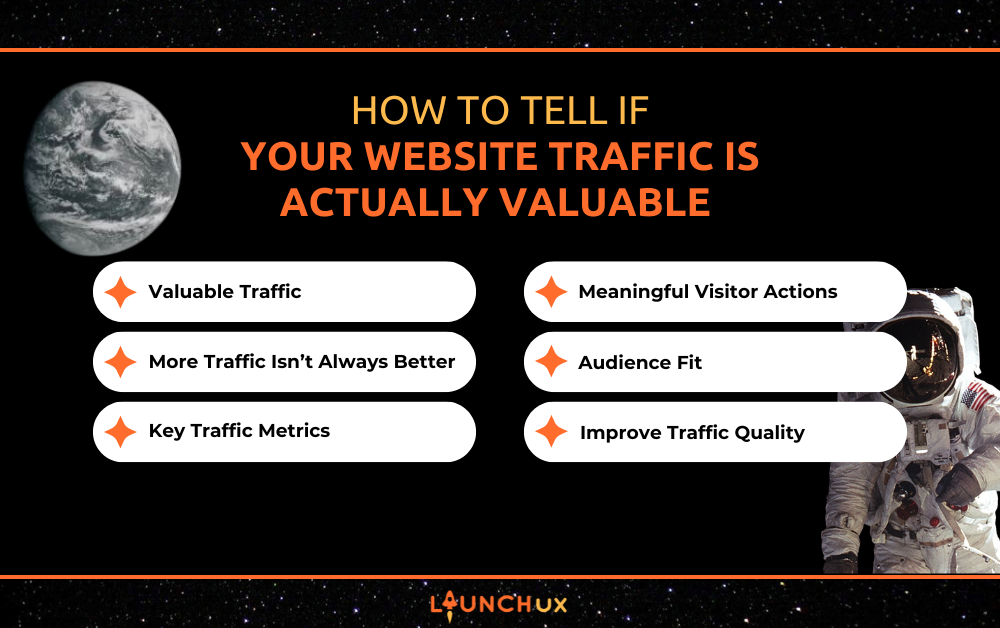
How to Tell If Your Website Traffic Is Actually Valuable 

Website traffic is one of the most common ways businesses measure online performance, but more traffic does not always mean better results. A website can bring in hundreds or even thousands of visitors, but if those visitors are not interested in your services, located in your target area, or taking meaningful action, that traffic may not be helping your business grow.

That is why it is important to look beyond the total number of visitors. Valuable website traffic should connect to real business goals, such as phone calls, form submissions, quote requests, booked consultations, purchases, or stronger brand awareness. When you understand which visitors are actually engaging with your website, you can make smarter decisions about your SEO, content, advertising, and overall digital marketing strategy.

What Makes Website Traffic Valuable?

Valuable website traffic is traffic that supports a real business goal. While a high number of visitors may look impressive in a report, traffic only matters if it brings the right people to your website and helps move them closer to becoming a lead, customer, or client.

For some businesses, valuable traffic may mean visitors who fill out a contact form or request a quote. For others, it may mean people who call, book an appointment, make a purchase, download a resource, or return to the website later for more information. The goal depends on the business, but the traffic should always connect back to a meaningful action.

This is why traffic quality matters more than traffic volume. A smaller number of visitors who are actively looking for your services can be much more valuable than a large number of visitors who leave quickly or have no real interest in what you offer.

Why More Traffic Does Not Always Mean Better Results

Seeing a spike in website traffic can feel like a major win, but more visitors do not automatically lead to more leads, sales, or inquiries. Sometimes, traffic increases because a page is reaching a broad audience that does not match the business’s actual customers.

For example, a local service business may have a blog post that brings in a lot of visitors from across the country. That may improve total traffic numbers, but it may not help much if the company only serves a specific region. In the same way, a blog post can rank well for an informational topic but attract people who are looking for quick answers, not people who are ready to hire.

Traffic may look strong but perform poorly when:

  • Visitors are outside your service area
  • Keywords are too broad or too informational
  • Blog topics are not connected to your services
  • Users leave without visiting another page
  • Calls to action are unclear or missing
  • Contact forms are too difficult to complete
  • Tracking is not set up correctly

This is why businesses should avoid judging website performance by traffic alone. A website that brings in fewer visitors but generates more qualified leads is often performing better than a site with high traffic and little action.

Which Metrics Help You Measure Website Traffic Quality?

To understand whether your website traffic is actually valuable, you need to look at more than total visitors. Traffic volume tells you how many people came to your site, but it does not explain what they did once they arrived.

A few important metrics can help you better understand traffic quality:

  • Users and sessions: These show how many people visited your website and how many total visits occurred.
  • Engaged sessions: This helps show whether visitors interacted with your website instead of leaving right away.
  • Average engagement time: This shows how long people stayed involved with your content.
  • Traffic source: This tells you whether visitors came from organic search, paid ads, social media, referrals, email, or direct traffic.
  • Landing pages: These show which pages people saw first when they entered your website.
  • Conversions or key events: These track meaningful actions like form submissions, phone calls, quote requests, purchases, or button clicks.

The key is to look at these metrics together. For example, a page with a lot of website traffic but low engagement and no conversions may not be as valuable as a page with fewer visitors but stronger action. On the other hand, a service page that brings in a smaller amount of traffic but leads to phone calls or form submissions may be one of the most important pages on your site.

When reviewing your data, ask what the numbers are actually showing. Are people staying on the site? Are they visiting important pages? Are they taking the next step? Those answers can help you understand whether your website traffic is helping your business or simply adding numbers to a report.

Are Visitors Taking the Right Actions?

Website traffic becomes more valuable when visitors take meaningful steps after they arrive. These actions show that people are not just landing on your site and leaving. They are engaging, showing interest, and moving closer to becoming a lead or customer.

The right actions will depend on your business, but they may include:

  • Filling out a contact form
  • Calling your business
  • Requesting a quote
  • Booking a consultation
  • Clicking to get directions
  • Signing up for a newsletter
  • Downloading a helpful resource
  • Visiting multiple service or product pages

This is also where proper tracking becomes important. If form submissions, phone calls, button clicks, and other key events are not being tracked, it can be difficult to know which traffic sources are actually producing results. You may see that your website traffic is increasing, but without conversion tracking, you may not know whether that growth is coming from SEO, paid ads, social media, referrals, or another source.

A valuable website should make the next step easy. Clear calls to action, simple forms, clickable phone numbers, and strong internal links can all help visitors move from interest to action.

Does Your Traffic Match Your Target Audience?

A website can attract visitors and still miss the people who are most likely to become customers. Valuable website traffic should reflect the audience your business actually wants to reach. That means looking beyond how many people visited and focusing on whether those visitors match your ideal customer.

For local businesses, location is one of the most important factors. If your company only serves a specific city, county, or region, traffic from outside that area may not be as useful. A smaller number of visitors from your service area can be more valuable than a large number of visitors from places you do not serve.

It also helps to look at the search terms and pages that bring people to your site. If visitors are finding you through keywords that match your services, problems, or buying intent, that traffic is more likely to matter. If they are landing on unrelated blogs or general informational pages, they may not be ready to take the next step. The more closely your traffic matches your target audience, the more likely it is to support real business growth.

How Can You Improve the Quality of Your Website Traffic?

Once you understand what kind of website traffic you are attracting, the next step is improving the quality of that traffic. The goal is not just to bring more people to your website. The goal is to attract visitors who are more likely to need your services, trust your business, and take action.

One of the best ways to improve traffic quality is to focus on search intent. Instead of targeting broad keywords that may attract anyone, your website should target the specific questions, problems, and services your ideal customers are actually searching for. A keyword with lower search volume can still be valuable if it brings in users who are closer to making a decision.

You can also improve traffic quality by strengthening the pages that matter most. Service pages, product pages, location pages, and contact pages should clearly explain what you offer, who you help, where you work, and what visitors should do next. Blog content should support those pages by answering common questions and linking readers to related services.

Other ways to improve website traffic quality include:

  • Updating outdated website content
  • Adding stronger internal links
  • Improving local SEO
  • Creating clearer calls to action
  • Making forms easier to complete
  • Improving mobile usability
  • Reviewing which traffic sources bring in the best leads
  • Setting up accurate form, call, and conversion tracking

When your website is built around the right audience and the right goals, your traffic becomes more than a number. It becomes a better indicator of real interest, stronger leads, and long-term business growth.

Conclusion

Website traffic can be a helpful way to measure visibility, but it should never be the only number a business uses to judge online performance. More visitors may look impressive in a report, but traffic only becomes valuable when it brings in the right audience and encourages meaningful action.

The most important question is not always, “How much traffic did we get?” A better question is, “What did that traffic do?” If you are unsure whether your website traffic is helping your business grow, LaunchUX can review your analytics, SEO performance, conversion tracking, and page strategy to identify what is working and where improvements can be made.

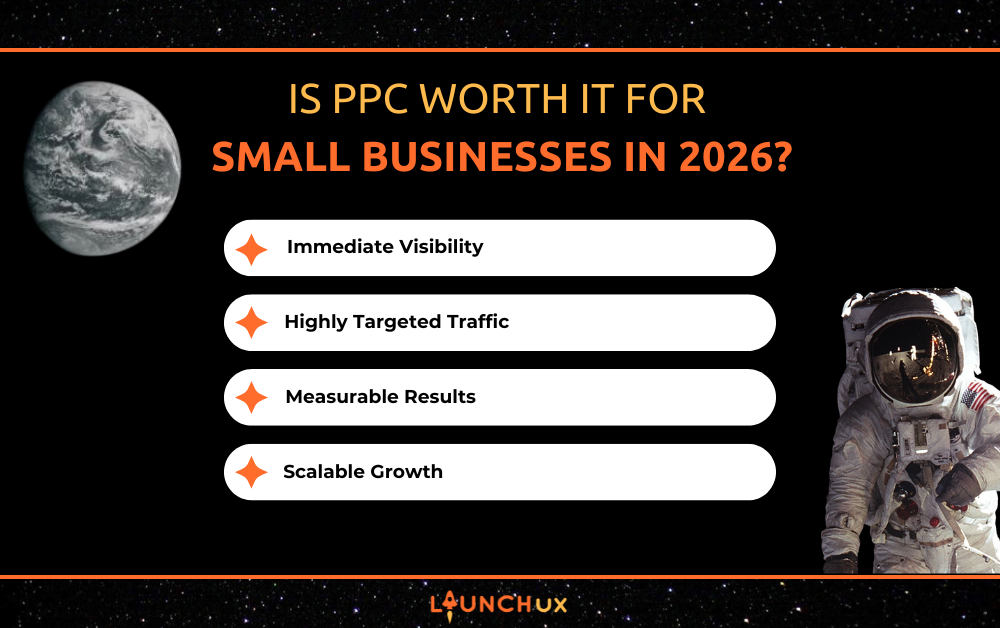
Is PPC Worth It for Small Businesses in 2026?

Small businesses are always looking for ways to generate leads quickly, especially in competitive markets. With limited budgets and growing competition online, many business owners are asking the same question: Is PPC worth it for small businesses in 2026?

Pay-per-click advertising offers fast visibility and targeted traffic, but it also comes with costs and complexity. The truth is that PPC can be incredibly effective—but only when it’s used the right way.

In this blog, we’ll break down how PPC works, when it’s worth the investment, and what small businesses need to do to get real results.

What Is PPC and How Does It Work?

A Simple Explanation of PPC

PPC, or pay-per-click advertising, is a model where businesses pay each time someone clicks on their ad. These ads appear on platforms like Google, Bing, and social media.

How PPC Generates Traffic Quickly

Unlike SEO, which takes time to build momentum, PPC ads can place your business at the top of search results almost immediately. This makes it a powerful option for businesses that need visibility right away.

Why PPC Appeals to Small Businesses

PPC is attractive because it offers:

  • Immediate visibility
  • Targeted audience reach
  • Flexible budget control
  • Measurable results

For many small businesses, this feels like a shortcut to growth—but there’s more to the story.

The Pros of PPC for Small Businesses

Immediate Visibility

PPC allows your business to appear at the top of search results for relevant keywords. This is especially useful if your website isn’t ranking organically yet.

Highly Targeted Traffic

You can target users based on:

  • Location
  • Search intent
  • Demographics
  • Device usage

This level of targeting ensures your ads reach people who are more likely to convert.

Measurable Results

With PPC, you can track everything:

  • Clicks
  • Conversions
  • Cost per lead
  • Return on investment

This data makes it easier to adjust and improve your campaigns over time.

Scalable Growth

Once you find a campaign that works, you can increase your budget to generate more leads. PPC allows for controlled, scalable growth.

The Challenges of PPC (What to Watch Out For)

Costs Can Add Up Quickly

In competitive industries, cost-per-click can be high. Without proper management, businesses can spend money without seeing results.

Poor Setup Leads to Wasted Budget

Many campaigns fail because of:

  • Targeting the wrong keywords
  • Weak ad copy
  • Poor audience targeting
  • Sending traffic to ineffective landing pages

PPC Doesn’t Work Without Strategy

Running ads without a plan is one of the biggest mistakes small businesses make. PPC requires continuous testing, optimization, and monitoring.

When PPC Is Worth It for Small Businesses

You Need Leads Quickly

If you’re launching a new business, running a promotion, or entering a competitive market, PPC can generate leads almost immediately.

You Have a Clear Offer and Landing Page

PPC works best when your website is built to convert. A strong landing page with clear messaging and a simple call-to-action is critical.

You’re Targeting High-Intent Keywords

Keywords like “near me” or “buy now” indicate strong purchase intent. PPC performs best when targeting users who are ready to take action.

You Have Budget for Testing and Optimization

PPC is not a one-time investment. It requires ongoing adjustments to improve performance and maximize return.

When PPC Might Not Be Worth It

No Clear Strategy or Goal

If you don’t know what you want your campaign to achieve, it’s easy to waste budget.

Weak Website or Landing Page

Even great ads won’t convert if your website is slow, confusing, or outdated.

Expecting Instant Profit Without Testing

PPC requires testing different keywords, ads, and landing pages. Expecting immediate results without optimization often leads to disappointment.

Choosing PPC vs SEO: Which Is Better for Small Businesses?

PPC for Immediate Results

PPC is ideal for businesses that need traffic and leads right away.

SEO for Long-Term Growth

SEO builds long-term visibility and generates organic traffic over time.

Why the Best Strategy Uses Both

The most effective strategy combines both approaches:

  • PPC drives immediate traffic
  • SEO builds long-term authority

Together, they create a balanced marketing strategy that delivers both short-term and long-term results.

How to Make PPC Worth It for Your Business

Start With the Right Keywords

Focus on keywords that show intent. Avoid broad, generic terms and target searches that indicate a user is ready to act.

Build a Strong Landing Page

Your landing page should:

  • Load quickly
  • Clearly explain your offer
  • Have a strong call-to-action

Track and Optimize Performance

Monitor your campaigns closely and adjust based on data. Small improvements can make a big difference in ROI.

Work With Experts When Needed

Managing PPC effectively takes time and experience. Working with professionals can help you avoid costly mistakes and improve results faster.

PPC Can Be Worth It With the Right Approach

So, is PPC worth it for small businesses in 2026?

The answer is yes—but only when it’s done strategically.

PPC is not a shortcut to instant success. It’s a powerful tool that, when paired with the right strategy, can generate consistent leads and drive real growth.

The key is understanding how it works, setting clear goals, and building a system that supports conversions—not just clicks.

If you’re considering PPC or want to improve your current campaigns, LaunchUX can help you build a strategy that delivers measurable results. Contact LaunchUX today to get started.

The Basics of High-Performing Landing Page Design Services

Landing pages hold an important place in modern digital marketing success because they are designed with a very specific purpose in mind. Businesses like LaunchUX understand that effective landing page design services are not just about appearance, but about performance and measurable results. A well-built landing page can significantly increase leads, sales, and customer engagement when done correctly. Every detail, from layout to messaging, must work together to guide users toward action. Unlike general websites, landing pages are focused, streamlined, and conversion-driven. This guide breaks down the most important things you should know.

They Are Built for Conversions, Not Just Visuals

Purpose-Driven Design Approach

Landing page design services focus on turning visitors into leads or customers, not just making a page look attractive. Every element is intentionally placed to guide users toward a specific action, such as filling out a form or making a purchase. This means design decisions are always tied to performance goals rather than decoration. The structure is carefully planned to reduce distractions and increase focus. When done accurately, this method leads to higher engagement and better results. Conversion is always the primary objective.

Elimination of Distractions

Unlike general web pages, landing pages are highly focused and eliminate unnecessary navigation or competing messages. This simplicity helps keep users on a single path toward conversion. By removing distractions, visitors are less likely to leave the page without taking action. The experience is streamlined to encourage decision-making. This focused environment improves clarity and effectiveness. A distraction-free layout is essential for performance.

Balanced Visual and Functional Design

A strong landing page design balances aesthetics with performance-driven structure. While visuals are important, they must support the overall conversion goal. Colors, spacing, and layout all work together to direct attention strategically. Every design choice has a functional purpose behind it. This balance ensures the page is both appealing and effective. Good design always serves a measurable outcome.

Strong Messaging Is at the Core of Design

Clear Communication of Value

Effective landing page design services prioritize clear, persuasive messaging above all else. Headlines and supporting copy are crafted to quickly communicate value to visitors. Users should instantly understand what is being offered and why it matters. If the message is unclear, visitors are likely to leave within seconds. Strong messaging ensures that interest is captured right away. Clarity drives engagement and trust.

Strategic Copy Placement

Content is not just written but strategically placed within the design. Headlines, subheadings, and call-to-action sections are positioned to guide the reader’s eye. This structure ensures the message is absorbed in the right order. Visitors naturally move from awareness to interest to action. Proper placement enhances readability and impact. Every section of copy serves a specific role.

Alignment Between Design and Message

Good landing pages ensure that design and messaging work together seamlessly. Visual elements reinforce the written message rather than distract from it. This alignment creates a more cohesive user experience. When design and copy support each other, conversion rates improve significantly. Consistency strengthens the overall effectiveness of the page. Unified messaging is essential for success.

User Experience Plays a Critical Role

Intuitive Layout and Flow

A successful landing page must be easy to navigate and intuitive to use. Landing page design services focus heavily on layout, spacing, and visual flow. Pages are structured so visitors naturally move from one section to the next. This reduces confusion and improves engagement. A logical flow keeps users focused on the intended action. Simplicity enhances usability.

Mobile Optimization Importance

Mobile responsiveness is essential since many users browse on smartphones. A landing page must adapt seamlessly to different screen sizes. Poor mobile design can significantly reduce conversions and user satisfaction. Designers ensure that buttons, text, and visuals remain clear on all devices. Mobile optimization improves accessibility and reach. It is a non-negotiable part of modern design.

Reducing Friction in the User Journey

Every detail is designed with usability in mind to reduce friction. Complicated forms or unclear instructions can discourage users from converting. Landing pages simplify interactions to make the process as smooth as possible. This helps guide users effortlessly toward the desired action. A frictionless experience leads to higher conversion rates. Ease of use is a critical factor.

Testing and Optimization Improve Performance

Data-Driven Improvements

Landing page design services often include ongoing testing to improve results over time. A/B testing allows designers to compare different versions of a page. Elements such as headlines, images, and calls-to-action are tested for performance. This removes guesswork from the design process. Decisions are based on real user behavior. Data-driven strategies lead to better outcomes.

Continuous Refinement Process

Small adjustments can lead to noteworthy advancements in conversion rates. Even minor changes in wording or layout can impact performance. Continuous optimization ensures the page evolves over time. This process keeps the landing page effective in changing markets. Regular updates help maintain strong results. Improvement is ongoing, not one-time.

Measuring Success Accurately

Tracking performance metrics is essential for understanding effectiveness. Conversion rates, bounce rates, and engagement levels provide valuable insights. These measurements guide future design decisions. Without tracking, improvement becomes difficult to achieve. Analytics help refine strategy and execution. Measurement is key to optimization.

Strategy-Driven Design Is Essential

Goal-Oriented Development

We offer a spectrum of landing page design services that help businesses turn traffic into results by combining strategy, design, and performance-focused development. Each landing page is built with a clear goal in mind, whether it is generating leads, promoting a product, or driving sign-ups. Strategy guides every design decision from start to finish. This ensures alignment with business objectives. Purpose-driven design leads to stronger results.

Integration of Marketing Insights

Effective landing pages are built using insights from user behavior and marketing strategy. Understanding audience intent helps shape layout and messaging decisions. This ensures the page resonates with the right visitors. Marketing data informs how the page is structured and optimized. This integration improves effectiveness. Strategy and design must work together.

High-Performance Outcomes

Strategic alignment is what separates average pages from high-performing ones. When design is backed by data and purpose, results improve significantly. Businesses see better engagement and higher conversions. A strategic approach ensures long-term success. Performance is always the ultimate goal. Strong strategy drives strong results.

Conclusion

Understanding the core principles behind landing page design services is essential for creating pages that truly perform. From conversion-focused layouts to strategic messaging and continuous optimization, every element plays a role in success. When these components work together, businesses can significantly improve engagement and lead generation. LaunchUX emphasizes the importance of combining design, strategy, and user experience to achieve measurable results. A landing page is more than just a digital presence; it’s a tool that turns visitors into customers. 

If you are ready to improve your results with high-performing landing page design services, contact LaunchUX today to get started.

Why Do Service Businesses Need Location Landing Pages? 

Many service businesses do not rely on customers visiting a storefront. Instead, they travel to customers across multiple towns, cities, counties, or regions. Because of this, their website needs to clearly show where they work, not just what services they offer.

Location landing pages help service businesses connect their services to specific local areas. When these pages are written and structured well, they can support local SEO, improve the user experience, and help nearby customers feel more confident reaching out.

What Are Location Landing Pages?

Location landing pages are website pages built around a specific city, town, county, region, or service area. They help visitors and search engines understand where a business provides its services.

For service businesses, this matters because customers often search for help in a specific area. They may search for things like “HVAC company in Chambersburg,” “tree service near Hagerstown,” or “IT support in Harrisburg.” A general service page may explain what the business does, but location landing pages make it clear where those services are available.

A strong location page should not be a thin copy of another page with only the city name changed. It should include useful information for people in that area, such as the services offered, nearby communities served, common local needs, testimonials, and a clear way to contact the business.

Location Pages vs. Service Pages

A service page explains what a business does. A location landing page explains where that service is available.

For example, an HVAC company may have one page for AC repair and separate location landing pages for the towns it serves. The AC repair page focuses on the service itself, while the location page connects that service to a specific local area.

Why Location Landing Pages Matter for Local SEO

Service businesses often want to show up for searches that include “near me,” “in [city],” or “serving [area].” Location landing pages help create a clearer connection between the business, its services, and the specific areas it serves.

This matters because search engines need strong location signals. If a website only mentions service areas in the footer or on one general page, it may be harder to rank for searches in each town, city, or region. A dedicated location page gives each important service area its own focused place on the website.

Location landing pages can help with:

  • Local keyword targeting
  • City-specific search visibility
  • Clearer service-area information
  • Internal links to related service pages
  • Better relevance for local searches

When done well, these pages can help service businesses compete in nearby markets, especially when they want to reach customers outside their main office location.

How Location Landing Pages Help Customers Make Decisions

Location landing pages are not only helpful for search engines. They also help potential customers quickly understand whether your business serves their area. When someone lands on a page for their city or region, they should not have to guess if they are in the right place.

This can make the user experience much stronger. A visitor looking for a service nearby wants clear answers, local relevance, and an easy way to take the next step. If the page confirms that your business serves their area, explains what you offer, and gives them a simple way to contact you, they are more likely to reach out.

Local Details Build Trust

Strong location landing pages should include details that feel specific to the area. This does not mean forcing city names into every sentence. It means adding helpful information that shows you understand the local market.

For example, a roofing company may mention common storm concerns in a specific region. An IT company may discuss support for businesses in a nearby city. A tree service may reference local weather patterns, property types, or seasonal concerns. These details help the page feel more useful and trustworthy instead of generic.

What Should Be Included on a Location Landing Page?

A strong location landing page should be clear, helpful, and focused on the customer’s next step. The page should explain where you work, what services you provide in that area, and why someone nearby should choose your business.

The goal is not to create a generic page with a city name added in. The goal is to make each page useful for people searching in that specific location.

Important elements to include are:

  • A clear page title that includes the target location
  • A short introduction explaining the services available in that area
  • Local details that make the page feel unique
  • Internal links to related service pages
  • Reviews, testimonials, or examples of work
  • Nearby towns or communities served
  • Frequently asked questions
  • A clear call to action

Avoid Duplicate Content

One of the biggest mistakes businesses make with location landing pages is creating several pages that all say almost the same thing. If the only difference is the city name, the pages may feel thin, repetitive, or unhelpful.

Each location page should offer something unique. That could include local service needs, nearby areas served, customer examples, specific services available in that region, or details that help the visitor feel confident contacting your business.

Why Service Businesses Need More Than One Location Page

Many service businesses cover more than one town, city, or county. If the website only has one general service area page, it may not speak clearly to each local audience. A single page can list where you work, but it may not give each important location enough attention.

Multiple location landing pages allow businesses to target key service areas individually. This can be especially helpful for contractors, HVAC companies, electricians, IT providers, landscapers, tree services, medical offices, and other local or regional service providers that want to reach customers beyond their main office location.

A business may benefit from more than one location page when it serves several nearby communities, wants to rank in areas outside its main city, or has different customer needs by region. These pages create clearer paths from local searches to the right services, which can help turn nearby visitors into better leads.

Common Mistakes to Avoid With Location Landing Pages

Location landing pages can support local SEO, but only when they are built with quality and strategy. Poorly written pages may not help rankings or conversions, especially if they feel rushed, repetitive, or created only for search engines.

One common mistake is using the same copy across every location page. Replacing one city name with another does not give visitors much value. Each page should include details that make sense for that specific area, even if the business provides the same services in multiple locations.

Other common mistakes include thin copy, unnatural keyword stuffing, missing service details, weak internal links, and unclear calls to action. If a visitor lands on the page and still does not understand what you offer, where you work, or how to contact you, the page is not doing its job.

Location landing pages should be written for real people first. The goal is to answer local questions, explain service availability, build trust, and make it easy for visitors to take the next step. When pages are helpful, specific, and easy to use, they are more likely to support both SEO and lead generation.

Conclusion

Service businesses need more than a simple list of towns in a website footer. They need clear, helpful pages that connect their services to the specific areas they serve. Location landing pages can help improve local visibility, support better user experience, and make it easier for nearby customers to understand that they are in the right place.

When built with strategy, location landing pages can support both SEO and lead generation. If your business needs stronger local visibility in the areas you serve, LaunchUX can help create location landing pages that are useful, optimized, and built to turn more local searches into leads.

Why Your Old Blog Content May Be More Valuable Than You Think 

Many businesses focus on creating new blogs, but forget about the blog content they have already published. Over time, older posts can get pushed deeper into the website, even if they still have valuable information, keyword rankings, backlinks, or traffic potential.

Old blog content may be one of the most overlooked assets on your website. With the right updates, older posts can become more accurate, more useful, and more effective at improving SEO, strengthening website authority, and creating better paths for visitors to become leads.

Why Old Blog Content Still Matters

Old blog posts are not automatically useless just because they were published months or even years ago. In many cases, older blog content already has something that new content does not: history. Search engines may have already indexed the page, users may have visited it over time, and the post may already be connected to other pages across your website.

That foundation can be valuable. A brand-new blog has to start from the beginning. An existing post may already have keyword rankings, backlinks, internal links, impressions, or traffic data. Even if performance has dropped, the post may still have enough momentum to improve.

Updating old blog content gives you the chance to build on what already exists. You can make the information more accurate, improve the structure, add stronger internal links, and better match what people are searching for today. In some cases, refreshing an older post can be a more strategic move than writing something completely new on a similar topic.

Signs Your Blog Content Is Worth Updating

Not every old blog post needs to be rewritten, but some pages are strong opportunities for improvement. The key is knowing which pieces of blog content still have value and which ones may be holding your website back. A post that is outdated, underperforming, or missing a clear next step may only need the right updates to become useful again.

The Topic Is Still Relevant

One of the best signs that a blog is worth updating is that the topic still matters to your audience. Evergreen posts, service-related blogs, how-to articles, FAQs, and educational content can continue attracting visitors long after they are first published.

For example, a blog about SEO basics, website maintenance, landing pages, or digital marketing strategy may still be relevant, but the details may need to be refreshed. Search behavior changes, platforms update, and best practices evolve. If the topic still connects to your business and your customers’ needs, the post may be worth improving instead of replacing.

The Page Gets Impressions but Few Clicks

Another sign is when a blog appears in search results but does not get many clicks. This often means Google sees some value in the page, but the title, meta description, or content angle may not be strong enough to earn attention.

This type of blog content can be a great refresh opportunity because it already has visibility. Updating the title, improving the introduction, answering the search query more clearly, and making the post more useful can help turn those impressions into more actual visits.

You may also want to update a blog if:

  • It ranks on page two or three of Google
  • It includes outdated dates, links, or statistics
  • It gets traffic but does not guide visitors to a service or contact page
  • It has weak, missing, or outdated calls to action
  • It no longer reflects your current services, process, or brand voice

How Updating Blog Content Can Help SEO

Updating old blog content is not just about making a page look newer. It is about making the page more helpful, accurate, and aligned with what people are searching for today. Search intent changes over time, and a blog that performed well a few years ago may need stronger answers, clearer structure, or better optimization to stay competitive.

A refreshed blog can also help improve how search engines understand the page. By updating headings, adding relevant details, improving keyword usage, and connecting the post to newer pages on your website, you give the content a better chance to support your overall SEO strategy.

Old blog content can also be used to strengthen internal linking. For example, an older post may be able to link to a newer service page, case study, related blog, or contact page. These links help visitors find useful next steps while also helping search engines understand how your website content connects.

Better Content Can Lead to Better User Experience

SEO is not only about keywords. It is also about whether the page is useful for the person reading it. When visitors land on an outdated or hard-to-read blog, they may leave quickly. But when the content is organized, current, and easy to follow, they are more likely to stay on the page and explore the rest of your website.

Refreshing content can improve the user experience by adding clearer headings, shorter paragraphs, updated examples, helpful links, and stronger calls to action. These changes make the page easier to read and more useful, which can help turn an old blog into a stronger part of your marketing strategy.

What Should You Update in an Old Blog Post?

A content refresh does not always mean rewriting the entire post. Sometimes, the best updates are focused improvements that make the page more helpful, more accurate, and easier to use. The goal is not to change everything. The goal is to make your blog content work better for both search engines and readers.

Start by reviewing the title and meta description. These are often the first things people see in search results, so they should clearly explain what the blog is about and give readers a reason to click. If the title feels vague, outdated, or too broad, rewriting it can help the page better match current search intent.

The introduction is another important place to update. An older blog may take too long to get to the point or may not include the main keyword naturally. A stronger introduction should quickly explain the problem, why it matters, and what the reader can expect to learn.

You should also review:

  • Internal links to service pages, newer blogs, or contact pages
  • Outdated statistics, dates, screenshots, or examples
  • Broken links or links to pages that no longer exist
  • Headings that could be clearer or more searchable
  • Calls to action that no longer match your current goals

The best updates should make the post more useful. That may mean answering a question more clearly, adding a better example, improving readability, or helping visitors understand what to do next. When old blog content is refreshed with purpose, it can become a stronger asset instead of just another archived post on your website.

When New Blog Content Is Still the Better Choice

Refreshing old blog content can be valuable, but it is not always the right move. Sometimes, a brand-new blog post makes more sense, especially when the topic, audience, or search intent has changed too much from the original post.

For example, an older blog may target a keyword that no longer fits your business goals. It may also speak to the wrong audience, focus on an outdated service, or cover a topic that has become too broad to improve with a simple refresh. In those cases, trying to force new information into an old post could make the page feel confusing or unfocused.

A new blog may be the better choice when:

  • The existing post targets the wrong audience
  • The keyword intent is completely different
  • The old post is too thin or outdated to improve effectively
  • Your business has a new service, offer, or strategy to promote
  • The topic deserves a more specific article

A strong content strategy should include both approaches. Updating valuable existing blog content can help you build on what already has potential, while new blogs can help you target fresh keyword opportunities, answer new questions, and support current business goals.

Conclusion

Old blog content may be one of the most overlooked assets on your website. While new content still has an important place in your SEO strategy, existing posts may already have search history, keyword rankings, traffic potential, and useful information that can be improved with the right updates.

Instead of letting older blogs sit untouched, take time to review which posts are still relevant, underperforming, or missing a clear next step. If your website has older blog content that has not been reviewed in a while, LaunchUX can help refresh it so it better supports your SEO and digital marketing strategy.

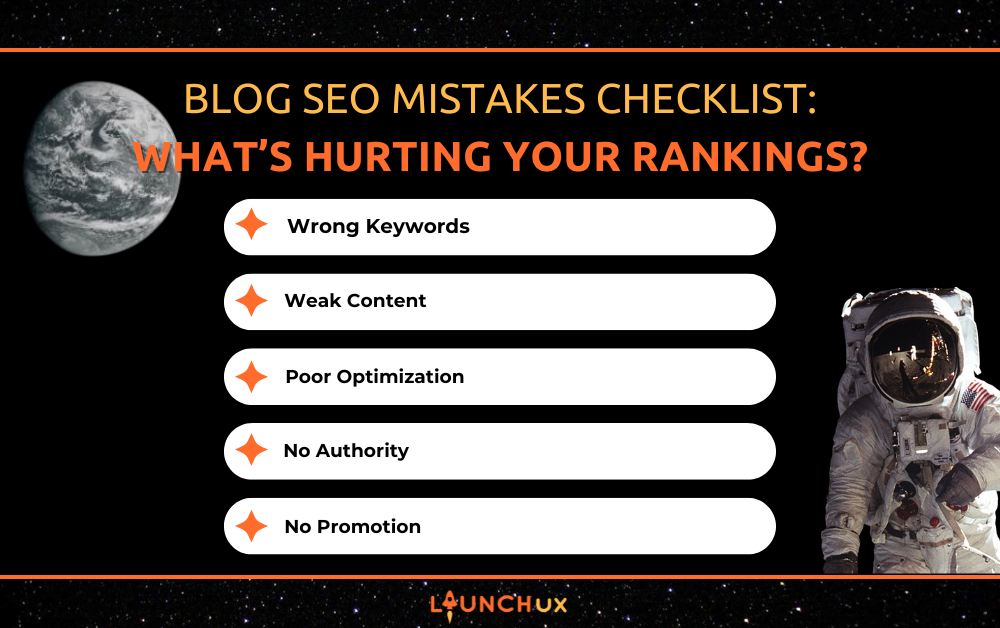
Blog SEO Mistakes Checklist: What’s Hurting Your Rankings?

You’re putting in the effort. You’re writing blog posts, publishing content, and trying to improve your website’s visibility. But when you check your analytics, the traffic just isn’t there.

If you’ve been asking yourself why your blog posts aren’t ranking, you’re not alone. This is one of the most common challenges businesses face with SEO.

The reality is that most blogs fail to rank because of a handful of avoidable mistakes. The good news is that once you identify them, you can fix them.

Use this checklist to find out what’s hurting your rankings and what you can do about it.

Blog SEO Mistakes Checklist

Go through each section below and see which issues apply to your blog content.

1. You’re Not Targeting the Right Keywords

One of the biggest blog SEO mistakes is choosing the wrong keywords from the start.

Targeting Keywords That Are Too Broad

Trying to rank for general terms like “marketing” or “SEO” puts you up against massive competition. Smaller websites rarely win in these situations.

Ignoring Search Intent

Even if you pick a keyword, your content may not match what users are actually searching for. Google prioritizes content that best answers the query.

Not Using Long-Tail Keywords

Long-tail keywords are more specific and easier to rank for. They also tend to attract more qualified traffic.

Quick Fix Checklist:

  • Use specific, question-based keywords
  • Match content to user intent
  • Focus on long-tail search phrases

2. Your Content Isn’t Providing Real Value

Google rewards content that helps users. If your blog isn’t delivering value, it won’t rank.

Thin or Short Content

Short, surface-level content doesn’t give Google enough information to understand your expertise.

Rewriting Instead of Creating Original Content

If your content sounds like everything else online, it won’t stand out.

Not Answering Real Questions

Many blogs talk about a topic without actually solving the reader’s problem.

Quick Fix Checklist:

  • Answer specific questions clearly
  • Add depth, examples, and explanations
  • Focus on helpful, user-first content

3. Your Blog Isn’t Properly Optimized On-Page

Even strong content needs proper structure and optimization to rank.

Missing or Weak Title Tags

Your title should clearly include your keyword and reflect what the blog is about.

Poor Header Structure

Disorganized content makes it harder for both users and search engines to understand your page.

No Internal Linking

If you’re not linking to other relevant pages, you’re missing a key SEO signal.

Quick Fix Checklist:

  • Include your keyword in the title
  • Use clear H1, H2, and H3 structure
  • Add internal links to related pages

4. You’re Ignoring Technical SEO Issues

Technical problems can hold your blog back, even if your content is strong.

Slow Page Speed

If your page loads slowly, users leave. That sends negative signals to Google.

Not Mobile-Friendly

Most users are on mobile devices. Your blog needs to perform well on all screen sizes.

Crawl Errors and Broken Links

Errors prevent search engines from properly indexing your content.

Quick Fix Checklist:

  • Improve page load speed
  • Ensure mobile responsiveness
  • Fix broken links and errors

5. You’re Not Building Authority

Authority is a major factor in whether your blog ranks.

No Backlinks

Backlinks act as trust signals. Without them, it’s harder for Google to see your content as credible.

Inconsistent Publishing

Posting once and stopping won’t build momentum.

No Topical Depth

One blog post on a topic is not enough. Google favors websites that consistently cover a subject.

Quick Fix Checklist:

  • Publish content consistently
  • Build topic clusters around key services
  • Work on earning backlinks over time

6. You Expect Results Too Quickly

SEO is not instant, and expecting quick results can lead to frustration.

SEO Is a Long-Term Strategy

It takes time for Google to crawl, index, and trust your content.

Lack of Consistency

Publishing one or two blogs and stopping will not produce results.

Quick Fix Checklist:

  • Commit to a long-term SEO strategy
  • Publish consistently
  • Monitor progress over time

7. You’re Not Promoting Your Blog Content

Publishing a blog is only part of the process. Promotion matters.

No Distribution Strategy

If you publish content and do nothing with it, it will struggle to gain traction.

Ignoring Social Media and Email

These channels help drive traffic and reinforce your content’s visibility.

Quick Fix Checklist:

  • Share blogs on social media
  • Include blogs in email campaigns
  • Repurpose content into other formats

Most Blog SEO Mistakes Are Fixable

If your blog posts aren’t ranking, it’s rarely due to one major issue. More often, it’s a combination of smaller SEO mistakes that add up.

The good news is that these problems are fixable. With the right keyword strategy, stronger content, proper optimization, and consistent effort, your blog can start gaining traction.

SEO is not about shortcuts. It’s about building a solid foundation and improving over time.

If you’re unsure what’s holding your content back, LaunchUX can help identify the gaps and build a strategy that gets your blog working the way it should. Contact LaunchUX today to get started.

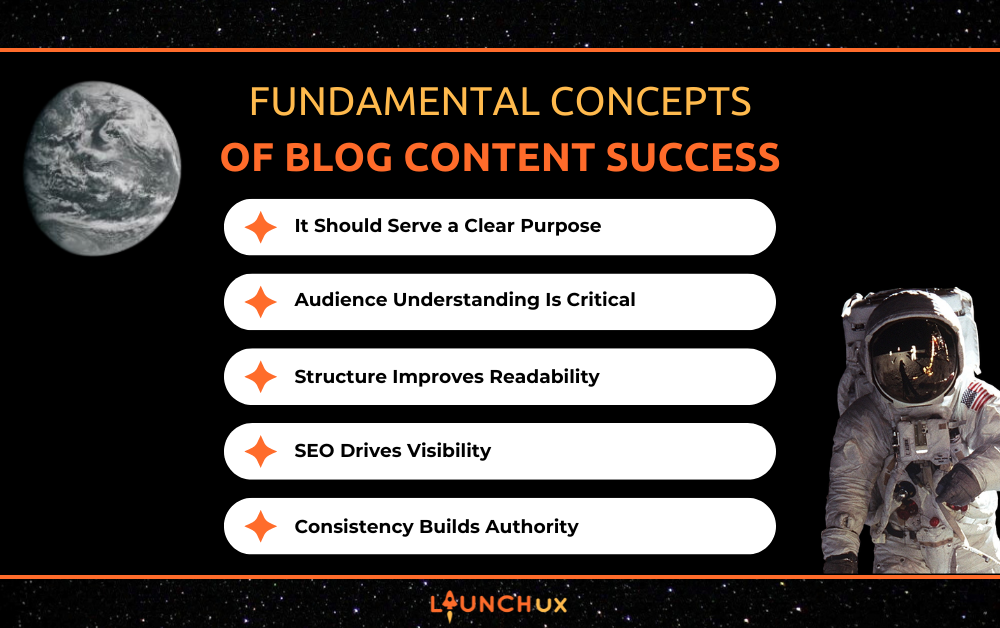
Fundamental Concepts of Blog Content Success

Creating effective blog content requires more than just writing words on a page. Brands like LaunchUX recognize that successful blogs are built on strategy, clarity, and consistency. Whether your goal is to attract traffic, educate readers, or generate leads, understanding the fundamentals of blog content is essential. Each piece you publish should contribute to a larger objective while delivering real value to your audience. Without a thoughtful approach, even well-written content can fail to perform. This guide explores the most important elements you need to understand to create impactful blog content.

It Should Serve a Clear Purpose

Defining the Goal of Your Content

Every piece of blog content needs a clear goal, whether to inform, persuade, or convert readers. Without a clear purpose, content can feel scattered and fail to connect with its audience. Establishing a goal early helps shape the piece’s tone, structure, and direction. It ensures that every section contributes to a meaningful outcome. Readers are more likely to engage when the intent is obvious. A strong foundation begins with clarity.

Building Around a Central Idea

Strong blogs are built around a central idea that guides the structure and messaging. This core concept keeps the content focused and cohesive from beginning to end. When a blog stays aligned with its main topic, it becomes easier for readers to follow and understand. A clear theme also helps reinforce your message. Consistency in thought improves overall readability. It creates a more impactful experience for the audience.

Driving Measurable Results

Purpose-driven writing also improves overall engagement and effectiveness. When content is aligned with a goal, it becomes easier to measure performance. Metrics such as time on page, conversions, and click-through rates provide valuable insights. These results help refine future blog content strategies. Writing with intention leads to better outcomes over time. It ensures your efforts are both meaningful and productive.

Audience Understanding Is Critical

Identifying Reader Needs

Effective blog content is written with a specific audience in mind. Understanding what your readers are looking for helps you produce content that resonates with them. This includes recognizing their challenges, interests, and expectations. When content addresses real needs, it becomes more valuable, and your audience is more likely to stay engaged and return for more. Knowing your audience is the foundation of relevance.

Tailoring Tone and Messaging

Content that feels tailored tends to perform better because it connects on a deeper level. Using the right tone, language, and examples helps make your message more relatable. A conversational tone may work for some audiences, while others may prefer a more formal approach. Adapting your style ensures your message is received as intended. Personalization enhances the reader experience. It makes your blog content more impactful.

Building Trust and Loyalty

When readers feel understood, they are more likely to engage and explore further. Audience-focused writing creates a sense of connection and credibility. Over time, this builds trust and encourages repeat visits. Faithful viewers are more likely to share your content and recommend it to others. This organic growth strengthens your brand presence. Trust is a key driver of long-term success.

Structure Improves Readability

Organizing Content Effectively

Well-structured blog content is easier to read and more enjoyable to navigate. Clear organization helps guide readers through your ideas without confusion. Breaking content into sections improves flow and comprehension. This approach makes even complex topics easier to understand. Structure plays a major role in keeping readers engaged. A well-organized blog encourages continued reading.

Using Clear Transitions

Transitions between sections help maintain a smooth reading experience. They connect ideas in a way that feels natural and logical. Without proper transitions, content can feel disjointed and difficult to follow. A consistent flow keeps readers moving from one point to the next. This improves overall engagement and comprehension. Strong transitions enhance the effectiveness of your blog content.

Enhancing User Experience

Readability plays a major role in user experience and retention. Short paragraphs and logical formatting make content less overwhelming. Followers are more likely to stay on a page that feels easy to navigate. A positive experience increases the chances of conversion and sharing. Good structure supports both clarity and engagement. It ensures your message is delivered effectively.

SEO Drives Visibility

Optimizing for Search Engines

Search engine optimization is essential for getting blog content in front of the right audience. Using relevant keywords helps search engines comprehend what your content is about. Proper optimization increases your chances of ranking higher in search results. This leads to more visibility and traffic. SEO ensures your content reaches the people who need it most. 

Enhancing Content Discoverability

Optimizing headings and writing effective meta descriptions improves discoverability. These elements help attract users when your content appears in search results. A well-crafted title can significantly impact click-through rates. Visibility begins with making your content appealing at first glance. Strong SEO practices help your blog stand out. They give your content a competitive edge.

Increasing Organic Traffic

High-quality content combined with SEO best practices increases organic traffic over time. Consistent optimization helps build momentum and authority in search rankings. This creates a steady flow of visitors without relying on paid ads. Organic growth is both sustainable and cost-effective. It allows your blog content to deliver long-term value. Visibility is key to maximizing impact.

Consistency Builds Authority

Establishing Credibility

Publishing blog content regularly helps establish credibility in your niche. Consistency demonstrates that your brand is engaged and committed to providing value. Readers begin to see your platform as a reliable source of information. This builds trust and encourages ongoing engagement. Credibility is essential for long-term success. It positions your brand as an authority.

Strengthening Brand Identity

A consistent voice and style help reinforce your brand identity. Readers become familiar with your tone and messaging over time. This recognition creates a stronger connection with your audience. Consistency also improves the overall quality of your content. It ensures a cohesive experience across all posts. A clear identity makes your blog content more memorable.

Encouraging Long-Term Growth

Maintaining a content schedule ensures ongoing engagement and growth. Regular posting keeps your audience interested and coming back for more. Over time, this improves rankings and visibility. Long-term success comes from showing up consistently. Reliable content builds momentum and lasting impact.

Conclusion

Understanding the key elements of blog content is essential for creating material that performs and delivers value. From defining a clear purpose to maintaining consistency, each factor contributes to overall success. When combined, these strategies help you build stronger connections with your audience and improve visibility. LaunchUX emphasizes the importance of thoughtful, well-structured blog content that aligns with both user needs and business goals. If you are ready to elevate your blog content strategy and create content that truly performs, contact LaunchUX today to get started.

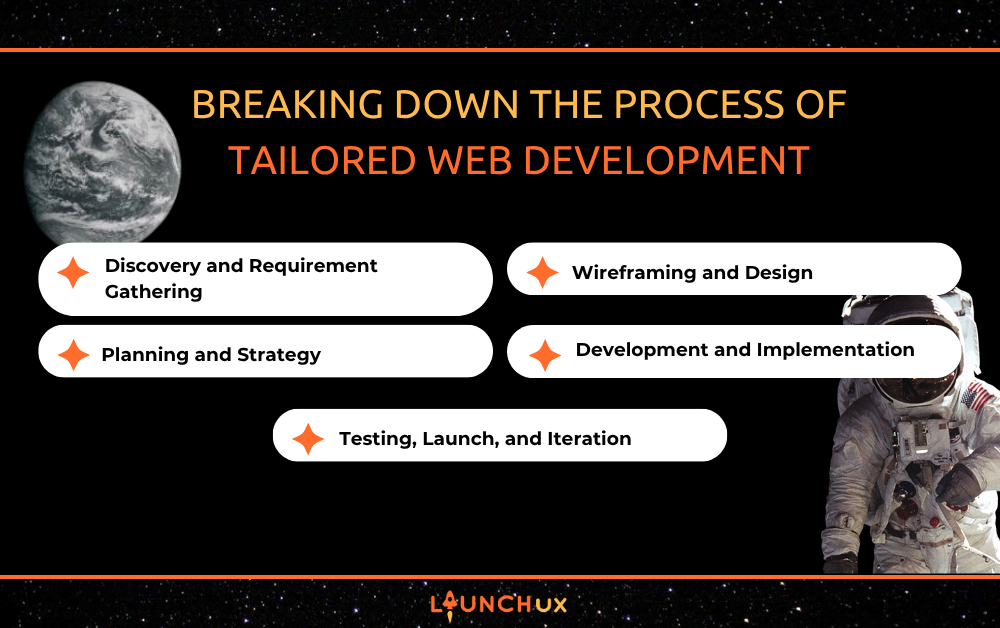
Breaking Down the Process of Tailored Web Solutions

Tailored web solutions offer a strategic approach, combining design, functionality, and user experience that align perfectly with a company’s goals. At LaunchUX, we understand that every business is unique, and crafting a website that reflects that uniqueness requires a deliberate, structured process. From initial discovery to launch and ongoing iteration, each step plays a critical function in delivering a web solution that drives results. Understanding this approach can help businesses respect the thought, collaboration, and expertise behind every successful website project.

Discovery and Requirement Gathering

Understanding Client Goals

The first step in creating tailored web solutions is understanding the client’s objectives and business vision. This involves in-depth discussions to uncover both short-term needs and long-term goals. Knowing the audience, market position, and pain points is essential to ensure that the website supports broader business strategies. Discovery sessions often reveal insights that guide both design and functionality decisions, preventing costly missteps later in development. Effective communication at this stage lays the basis for a website that is not only aesthetically pleasing but also aligned with the client’s objectives.

Research and Analysis

Competitive analysis is a key component of discovery, providing context for industry standards and user expectations. By examining competitors’ websites, businesses can identify opportunities to differentiate themselves through unique features or design elements. Surveys, interviews, and analytics reviews further inform the approach, ensuring the website addresses real user needs. This research phase helps anticipate challenges and define clear priorities for both design and functionality. The more thorough the analysis, the smoother the subsequent planning and development stages become.

Documenting Requirements

Once information is gathered, it is documented in a structured format for the entire project team to reference. Requirements typically include functional specifications, design preferences, content needs, and technical considerations. Clear documentation ensures that designers, developers, and stakeholders share a common understanding of project goals. This step reduces miscommunication and keeps the project focused on delivering tailored solutions that meet both business and user expectations. By formalizing requirements, teams can plan and allocate resources effectively, laying the groundwork for a successful website build.

Planning and Strategy

Defining the Roadmap

With requirements in place, the next phase is planning a detailed roadmap for the project. This includes determining the website architecture, key features, and overall content strategy. By creating a timeline and assigning responsibilities, teams ensure that tasks progress smoothly and deadlines are met. A well-defined roadmap allows for proactive management of potential obstacles, keeping the project on track. Planning in advance ensures that every element of the website serves a clear purpose in achieving business objectives.

Establishing Workflows

Workflows are essential for maintaining efficiency during development. By outlining steps for design, development, testing, and feedback, teams can work in parallel without overlap or confusion. Agile methodologies are often adopted, allowing for iterative progress and quick adjustments when necessary. Collaboration between designers, developers, and content creators ensures that all components integrate seamlessly. A structured workflow provides the flexibility to refine and improve the project while adhering to deadlines.

Aligning Strategy with Goals

Strategic alignment ensures that every website decision supports broader business objectives. This means prioritizing features that drive conversions, enhance user experience, and reflect the brand identity. Strategic planning also identifies opportunities to optimize performance and scalability. By maintaining focus on the end goals, tailored web solutions become more than just a digital presence—they become a business asset. Effective planning and strategy transform ideas into actionable steps that result in a cohesive, high-performing website.

Wireframing and Design

Creating Visual Layouts

Design begins with wireframes or mockups that illustrate the website’s structure and user journey. These visual frameworks help clients and teams understand how content and functionality will be organized. Wireframes allow for experimentation without committing to final designs, saving time during development. They also help identify potential usability issues early in the process. Clear visualization ensures that the final product will meet both aesthetic and functional expectations.

Designing Custom Elements

Tailored web solutions rely on custom visual elements, branding, and interactive features that differentiate the website from competitors. Designers incorporate brand colors, typography, and imagery that resonate with the target audience. Interactive features, such as animations or dynamic content, are designed to enhance user engagement. This stage emphasizes creativity while maintaining usability and accessibility standards. By customizing the design, the website becomes a unique extension of the brand.

Client Collaboration

Collaboration tools such as Figma and Adobe XD enable real-time feedback and iterative refinement. Clients can provide input on layouts, color schemes, and functionality before development begins. This collaborative approach reduces revisions later in the process and ensures alignment with client expectations. Regular check-ins during the design phase foster transparency and trust. Active participation from clients helps create a website that truly reflects their vision while maintaining technical feasibility.

Development and Implementation

Turning Design into Code

Once designs are approved, developers bring the website to life using coding languages and frameworks. This step involves translating visual layouts into functional, interactive web pages. Developers guarantee that the site is responsive across devices and optimized for speed and performance. Accurate execution of design specifications is critical to delivering a seamless user experience. By bridging design and functionality, the development phase transforms creative concepts into tangible results.

Agile Workflows

Agile development methodologies allow teams to work in iterative sprints, delivering features incrementally. This approach enables continuous testing and refinement throughout the project. Agile workflows also provide flexibility to adjust priorities based on client feedback or evolving requirements. Regular updates and demonstrations keep clients informed of progress. Iterative development ensures that tailored web solutions remain aligned with both the company’s needs and user expectations.

Continuous Collaboration

Frequent communication between developers and clients is crucial for success. Check-ins allow for adjustments, clarify requirements, and ensure that all functionality is implemented as intended. Developers can address concerns early, preventing delays and costly rework. Collaboration during development ensures that the final product meets both design vision and technical standards. Maintaining this partnership strengthens trust and enhances the overall quality of the website.

Testing, Launch, and Iteration

Quality Assurance

Before launch, rigorous testing ensures that every aspect of the website functions correctly. Quality assurance includes checking for broken links, responsiveness across devices, loading speed, and security vulnerabilities. Testing verifies that the website meets both functional requirements and user experience expectations. Identifying and fixing problems early helps avoid disruptions after launch. QA is a critical step in delivering reliable, high-performing, tailored web solutions.

Launching the Website

The website launch celebrates the close of months of planning, design, and development. Launch strategies often include content migration, SEO optimization, and final performance checks. Ensuring a smooth transition for existing users and stakeholders is a priority. Effective launch management minimizes downtime and maximizes the impact of the new site. A booming launch sets the scene for ongoing user engagement and business growth.

Ongoing Iteration

A tailored website is never truly finished; it requires continuous updates based on analytics, user feedback, and evolving business needs. Regular iteration helps maintain optimal performance, usability, and relevance. Data-driven improvements can include refining content, adding new features, or adjusting design elements. By treating the website as a living asset, businesses can maximize ROI and sustain competitive advantage. Ongoing iteration ensures that tailored web solutions remain effective and future-ready.

Conclusion

Tailored web solutions are a strategic investment that goes beyond surface-level design. At LaunchUX, we guide businesses through every stage, from discovery to continuous iteration, ensuring that every website is built for performance, usability, and growth. If you’re ready to elevate your online presence with a website designed specifically for your business, contact LaunchUX today to get started.

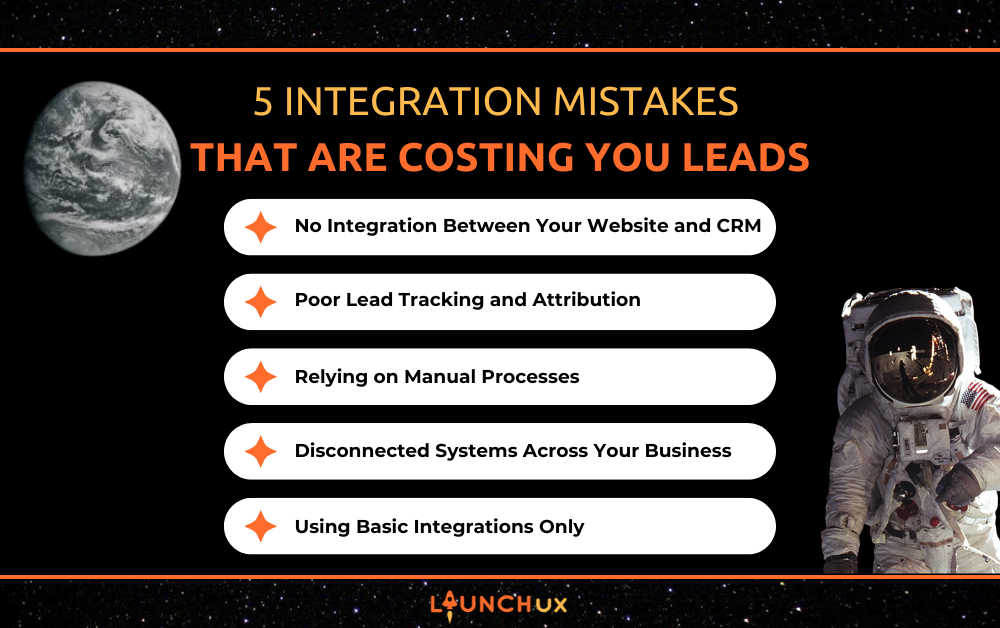
5 Integration Mistakes That Are Costing You Leads

Many businesses invest in marketing, websites, and tools, but still struggle to convert leads into actual opportunities. In many cases, the issue isn’t traffic or visibility. It’s integration. When your systems don’t communicate properly, leads get lost, delayed, or mishandled without anyone noticing. These breakdowns can quietly impact your bottom line, making it harder to track performance and respond effectively. Understanding where integration fails is the first step toward building a system that captures and converts every opportunity.

No Integration Between Your Website and CRM

When your website and CRM aren’t fully connected, leads don’t flow the way they should. Instead of being captured and routed instantly, they often rely on email notifications or manual entry. At first, this might seem manageable, especially if lead volume is low, but as your business grows, these gaps become more noticeable. Leads can sit in inboxes, get overlooked, or never make it into your system at all.

This disconnect also makes it harder to stay organized. Without proper integration, your team may be working with incomplete or outdated information, which affects how quickly and effectively they can follow up. Over time, this creates inconsistencies in your sales process and reduces your chances of converting leads into customers.

A proper integration removes that friction by ensuring every submission is automatically logged, assigned, and ready for follow-up the moment it comes in. It creates a centralized system where your team can see, track, and manage every opportunity without relying on extra steps.

Common signs this is happening:

  • Leads only come through email
  • Sales reps manually enter data into the CRM
  • Delays between submission and response
  • Inconsistent or missing lead records

Poor Lead Tracking and Attribution

If your systems aren’t integrated, your data stays disconnected. You might see leads coming in, but you don’t have a clear understanding of what’s actually driving them. Without that connection, it becomes difficult to tie a specific lead back to a campaign, keyword, or channel.

When you lack accurate attribution, marketing decisions become less reliable. You may continue investing in channels that aren’t producing results or miss opportunities to scale the ones that are. Over time, this leads to wasted budget and slower growth because you’re operating without a full picture of performance.

What proper integration should connect:

  • UTM parameters from campaigns
  • Landing page data
  • Referral sources
  • CRM lead records

With the right integration in place, every lead carries valuable context. This allows you to measure performance more accurately, optimize your strategy, and invest with confidence.

Relying on Manual Processes Instead of Automation

Many businesses still rely on manual steps to manage incoming leads, and it slows everything down more than they realize. Copying information from emails into a CRM, assigning leads by hand, or sending follow-ups manually all introduce delays and increase the risk of mistakes. Even small inefficiencies can add up quickly, especially as lead volume grows.

Manual processes also create inconsistency. Some leads may get immediate attention, while others sit untouched simply because someone missed a notification or got busy with other tasks. In competitive industries, speed is critical. The longer it takes to respond, the less likely you are to convert that lead into a customer.

Integration allows you to remove these gaps by automating the flow of information and actions. Instead of relying on people to manage every step, your systems handle it in real time, ensuring no opportunity is overlooked.

With the right integration in place, you can:

  • Automatically assign leads to the right team member
  • Trigger follow-up emails or internal tasks
  • Send real-time notifications when a lead comes in
  • Eliminate repetitive data entry and reduce errors

By reducing manual work, your team can focus on what actually drives results—engaging with leads and closing deals.

Disconnected Systems Across Your Business

Most businesses rely on multiple tools to operate—your website, CRM, email platform, scheduling software, and other internal systems. The problem is that these tools often don’t communicate with each other. When there’s no integration connecting them, information gets stuck in silos and your process becomes fragmented.

This lack of connection creates confusion for your team and inconsistency for your leads. Important details may not carry over from one system to another, which means conversations can feel disjointed and follow-ups may miss key context. Over time, this leads to a poorer overall experience and lower conversion rates.

What This Looks Like in Practice

A lead fills out a form on your website, but that information never fully carries into your CRM or email platform. Follow-ups may be delayed, generic, or based on incomplete data. Sales teams may not have visibility into previous interactions, forcing them to start from scratch or rely on guesswork.

Strong integration connects every part of your process so your systems share information automatically. This gives your team full visibility into each lead and ensures a smoother, more consistent experience from the first interaction to the final decision.

Using Basic or “Out-of-the-Box” Integrations Only

Not all integrations are created equal. Many businesses rely on basic, plug-and-play connections because they are quick to set up and easy to use. While these solutions can handle simple tasks, they often fall short when it comes to supporting real business workflows.

Out-of-the-box integrations typically only pass limited information between systems. Important data fields may be left out, automation may be minimal, and the overall setup may not align with how your team actually operates. As a result, you end up with a system that is technically connected but still inefficient.

Common limitations of basic integrations:

  • Only partial data is transferred between systems
  • Important fields or context are missing
  • Limited or no automation capabilities
  • Little flexibility to match your sales process

As your business grows, these limitations become more noticeable. What worked at a small scale starts to create bottlenecks and missed opportunities. A more advanced or custom integration allows you to control how data flows between systems, ensuring everything works together in a way that supports your process, not restricts it.

Conclusion

Integration plays a critical role in how effectively your business captures, manages, and converts leads. You can invest in strong marketing and drive consistent traffic, but if your systems are not working together, opportunities will continue to slip through the cracks. By addressing these common integration mistakes, you can create a more efficient and reliable process that supports both your marketing and sales efforts.

If your current setup feels disconnected or difficult to manage, LaunchUX can help. Our team builds fully integrated websites and systems that streamline your process, improve tracking, and eliminate lost opportunities. Reach out us to see how better integration can turn more of your traffic into real results.