The landscape of web development is undergoing a significant transformation, thanks to the emergence of no-code and low-code platforms. This trend is breaking down the barriers to web development, allowing individuals without extensive programming knowledge to create web applications using intuitive visual interfaces and drag-and-drop tools. Consequently, at LaunchUX, our skilled integration team has proficiently integrated major systems like QuickBooks, NetSuite, Slack, Discord, and Zoho. This expertise has earned us recognition in the top 1% by Gartner.
The Rise of No-Code/Low-Code Platforms
Simplifying Web Development
No-code/low-code platforms have revolutionized the way web applications are built. By abstracting and simplifying the coding process, these platforms enable a wider range of people to participate in web development. Users can design, build, and deploy applications using graphical user interfaces, with minimal coding required.
Bridging the Technical Gap
These platforms are particularly beneficial for businesses and entrepreneurs who need to quickly develop web solutions but lack the in-house technical expertise. They allow for rapid prototyping and deployment, significantly reducing the time and cost typically associated with traditional web development.
The Role of LaunchUX in No-Code/Low-Code Development
Expertise in Integration and Customization
LaunchUX’s integration team has a deep understanding of no-code/low-code platforms. Our expertise lies in customizing these platforms to fit specific business needs and integrating them with a wide range of systems. Consequently, this includes complex integrations with major platforms like QuickBooks, NetSuite, Slack, Discord, and Zoho, enabling seamless data flow and functionality.
Recognized Excellence in the Field
Our success and proficiency in leveraging no-code/low-code solutions have not gone unnoticed. Being ranked in the top 1% by Gartner is a testament to our commitment to excellence and innovation in this field. This recognition underscores our ability to deliver high-quality, integrated web solutions using the latest no-code/low-code technologies.
Challenges and Considerations
Balancing Flexibility and Complexity
While no-code/low-code platforms offer ease and speed, they sometimes lack the flexibility needed for more complex, customized web applications. Understanding the limitations and strengths of these platforms is essential for effective implementation.
Ensuring Scalability and Security
As with any web development project, scalability and security are paramount. Our team ensures that applications built using no-code/low-code platforms are not only effective in the short term but also scalable and secure for long-term use.
Conclusion: The Future of Web Development with LaunchUX
No-code/low-code development is more than a trend; it’s a pivotal shift in the web development paradigm, making it more inclusive and accessible. At LaunchUX, we lead in revolutionizing web solutions using these platforms for integrated, efficient, and powerful outcomes. Whether you’re looking to integrate complex systems or develop a web application with minimal coding, our team is equipped to bring your vision to life, reinforcing our standing as a leader in the industry.
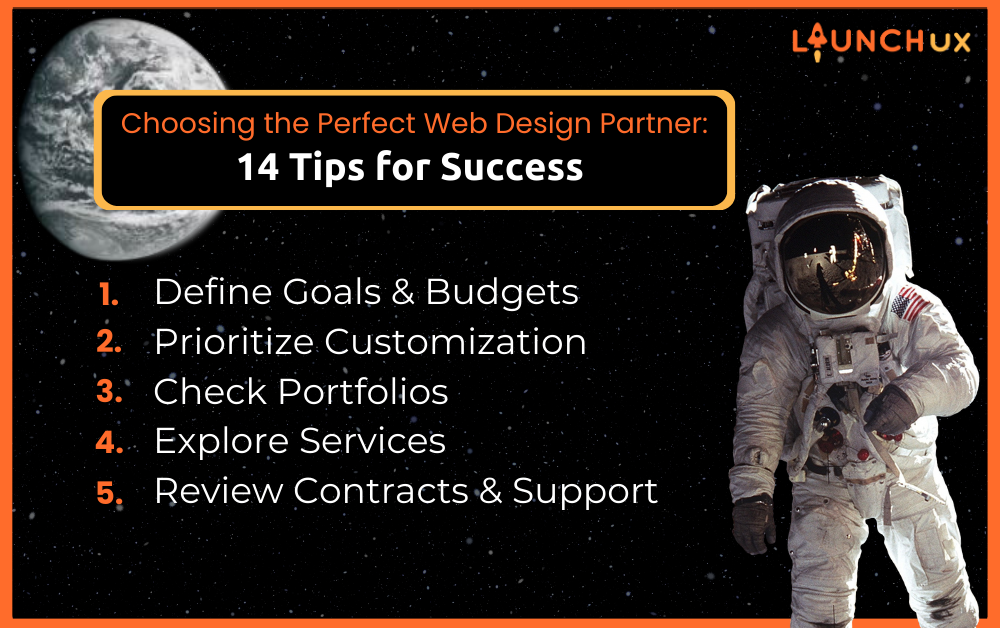
Are you searching for the ideal web design partner to take your online presence to the next level? Your quest for the perfect web design agency ends here. In this comprehensive guide, we’ll provide you with 15 expert tips to help you select the best web design partner that aligns perfectly with your goals and objectives. Prepare to make an informed decision that propels your online success to new heights.
1. Clearly Define Your Website Goals
Before diving into your search for a web design partner, invest time in clearly defining your website goals. Understanding precisely what you aim to achieve with your website is paramount. Whether it’s increasing marketing effectiveness, driving sales, or enhancing customer support, well-defined goals serve as the foundation for a successful partnership.
For example, if you’re an e-commerce store, your goal may be to increase conversions and make it easy for customers to purchase products.
2. Establish a Realistic Web Design Budget
Once your goals are in place, set a realistic budget for your website design project. Having a clear budget from the start helps you narrow down your options and avoid overspending. Keep in mind that more complex designs may require a higher budget, so plan accordingly.
For instance, if you’re planning a simple portfolio website, your budget may differ from that of a large-scale e-commerce platform with extensive features.
3. Prioritize Customized Website Designs
To truly stand out in the digital crowd, it’s essential to choose a web design agency that specializes in customized designs. Beware of agencies that secretly rely on template designs. A unique and tailor-made design is the key to setting your website apart from the competition and capturing your audience’s attention.
Imagine a scenario where a template design could make your website look like dozens of others, undermining your uniqueness and brand identity.
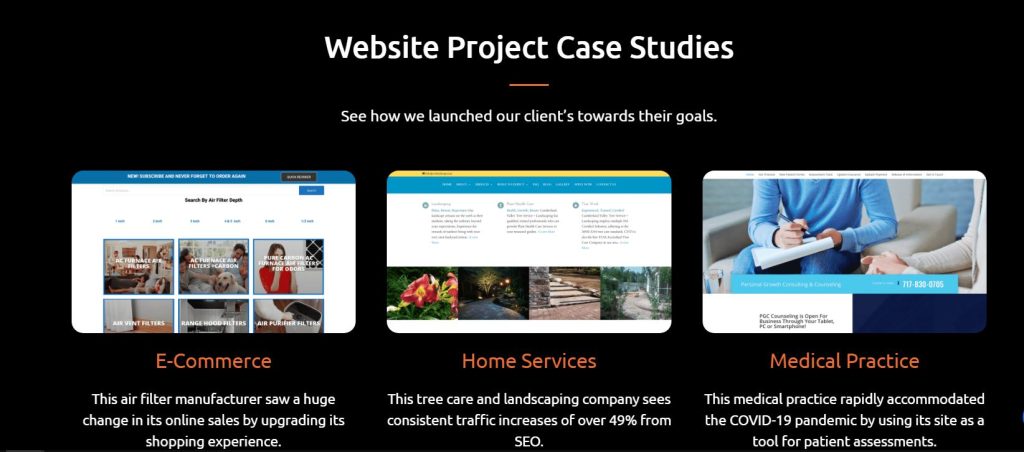
4. Examine the Portfolio
A web design agency’s portfolio is a goldmine of insights into their capabilities. While looking for agencies experienced in your industry is beneficial, also consider those with diverse portfolios. This diversity can indicate adaptability and creativity.
Imagine a scenario where a web design agency has experience working with similar businesses, such as restaurants or tech startups. This experience can translate into a better understanding of your specific needs and audience.
5. Seek Recommendations
Don’t underestimate the power of recommendations. Reach out to friends, family, colleagues, and professionals in your network for insights and referrals. Personal recommendations can save you time and provide valuable guidance on which agencies to consider or avoid.
Consider a scenario where a friend in a similar business highly recommends an agency that helped them achieve remarkable online success.
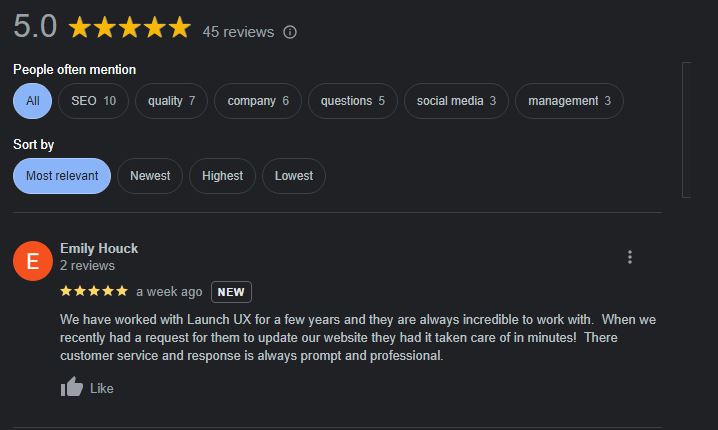
6. Review Client Testimonials and Ratings
Reading reviews and client testimonials is crucial for understanding how a web design agency treats its clients. Look for agencies with a substantial number of positive testimonials. Satisfied clients are often an indicator of quality service.
Imagine reading a testimonial where a client praises the agency’s prompt communication, creative solutions, and impressive website design.
7. Evaluate Available Resources
When selecting a web design partner, assess the resources they can provide. Look for agencies with in-house tools and a team of skilled professionals. In-house resources often lead to more customized designs and better results for your website.
Consider a scenario where an agency uses cutting-edge design tools and has a dedicated team of UI/UX experts, ensuring your website’s aesthetics and functionality are top-notch.
8. Explore Additional Services
To ensure your website’s success, consider a web design partner that offers more than just design services. Services like Search Engine Optimization (SEO), branding, and social media marketing can significantly enhance your website’s impact. A full-service agency provides all the tools you need for a cohesive online presence.
Imagine a scenario where your web design partner also offers SEO services, helping your website rank higher in search engine results and driving more organic traffic.
9. Ask Questions About the Agency’s Strategy
Narrow down your choices by asking critical questions about a web design agency’s strategy. Inquire about the team working on your project, whether the work is done in-house or outsourced, their web design process, communication practices, and how they handle potential issues.
Consider a scenario where the agency emphasizes a collaborative approach, involving you in the design process from start to finish, ensuring your vision is brought to life effectively.
10. Assess Their Industry Knowledge
Look for a web design partner that has a deep understanding of your industry. An agency with industry-specific knowledge can better cater to your unique needs and challenges, ensuring a more tailored and effective website.
Imagine a scenario where the agency has extensive experience working with healthcare organizations, understanding the compliance requirements and patient-focused design necessary for your medical practice’s website.
11. Check for Responsive Design Expertise
In today’s mobile-driven world, having a responsive design is crucial. Ensure that your chosen web design agency excels in creating websites that adapt seamlessly to various devices and screen sizes for an optimal user experience.
Imagine a scenario where your website seamlessly transitions from desktop to mobile, providing a user-friendly experience regardless of the device used by your visitors.
12. Inquire About Post-Launch Support
A successful website project goes beyond the launch date. Ask about post-launch support and maintenance services. A reliable partner should offer ongoing assistance, updates, and troubleshooting.
Consider a scenario where your web design partner provides a comprehensive support package, ensuring your website remains secure, up-to-date, and free from technical issues long after the launch.
13. Investigate Their Hosting Options
Consider the hosting options provided by your potential web design partner. Reliable hosting is vital for website performance and security. Ensure they offer scalable hosting solutions that can accommodate your website’s growth.
Imagine a scenario where the agency offers robust hosting with automatic backups and 24/7 monitoring, guaranteeing the uptime and security of your website.
14. Review Their Contract Terms and Ownership
Before finalizing your partnership, carefully review the agency’s contract terms. Pay special attention to issues related to website ownership, content rights, and any ongoing fees. Ensure that the terms align with your long-term goals.
Imagine a scenario where the contract clearly specifies that you own all website assets, including design files and content, giving you full control and flexibility to make future updates and changes.
Elevate Your Online Presence with the Right Web Design Partner
In conclusion, selecting the right web design partner is a pivotal step toward achieving online success. By following these 15 expert tips, you’ll be well-equipped to make an informed decision and collaborate with a web design agency that perfectly aligns with your business objectives. Transform your website into a standout online asset and drive new revenue – choose your web design partner wisely!
Ready to Take the Next Step?
Contact LaunchUX today to discuss your web design needs and start your journey towards a stunning, effective, and revenue-generating website. Our team of experts is here to guide you every step of the way. Let’s turn your online vision into a reality!
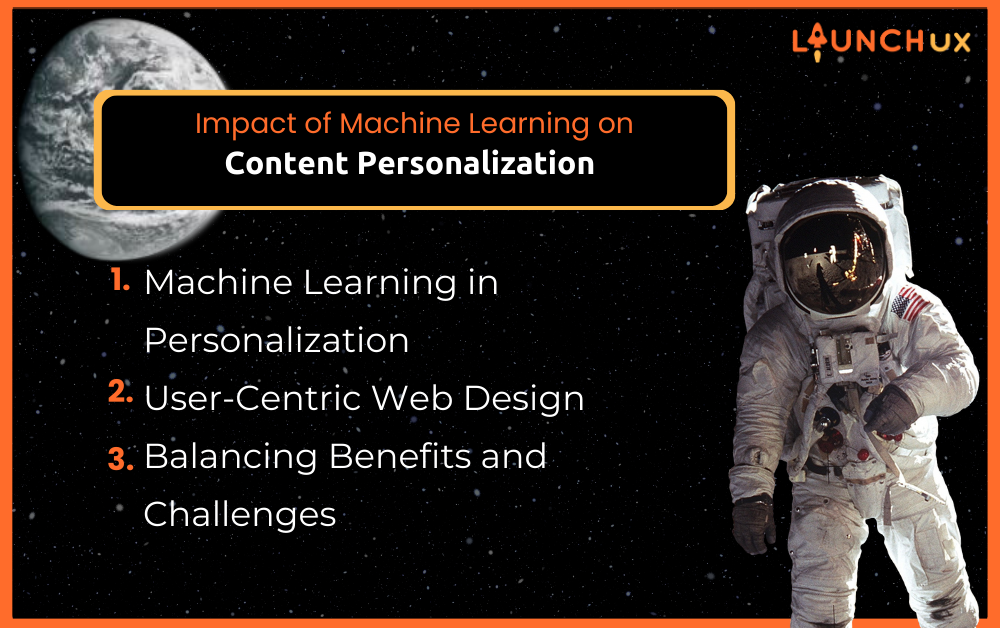
Content personalization has become a cornerstone of user experience. Consequently, machine learning (ML) technology is leading the charge in this transformation. ML enables the customization of web content to individual user behaviors and preferences. This trend, evident in platforms like Netflix and Airbnb, reshapes how users interact with digital services, offering them a more personalized and engaging experience.
Unraveling Content Personalization Through Machine Learning
The Mechanics of Machine Learning in Personalization
Machine Learning algorithms analyze vast amounts of data on user interactions, preferences, and behaviors. This analysis allows for the prediction and display of content that aligns closely with individual user interests. In other words, ML continually learns from user interactions, refining its content suggestions to become more accurate and relevant.
The User-Centric Approach in Web Design
Content personalization through ML places the user at the forefront of the web experience. Websites can increase engagement, boost user satisfaction, and foster brand loyalty by delivering content that resonates with the user’s interests and past behaviors. Therefore, this user-centric approach transforms the one-size-fits-all content delivery model into a dynamic, individualized experience.
The Benefits and Challenges of Machine Learning in Content Personalization
Enhancing User Engagement and Satisfaction
Personalized content has been shown to enhance user engagement significantly. Users are more likely to spend time on a site and return if they find the content relevant and tailored to their interests. This increased engagement benefits the user and drives business metrics like conversion rates and time on site.
Navigating the Complexities of Data and Privacy
While ML offers remarkable capabilities in personalizing content, it also presents challenges, particularly in data management and user privacy. Collecting and analyzing user data requires adherence to privacy laws and ethical considerations. Balancing personalization with privacy is a delicate task that requires transparency and user trust.
Technical and Resource Considerations
Implementing ML for content personalization demands significant technical expertise and resources. Developing and maintaining ML models can be complex and resource-intensive. Additionally, personalization quality is highly dependent on the quantity and quality of data available, posing a challenge for newer or smaller websites.
The Future of Web Interactions
Content personalization through Machine Learning is not just a passing trend; it’s a paradigm shift in how digital content is curated and presented. By offering tailored experiences, ML enhances user satisfaction and engagement, paving the way for a more intuitive and responsive web. However, this technology must be implemented thoughtfully, balancing the benefits of personalization with the responsibilities of data privacy and ethical considerations. As ML continues to evolve, its role in shaping the future of web interactions remains a key area of innovation and exploration.
The digital landscape is continuously evolving, and Progressive Web Applications (PWAs) are at the forefront of this transformation. Consequently, PWAs blend the best of web and mobile apps, offering users a seamless, app-like experience directly in their web browsers. This innovative approach is reshaping how users interact with websites and applications.
What are Progressive Web Applications?
Defining PWAs and Their Core Features
Progressive Web Applications are essentially websites that offer functionality traditionally available only to native apps. These include features like push notifications, offline accessibility, and the ability to be added to a device’s home screen. Consequently, built using standard web technologies like HTML, CSS, and JavaScript, PWAs offer a high level of performance and user engagement.
The Benefits of PWAs for Users
The primary appeal of Progressive Web Applications lies in their versatility and efficiency. Users enjoy a fast, engaging experience without the need to download a separate app. PWAs load quickly, even on slow network connections, and can work offline, making them particularly beneficial in areas with poor internet connectivity.
Key Technologies Behind PWAs
Service Workers: The Backbone of PWAs
Service workers play a critical role in the functionality of Progressive Web Applications. They are scripts that run in the background, separate from the web page, and enable features like push notifications and background sync. Service workers also allow PWAs to load instantly and provide offline capabilities, enhancing the user experience.
Manifest Files and Home Screen Icons
A web app manifest file is essential for PWAs. It contains metadata about the app, such as its name, icons, and display properties. This file allows PWAs to be added to a device’s home screen, giving them a native app-like feel. Users can access the PWA with a single tap, just like a regular app.
Challenges and Considerations in Developing PWAs
Balancing Performance and Functionality
While Progressive Web Applications offer numerous benefits, developers must carefully balance performance and functionality. Ensuring that the PWA is lightweight and fast, while still providing rich features, is crucial. Optimizing images, minifying code, and leveraging browser caching are some strategies used to enhance PWA performance.
Cross-Browser Compatibility and Updates
Cross-browser compatibility is another challenge for PWA developers. Ensuring that the PWA works seamlessly across different browsers and devices is essential for user satisfaction. Additionally, keeping the PWA updated with the latest web standards and technologies is crucial for maintaining its effectiveness and security.
The Future of Web Applications
Progressive Web Applications represent a significant shift in web development, offering a unique blend of the best features of web and mobile apps. Consequently, they provide a more efficient, engaging user experience and have the potential to become the standard for web applications in the future. As technology continues to evolve, PWAs are poised to play a pivotal role in shaping the future of online interactions.
At LaunchUX, we’ve extensively used UpDraft Plus, a prominent WordPress plugin for backups and migrations. Our journey with UpDraft Plus has been mostly positive, especially for smaller website projects, where its performance has been particularly impressive.
Understanding UpDraft Plus
UpDraft Plus is a versatile WordPress plugin designed for backing up, restoring, and migrating websites. It’s recognized for its user-friendly interface and efficient functionality, making it a popular choice among WordPress users.
Our experience at LaunchUX has shown that UpDraft Plus excels when working with smaller websites. Its ability to swiftly and securely back up website data, files, and databases makes it an ideal solution for many of our clients with smaller digital footprints. The process is streamlined and user-friendly, requiring minimal intervention and resources.
While UpDraft Plus is a robust tool, we have observed that it can face challenges when handling larger websites. The backup process for sites with extensive data and files may require more resources and time. However, with the right settings and server configurations, these challenges can be mitigated, ensuring that larger sites are also backed up effectively, albeit with a bit more effort.
Ease of Migrations and Backups
UpDraft Plus stands out in our LaunchUX toolkit for its ease in website migrations and backups. The plugin simplifies what is normally a complex and time-consuming process. Whether it’s migrating a website to a new host or ensuring regular backups, UpDraft Plus handles these tasks with remarkable efficiency.
UpDraft Plus allows us to set automated backup schedules, ensuring that our clients’ websites are backed up regularly without manual intervention. This feature is essential for preserving data integrity and ensuring client confidence. It guarantees website data safety and offers restoration options in case of mishaps.
UpDraft Plus provides a effortless recovery process for instances like technical glitches or website update issues. This ensures easy recovery when restoration is necessary. This functionality is crucial for quickly restoring websites to their previous state. It downtime and potential data loss.
Different websites have unique requirements, and what works for one may not be the optimal choice for another. Depending on the size, complexity, and specific needs of your website, there could be other products in the market that align more closely with your requirements.
This is where consulting with a knowledgeable and experienced company like LaunchUX becomes invaluable. Our team guides you through numerous options, assessing your needs to find a solution that exceeds your expectations.
In a world where social media’s influence can’t be overstated, having an effective strategy for your business’s social media presence isn’t just a good idea—it’s a cornerstone of success. Whether you’re a fresh startup, a global enterprise, or somewhere in between, the way you handle your social media can significantly amplify your business’s voice and impact.
Understanding Your Audience: The Foundation of an Effective Strategy
Know Who You’re Talking To
The first step in crafting an effective strategy for social media is to understand your audience. Are you speaking to young entrepreneurs, seasoned industry leaders, or a diverse global audience? Tailoring your content to match their interests, challenges, and aspirations is key. It’s crucial to delve into their world, understand the platforms they frequent, and the type of content that captures their attention. By doing so, you ensure your message is not just heard, but also resonates deeply, fostering a stronger connection.
Engagement: More Than Just Numbers
It’s not just about gaining followers; it’s about cultivating meaningful interactions. Engage with your audience through thoughtful content, timely responses, and by creating a community around your brand. This approach builds trust and loyalty, which are invaluable currencies in the digital world. Additionally, consider encouraging user-generated content, which can dramatically increase engagement and give your audience a sense of ownership in your brand’s narrative. Always prioritize conversations over broadcasting; social media is a two-way street that thrives on dialogue, not monologues.
Content is King: Crafting Messages that Resonate
Quality Over Quantity
Your social media should be a reflection of your brand’s values and expertise. Every post should add value—be it through insights, solutions, or even humor. Avoid the temptation to post for the sake of posting. Instead, focus on quality content that resonates with your audience. Remember, a well-crafted, insightful post can have a greater impact than numerous mediocre ones. It’s about creating content that not only attracts attention but also fosters meaningful engagement and conversation, thereby strengthening your brand’s relationship with its audience.
Consistency is Key
Consistency in your posting schedule helps keep your audience engaged and your brand top-of-mind. But consistency isn’t just about frequency; it’s also about maintaining a consistent tone and style that aligns with your brand. This uniformity in messaging helps in building a recognizable brand identity, making your content immediately identifiable to your audience. Furthermore, consistent engagement on social media platforms also improves your visibility and ranking, ensuring your message reaches a broader audience.
Leveraging Analytics for Insightful Strategy Refinement
The Power of Data
Use the analytics tools provided by social platforms to gain insights into what works and what doesn’t. These tools can offer invaluable information about your audience’s preferences, engagement patterns, and more. By analyzing metrics like engagement rates, click-throughs, and follower demographics, you can fine-tune your content to better meet the needs and interest of your audience. This data-driven approach allows for targeted marketing strategies of your audience. This data-driven approach allows for targeted marketing strategies that can significantly increase the ROI of your social media efforts. Additionally, keeping an eye on these analytics helps in identifying emerging trends, enabling you to stay ahead of the curve and position your brand as a forward-thinking leader in your industry.
Adapting and Evolving
Based on these insights, continually refine your strategy. Social media is dynamic, so staying adaptable and responsive to trends and feedback is crucial. It’s also essential to be open to experimenting with new platforms and formats-sometimes the next big trend is just around the corner. Don’t be afraid to pivot your strategy if you notice a shift in your audience’s behavior or preferences. Regularly reviewing and updating your strategy ensures that your social media efforts remain effective and aligned with your business goals.
Conclusion: Harnessing the Power of Strategic Social Media
Crafting an effective strategy for your social media is not just a necessity—it’s a game changer for your business. By deeply understanding your audience, delivering consistently high-quality content, and leveraging analytics for ongoing refinement, you position your brand to thrive in the ever-evolving digital landscape. Remember, your social media presence is more than just a digital footprint; it’s a vibrant, engaging platform that can dramatically elevate your brand’s visibility and influence.
Take Action: Elevate Your Brand Today
Ready to transform your social media presence? Connect with us to develop a bespoke social media strategy that resonates with your audience and amplifies your business’s impact. Don’t let your social media be an afterthought—make it the forefront of your digital success. Reach out now and take the first step towards a compelling and influential online presence.
The digital era has ushered in AI-powered chatbots, revolutionizing how businesses interact with customers. These sophisticated tools provide efficient, always-on service, but it’s crucial to remember that their effectiveness hinges on rigorous testing. A well-executed chatbot can significantly enhance customer experience, while a poorly implemented one risks losing sales and damaging brand reputation.
Exploring AI-Powered Chatbots
Understanding the Functionality of AI Chatbots
AI chatbots use artificial intelligence to mimic human conversation, processing and responding to user inquiries with increasing accuracy. They range from basic, rule-based systems offering predefined answers to advanced bots employing machine learning to evolve from user interactions.
The Role of AI Chatbots in Enhancing Customer Service
Chatbots are the frontline for customer queries, efficiently managing routine questions and freeing human agents for more complex issues. They provide instant responses, cutting down wait times and elevating customer satisfaction. When implemented correctly, AI chatbots are a powerful tool for increasing engagement and loyalty.
The Importance of Thorough Testing in Chatbot Deployment
Crafting a Flawless User Experience
Extensive testing is critical before deploying an AI chatbot. This process should encompass various scenarios to assess the bot’s ability to handle diverse inquiries and its proficiency in understanding and responding accurately to user requests.
Consequences of an Inadequate Chatbot
An untested or poorly designed chatbot can lead to negative user experiences. Misinterpretations, irrelevant replies, or failure to deliver useful information can quickly repel potential customers, potentially harming a brand’s image and leading to lost sales.
Popular AI Chatbot Products and Best Practices
Leading AI Chatbot Platforms
Several AI chatbot platforms have gained popularity due to their robust features and reliability. Notable examples include:
Dialogflow (by Google): Known for its natural language understanding and integration with multiple platforms.
IBM Watson Assistant: Offers advanced AI and machine learning capabilities for more complex, personalized interactions.
Microsoft Bot Framework: Provides tools for building sophisticated bots that can integrate with various services and channels.
Design and Continuous Improvement
When designing a chatbot, prioritize user experience. Ensure the bot is user-friendly and its responses align with your brand’s voice. To refine effectiveness, continuous monitoring and improvements based on user feedback and interaction analysis are vital.
Striking the Right Balance
AI-powered chatbots transform customer service, but their success depends on rigorous testing and ongoing refinement. A well-crafted chatbot can be a strategic asset, driving customer satisfaction and engagement. As AI technology evolves, so should our methods of integrating these digital assistants, always focusing on delivering the highest quality of user experience.
In the fast-paced world of mobile internet, speed is a currency. This is where Accelerated Mobile Pages (AMP) come into play. Initiated by Google, AMP is a revolutionary approach to building web pages for static content that load faster on mobile devices. This initiative addresses the need for speed in the mobile user experience, prioritizing quick, efficient access to content. Consequently, it not only enhances user satisfaction but also significantly improves website performance in terms of loading time and readability on mobile devices.
Understanding Accelerated Mobile Pages (AMP)
The Genesis and Purpose of AMP
AMP was developed in response to the increasing frustration of users over slow-loading mobile web pages. The primary goal of AMP is to enhance the mobile browsing experience by significantly speeding up web page loading. This is achieved by simplifying the HTML code and streamlining the CSS and JavaScript used on a page, ensuring a swift and smooth performance on mobile devices.
How Does AMP Work?
At its core, AMP is a stripped-down form of HTML, dubbed AMP HTML. This variant of traditional HTML restricts specific HTML, CSS, and JavaScript elements known to cause slow page loading. AMP pages also use a unique JavaScript library that manages resource handling and asynchronous loading. AMP pages only load the essential elements first, prioritizing speed and user experience.
The Benefits of AMP in Mobile Web Development
Enhanced Page Loading Speed and User Engagement
The most notable advantage of AMP is its remarkable speed. AMP pages load almost instantly, providing an almost seamless user experience. This rapid loading significantly reduces bounce rates and increases user engagement, as visitors are more likely to stay on a page that loads quickly.
Improved Search Engine Visibility
AMP pages are favored by search engines, notably Google, which highlights AMP pages in its search results. This visibility can lead to higher traffic, as users are likelier to click on results that load faster. Additionally, the AMP format is also known to improve search rankings, potentially amplifying its appeal. Moreover, this enhanced visibility not only attracts more visitors but also contributes to better user engagement and retention, further boosting the website’s overall performance.
Considerations and Challenges in Implementing AMP
Balancing AMP Limitations with Creative Design
While AMP offers speed and efficiency, it also comes with limitations, particularly in terms of design flexibility and functionality. Developers must work within the confines of AMP’s restrictions, finding creative ways to deliver engaging content without the full array of HTML, CSS, and JavaScript features.
Keeping Up with Evolving Standards
AMP is an evolving project, and keeping up with its changes can be challenging. Developers must stay informed about the latest updates and modifications to the AMP framework to ensure their pages continue to perform optimally. Furthermore, by actively engaging with the AMP community and utilizing available resources, developers can more effectively adapt to these changes. This allows them to maintain the high-speed efficiency that AMP aims to provide.
AMP as a Catalyst for Mobile Optimization
Accelerated Mobile Pages represent a significant stride towards optimizing the mobile web experience. By focusing on speed and efficiency, it not only enhances user satisfaction but also contributes to better search engine performance and visibility. Consequently, as mobile internet usage continues to rise, the relevance and impact of AMP in delivering fast, user-friendly web experiences are poised to grow, making it an essential consideration in modern web development.
Conclusion
In summary, Accelerated Mobile Pages have emerged as a pivotal innovation in enhancing the mobile web experience. Emphasizing speed, efficiency, and user-centric design, it stands as a testament to the evolving dynamics of web development in an increasingly mobile-driven world. While it presents certain challenges in terms of design flexibility, AMP is a crucial tool for developers and businesses. The necessity for ongoing adaptation is a key aspect of its use. However, the benefits, such as improved user engagement and heightened search engine visibility, make it indispensable. As the digital landscape continues to evolve, AMP will undoubtedly play a crucial role in shaping the future of mobile internet, underscoring the importance of speed and efficiency in our interconnected, fast-paced digital era.
In the ever-evolving landscape of the internet, changes are a constant. As digital platforms continue to develop, some features and tools that once seemed indispensable eventually fade into obsolescence. One such change is currently underway, as Google announces the end of its Business.Site websites, leaving many businesses with questions about the future of their online presence.
The Google Business.Site Era
For years, Google provided businesses with a straightforward way to establish a web presence through its Business.Site platform. These websites originated from information sourced from a company’s Google Business Profile, formerly recognized as Google My Business. For many small and local businesses, this was an accessible and cost-effective solution to get their information online quickly.
The format was simple: a subdomain at business.site hosted a basic website for businesses. This URL structure looked something like localbizname.business.site. It was a straightforward approach, offering essential information such as hours of operation, contact details, and a brief description of the business. For businesses looking to establish an online presence without the complexity of building a full-fledged website, Business.Site was a valuable resource.
The Winds of Change
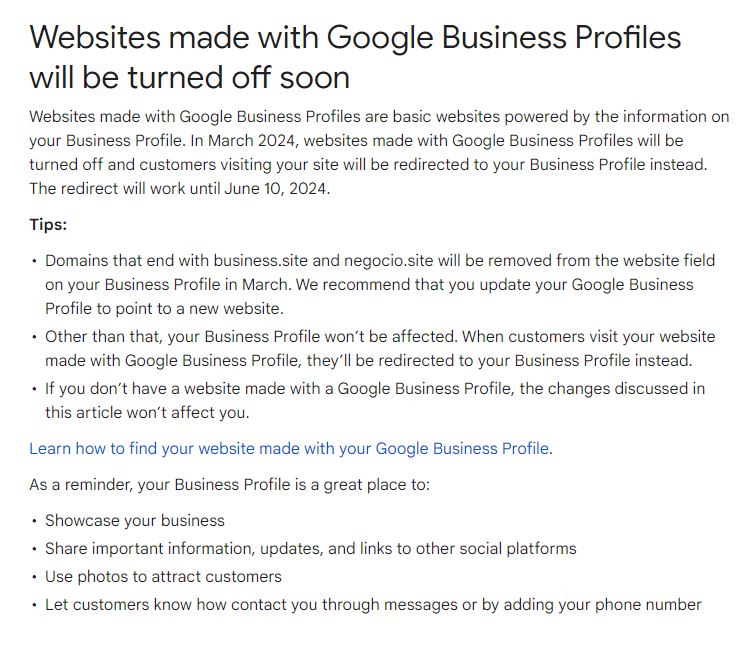
However, as of March 1, 2024, Google has announced a significant shift. Business.Site websites will be discontinued, and any visitors to these sites will be redirected to the associated Google Business Profile. Then, on June 10, 2024, the websites will no longer be available. This change might come as no surprise, given Google’s recent sale of Google Domains to Squarespace.
The official email sent out to Google Business Profile account holders states:
“Websites made with Google Business Profiles will be turned off soon. Starting from March 1, 2024, customers will be redirected to your Business Profile when they visit these websites. This feature is going away in the coming months and will no longer be supported, meaning the site you created with this tool will be removed. Your website will redirect customers until June 10, 2024, after which it will show as unavailable.”
What Does This Mean for Your Business?
If you currently have Business.Site websites, this announcement has implications for your online presence. Once your Business.Site website is turned off in March 2024, visitors attempting to access it will be redirected to your Business Profile. However, this redirection will only work until June 10, 2024, after which visitors will receive a “page not found” error.
So, what should your business do in response to this change? Well, the first step is to ensure that your Google Business Profile is up-to-date. This profile will become the primary destination for potential customers seeking information about your business. Make sure it showcases all the essential details, including your business hours, contact information, location, and a brief description of your products or services.
Embrace the Transition
While this transition might seem daunting at first, it’s also an opportunity for businesses to enhance their online presence significantly. Consider the value of hiring a skilled web developer, like those at LaunchUX, who can create a fully customized website tailored to your unique business identity and objectives.
With a web developer’s expertise, you can expect a website that goes beyond providing essential information, effectively showcasing your brand’s personality. Features such as e-commerce capabilities, a dynamic blog, an impressive portfolio, or a seamless booking system can all be integrated to meet your specific business needs.
By choosing the right web developer for your project, you’ll benefit from their experience in crafting compelling online experiences that drive growth and revenue for your business.
Why a Strong Website Matters
A robust online presence is essential in today’s digital landscape. Your website serves as a virtual storefront, providing potential customers with their first impression of your business. A well-designed and user-friendly website can:
Enhance Credibility: A professional-looking website conveys trust and reliability, making potential customers more likely to engage with your business.
Expand Reach: A website allows you to reach a global audience, not just your local community, increasing your potential customer base.
Provide Information: Customers can easily access essential information about your products, services, and contact details, improving their overall experience.
Facilitate Transactions: If you offer online sales or bookings, a website streamlines these processes, making it convenient for customers to engage with your business.
Showcase Your Brand: Your website is an excellent platform to showcase your brand’s personality, values, and unique selling points.
The Benefits of LaunchUX Website Services
Now that we’ve discussed the importance of a strong website, let’s delve into the specific benefits of choosing LaunchUX for your website needs:
Tailored Solutions: LaunchUX understands that each business is unique. Our team collaborates closely with you to grasp your specific goals and requirements, ensuring your website becomes a perfect fit for your business.
Stunning Design: Our design experts create visually appealing websites that capture the essence of your brand. Your website will stand out and leave a lasting impression on visitors.
User-Friendly Interface: A seamless user experience is a priority for us. We design intuitive and easy-to-navigate websites, reducing bounce rates and keeping visitors engaged.
Mobile Optimization: With the majority of internet traffic coming from mobile devices, we ensure that your website looks and functions flawlessly on smartphones and tablets, providing a consistent experience for all users.
SEO Excellence: LaunchUX excels in search engine optimization. We optimize your website for search engines, increasing its visibility and driving organic traffic.
Content Management: We build our websites with content management systems (CMS) that empower you to effortlessly update and maintain your site’s content, even if you lack technical expertise.
E-Commerce Solutions: If you’re looking to sell products or services online, LaunchUX can develop an e-commerce platform that streamlines the buying process, providing a secure and convenient shopping experience for your customers.
Ongoing Support: Our commitment to your success doesn’t end with the website launch. We provide ongoing support and maintenance to ensure your website remains up-to-date and secure.
Embrace the Change for a Stronger Online Presence
In conclusion, the end of Google’s Business.Site websites is a significant shift in the digital landscape. However, it presents an opportunity for businesses to strengthen their online presence by creating custom websites that better reflect their brand and offer enhanced functionality.
Don’t wait until your Google Business.Site websites goes dark in June 2024. Take this chance to revamp your online presence and ensure that your business continues to thrive in the digital age. To embark on your new website journey with LaunchUX, reach out to us today. Explore how we actively drive new revenue to your business through our effective web design and SEO solutions.
The digital world is constantly evolving, and adapting to these changes is crucial for your business’s success. Embrace the transition, create a powerful online presence, and ensure that your business continues to thrive in the digital age.
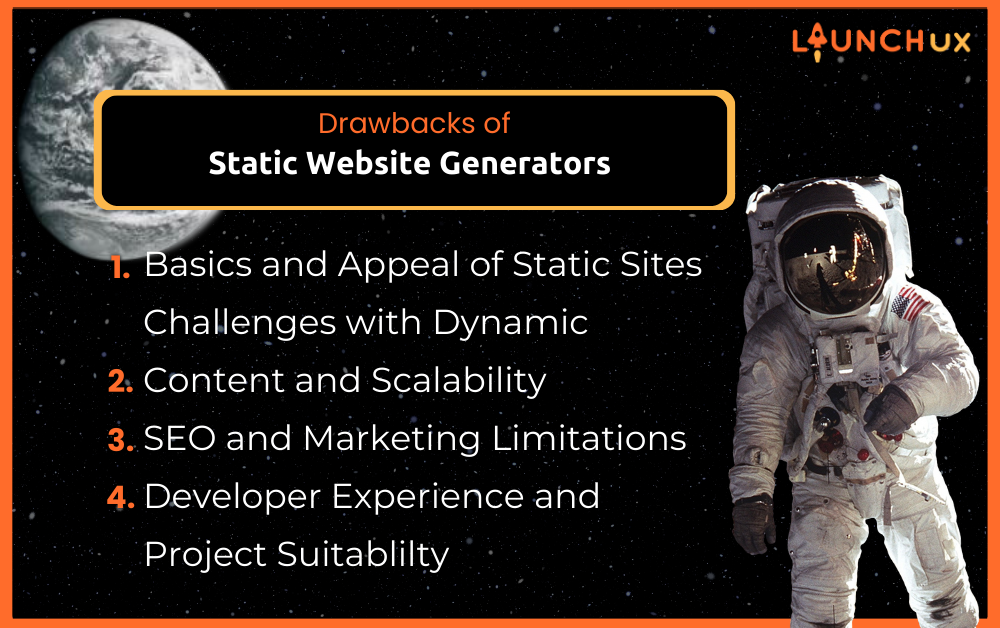
In our industry of web development, static website generators like Jekyll, Hugo, and Gatsby have gained popularity for their speed, security, and ease of management. However, it’s important to delve deeper and understand why these tools might not always be the best choice for every web project. This discussion aims to shed light on the limitations and drawbacks of using static website generators.
Understanding Static Website Generators
The Basics of Static Sites Generation
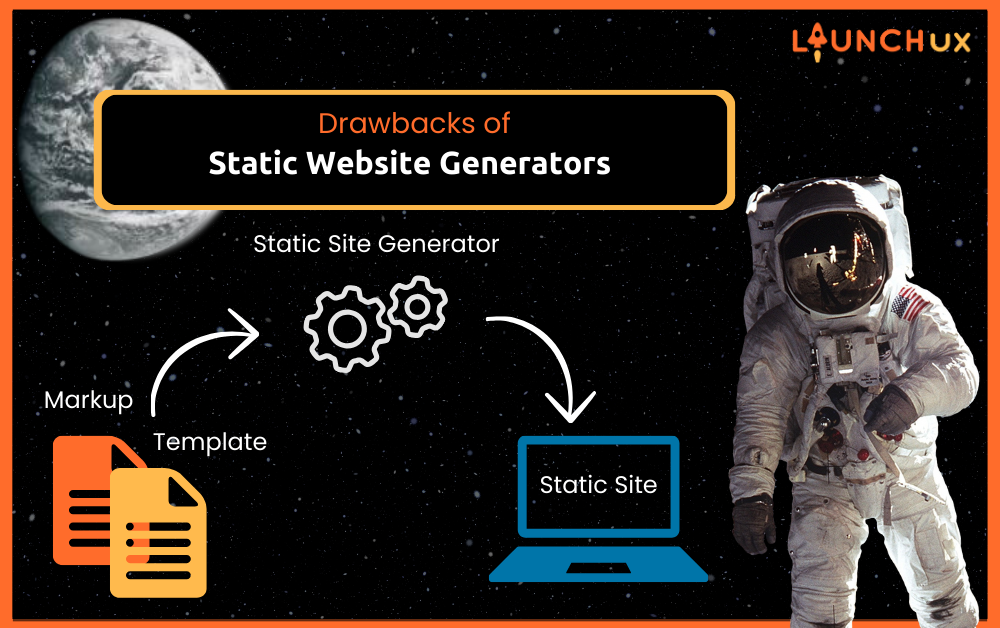
Static website generators deliver web pages to the user in their stored form, unlike dynamic websites. Dynamic websites generate pages on the fly from a web server, offering a contrast in content delivery. These tools pre-build pages at deployment, which can result in faster load times and improved security since there’s no database or server-side processing involved.
The Appeal of Static Sites
The allure of static website generators is clear: they offer simplicity and speed. Static sites eliminate the need for complex server-side processing or database queries, resulting in faster load times. Their simpler structure makes them less vulnerable to common web security issues. This makes them an appealing choice for straightforward, content-focused websites.
The Challenges and Limitations of Static Sites
Lack of Dynamic Capabilities
One of the primary limitations of static website generators is their inability to handle dynamic content efficiently. Static sites fall short for websites that require real-time updates, user interactions, or personalized content based on user data. This can be a significant hindrance for e-commerce sites, social media platforms, or any site requiring user input and data processing.
Scalability and Complexity Issues
As websites grow and become more complex, managing content with a static generator can become cumbersome. Without a database, every page on a static site requires individual updates and redeployment. This process can become time-consuming and inefficient, especially for larger sites or those needing frequent updates.
SEO and Marketing Drawbacks
While static sites are fast, they can pose challenges in SEO and content marketing. The lack of dynamic content generation makes implementing advanced SEO strategies such as personalized landing pages or content tailored to user behavior is difficult. Additionally, integrating marketing tools and analytics can be more challenging with static websites.
Developer Experience and Flexibility
Static site generators often require a certain level of technical expertise, which can be a barrier for less tech-savvy content creators or marketers. However, their limited design and functionality can be a drawback when compared to dynamic CMS platforms. This limitation is particularly evident in creative and complex web projects.
Weighing the Pros and Cons
While static website generators offer advantages in terms of speed and security, they are not a one-size-fits-all solution. The decision to use a static site generator should be based on a careful evaluation of your website‘s specific needs and goals. Alternative solutions might be more suitable for projects requiring dynamic content, user interaction, and scalability. In the ever-evolving landscape of web development, understanding the limitations and appropriate use cases of different technologies is key to making informed decisions for your web projects.
 About Us
 Web Design
 SEO
 Social Media
 Integrations
 Web Hosting
 Case Studies
 Captain's Blog
 Pay Per Click
 Web Apps
 PMP
 Careers