
rocketfuel, Author at LaunchUX - Page 10 of 28

Author: rocketfuel

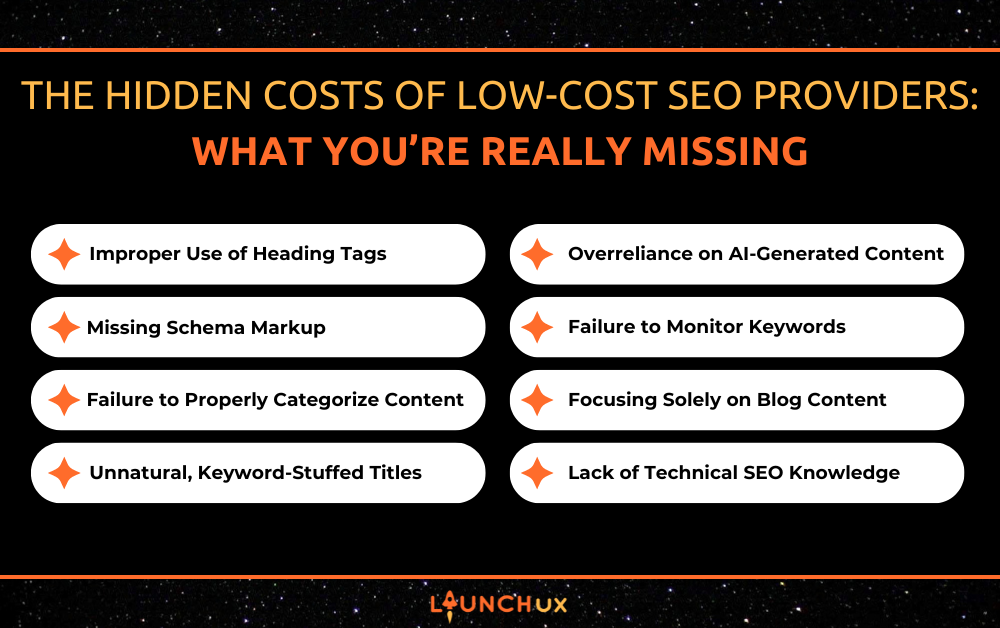
The Hidden Costs of Low-Cost SEO Providers: What You’re Really Missing

At first glance, low-cost SEO services might seem like a smart business move. After all, who doesn’t want better rankings without breaking the bank? But as with most things in business, you often get what you pay for. Budget SEO providers frequently cut corners or lack the knowledge and tools to do the job effectively. This can leave your website underperforming in search results, or worse—flagged by search engines for poor practices.

Here are just 8 critical areas where low-cost SEO services typically fall short—and why these oversights matter to your business.

1. Improper Use of Heading Tags

Search engines don’t read web pages the same way humans do—they rely on structure to interpret what each page is about. Heading tags (H1 through H6) are key to this structure. An H1 tag should introduce the main topic of the page, while H2 and H3 tags break content into organized sections.

Low-cost providers often ignore proper heading hierarchies entirely, either using no headings or misusing multiple H1s. This creates confusion for search engines and can hurt your chances of ranking for relevant queries. Properly used, heading tags not only improve SEO but also enhance readability and accessibility—benefiting both your audience and your rankings.

2. Missing Schema Markup

Schema markup (also known as structured data) is a powerful tool that helps search engines understand the context of your content. It can identify things like products, services, articles, reviews, events, and more. With the right schema, your pages may qualify for rich results in search—like star ratings, FAQs, event info, or product details—which can dramatically increase visibility and click-through rates.

Low-cost SEO providers frequently skip schema implementation because it requires technical knowledge and time. This omission leaves your content less visible in search and undermines its credibility. Without schema, you’re giving competitors an edge and missing opportunities to stand out on the results page.

3. Failure to Properly Categorize Content

SEO isn’t just about what you publish—it’s also about how you organize it. Categories and tags help group content by themes, making your website more navigable for users and more logical for search engines to crawl.

Budget SEO providers often ignore taxonomy altogether, leaving content uncategorized or misfiled. This not only frustrates users but also limits your internal linking structure—an important SEO signal. When content is well-organized, it creates a natural ecosystem of related articles, boosting engagement time and search performance.

4. Unnatural, Keyword-Stuffed Titles

Titles are one of the most important elements for both SEO and user engagement. A good title is clear, relevant, and encourages clicks. Unfortunately, many cheap SEO services take a “more is better” approach and stuff titles with keywords and locations—regardless of whether they fit the context.

For example, a blog titled “Best Plumbing Services in Harrisburg, Mechanicsburg, and Chambersburg” might rank locally, but if the content on the page doesn’t make the title relevant to the content, it can make the page appear misleading or inauthentic. Worse, search engines are smart enough to detect keyword stuffing and may flag it as spammy behavior.

Titles should be written for humans first to ensure relevance, then optimized for search engines. When SEO is done right, it finds the perfect balance.

5. Overreliance on AI-Generated Content Without Human Editing

AI tools like ChatGPT are powerful aids for SEO writing, but they should never replace human insight. Cheap SEO providers often copy and paste AI-generated text directly into blogs without edits or personalization. The result? Generic, robotic content that lacks voice, tone, and relevance.

Good SEO content must reflect your brand, engage your audience, and provide value. It should be tailored, edited, and fact-checked. At LaunchUX, for instance, we use AI to assist—not replace—our human copywriters. This ensures every piece of content sounds natural, reads well, and supports your overall marketing goals.

6. Failure to Monitor Keyword Opportunities

SEO is dynamic. The keywords that perform today may not be the best opportunities tomorrow. That’s why successful SEO requires regular analysis, tracking, and optimization using tools like SEMrush, Ahrefs, or Google Search Console.

Budget SEO firms usually don’t invest in these tools—or the expertise to use them properly. Instead, they take a “set it and forget it” approach, relying on outdated keyword lists or surface-level research. Without consistent monitoring, you’re likely missing out on valuable keyword trends, competitive gaps, and low-hanging fruit that could drive targeted traffic.

7. Focusing Solely on Blog Content

Blogs are an essential part of any content strategy—but they shouldn’t be the only part. A well-rounded SEO plan also includes on-page optimization (like improving title tags, meta descriptions, and internal links), technical site audits, backlink building, and even conversion-focused landing pages.

Cheap providers often offer only blog writing because it’s easy to outsource. But real SEO success comes from a holistic strategy—something you won’t get with a content-only provider. If your SEO firm isn’t looking at your entire site and your funnel, they’re not really doing SEO.

8. Lack of Technical SEO Knowledge

Technical SEO is the foundation of all your other efforts. It includes ensuring your website loads quickly, is mobile-friendly, has a clean URL structure, and doesn’t suffer from crawl errors or broken links. It also involves managing XML sitemaps, canonical tags, and structured data.

Most budget SEO providers don’t even touch technical SEO because it requires a deeper skill set and hands-on access to your website’s backend. Ignoring these details can slow your site down, block it from being indexed properly, or create duplicate content problems—all of which hurt rankings and user experience.

Final Thoughts: Why Professional SEO Is Worth It

SEO isn’t just a task—it’s an ongoing strategy that supports your visibility, credibility, and conversions. While low-cost SEO might look good on paper, the shortcuts they take often leave lasting damage or simply produce no meaningful results.

At LaunchUX, we combine technical precision, strategic planning, and authentic content to create SEO that actually works. We don’t cut corners—we build long-term value.
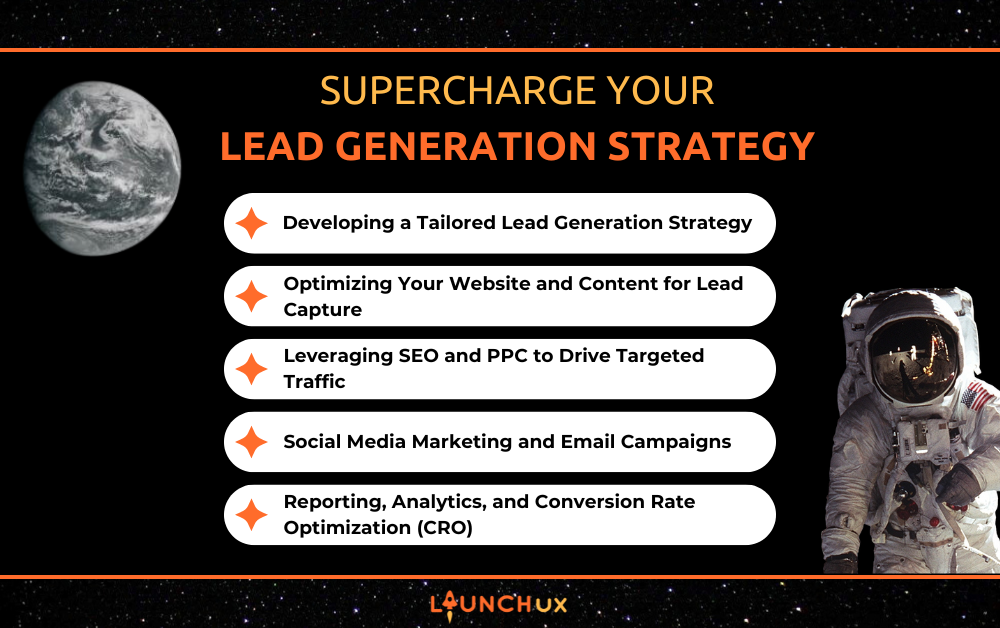
Supercharge Your Lead Generation Strategy

Lead generation is the foundation of any solid digital marketing strategy. It’s all about grabbing the attention of potential customers and converting them into serious leads who are ready to engage with your business. Without it, growth slows down and opportunities slip away. Many businesses hit a wall when trying to capture high-quality leads, often due to a lack of strategy or expertise. That’s where a digital marketing agency like LaunchUX comes in. They bring the experience and tools to optimize your lead generation and convert prospects into loyal customers.

Developing a Tailored Lead Generation Strategy

Creating a Custom Approach for Success

When it comes to lead generation, one-size-fits-all approaches simply don’t work. Every business has unique goals, target audiences, and offerings, and a successful lead generation strategy needs to reflect that. LaunchUX works with each client to create a highly customized lead generation plan. This plan is built around the specifics of the business—whether it’s expanding into new markets, launching a product, or simply increasing conversions from existing traffic. By focusing on a tailored approach, LaunchUX ensures that all marketing efforts align with the core objectives of the business, giving you the best chance of attracting the right leads.

Leveraging Data-Driven Insights for Optimization

With LaunchUX, there’s no guesswork involved. They rely on data-driven insights to refine every aspect of your lead generation strategy. From analyzing website traffic patterns to understanding user behavior, LaunchUX dives deep into the data to see what’s working and what isn’t. This allows them to make adjustments in real time, ensuring that your lead generation tactics are constantly optimized. They track key metrics such as click-through rates, bounce rates, and conversion rates to ensure that your marketing strategies are effectively driving qualified leads. This level of analysis enables LaunchUX to continuously fine-tune campaigns, adapting to changes in customer behavior and market conditions for maximum lead generation impact.

Optimizing Your Website and Content for Lead Capture

Building a User-Friendly Experience

Your website is often the first point of contact for potential leads, and if it’s not optimized for lead capture, you’re missing opportunities. LaunchUX focuses on making sure your website is designed with lead generation in mind. This means implementing clean, easy-to-navigate layouts, fast load times, and mobile-friendly designs to ensure that visitors have a seamless experience. When users land on your site, they should be able to quickly find what they’re looking for without any frustration. The goal is to create a user experience that leads naturally to conversion.

Crafting Effective Landing Pages and CTAs

A great website is only part of the equation—landing pages and calls to action (CTAs) are where the real magic happens. LaunchUX builds highly optimized landing pages that are designed to capture leads with clear, compelling CTAs. These landing pages are crafted to be visually appealing, straightforward, and focused on a single goal: conversion. Whether it’s downloading a guide, signing up for a webinar, or filling out a form for a quote, every page is strategically designed to drive action. LaunchUX also ensures that CTAs are strategically placed throughout your site, making it easy for visitors to take the next step.

Creating Valuable Content to Attract Leads

Content is king in the world of lead generation. LaunchUX understands that providing value through content is key to attracting and nurturing leads. From blog posts and videos to infographics and eBooks, they help businesses create high-quality content that speaks to their audience’s pain points and needs. Offering valuable, informative content not only builds trust but also encourages potential customers to exchange their contact information for something useful. LaunchUX takes it a step further by creating gated content—such as downloadable resources or exclusive offers—designed to capture lead details, turning passive visitors into active prospects.

Leveraging SEO and PPC to Drive Targeted Traffic

SEO for Organic Lead Generation

Search engine optimization (SEO) is one of the most powerful tools for driving organic traffic to your website, which translates directly into lead generation. LaunchUX understands the importance of ranking high on search engine results pages (SERPs). They perform in-depth keyword research to identify terms that potential leads are searching for and optimize your site accordingly. By focusing on both on-page and off-page SEO strategies, such as optimizing meta tags, improving site structure, and building authoritative backlinks, LaunchUX helps businesses rank higher, driving targeted traffic that’s more likely to convert.

PPC Campaigns for Immediate, Targeted Leads

While SEO brings long-term traffic, pay-per-click (PPC) advertising delivers quick, targeted results. LaunchUX designs and manages PPC campaigns across platforms like Google Ads and social media to ensure that businesses attract the right kind of traffic. With precise targeting capabilities, PPC allows you to reach potential leads based on keywords, demographics, location, interests, and behaviors. Whether you’re looking to capture leads for a specific product launch or boost traffic for an ongoing promotion, LaunchUX ensures your ads are set up to drive high-quality traffic. This traffic is carefully targeted to reach the right audience. As a result, it’s more likely to convert into valuable leads.

Combining SEO and PPC for Maximum Results

When SEO and PPC are combined, the results can be exponentially more powerful. LaunchUX integrates both strategies to maximize the impact of your lead generation efforts. For example, the insights gained from PPC campaigns can inform SEO strategies by highlighting which keywords are driving the most conversions. On the flip side, the long-term benefits of SEO can help reduce overall PPC costs by improving organic search rankings. This synergy ensures a well-rounded, effective approach to lead generation that delivers results at every stage of the sales funnel.

Social Media Marketing and Email Campaigns to Engage and Nurture Leads

Social Media for Lead Generation

Platforms like Facebook, Instagram, LinkedIn, and Twitter are powerful tools for engaging potential leads and guiding them through the sales funnel. LaunchUX uses a strategic approach to social media, creating content that resonates with your audience and drives action. Whether it’s through organic posts, paid ads, or sponsored content, social media campaigns are tailored to attract, engage, and convert leads. LaunchUX leverages social media targeting to ensure ads reach the right audience—those most likely to convert into leads and loyal customers.

Email Marketing for Lead Nurturing

Once you’ve captured leads, the work isn’t over. Email marketing is a crucial tool for nurturing those leads and guiding them toward conversion. LaunchUX sets up personalized email campaigns that deliver relevant content, offers, and updates based on where leads are in the sales funnel. By segmenting your email list and sending targeted messages, LaunchUX ensures your leads receive the right communication at the right time. This keeps them engaged and moving through the buying process. Automated email sequences, such as welcome emails, newsletters, and product updates, help maintain consistent communication and encourage ongoing interest.

Automating Lead Nurturing for Better Results

To streamline the lead nurturing process, LaunchUX integrates marketing automation tools. These tools help create automated workflows that send personalized emails based on user actions. This includes activities like downloading content, filling out forms, or clicking on specific offers. By automating repetitive tasks, businesses can maintain constant engagement with their leads without manual intervention. This level of automation ensures that no lead falls through the cracks and that every potential customer is continuously nurtured until they are ready to convert.

Reporting, Analytics, and Conversion Rate Optimization (CRO)

Tracking Performance and Measuring Success

To ensure that lead generation efforts are effective, it’s crucial to track and analyze performance. LaunchUX uses advanced analytics tools to measure key metrics such as traffic, conversion rates, click-through rates, and engagement levels. By constantly monitoring these metrics, LaunchUX can assess what’s working and what isn’t. This allows businesses to make informed decisions about their marketing strategies. Detailed reporting gives businesses insight into how well their lead generation tactics are performing, ensuring they can focus on what delivers the best results.

A/B Testing and Conversion Rate Optimization (CRO)

Once leads are being generated, the next step is converting them into customers. LaunchUX employs A/B testing to optimize landing pages, forms, CTAs, and other crucial elements of the website. This testing compares variations of design and content to see which versions yield the highest conversion rates. By making data-driven adjustments based on test results, LaunchUX continually improves the user experience and increases the likelihood of conversions. This process, known as Conversion Rate Optimization (CRO), ensures that the business gets the maximum return from every lead generated.

Continuous Improvement Through Iteration

Lead generation doesn’t stop once a campaign is launched—it’s an ongoing process that requires constant refinement. LaunchUX continuously evaluates the results of all lead generation activities and makes adjustments as needed. Whether it’s tweaking SEO strategies, refining PPC campaigns, or improving email sequences, the focus is always on optimizing performance. This commitment to continuous improvement ensures that businesses maintain a strong pipeline of high-quality leads, driving long-term growth.

Unlock Your Business’s Lead Generation Potential

Lead generation is a critical component of any successful digital marketing strategy, and with the right approach, businesses can attract and convert high-quality leads that drive growth. LaunchUX offers tailored solutions that address every aspect of the lead generation process. This includes website optimization, content creation, SEO, PPC, social media, email marketing, and continuous performance optimization. With a data-driven, customized strategy in place, businesses can generate more leads, nurture them effectively, and ultimately increase conversions.

Ready to Supercharge Your Lead Generation?

Don’t let your lead generation efforts fall flat. Contact LaunchUX today to get a personalized consultation and start optimizing your digital marketing strategy for maximum lead generation success. Let’s turn your website into a powerful lead-generating machine.

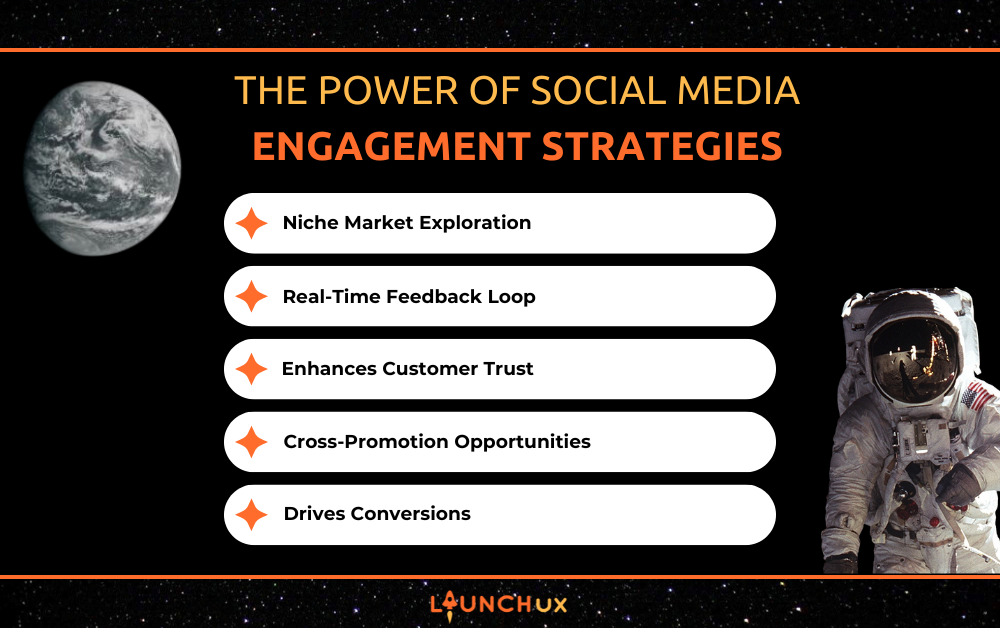
The Power of Social Media Engagement Strategies

Engagement strategies for social media, facilitated by the unique features of each platform, have become essential for brands intending to build relationships with their consumers. These strategies foster relationships and drive business growth by creating meaningful user interactions. Businesses can uncover unique opportunities that enhance their overall impact by leveraging specific tactics. Familiarizing themselves with the intricacies of social media engagement is imperative for brands wanting to prosper in an increasingly competitive market. Companies establish a strong presence and resonate with their target audiences. Through effective engagement with help from LaunchUX, companies can establish a strong presence and resonate with their target audiences.

Niche Market Exploration

Discovering Unique Segments

One of the most exciting advantages of effective engagement strategies is the ability to explore niche markets. It’s like embarking on a journey of discovery. By actively engaging with specific communities on social media, brands can uncover unique customer segments that may have previously gone unnoticed. This targeted approach allows businesses to identify groups with common interests, leading to more effective marketing campaigns. Engaging with these niche audiences enhances brand loyalty and creates opportunities for tailored messaging that resonates deeply with potential customers. By focusing on niche segments, brands can establish valuable relationships and encourage a sense of collaboration.

Tailored Messaging

These niche audiences often possess specific interests and needs, which presents a unique opportunity for brands. Tailoring offerings to meet these needs can lead to higher customer satisfaction and loyalty. Additionally, engaging with niche markets can give valuable insights into customer preferences, enabling brands to adapt their strategies accordingly. By recognizing the distinct characteristics of these segments, businesses can develop marketing messages that speak directly to their interests. This level of personalization strengthens relationships and encourages ongoing engagement.

Strengthening Brand Loyalty

Moreover, exploring niche markets can help brands stand out in a crowded marketplace. Focusing on specific communities can differentiate a brand from its competitors in a world where consumers are bombarded with information. This strategic approach increases visibility and positions the brand as a leader within those niche spaces. Engaging with niche segments allows for more authentic connections, which can translate into strong word-of-mouth marketing. As clients relay favorable feedback, brands can enjoy organic growth and increased awareness within their target markets.

Real-Time Feedback Loop

Instant Insights

Social media provides a powerful real-time feedback loop, enabling brands to gather immediate insights on their products or campaigns. This instant feedback mechanism allows businesses to make quick adjustments and improvements based on customer reactions. By actively monitoring engagement, brands can identify what resonates with their audience and what doesn’t. This attentiveness is essential in an ever-evolving marketplace where trends can shift rapidly. Embracing real-time feedback demonstrates a brand’s commitment to continuous improvement and customer satisfaction, necessitating a dynamic approach to engagement strategies.

Agility in Marketing

When brands receive immediate feedback, they can quickly adapt their strategies. For example, if a particular post generates a lot of engagement, brands can capitalize on that momentum by creating similar content. Conversely, if a campaign isn’t performing well, quick adaptations can be undertaken to strengthen its effectiveness. This level of agility is essential for staying relevant in an ever-changing landscape. Brands that prioritize real-time feedback improve their products and show their audience that they are listening and responding to their needs.

Continuous Improvement

The ability to gather insights instantly also fosters a culture of innovation within the brand. Teams can brainstorm ideas based on customer sentiments, leading to fresh and relevant offerings. This proactive approach ensures the brand remains aligned with its audience’s preferences and expectations. Additionally, engaging with customers during product development can lead to co-creation opportunities, further enhancing loyalty. Ultimately, leveraging the real-time feedback loop sets the stage for ongoing success and customer engagement.

Enhances Customer Trust

Building Credibility

Building trust is essential for any brand; social media engagement strategies are pivotal. When brands actively engage with their audience, they signal that they value customer feedback and opinions. This straightforwardness enhances perceptions of trust and reliability, encouraging customers to form a deeper connection with the brand. By prioritizing engagement, businesses can cultivate long-lasting relationships built on trust. Trust plays a vital role in fostering customer loyalty, often translating into repeat business and positive referrals.

Fostering Loyalty

While engagement strategies that prioritize customer interaction create an environment of open communication, it’s important to note that customers who feel heard are likelier to share their experiences and provide constructive comments. This collaborative interaction enhances overall customer satisfaction and improves a brand’s reputation. However, it’s also important to be aware that engaging with niche segments can also amplify negative feedback if not managed carefully. Moreover, demonstrating responsiveness in addressing concerns or questions illustrates that the brand is attentive to its customers. This commitment to customer service is a powerful driver of trust and loyalty.

Encouraging Open Communication

Furthermore, brands that engage with their audience can effectively manage their reputation. By addressing negative feedback or criticism promptly, brands can mitigate potential damage. Engaging with customers during challenging times demonstrates a commitment to transparency and accountability. This proactive approach helps to strengthen trust, as patrons perceive that the brand is committed to taking responsibility for its actions. Enhancing customer trust through effective engagement strategies is essential for long-term success.

Cross-Promotion Opportunities

Strategic Collaborations

Engaging with other brands or influencers opens the door to valuable cross-promotion opportunities. It’s not just about promotion; it’s about building a community. Collaborative efforts can create mutually beneficial partnerships that broaden reach and enhance visibility. When brands engage with influencers or complementary businesses, they tap into new audiences that may not have been accessible otherwise. This type of strategic collaboration amplifies marketing efforts and fosters a sense of community among brands. As a result, both parties can benefit from increased exposure and engagement.

Tapping into New Audiences

By forming partnerships, brands can share resources and insights, further enriching their marketing strategies. Cross-promotion allows for innovative campaigns that leverage the strengths of both brands, creating a win-win scenario. For instance, co-hosting events or contests can generate excitement and engagement from both audiences. These collaborative initiatives not only increase brand awareness but also enhance customer experiences. When customers see brands working together, it fosters a sense of trust and credibility.

Strengthening Brand Presence

Engaging with other brands can also create creative content opportunities that captivate audiences. By combining efforts, brands can produce unique content that resonates with both communities. This type of engagement entertains and educates customers, positioning the brands as thought leaders. As brands work together, they can explore new ideas and expand their horizons. Ultimately, cross-promotion opportunities enrich the engagement strategy, leading to sustained growth and success.

Drives Conversions

Encouraging Desired Actions

One of the most compelling reasons to invest in engagement strategies is their ability to drive conversions. It’s about empowering your audience to take action. Engaged users are likelier to take desired actions, such as making purchases, signing up for newsletters, or sharing content with their networks. By creating meaningful interactions, brands can nurture relationships, encouraging users to move along the conversion funnel. This strengthened engagement effectively leads to increased conversion rates and contributes to overall business success. Understanding how to engage users effectively is key to maximizing conversion potential.

Nurturing Relationships

Furthermore, engagement strategies can help brands identify what drives customer action. Businesses can uncover trends that demonstrate which content styles resonate strongly by analyzing engagement metrics. This insight allows brands to refine their messaging and direct efforts toward solutions that provide the most significant benefits. Engaging users through personalized content and targeted promotions can significantly enhance conversion rates. As customers feel more connected to a brand, they are more inclined to make purchases or share their positive experiences.

Measuring Success

Moreover, fostering a sense of community around a brand can lead to increased conversions. When customers feel part of a larger group, they are more likely to advocate for the brand and influence their circles. This personal recommendation can serve as a potent force for conversions, as recommendations from friends and family hold significant weight. By prioritizing engagement, brands can create a loyal following that actively participates in their growth. Effective engagement strategies are essential for driving conversions and achieving long-term success.

Conclusion

Social media engagement strategies are not just about posting content but about building relationships, gathering insights, and driving results. By exploring niche markets, leveraging real-time feedback, enhancing customer trust, fostering cross-promotion opportunities, and driving conversions, brands can fully leverage their opportunities on social media platforms. These strategies contribute to a cohesive approach that enhances overall engagement and growth. As social media evolves, brands must adapt their strategy to remain relevant and impactful.

Are you ready to elevate your social media game? Contact LaunchUX today, start implementing these engagement strategies, and watch your brand thrive!

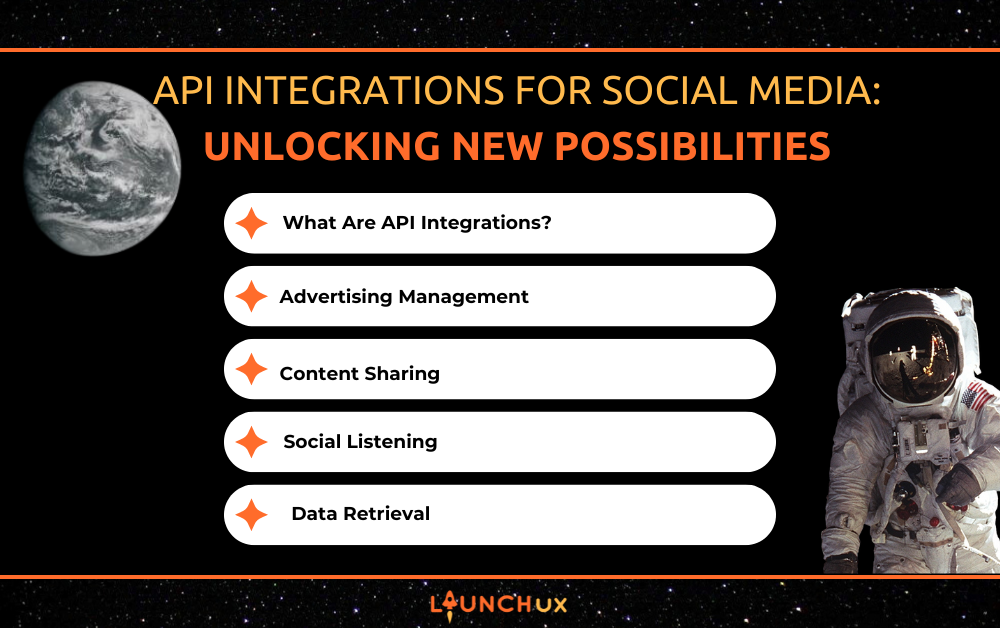
API Integrations for Social Media: Unlocking New Possibilities

API integrations have become essential for brands wanting to strengthen their social media footprint. By leveraging Application Programming Interfaces (APIs), companies can connect various social media platforms with their applications, streamlining processes and unlocking a wealth of functionality. These integrations allow brands to communicate more effectively with their audiences and access powerful features that improve engagement. LaunchUX can help you learn how API integrations work and how their benefits can significantly impact your brand’s ability to engage effectively. Ultimately, these connections provide the tools necessary for businesses to take control of their social media strategies and thrive in a competitive environment.

What Are API Integrations?

API integrations refer to the connections between different software applications using APIs, which are rules that allow programs to communicate. These interfaces enable systems to share data seamlessly, making it easier for businesses to interact with social media platforms. In the context of social media, API integrations allow brands to enhance user experience and operational efficiency by tapping into various platform functionalities. For instance, they can automate posting, retrieve analytics, or even manage advertising campaigns directly from their applications. By connecting their software to social media APIs, brands can streamline their processes and create a more cohesive online presence.

Seamless Communication

API integrations facilitate seamless application communication, ensuring data flows smoothly across platforms. This capability allows businesses to synchronize their efforts and maintain consistency in messaging. With seamless communication, brands can quickly adapt to changes in their marketing strategies. As a result, they can respond faster to audience needs and preferences, enhancing overall customer satisfaction. Moreover, this efficiency helps businesses stay competitive in a rapidly evolving digital landscape.

Enhanced User Experience

By integrating APIs, businesses can provide a more cohesive and engaging user experience. A well-integrated platform allows customers to interact with a brand without unnecessary barriers. For example, users can share content or access services directly from third-party applications. This streamlined experience not only saves time but also encourages more frequent interactions. Ultimately, an enhanced user experience fosters loyalty and increases the likelihood of conversions.

Operational Efficiency

These integrations reduce manual processes, allowing teams to emphasize long-term planning instead of day-to-day tasks. By automating routine functions, businesses can allocate resources more effectively. This operational effectiveness brings about cost reductions and heightened productivity across departments. Teams can leverage their time and skills to innovate and refine their strategies. Overall, API integrations enhance a business’s agility, enabling it to adapt to market changes swiftly.

Advertising Management

API integrations in social media play a pivotal role in advertising management. Various social media networks supply APIs that allow businesses to programmatically create, monitor, and analyze ad campaigns. This functionality empowers marketers to optimize their advertising strategies by accessing real-time performance metrics. With API integrations, brands can target specific demographics, track conversions, and adjust campaigns based on data-driven insights. This level of control helps maximize return on investment and ensures that advertising efforts are aligned with business goals.

Real-Time Adjustments

API integrations allow marketers to make real-time adjustments to their ad campaigns based on performance data. This capability means that brands can pivot quickly in response to trends or unexpected changes in audience behavior. Immediate access to analytics empowers teams to test different strategies and optimize ad placements effectively. By continually refining their approach, businesses can increase their overall ad effectiveness. Real-time adjustments ultimately lead to more successful campaigns and improved engagement.

Targeted Advertising

These integrations enable more precise targeting of specific demographics and user interests. By harnessing information from multiple channels, brands can produce highly personalized ad experiences. Targeted advertising heightens the possibility of user interaction because users often find themselves drawn to content that resonates with them. This intentional strategy not only elevates customer satisfaction but also improves conversion rates, enabling brands to cultivate more robust relationships with their audiences.

Improved ROI

Optimizing ad strategies through data insights can help businesses achieve a higher return on investment. API integrations provide the tools needed to measure advertising efforts’ effectiveness accurately. This analytical capability allows brands to allocate their budgets more efficiently and focus on high-performing campaigns. The result is a more profitable advertising strategy that aligns with overall business objectives. Improved ROI is a crucial metric for any brand seeking long-term growth.

Content Sharing

Another valuable aspect of API integrations for social media is content sharing. APIs enable users to post updates, images, or videos directly from third-party applications to their social media accounts. This capability simplifies the sharing process, allowing businesses to sustain a cohesive online presence without frequent logins into each platform. By integrating content-sharing functionalities, brands can streamline their marketing efforts and ensure their messages reach audiences across multiple channels. This seamless sharing not only enhances engagement but also saves time, making businesses more efficient and productive.

Streamlined Processes

Integrating content-sharing capabilities streamlines the posting process across various platforms. Brands can pre-schedule posts, guaranteeing a steady delivery of content without needing manual oversight. This automation helps maintain an active online presence, which is crucial for audience engagement. Thus, businesses can dedicate their efforts to producing high-quality content rather than worrying about logistics. Streamlined processes ultimately lead to more efficient marketing strategies.

Consistent Branding

APIs help maintain consistent branding by allowing simultaneous posts across multiple social media accounts. Cohesion plays a significant role in creating brand recognition and trust among consumers. When a brand’s messaging aligns across platforms, it makes a cohesive identity that resonates with audiences. This alignment reinforces brand values and enhances customer loyalty. Harmonized branding is fundamental for achieving a solid market presence.

Increased Engagement

Easier sharing leads to higher engagement rates, as users can interact conveniently with content. When sharing is simplified, audiences are likelier to involve themselves in exchanges or relate their experiences. Greater engagement builds a strong community surrounding the brand, encouraging deeper connections with consumers. This dynamic can lead to organic growth as engaged users become brand advocates. Ultimately, increased engagement translates to higher visibility and impact.

Social Listening

API integrations additionally have a vital impact on social listening, allowing businesses to monitor mentions, comments, and interactions across various social media platforms. By integrating these capabilities, brands can effectively maintain their web reputation and engage with customer feedback promptly. Social listening through API integrations provides valuable insights into public perception, enabling companies to proactively identify trends and address concerns. This way of working augments customer satisfaction and develops a sense of community, making the audience feel more connected and involved.

Reputation Management

Effective social listening helps brands manage their online reputations by tracking customer sentiments. Businesses can proactively address any issues by understanding how consumers perceive their brand; monitoring mentions allows for quick responses to negative feedback, demonstrating a commitment to customer care. This cautiousness can avert minor problems from escalating into more significant crises. Reputation management through social listening is essential for maintaining trust and credibility.

Proactive Engagement

API integrations allow for proactive customer engagement, addressing issues before they escalate. Brands can reach out to users who express concerns or negative sentiments, showing that they value their opinions. This proactive approach not only resolves issues but also strengthens relationships with customers. By fostering open communication, businesses can create a loyal customer base that feels listened to and valued. Proactive engagement is key to building long-lasting connections.

Building Community

By actively listening, brands can foster a stronger community among their followers. Social listening enables companies to identify common interests and engage in conversations that matter to their audience. This engagement helps create a more connected and loyal customer base. When users feel a sense of belonging, they are more likely to advocate for the brand. Building community through social listening is crucial for sustaining growth and loyalty.

Data Retrieval

Accessing social media data is another significant benefit of API integrations. Developers can retrieve valuable information through social media APIs, such as user profiles, posts, and analytics. This insight allows businesses to examine trends, monitor engagement, and gather insights that inform their marketing strategies. By leveraging data retrieval capabilities, brands can better understand their audience’s preferences and behaviors, leading to more effective targeting and content creation. This analytical approach enables businesses to leverage insights for strategic choices and enhance their social media presence for maximum effectiveness.

Trend Analysis

API integrations provide access to data that helps brands analyze trends and adapt their strategies accordingly. By identifying patterns in user behavior, companies can pivot their marketing efforts to align with current interests. Brands that analyze trends are better equipped to capitalize on new opportunities and address challenges. Trend analysis through data retrieval empowers businesses to remain competitive.

Enhanced Targeting

Understanding audience preferences enables more precise targeting in marketing campaigns. By analyzing data, brands can create personalized content that resonates with specific user segments. Enhanced targeting leads to higher interaction rates and conversion outcomes because customers are more likely to connect with relevant messaging. This level of personalization helps build stronger relationships with audiences, ultimately contributing to improved marketing effectiveness.

Informed Decision-Making

Data insights lead to better decision-making, ensuring strategies are aligned with customer needs. By leveraging analytics, businesses can identify what works and what doesn’t, allowing for continuous improvement. Informed decision-making reduces guesswork and enhances overall strategy effectiveness. Brands that make data-driven decisions are more likely to achieve their goals and meet audience expectations. Ultimately, informed decision-making is vital for long-term success.

Conclusion

API integrations for social media offer many opportunities for businesses focused on growing their digital engagement and engaging with their audiences effectively. By employing the effectiveness of APIs, brands can streamline advertising management, simplify content sharing, enhance social listening, and access valuable data insights. Embracing API integrations improves operational efficiency and empowers businesses to develop more profound engagement with their audience.

Are you ready to unlock the full potential of your social media strategy? Start exploring API integrations, contact LaunchUX today, and take your engagement to the next level!

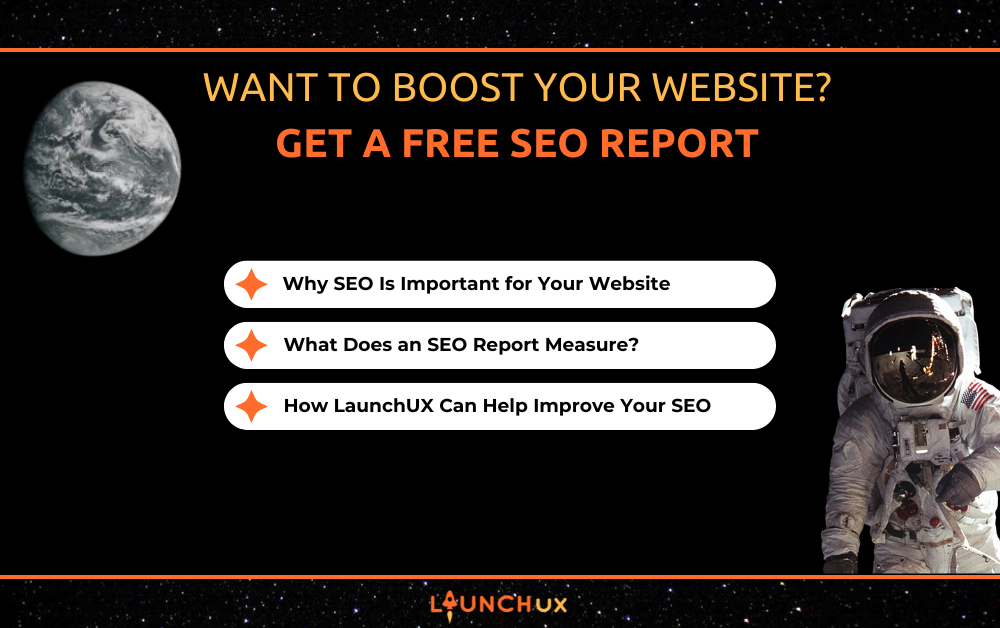
Want to Boost Your Website? Get a Free SEO Report

Businesses need a strong online presence to attract customers, and Search Engine Optimization (SEO) is key to achieving that. SEO helps your website rank higher in search results, making it easier for potential customers to find you. It also improves user experience by making your site faster, more navigable, and mobile-friendly, while building trust and credibility with both search engines and users. Without effective SEO, your website may get lost in search results, limiting your growth. LaunchUX’s free SEO report gives you the insights you need to improve your site’s performance and visibility, helping you connect with more customers.

Why SEO Is Important for Your Website

Search Engine Optimization (SEO) is essential for ensuring your website is visible and accessible to your target audience. Below are some of the key reasons why SEO is so important for your website’s success:

Increases Visibility and Organic Traffic

Without SEO, your website is likely to get lost in the vast sea of content on the internet. When you optimize your website, it becomes easier for search engines like Google to understand your content and rank it higher in search results. Higher rankings lead to more visibility, which means more visitors to your site. Organic traffic refers to visitors who find your site through search engines. It is one of the most valuable sources of traffic because it’s both free and targeted.

Improves User Experience

SEO isn’t just about search engines; it’s also about your users. A well-optimized website provides a better user experience by making it faster, easier to navigate, and mobile-friendly. Search engines reward websites that provide a good user experience with higher rankings, so focusing on SEO can directly improve the way visitors interact with your site.

Builds Trust and Credibility

Websites that rank higher in search results are often seen as more trustworthy and credible by users. SEO helps ensure that your website is secure, loads quickly, and provides valuable, relevant content. All these factors help build trust with both your audience and search engines. A strong online reputation can lead to increased customer confidence, more conversions, and a greater overall presence.

Enhances Local SEO and Targeting

For local businesses, SEO is a powerful tool to attract nearby customers. By optimizing your website for local searches, you can ensure that potential customers in your area can easily find you. This includes optimizing for “near me” searches and ensuring your website is listed correctly on Google My Business and other local directories.

Provides Long-Term Results

Unlike paid advertising, which stops driving traffic once you stop paying, SEO provides long-term results. Once your website ranks well for certain keywords, it can continue to attract organic traffic for months or even years. SEO is an investment that pays off over time, helping you grow your business sustainably.

In short, SEO is critical for improving your website’s visibility, user experience, and credibility. Without it, your website may struggle to attract the right audience, limiting your potential for growth. By focusing on SEO, you can ensure your business stays competitive and continues to attract new customers.

What Does an SEO Report Measure?

LaunchUX’s free SEO report evaluates several key areas that affect how well your website performs and how easily it can be found by search engines. Here’s a breakdown of what the report measures:

SEO (Search Engine Optimization)

This section looks at how well your website is optimized for search engines. It checks things like meta tags (title and description), header tags (H1, H2), keyword usage, and whether your images have proper alt text. The report also checks the structure of internal and external links and ensures that important files like robots.txt and XML sitemaps are set up correctly to help search engines crawl your site.

Performance

A fast website is crucial for both user experience and SEO rankings. This section measures your website’s page load speed, overall page size, and the number of requests made when the page loads. It also checks for the use of caching and compression, and whether the code is optimized to reduce unnecessary elements that could slow the site down.

Mobile Usability

Since mobile traffic makes up a large portion of web visits, this section checks if your site is mobile-friendly. It ensures your website has a responsive design that adjusts to different screen sizes, and checks if text is readable without zooming, buttons are easy to tap, and touch interactions work smoothly.

Social Presence

While social media doesn’t directly impact SEO rankings, having an active presence online can help increase your brand’s visibility. The report looks at how well your website is integrated with social media, ensuring links to your social profiles are included, and that your content is optimized for sharing on platforms like Facebook, Instagram, and Twitter.

Security

Website security is essential not only for protecting your data but also for boosting your site’s credibility with both users and search engines. This section checks if your website is secured with HTTPS, verifies that there are no security warnings or vulnerabilities, and ensures that outdated software doesn’t pose a risk to your website’s safety.

Each of these areas is crucial for improving your website’s ranking, user experience, and overall effectiveness at attracting and retaining visitors. By identifying strengths and weaknesses, the SEO report provides valuable insights that can help you improve your site’s performance and visibility.

How LaunchUX Can Help Improve Your SEO

Once you’ve received your free SEO report, LaunchUX can help you address any issues and optimize your website to boost its performance. Here are a few ways we can assist:

On-Site SEO Optimization

LaunchUX can help you fine-tune your website’s meta tags, header tags, and keyword usage to ensure your content aligns with SEO best practices. We’ll also ensure that internal and external links are set up properly and that your images are optimized with alt text to boost both accessibility and SEO.

Improving Website Performance

A slow website can hurt your rankings and drive visitors away. LaunchUX can optimize your site’s speed by reducing page sizes, minimizing requests, and ensuring that caching and compression are in place. We’ll also clean up unnecessary code to improve loading times.

Mobile Optimization

With more users browsing on mobile devices, it’s crucial that your site is mobile-friendly. LaunchUX can make sure your website has a responsive design that adapts to different screen sizes, making it easy for visitors to navigate and interact with your site.

Enhancing Social Media Integration

LaunchUX can ensure that your website is well-connected to social media platforms by adding social media links. We optimize content for sharing to increase your visibility. Additionally, we ensure your site’s posts appear rich on platforms like Facebook and Twitter. This can help increase traffic to your website and enhance your brand visibility.

Strengthening Security

Website security is a top priority for both users and search engines. LaunchUX can help implement HTTPS and fix any vulnerabilities. We can also update outdated software to ensure your site remains secure, trustworthy, and free from any security risks.

By addressing the issues identified in your SEO report, LaunchUX can help you improve your website’s SEO, enhance its user experience, and increase its visibility on search engines.

Conclusion

SEO is a vital part of any successful online strategy, helping businesses improve their visibility and attract more visitors. LaunchUX’s free SEO report provides a detailed analysis of your website’s performance, pinpointing areas that need improvement and offering actionable insights to help you rank higher on search engines.

By reviewing important factors like SEO optimization, performance, mobile usability, social presence, and security, the SEO report gives you a clear understanding of where your website stands and how to make it more effective. With LaunchUX’s help, you can take the necessary steps to improve your website, drive more traffic, and grow your business.

Ready to boost your website’s performance? Get your free SEO report from LaunchUX today and start optimizing your site for success!

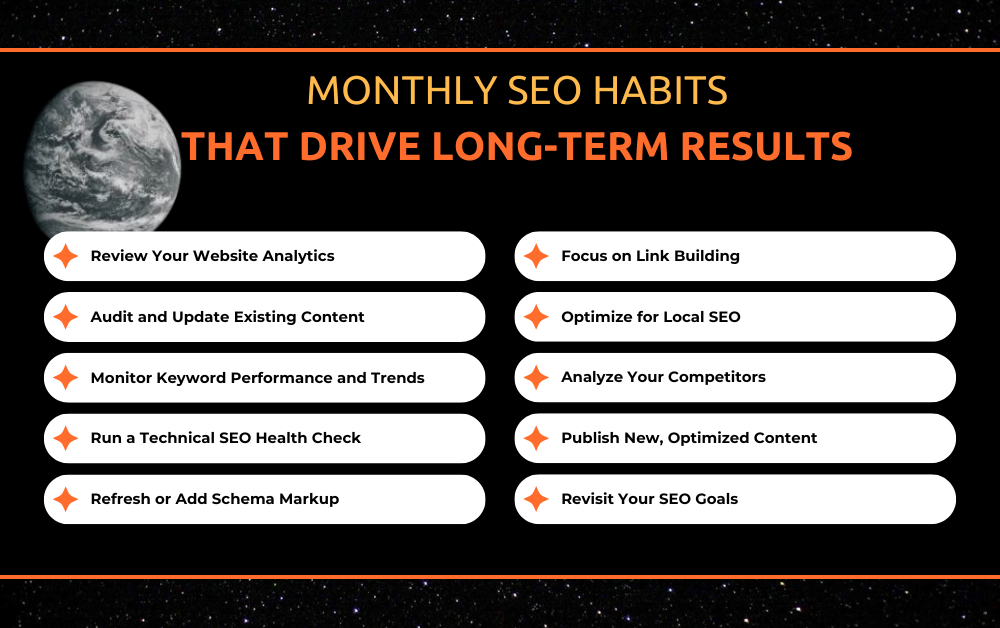
Monthly SEO Habits That Drive Long-Term Results

Search engine optimization isn’t about shortcuts—it’s about consistency. Many business owners make the mistake of thinking SEO is something you check off once and forget. In reality, SEO is an ongoing investment. Think of it like maintaining a vehicle. If you want peak performance, you don’t skip oil changes or tire rotations. The same goes for your website. At LaunchUX, we help businesses build sustainable SEO strategies by focusing on what truly works—recurring, strategic actions that compound over time. In this blog, we’re breaking down the monthly SEO habits that form the foundation of long-term results.

1. Review Your Website Analytics

Your analytics tell the real story of how your website is performing. Each month, log into Google Analytics and Google Search Console to answer key questions:

  1. How many visitors came to your site this month?
  2. Where is your traffic coming from? (organic, direct, social, paid, referral)
  3. What are your top-performing pages?
  4. What’s your bounce rate, average session duration, and conversion rate?

This monthly review helps you spot patterns before they become problems. For example, if traffic drops to a previously high-ranking page, that might be a sign of lost rankings or outdated content. Or if a blog post suddenly gains traction, it could be an opportunity to build out more content around that topic.

At LaunchUX, we use this data to drive decisions—from what content to update, to which keywords to prioritize next. If you’re flying blind, you’re wasting time.

2. Audit and Update Existing Content

You don’t always need to publish new content to boost rankings. Sometimes, your best SEO wins come from refreshing what you already have.

Each month, choose 3–5 key pages or blog posts to audit. Look for:

  • Outdated statistics or links
  • New opportunities to add images, FAQs, or examples
  • Internal linking opportunities to newer content
  • Missed keyword opportunities based on performance

If the page is already ranking well, small improvements can push it into the top 3 positions on Google—which is where the majority of clicks happen.

Pro tip: Use Google Search Console’s “Pages” tab to see which articles are receiving impressions but not clicks. These are prime candidates for a refresh.

SEO is a moving target. The keywords that worked last year might not bring in traffic today. Each month, review:

  • Which keywords are gaining traction?
  • Which ones are slipping in rank?
  • Are there new questions or phrases users are searching for in your niche?

Using tools like Ahrefs, SEMrush, or even Google Search Console, you can spot rising trends and adapt your content strategy accordingly. Look for long-tail keyword opportunities—these tend to have less competition and higher intent.

For example, if you run an HVAC company, a blog targeting “how to reduce electric bill in summer” might outperform a generic “AC maintenance” post simply because it speaks to a more urgent, user-focused question.

At LaunchUX, we track keyword movement regularly so our clients can stay ahead of their competitors and align their content with real-time search behavior.

4. Run a Technical SEO Health Check

Even if your content is great, technical issues can drag your rankings down. Every month, do a quick crawl of your site using tools like:

  • Screaming Frog
  • Sitebulb
  • Ahrefs Site Audit
  • Google Search Console Coverage Report

Key issues to look for:

  • Broken links (404s)
  • Redirect chains or loops
  • Duplicate meta descriptions or title tags
  • Missing alt text on images
  • Slow-loading pages
  • Mobile usability errors

Also, review your Core Web Vitals (speed, responsiveness, and visual stability). These are officially part of Google’s ranking algorithm, and they directly impact user experience.

A monthly audit may seem like overkill, but it’s a lot easier to fix a few small issues now than to recover from a major drop in rankings later.

5. Refresh or Add Schema Markup

Schema markup is behind-the-scenes code that helps search engines better understand your content. It can also trigger rich snippets—those extra bits of info like star ratings, event times, or FAQs that show up in search results and improve your click-through rate.

Each month:

  • Review your current schema for accuracy
  • Add new schema to fresh content (e.g., product, article, FAQ, review, etc.)
  • Use Google’s Rich Results Test to check implementation

Even small updates, like adding an FAQ schema to a blog post, can improve visibility and get you ahead of the competition on the search results page.

Links are still one of the top 3 Google ranking factors. But building high-quality backlinks is a long-term game—which makes it perfect for a monthly habit.

Here are some simple link-building actions to take each month:

  • Reach out to blogs or industry websites for guest posting opportunities
  • Promote your best-performing content on social media and email
  • Reclaim unlinked brand mentions using tools like Ahrefs’ Content Explorer
  • Submit to relevant directories and business associations

Also, keep an eye on your backlink profile. Tools like Ahrefs or SEMrush can show you which sites are linking to you, whether those links are high-quality, and if you’ve lost any important links recently.

7. Optimize for Local SEO (If You Serve a Region)

If your business has a physical location or serves specific areas, local SEO is critical to your success. It’s what gets you found in map results and “near me” searches.

Each month, check:

  • Is your Google Business Profile up to date with hours, photos, and offers?
  • Have you responded to new reviews (good or bad)?
  • Is your NAP (name, address, phone number) consistent across directories like Yelp, Bing Places, and local chambers of commerce?
  • Can you add a location-specific blog or landing page?

Local SEO takes time to build, but the reward is visibility right when potential customers are ready to buy.

At LaunchUX, we offer tailored local SEO strategies for small businesses that want to dominate in their own backyard.

8. Analyze Your Competitors

What are your top competitors doing this month that you’re not?

  • Are they publishing new content regularly?
  • Have they redesigned their site or added new product pages?
  • Are they getting backlinks from new sources?
  • Did their rankings improve for keywords you both target?

Monthly competitor research helps you stay sharp. You don’t need to copy their strategy—but you should know where you stand. Look for content gaps or ways to differentiate yourself.

You can track this manually, or use competitor-tracking tools built into platforms like SEMrush or SpyFu.

9. Publish New, Optimized Content

Fresh content keeps your site relevant and gives search engines new pages to index. Every month, aim to create and publish:

  • Blog posts that answer your customers’ questions
  • Service pages or landing pages for new offerings
  • Updated guides, resources, or how-to articles
  • Video transcripts or infographics with accompanying blog posts

Not sure what to write about? Your analytics and keyword reviews (see habits #1 and #3) will usually point you in the right direction.

At LaunchUX, we build content calendars for clients that align with their seasonal goals and search demand—so nothing is random and every piece has a purpose.

10. Revisit Your SEO Goals

It’s easy to get lost in the weeds with SEO. Each month, take a step back and review your broader goals:

  • Are your rankings improving for your core keywords?
  • Are you generating more qualified leads or traffic?
  • Which strategies are working—and which ones aren’t?

SEO is a long-term game, but that doesn’t mean you shouldn’t make adjustments. If your blog strategy isn’t moving the needle after a few months, shift focus. If one service page is outperforming the rest, double down.

This step ensures that your monthly habits aren’t just busy work—they’re actually driving results.

Final Thoughts: SEO Success Comes from Consistency

You don’t need to spend 20 hours a week on SEO. But you do need to have these SEO habits. These monthly habits are how you build authority, improve visibility, and stay ahead of your competition.

Most importantly? They compound over time. The work you do this month will make next month’s efforts even more impactful.

If you don’t have the time or team to manage these tasks, LaunchUX is here to help. From full-scale SEO campaigns to content planning and monthly reporting, we provide everything you need to grow your digital footprint without the guesswork.

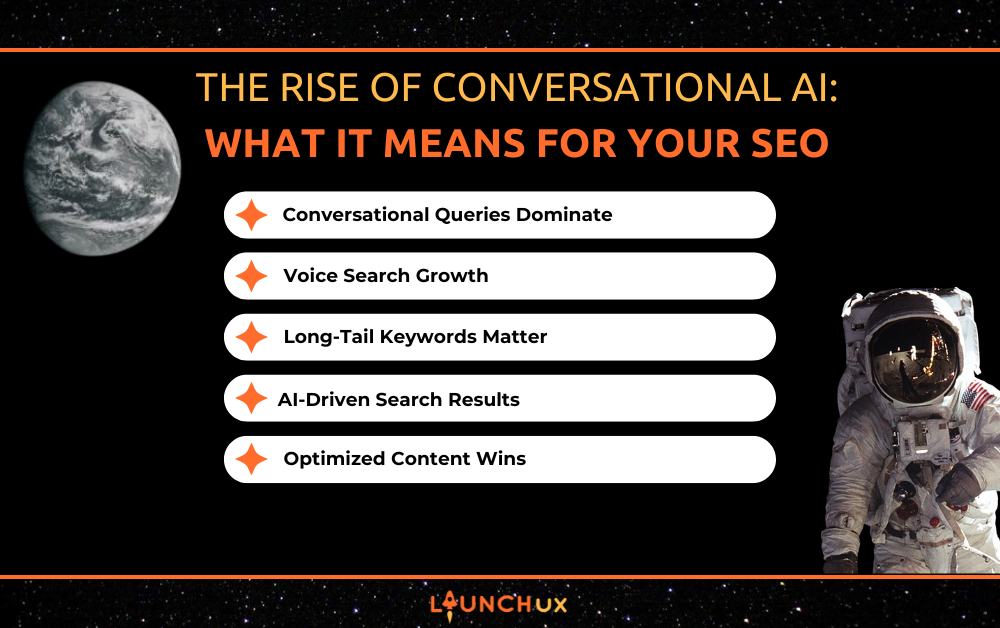
The Rise of Conversational AI: What it Means for Your SEO

Conversational AI, technology designed to understand and respond naturally to user queries, is rapidly reshaping online search. Users are moving away from traditional keyword searches, opting instead for full sentences and question-based interactions. This evolution means businesses and marketers must adapt their SEO strategies to align with how people now seek information online. In this blog, we’ll examine how conversational AI is influencing search behaviors, what it means for your website’s visibility, and why staying ahead of these trends is essential for long-term success.

Understanding Conversational AI

What is Conversational AI?

Conversational AI refers to artificial intelligence technology designed to interact naturally with humans, enabling human-like conversations through text or voice. Tools like chatbots, virtual assistants, and voice-enabled devices (e.g., Siri, Alexa, Google Assistant) rely on this technology to understand and respond effectively to user queries.

Why is Conversational AI Growing in Popularity?

Several factors are driving the rapid rise of conversational AI:

  • Rise of Mobile and Voice-Activated Devices: With smartphones, smart speakers, and voice assistants becoming household staples, users increasingly interact with technology through spoken, natural language.
  • Preference for Natural Interactions: Users prefer conversational interactions over traditional keyword-based searches. Queries are more likely phrased as questions or full sentences, resembling human-to-human conversation rather than robotic commands.
  • Search Engines Embrace Conversational AI: Google, Bing, and other search engines are rapidly evolving to better understand user intent and context through AI. They now deliver search results that match conversational queries more effectively, significantly influencing search engine optimization (SEO).

For businesses and marketers, recognizing and adapting to this shift toward conversational AI is crucial. Understanding this evolution allows you to optimize content more effectively and stay ahead in a quickly changing digital landscape.

How Conversational AI Impacts Search Habits

The rise of conversational AI has fundamentally shifted how people approach online searches. Previously, search queries were short, keyword-based phrases like “best coffee shop.” Today, searches often take the form of longer, more specific questions, such as “What’s the best coffee shop near me open now?” or “Where can I find affordable landscaping services near me?”

Understanding this shift is essential for SEO success. Conversational queries often include natural phrases and specific questions. Businesses that optimize their content to directly answer these queries gain higher visibility in search results.

Why Conversational Searches Matter:

  • Voice Search Popularity: Voice-enabled devices and smartphone assistants encourage users to speak complete questions, changing typical search behaviors.
  • Natural Language Queries: Users increasingly prefer interactions that mirror everyday conversation, leading to searches like, “Where can I find a good pizza restaurant near me?” instead of simply “pizza restaurant.”
  • Search Engines’ Semantic Understanding: Search engines now use AI to understand the intent behind queries, rather than relying solely on keywords. As a result, content that clearly addresses user intent tends to rank better.

In short, conversational AI has made online search more personal, natural, and direct. For your business to remain competitive, your SEO strategy must evolve accordingly.

Implications for Your SEO Strategy

As conversational AI reshapes search behaviors, businesses must refine their SEO strategies to remain competitive. Here’s how your company can leverage conversational search trends for better visibility and engagement:

Content Optimization for Conversational Queries

Users now expect direct answers to specific, conversational questions. To optimize for these queries:

  • Structure content around common questions your audience asks.
  • Use headers, FAQ sections, and conversational language to match user search habits.

For example, rather than targeting short phrases like “website hosting,” optimize for queries such as “What’s the best website hosting for small businesses?”

The move toward conversational queries requires a shift to long-tail keywords—longer, more specific phrases reflecting natural speech patterns.

  • Identify Conversational Phrases: Use tools like Google’s “People Also Ask,” AnswerThePublic, or keyword research tools to discover common conversational queries your audience uses.
  • Prioritize User Intent: Focus on contextually relevant content that clearly answers specific questions, increasing your visibility in semantic search results.

Structured Data and Direct Answers

Search engines increasingly prioritize direct, concise answers to conversational queries through featured snippets. Utilizing structured data can significantly boost your chances of being featured prominently.

  • Implement Structured Data (Schema Markup):
    Structured data helps search engines clearly identify your content’s intent and relevance, increasing the chance of being featured in prominent positions.
  • Provide Concise Answers:
    Ensure your content directly answers specific user questions. Short, clear answers are more likely to appear in featured snippets, instantly enhancing visibility.

By embracing these conversational AI-driven strategies, your business can significantly boost its search visibility and relevance in a rapidly evolving SEO landscape.

Practical Tips to Adapt Your SEO for Conversational AI

Adapting your SEO strategy for conversational AI isn’t complicated—it simply requires smart adjustments to your approach. Here are practical tips to help your business thrive:

Create Conversational, User-Friendly Content

  • Write as if you’re directly addressing the user, using natural, approachable language.
  • Develop content structured around common user questions and clear, informative answers.
  • Use FAQ sections to address specific conversational queries directly.
  • Focus on long-tail keywords that mimic spoken queries.
  • Include local context for users searching with voice commands (e.g., “near me” or “nearby”).
  • Ensure your content is readable and scannable for mobile users on smaller screens.

Improve Your Website’s Speed and User Experience

  • Ensure your site loads quickly—speed is critical for voice and mobile search rankings.
  • Design a responsive website optimized for smooth navigation on mobile devices.
  • Use clear navigation paths, concise content blocks, and easily accessible calls-to-action.
  • Monitor tools like Google Search Console to identify emerging conversational queries.
  • Adjust your content regularly based on insights from user search behavior and queries.

By following these tips, your SEO strategy will effectively align with the conversational and AI-driven evolution of online search, keeping your website competitive in today’s digital landscape.

The Future of Conversational AI and SEO

Conversational AI is continuously evolving, and its impact on search engine optimization (SEO) will only grow in the coming years. Businesses that stay ahead of these changes will be better positioned to maintain visibility and engage their audiences effectively.

The rise of advanced AI tools like ChatGPT, Google Bard, and Microsoft Copilot is revolutionizing how people interact with search engines. Some key trends shaping the future include:

  • AI-Powered Search Assistants – Search engines are integrating AI chatbots to provide more direct and conversational answers.
  • Personalized Search Results – AI-driven algorithms are refining search results based on individual user behavior and preferences.
  • AI-Generated Content Ranking – Search engines are adjusting ranking factors to differentiate between human-written and AI-generated content, emphasizing value and originality.

Predictions for the Next Few Years

  • Voice Search Will Become the Norm – As AI-powered voice assistants improve, more users will shift towards hands-free search.
  • Search Will Become More Intent-Focused – AI will refine its ability to understand context, delivering highly relevant, conversational responses.
  • Zero-Click Searches Will Increase – With AI providing direct answers within search results, businesses must optimize for featured snippets and structured data.

By embracing these changes, businesses can future-proof their SEO strategies and remain competitive in an AI-driven search landscape.

Conversational AI is transforming how people search for information, shifting from traditional keywords to natural, question-based queries. To stay competitive, businesses must optimize their content for this evolving search landscape, focusing on conversational language, long-tail keywords, and structured data.

Adapting now ensures that your website remains visible and relevant in an AI-driven digital world. Don’t wait until your competitors get ahead—embrace conversational AI and future-proof your SEO strategy today.

Ready to optimize your website for the future of search? Contact LaunchUX to enhance your SEO strategy and stay ahead in the digital landscape!

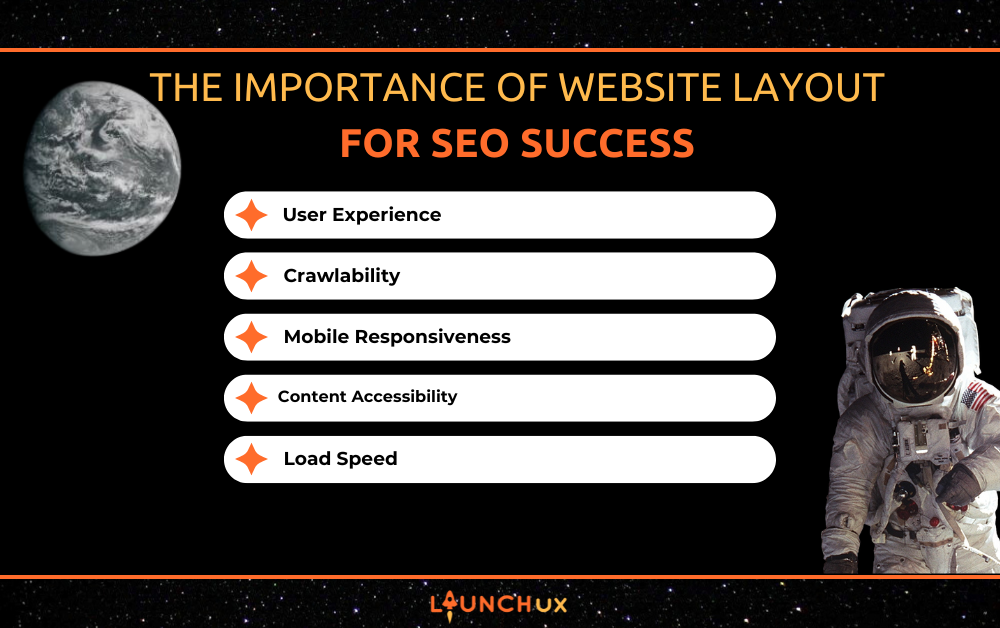
The Importance of Website Layout for SEO Success

Website layout is not just a matter of aesthetics; it plays a key part in search engine optimization (SEO). A well-structured website layout can enhance user experience, improve crawlability, ensure mobile responsiveness, boost content accessibility, and optimize load speed. Each of these elements contributes to better search engine rankings and increased visibility. By understanding the significance of each aspect with the help of LaunchUX, web admins can create an environment that fosters user engagement while satisfying search engine criteria. This holistic approach drives traffic and retains visitors, leading to a more successful online presence.

User Experience

Creating an intuitive user experience is fundamental to a practical website layout. A clean, organized design allows visitors to easily navigate the site, helping them quickly find the information they need. Users who encounter a seamless browsing experience are more likely to stay longer and engage with the content. This uptick in user engagement might result in fewer bounce rates, which search engines interpret as a sign of valuable content. Therefore, prioritizing user experience in your website layout is essential for keeping visitors satisfied and encouraging them to return.

Clear Navigation

Straightforward navigation is an essential component of user experience. A well-structured layout includes menus and links guiding users to different site sections. Users who can effortlessly move between pages are more inclined to explore additional content. This exploration enhances their experience and shows search engines that your site offers top-tier and relevant content. A thoughtful navigation system is vital for creating a positive impression on first-time visitors and encouraging repeat visits.

Visual Hierarchy

Visual hierarchy also plays a critical role in user experience. Headings, subheadings, and varying font sizes can create a clear structure that directs users’ attention to important information. A visually appealing layout helps visitors process content more effectively, making engaging with your message easier. This mindful incorporation of design components nurtures a more engaging atmosphere, allowing users to find key information quickly. Ultimately, a strong visual hierarchy enhances both usability and accessibility.

Crawlability

Crawlability indicates the simplicity with which search engine bots can move through and index your website. A logical website layout enhances crawlability by providing a clear structure that allows bots to discover all critical pages. Implementing a straightforward navigation system with internal links ensures no vital content is overlooked during indexing. When search engines find it straightforward to crawl your site, it boosts the likelihood that your pages will be properly indexed and ranked. Therefore, investing time in optimizing crawlability is crucial for achieving better search engine visibility.

Structured Data

Using structured data can further improve crawlability. By marking up your content with schema, you provide search engines with additional context about your pages. This makes it easier for bots to understand the content and relationships within your site, leading to more effective indexing. Implementing structured data enhances your site’s crawlability and the opportunity for inclusion in rich snippets, further elevating your visibility. A well-structured layout that incorporates these elements is invaluable for SEO success.

Internal Linking

Effective internal linking is another key aspect of crawlability. By linking related content throughout your site, you develop access points for search engine bots to follow. This helps with indexing and enhances user navigation, leading to a more engaging experience overall. Internal links connect various pages, allowing users to discover related content effortlessly. Users who find additional information through these links are more likely to spend time on your site, further boosting your SEO efforts.

Mobile Responsiveness

With the rise of mobile browsing, having a mobile-responsive website layout is no longer optional; it’s essential. A responsive design ensures that your site seamlessly accommodates all types of screen sizes, creating an exceptional experience for users on smartphones and tablets. Search engines prioritize mobile-friendly sites in their rankings, recognizing the growing importance of mobile accessibility. A website that looks and functions well on mobile devices attracts more visitors and retains them, as users are likelier to engage with a site that meets their needs. Therefore, investing in a responsive layout is crucial for modern SEO strategies.

Consistent User Experience

A mobile-responsive layout maintains a consistent user experience across devices. Users accessing your site on different platforms should encounter a similar look and feel. This reliability affirms your brand identity and supports trust among visitors, ultimately encouraging them to engage more deeply with your content. If users find your site inconvenient to navigate or unappealing in appearance on their mobile devices, they will likely leave and look for alternatives. Ensuring a positive mobile experience is essential for keeping visitors engaged and returning.

Google’s Mobile-First Indexing

Google’s mobile-first indexing approach means that the search engine primarily uses a website’s mobile version for ranking and indexing. This shift underscores the importance of having a mobile-responsive website layout that performs well on all devices. A responsive design includes practical considerations alongside aesthetics; it directly impacts your SEO performance. Websites that fail to provide a satisfactory mobile experience risk falling behind in search rankings. Thus, embracing mobile responsiveness is vital for any website looking to succeed in today’s competitive online landscape.

Content Accessibility

Accessibility is a crucial factor in website layout that cannot be overlooked. Making access available to all users, including individuals with disabilities, to your content is not only a legal requirement in many regions but also beneficial for SEO. A well-structured layout enhances content accessibility by making it easier for users to find and consume information. When all users can access your site, it broadens your audience and encourages more engagement. Additionally, search engines reward websites that prioritize accessibility as they align with best practices for user experience.

Use of Headings and Alt Text

Incorporating headings and alt text for images improves both accessibility and SEO. Screen readers depend on these features to relay information to visually impaired users. Using appropriate tags and descriptions enhances the overall experience for all visitors while also providing search engines with valuable context about your content. This practice not only meets accessibility standards but also increases your opportunities for ranking more prominently in search results. Prioritizing accessibility in your website layout can create a more inclusive environment for all users.

Avoiding Complex Layouts

Simplicity in layout design promotes better accessibility. Detailed designs may perplex users and obstruct their ability to navigate your site effectively. A straightforward, uncluttered layout ensures that all visitors can easily find the information they need, contributing to a more positive experience. This approach not only aids users with disabilities but also benefits all visitors, as everyone appreciates an easy-to-navigate site. By focusing on simplicity, you can create a welcoming atmosphere that encourages engagement and reduces frustration.

Load Speed

Website load speed is a critical element that can significantly impact user experience and SEO. A delayed-loading site can discourage users and increase the likelihood of higher bounce rates. In contrast, a fast-loading website keeps visitors engaged and encourages them to explore more content. Search engines also consider load speed when determining rankings, so optimizing this aspect is essential for SEO success. A layout designed with speed can significantly impact user retention and search visibility.

Optimizing Images and Code

A practical website layout should include optimizations for images and code to enhance load speed. Compressing images, minimizing HTTP requests, and utilizing browser caching are just a few strategies to improve load times. By focusing on these optimizations, you can create a faster, more efficient website that retains users and performs well in search engine rankings. Each second of load time saved can enhance user satisfaction and lead to increased conversion rates. Thus, prioritizing load speed in your layout design is crucial for online success.

User Expectations

Today’s users expect fast-loading websites. Visitors will likely leave and seek information elsewhere if your site takes too long to load. Ensuring your website layout is optimized for speed meets user expectations and aligns with search engine algorithms prioritizing fast-loading sites. By implementing best practices for speed, you can create an environment that retains visitors and encourages them to engage with your content. A focus on load speed ultimately contributes to user satisfaction and improved SEO performance.

Conclusion

In summary, website layout is a fundamental aspect of SEO that impacts user experience, crawlability, mobile responsiveness, content accessibility, and load speed. By giving importance to these components in your design, you can establish a more effective and engaging website that satisfies users and performs well in search engine rankings. Taking the time to evaluate your website layout can unlock its full potential for SEO success. Contact LaunchUX today if you’re ready to enhance your website layout and online presence!

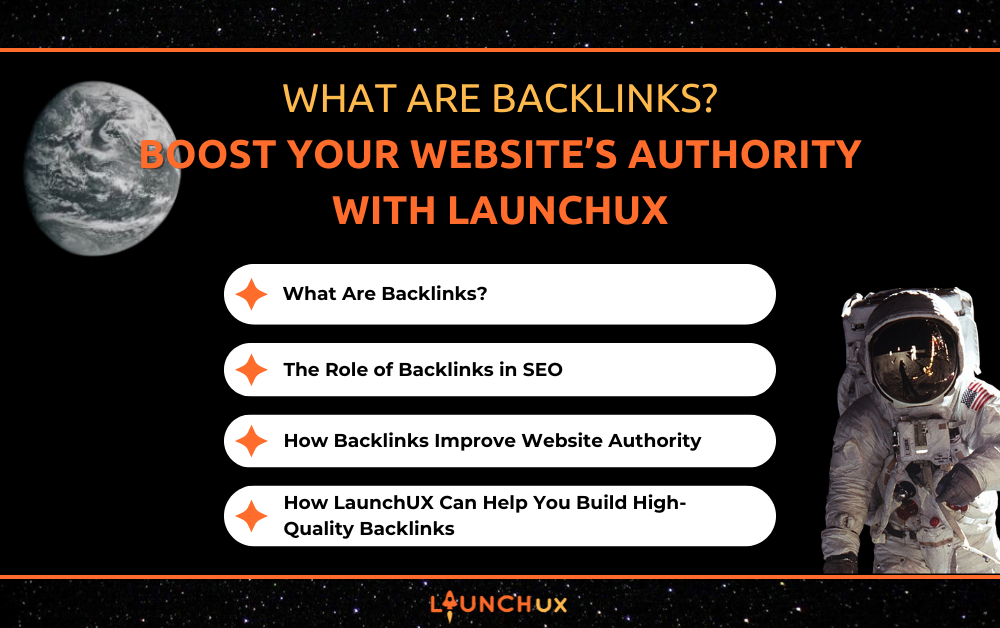
What Are Backlinks? Boost Your Website’s Authority with LaunchUX

If you’re looking for ways to boost your website’s visibility and rank higher on Google, you’ve probably come across the term “backlinks.” But what are backlinks, and why do they matter for your website’s success?

Backlinks are links from one website to another. They act as a vote of confidence, telling search engines that your content is valuable and trustworthy. The more high-quality backlinks your site has, the more authority it gains in search rankings.

In this blog, we’ll break down what backlinks are, how they impact SEO, and how they help improve your website’s authority. Plus, we’ll share how LaunchUX can help you build a strong backlink strategy with a specialist who knows what works.

To put it simply, backlinks are links from one website to another. When another website links to your site, it signals to search engines that your content is valuable and worth referencing.

Think of backlinks as digital recommendations. If a well-known website links to your content, it tells Google that your site is credible, which can help boost your rankings in search results.

Not all backlinks are created equal. Here are the main types:

  • DoFollow Backlinks – These pass authority (also called “link juice”) from the referring website to yours, helping with SEO.
  • NoFollow Backlinks – These links don’t pass SEO value but can still drive traffic and increase brand visibility.
  • Internal Links – Links that connect pages within the same website (e.g., linking from your homepage to a blog post).
  • External Links – Links that come from other websites to yours, which influence SEO rankings.
  • Natural Backlinks – Earned organically when other sites link to your content without you asking.
  • Manually Built Backlinks – Acquired through outreach, guest blogging, or influencer partnerships.
  • Self-Created Backlinks – Links added to forums, blog comments, or business directories (these should be used carefully to avoid spam).

Having high-quality backlinks from reputable sources can help your website gain credibility and improve rankings over time.

Now that we’ve answered what are backlinks, let’s explore how they impact your website’s search engine optimization (SEO). Backlinks are one of the most important ranking factors used by Google and other search engines.

Search engines like Google view backlinks as votes of confidence for your website. The more high-quality backlinks your site has, the more likely it is to rank higher in search results.

Here’s how it works:

  1. Authority & Trust – Websites with backlinks from trusted sources are seen as more credible.
  2. Relevance – If your website receives backlinks from sites in your industry, Google considers your content more relevant.
  3. Traffic Boost – Backlinks can drive direct traffic from other websites, bringing in new visitors.
  4. Faster Indexing – Search engines discover new content through backlinks, helping your pages get indexed faster.

Quality Over Quantity

Not all backlinks help your SEO. In fact, low-quality or spammy backlinks can hurt your rankings. Google prioritizes backlinks from authoritative, relevant sites.

✅ Good Backlinks:
✔️ From reputable websites in your industry
✔️ Naturally placed within valuable content
✔️ Earned through ethical link-building strategies

❌ Bad Backlinks:
✖️ From spammy or irrelevant websites
✖️ Paid or artificially created links
✖️ Links from low-quality directories or comment sections

By focusing on earning high-quality backlinks, your website can build credibility, rank higher, and attract more organic traffic.

Now that we’ve covered what are backlinks and their role in SEO, let’s dive into how they help improve your website’s authority. Website authority refers to how trustworthy and credible your site appears to search engines. The stronger your authority, the better your chances of ranking higher on Google.

Boosting Domain Authority (DA) and Page Authority (PA)

  • Domain Authority (DA) is a score that predicts how well a website will rank on search engines. It’s influenced by the quality and number of backlinks your site has.
  • Page Authority (PA) works the same way but focuses on individual pages rather than the entire website.

Backlinks from high-authority websites increase both DA and PA, improving your overall SEO strength.

Enhancing Trust and Credibility

Search engines trust websites that credible sources link to. For example, if your site gets a backlink from a well-known news outlet or an industry leader, it signals to Google that your content is reliable and worth ranking higher.

Driving Referral Traffic

Backlinks don’t just help with SEO—they also bring real visitors to your website. When people click on a backlink from another site, they land on your page, increasing traffic and potential leads.

Helping Content Get Indexed Faster

Search engines use backlinks to discover and index new pages. If your content has no backlinks, it may take longer for search engines to find and rank it. Backlinks help search engines crawl your site more efficiently, improving visibility.

By focusing on earning high-quality backlinks, your website becomes more authoritative, which leads to better rankings, more traffic, and higher credibility.

Understanding what are backlinks is just the first step—building a strong backlink strategy is where the real SEO success happens. That’s where LaunchUX comes in.

At LaunchUX, we specialize in ethical, high-quality backlink building to boost your website’s authority and search rankings. Our team understands what search engines look for and how to earn backlinks the right way.

Every business is different, so we create customized backlink strategies tailored to your industry and goals. Whether you need backlinks from industry blogs, local directories, or high-authority websites, we have a plan that works for you.

Not all backlinks are good for SEO. A LaunchUX backlink specialist can analyze your existing backlinks, remove harmful links, and help strengthen your site’s link profile.

Results-Driven Approach

Our focus isn’t just on getting backlinks—it’s on getting the right backlinks that improve rankings, drive traffic, and enhance your online authority.

If you’re ready to take your website’s SEO to the next level, LaunchUX is here to help you build a backlink strategy that delivers real results.

Conclusion

Backlinks are a crucial part of any successful SEO strategy. But what are backlinks, really? They’re more than just links—they’re a signal to search engines that your content is valuable, trustworthy, and worth ranking higher.

By earning high-quality backlinks, your website can:
✅ Improve its search rankings
✅ Increase domain authority
✅ Gain trust and credibility
✅ Drive more organic traffic

However, not all backlinks are created equal—low-quality or spammy links can do more harm than good. That’s why it’s important to focus on strategic, high-authority link building.

If you want to strengthen your website’s backlink profile, LaunchUX can help. With our expert backlink specialists, we’ll create a customized plan to build quality links, clean up bad ones, and boost your site’s SEO performance.

???? Ready to take your website to the next level? Contact LaunchUX today and start building the right backlinks for long-term success!

Understanding Website Migration: A Comprehensive Guide

Website migration is crucial for any business or organization to enhance its online presence. Whether it involves changing your domain name, switching hosting providers, or revamping your site’s structure, understanding the intricacies of website migration can significantly impact your brand’s performance. A successful migration requires detailed strategizing and careful execution to avoid potential pitfalls. During this transition, businesses must consider various factors, including SEO implications, user experience, and brand consistency. LaunchUX will help you explore the essential aspects of website migration, focusing on maintaining brand consistency, SEO considerations, user experience, updating links, and analytics tracking. Understanding the value of these components allows you to achieve a streamlined and impactful migration process.

Maintaining Brand Consistency

The Importance of a Cohesive Brand Identity

During website migration, maintaining brand consistency ensures that all elements of your online presence align. A cohesive brand identity reinforces recognition and trust among your audience, making it easier for them to engage with your content. Any changes made during the migration should reflect your brand’s core values and messaging, ensuring that users feel familiar with your new site. This consistency extends beyond the website and should encompass social media profiles, marketing materials, and customer communications. Keeping your branding aligned creates a unified user experience that strengthens their connection to your brand. Ultimately, a strong brand identity contributes to customer loyalty and long-term success.

Updating Visual Elements

As part of website migration, updating visual elements such as logos, color schemes, and typography is crucial to align with your new site. These updates should seamlessly integrate into your social networking profiles, email campaigns, and other online platforms. Striving for coherence in visual elements throughout all channels reinforces brand recognition and helps to establish trust with your audience. Users who see familiar branding are likelier to engage with your content and return to your site. Keeping visual elements fresh and appealing can also attract new visitors and enhance the overall user experience. Consistency in visual branding ultimately plays a significant role in shaping perceptions of your business.

Communicating Changes to Your Audience

Being transparent is fundamental to upholding brand consistency during a website migration. Informing your audience about the changes and what they can expect helps manage their perceptions and experiences. Social media channels, newsletters, and blog posts announce the migration and highlight its benefits. Clear communication fosters trust and encourages users to explore the new site while reassuring them that their favorite features are still available. Keeping your audience informed not only demonstrates your commitment to their experience but also helps to maintain engagement. This proactive approach can turn potential concerns into excitement about your migration’s improvements.

SEO Considerations

The Impact of Migration on Search Rankings

Website migration can substantially affect your search engine standings if not managed correctly. Search engines may temporarily lose track of your site during the transition, which could lead to a drop in traffic. This disruption can affect your visibility and organic reach, making it essential to have a comprehensive SEO strategy in place. By anticipating potential challenges and planning accordingly, you can minimize risks and maintain your site’s search engine rankings. Understanding the relationship between migration and SEO is critical for ensuring that your online presence remains strong. A successful migration can lead to improved rankings if managed with careful consideration of SEO best practices.

Implementing Redirects

One of the critical aspects of website migration entails configuring 301 redirects from your previous URLs to the new ones. This approach ensures that users and search engines navigate the relevant pages, preserving your site’s SEO value. Properly implemented redirects help prevent broken links and maintain your search rankings, vital for driving organic traffic. Without redirects, visitors may encounter error pages, leading to frustration and potential loss of business. Additionally, search engines may penalize sites with broken links, negatively impacting your overall performance. Therefore, correctly setting up redirects is essential for a successful migration.

Monitoring SEO Performance Post-Migration

After completing the website migration, closely monitoring your SEO performance is essential. Examine statistics such as organic traffic, bounce rates, and keyword rankings to identify any potential issues. Regularly reviewing these metrics allows you to catch and address any declines promptly. By actively monitoring your SEO performance, you can make data-driven decisions that help improve your site’s visibility. Staying informed about how your site performs post-migration will ultimately contribute to its long-term success. Adjusting your strategies based on performance data ensures that your website continues to attract visitors effectively.

User Experience

Enhancing Navigation and Accessibility

Website migration provides an opportunity to enhance user experience through improved navigation and accessibility. A laid-out site facilitating easy navigation stimulates users to browse and participate in your content. During migration, consider user feedback and analytics to create a more intuitive layout that meets the needs of your audience. This attention to user experience helps visitors remain on your site for extended periods and increases the odds of conversions. Navigation enhances a seamless experience that fosters positive interactions and encourages repeat visits. A user-friendly design can set your site apart in a competitive online landscape.

Ensuring Mobile Responsiveness

As mobile device usage rises, ensuring your newly migrated website is mobile-responsive is essential. A responsive design adjusts to various screen sizes, creating a cohesive user experience on different devices. As mobile traffic rises, a mobile-friendly site becomes crucial for retaining visitors and optimizing conversions. Failing to implement mobile responsiveness can lead to high bounce rates and missed opportunities for user engagement. Therefore, prioritizing mobile responsiveness during migration can significantly improve user satisfaction and overall performance. A site that functions well on all devices enhances accessibility and drives traffic.

Testing for Optimal Performance

Before fully launching your migrated website, conduct thorough testing to ensure optimal performance. Check for broken links, loading speeds, and overall functionality to ensure everything operates smoothly. A well-tested site provides a reliable experience for users and helps maintain their trust in your brand. Conducting tests also allows you to identify any issues that may arise post-launch, enabling you to address them proactively. By investing time in testing, you create a solid foundation for your website that enhances user experience. Ensuring optimal performance will ultimately lead to higher engagement and customer satisfaction.

As part of website migration, it’s crucial to refresh internal links to reflect the new structure. Malfunctioning internal links can result in a disappointing user experience and harm SEO performance. Verifying that all internal links connect users to the correct pages enhances navigation and keeps visitors engaged with your content. A well-organized internal linking structure helps search engines better understand your site, improving overall SEO performance. Taking the time to update links can significantly contribute to user satisfaction and site effectiveness. A seamless linking structure fosters exploration and encourages users to discover more of your content.

In addition to internal links, consider contacting external websites that link to your old site. Inform them of your migration and request they update their links to your new URLs. This proactive approach helps maintain your SEO value and encourages continued referral traffic. Keeping external links up-to-date prevents the potential loss of visitors who may encounter broken links on those sites. Maintaining these connections is essential for fostering partnerships and sustaining traffic. Ensuring that external links are accurate enhances your site’s credibility and visibility.

After migration, monitor the performance of your updated links to ensure they are functioning correctly. Use analytics resources to assess user interactions with links and identify any issues that may arise. Regular monitoring helps you maintain a seamless user experience and quickly address any problems hindering engagement. If you notice broken links or low-performing pages, be prepared to take action to rectify the situation. Continuous oversight of link performance allows you to optimize your site and enhance user satisfaction. By staying vigilant, you can ensure your website is user-friendly and practical.

Analytics Tracking

Setting Up New Tracking Codes

Setting up new tracking codes for analytics tools is essential as you migrate your website. This allows data on your new site’s user actions, traffic sources, and engagement metrics to be accumulated. Implementing tracking codes during migration ensures you can effectively monitor performance from day one. Accurate analytics are crucial for understanding how users interact with your content and making informed decisions moving forward. By establishing a solid foundation for tracking, you can gain essential knowledge that helps refine your marketing strategies. Setting up tracking codes is key to optimizing your site’s performance.

Analyzing User Behavior

Assessing user behavior is essential for understanding how visitors connect with your new site post-migration. Leverage analytics resources to understand user paths, popular content, and conversion rates. This data helps you make informed decisions about future content and marketing strategies, ensuring that you address user needs effectively. Understanding user behavior allows you to identify trends and preferences that can guide your site’s evolution. You can continuously refine your approach by paying attention to how users engage with your content; analyzing user behavior is essential for maximizing the impact of your website.

Adjusting Strategies Based on Data

As you collect data from your migrated site, be equipped to alter your strategies depending on user insights. If specific pages are underperforming or users leave quickly, consider making changes to improve engagement. This could involve updating content, enhancing visuals, or streamlining navigation to meet user expectations better. Continually refining your approach ensures that your website effectively meets user needs and achieves your goals. Adapting your strategies based on data-driven insights fosters growth and helps you stay competitive. An agile approach to strategy adjustment can significantly enhance your site’s performance over time.

Conclusion

In conclusion, website migration is a vital process that can significantly impact your online presence. You can ensure a successful transition by fostering brand consistency, addressing SEO considerations, enhancing user experience, updating links, and effectively tracking analytics. Embracing these strategies will help the website retain its value and improve overall performance. Don’t leave your website migration to chance—contact LaunchUX today to ensure a smooth and effective transition for your online presence!