
rocketfuel, Author at LaunchUX - Page 11 of 28

Author: rocketfuel

Advanced Analytics in Social Media in 2025

Advanced analytics in social media continues to evolve, playing a crucial role in how businesses and marketers interpret audience behavior and optimize engagement strategies. In 2024, social media analytics primarily focused on performance tracking, sentiment analysis, and predictive modeling. However, in 2025, advancements in artificial intelligence, privacy compliance, and cross-platform integration are reshaping the way data is collected and utilized. This blog examines the key changes in social media analytics, highlighting how these updates enhance marketing strategies, improve data-driven decision-making, and align with evolving user expectations.

State of Social Media Analytics in 2024

Overview of 2024 Analytics

In 2024, advanced analytics in social media were foundational in shaping digital marketing strategies. These analytics focused on gathering quantitative insights such as user engagement rates, click-through rates, and social listening tools to gauge public sentiment and brand perception.

Key Technologies and Their Impact

Artificial intelligence and machine learning were at the forefront, automating data analysis and providing predictive insights that helped marketers anticipate market trends and consumer needs. Despite their effectiveness, they faced challenges in terms of accuracy in sentiment analysis and the ability to handle unstructured data.

Challenges in Data Integration and Privacy

Data integration posed significant challenges as businesses struggled to amalgamate data from diverse sources into a cohesive framework. Privacy concerns were also prominent, with stringent data protection laws like GDPR and CCPA requiring marketers to tread carefully regarding personal data usage.

Utilizing Basic Predictive Analytics

Basic predictive analytics were employed to forecast user behaviors and campaign outcomes. However, these tools often required further refinement to handle complex data sets and real-time inputs effectively.

AI’s Role in Streamlining Analytics

AI tools streamlined the processing and interpretation of vast amounts of social media data, enhancing the capabilities of analytics platforms. These tools, however, needed continuous tuning to align with evolving social media dynamics.

User Privacy and Compliance Issues

User privacy remained a critical issue, with analytics practices being scrutinized for compliance with global privacy standards. This necessitated the adoption of more sophisticated security measures and transparency in data handling by social media platforms.

Summary of the 2024 Landscape

The year 2024 set the stage for robust advanced analytics in social media but also highlighted the need for improvements in technology integration, privacy assurance, and data accuracy. As marketers leaned heavily on these tools, they faced the dual challenge of maximizing utility while adhering to increasingly strict privacy laws. Moreover, the advanced analytics in social media tools of 2024 began to pave the way for more dynamic applications, setting a foundational framework that encouraged the exploration of more sophisticated AI-driven insights and cross-platform analytics solutions.

Evolution and Major Updates in Social Media Analytics for 2025

Introduction to Anticipated Advancements

As we enter 2025, significant transformations are expected in advanced analytics in social media. These enhancements aim to refine existing technologies and introduce new capabilities. They enhance data interpretability and enable nuanced marketing approaches.

Predicted Shifts in Analytics Approaches

As we move into the future, the analytics landscape is set to become more integrated and user-centric. Consequently, advanced models are likely to handle diverse data streams. Furthermore, they will provide detailed analyses of user behavior and interaction patterns. This is crucial for personalizing user experiences and optimizing content delivery.

Enhanced AI and Machine Learning Capabilities

AI and machine learning are predicted to undergo significant enhancements. They will process and analyze large datasets in real-time. These technologies will predict user behavior and identify emerging trends. This leads to more targeted marketing campaigns.

Privacy-Compliant Analytics: Adapting to New Regulations

Stricter global privacy regulations are expected to be implemented fully. Analytics tools will need to evolve to ensure compliance while still providing insightful data. Expect enhanced anonymization techniques and transparent data processing methods. These will align with regulations like GDPR and CCPA.

Cross-Platform Integration: Unified Analytics Tools

Sophisticated integration tools are expected in 2025. They will consolidate analytics across various social media platforms into a unified dashboard. Marketers will gain a holistic view of campaign performance and audience engagement.

Real-Time Data Processing: Instantaneous Insights

The ability to process data instantaneously will transform strategy adjustments in real time, thereby enhancing the agility of marketing efforts. As a result, brands will be able to respond swiftly to consumer behavior and market changes.

Visual Data Representation and Sustainability Metrics

Expect advanced visualization tools to make complex data sets more accessible. They will use dynamic charts and interactive graphics for quick insights. Additionally, new metrics will assess the sustainability and ethical impacts of marketing campaigns. This helps brands align with corporate social responsibility goals.

Summary of Expected Advances in 2025

The anticipated updates in 2025 are set to revolutionize advanced analytics in social media. Tools will become more powerful, privacy-compliant, and user-friendly. These improvements will empower marketers to craft more effective and adaptive strategies. They will base these strategies on richer, real-time data insights. Campaigns will be not only effective but also ethically responsible.

Strategic Application of Advanced Analytics in Social Media for 2025

As advanced analytics in social media evolve with new updates in 2025, marketers have a unique opportunity to refine and strengthen their strategies. Here’s how they can leverage these updates effectively:

Leveraging AI for Enhanced Predictive Analytics

Marketers can utilize enhanced AI capabilities to predict consumer behavior more accurately and identify emerging trends. By integrating predictive analytics into their strategies, they can anticipate market shifts and adjust their campaigns proactively, ensuring they remain relevant and effective.

Utilizing Real-Time Analytics for Agile Marketing

With the availability of real-time data processing, marketers can implement agile marketing strategies. This allows for immediate adjustments based on live data feeds, enabling a more responsive approach that can capitalize on momentary market opportunities or mitigate unfolding issues before they escalate.

Integrating Cross-Platform Data for Holistic Insights

The updates in analytics provide tools for seamless integration across various platforms. Marketers should use these tools to gather and analyze data from all relevant platforms to gain a comprehensive view of their audience’s behaviors and preferences. This holistic insight will help in crafting cohesive strategies that are consistent across all channels.

Ensuring Compliance with Privacy Regulations

As privacy continues to be a critical concern, marketers must ensure that their data practices comply with new and existing regulations. By using advanced analytics tools that prioritize data security and user privacy, marketers can build trust with their audience while protecting sensitive information.

Enhancing Campaigns with Advanced Visualization Tools

Advanced visualization tools make it easier to interpret complex datasets and share these insights across the organization. Marketers should leverage these tools to present data in a clear and compelling manner, enhancing decision-making and enabling more strategic discussions about campaign directions.

Embracing Ethical Marketing Practices

Finally, with the inclusion of sustainability and ethical impact metrics, marketers have the means to evaluate the broader impact of their campaigns. By aligning their marketing strategies with ethical practices and sustainability goals, they can appeal to the growing base of socially conscious consumers and enhance their brand’s reputation.

By adopting these approaches, marketers can not only improve the effectiveness of their campaigns but also align with modern consumer expectations and regulatory standards. These strategic applications of advanced analytics in social media will be crucial for thriving in the competitive digital landscape of 2025.

Conclusion: Navigating the Future of Social Media Marketing

As we embrace 2025, the advancements in advanced analytics in social media are set to redefine the effectiveness and efficiency of marketing strategies. Marketers who adapt to these enhancements will gain a competitive edge by leveraging real-time data, comprehensive cross-platform insights, and AI-driven predictive capabilities, all while maintaining ethical standards and privacy compliance. The integration of these sophisticated tools will not only refine targeting and personalization but also foster deeper connections with audiences, ensuring that those who are agile and informed will lead in the evolving digital marketplace.

How Core Web Vitals Affect Your Google Rankings

When it comes to ranking on Google, Core Web Vitals have become a major player in determining how well your website performs. Google’s ranking system isn’t just about keywords and backlinks anymore—it’s also about user experience. If your site loads slowly, feels unresponsive, or has content shifting around while loading, you could be losing valuable traffic.

In this blog, we’ll break down what Core Web Vitals are, how they impact your Google rankings, and how to improve them for a better-performing website. Whether you’re a business owner, marketer, or web developer, understanding these metrics can make all the difference in staying ahead of the competition.

What Are Core Web Vitals? Understanding Google’s Key Performance Metrics

Google introduced Core Web Vitals to measure real-world user experience on websites. These metrics focus on three critical aspects: loading speed, interactivity, and visual stability. If your site struggles in any of these areas, it could hurt your rankings and user engagement.

Largest Contentful Paint (LCP) – How Fast Does Your Site Load?

LCP measures how long it takes for the largest visible element on your page to fully load. This could be an image, a block of text, or a video. Google considers an LCP score of 2.5 seconds or less ideal. A slow LCP means users might leave before your page even fully loads, increasing bounce rates and lowering conversions.

Interaction to Next Paint (INP) – Is Your Site Responsive?

Formerly measured as First Input Delay (FID), INP determines how quickly your website reacts to user interactions, like clicking a button or entering text in a form. If your site feels laggy or unresponsive, users will get frustrated. Google suggests keeping your INP score under 200 milliseconds to ensure smooth interaction.

Cumulative Layout Shift (CLS) – Does Your Content Move Unexpectedly?

Ever tried clicking a button, only for it to shift at the last second and make you click something else? That’s a poor CLS score. CLS tracks how much elements shift around as a page loads. Google recommends keeping this score below 0.1 to prevent unexpected content movement that disrupts user experience.

How Core Web Vitals Affect Your Google Search Rankings

Google has made it clear that Core Web Vitals are a direct ranking factor. While content quality and backlinks still play a huge role, Google also wants to ensure users have a fast, smooth, and frustration-free experience on any site they visit. If your site fails to meet these standards, your rankings could take a hit.

Google’s Page Experience Update – Why Speed and Stability Matter

In 2021, Google rolled out the Page Experience Update, officially making Core Web Vitals part of its ranking algorithm. This means that websites with better loading times, smoother interactions, and stable layouts are rewarded with higher search rankings. On the flip side, sites with slow load speeds and layout shifts might drop in visibility, leading to fewer visitors.

The Connection Between Core Web Vitals and SEO Performance

A website with poor Core Web Vitals can experience:

  • Lower rankings in search results – Google prioritizes user-friendly websites.
  • Higher bounce rates – If a page takes too long to load, visitors leave.
  • Fewer conversions – A frustrating user experience means lost leads and sales.
  • Reduced mobile performance – Mobile users expect fast, responsive websites.

If two websites have similar content and authority, Google will give the edge to the one with better Core Web Vitals. That’s why optimizing these metrics is essential for staying ahead of your competition.

The Business Impact of Poor Core Web Vitals Scores

Having a slow, unresponsive, or unstable website doesn’t just hurt your Google search rankings—it also affects how visitors interact with your site. If users get frustrated because your page takes too long to load or buttons don’t work properly, they’ll leave. That means lost traffic, lost leads, and ultimately, lost revenue.

Higher Bounce Rates – Users Won’t Wait

People expect fast-loading websites. Studies show that if a page takes more than 3 seconds to load, over 50% of users will abandon it. A poor Largest Contentful Paint (LCP) score means your site loads too slowly, increasing your bounce rate—the percentage of visitors who leave without interacting.

Lower Conversion Rates – Frustration Leads to Lost Sales

If users can’t interact with your site quickly due to a poor Interaction to Next Paint (INP) score, they’re less likely to complete actions like filling out a form or making a purchase. A 1-second delay in page response can lead to a 7% drop in conversions. That’s a huge loss, especially for e-commerce businesses.

Decreased Trust and Engagement

A shifting layout caused by a bad Cumulative Layout Shift (CLS) score can make a site feel unprofessional. If users keep clicking the wrong button because elements move unexpectedly, they’ll lose trust in your site and brand. Poor user experience means they may never return.

Improving Core Web Vitals isn’t just about SEO—it’s about keeping your audience engaged and ensuring a smooth experience that leads to more sales, sign-ups, and satisfied users. Now, let’s go over how you can optimize your website for better Core Web Vitals scores.

How to Improve Core Web Vitals for Better SEO and User Experience

Now that we understand how Core Web Vitals impact rankings and business performance, the big question is: how do you fix them? The good news is that improving your LCP, INP, and CLS scores doesn’t require a full website overhaul—just smart optimizations. Let’s break it down.

Optimizing Largest Contentful Paint (LCP) – Improve Loading Speed

A slow LCP score means your site’s largest element (image, video, or text block) is taking too long to load. Here’s how to fix it:

  • Use a faster hosting provider – Cheap hosting slows down your server response time.
  • Optimize images and videos – Compress images with tools like TinyPNG and use next-gen formats like WebP.
  • Enable lazy loading – This ensures images load only when they appear on screen.
  • Use a Content Delivery Network (CDN) – CDNs cache your site’s content on multiple servers worldwide, speeding up delivery.

Fixing Interaction to Next Paint (INP) – Make Your Site More Responsive

A poor INP (formerly FID) score means users experience delays when interacting with your site. To improve it:

  • Minimize JavaScript execution – Heavy JavaScript blocks responsiveness. Defer non-essential scripts.
  • Reduce third-party scripts – External widgets, ads, and tracking codes slow down interaction.
  • Optimize web fonts – Fonts can delay the first interaction. Use system fonts or font-display: swap in CSS.

Reducing Cumulative Layout Shift (CLS) – Stop Elements from Jumping Around

Unstable layouts cause frustrating user experiences. A high CLS score means elements shift unpredictably. Here’s how to fix it:

  • Set image and video dimensions – Always specify width and height to prevent reflow.
  • Avoid dynamically injected content – Pop-ups, ads, or banners that load after the main content can cause shifts.
  • Reserve space for web fonts – Use font-display: optional to prevent layout jumps when custom fonts load.

Tools to Monitor and Test Core Web Vitals

Want to check your Core Web Vitals performance? Use these free tools:

  • Google PageSpeed Insights – Gives a full breakdown of LCP, INP, and CLS scores.
  • Google Search Console (Core Web Vitals Report) – Helps you track site-wide performance.
  • Lighthouse (via Chrome DevTools) – Offers in-depth recommendations for optimization.

By optimizing these key areas, your website will not only rank higher on Google but also provide a seamless user experience that keeps visitors engaged.

Conclusion: Make Core Web Vitals a Priority

Google has made Core Web Vitals a critical ranking factor, and if your site doesn’t meet the mark, you could be losing traffic, conversions, and potential customers. Improving LCP, INP, and CLS isn’t just about SEO—it’s about delivering a better experience for your users.

If you want to stay ahead of the competition, now is the time to start optimizing your site. Run a Core Web Vitals audit, make the necessary improvements, and watch your rankings, engagement, and conversions improve.

Need expert help to improve your website’s performance? Contact us today!

The Importance of Having an Easy-to-Navigate Blog Design

Blog design is critical in attracting and retaining readers in today’s high-speed online world. An easy-to-navigate design is not just about aesthetics; it significantly influences user experience, engagement, and the overall success of your content. When individuals can swiftly discover what they want, they are more apt to spend time on your site, consume your posts, and share your content. A well-designed blog fosters a welcoming environment that encourages exploration and interaction. Investing in an intuitive layout with LaunchUX can increase traffic and cultivate a loyal readership.

Enhancing User Experience

User experience (UX) determines how long visitors stay on your blog. A well-organized layout allows users to navigate effortlessly, reducing frustration and enhancing satisfaction. When visitors can quickly find categories and search for topics, they feel more in control of their browsing experience. This ease of navigation contributes to a positive overall impression of your blog, encouraging readers to return for future visits. By prioritizing user experience in your blog design, you create an inviting space that resonates with your audience.

Intuitive Navigation

A seamless navigation experience is essential for a successful blog design. Clear menus and easily identifiable links allow readers to find what they need without hassle. When users can confidently navigate your blog, they are more likely to engage with your content and explore additional articles. This seamless experience enhances user satisfaction and fosters a sense of loyalty among your audience. Focusing on intuitive navigation makes it easier for visitors to connect with your content.

Clear Structure

A clear and logical structure is vital for guiding readers through your blog. This involves organizing your content into easily identifiable categories and utilizing headings and subheadings to break up text. When visitors can quickly see what topics are available, they can make informed decisions about where to click next. A well-structured blog helps prevent overwhelming readers with too much information at once, creating a more enjoyable experience. Ultimately, a clear structure enhances the likelihood of visitors exploring more content on your site.

Positive Impressions

Your blog’s overall impression on visitors significantly affects their likelihood of returning. A cluttered or confusing interface can lead to frustration, causing potential readers to leave before engaging with your content. Conversely, a clean, organized design conveys professionalism and attention to detail. Users who perceive your blog as user-friendly will trust your insights and return for more. This positive impression is crucial for building a loyal readership.

Building Trust and Credibility

An easy-to-navigate blog design contributes to building trust and credibility with your audience. Users who encounter a cluttered or confusing interface may perceive your blog as unprofessional or unreliable. A clean, organized design conveys that you value your readers’ time and experience, enhancing your authority in your niche. Creating a professional appearance fosters a sense of trust that encourages readers to engage with your content. Over time, this trust can increase loyalty and a stronger connection with your audience.

Professional Appearance

A professional appearance is essential for establishing credibility in the digital space. When your blog looks polished and thoughtfully designed, it signals to readers that you take your content seriously. This professionalism can significantly affect how visitors perceive your brand. A well-maintained blog invites readers to explore your insights and perspectives, establishing you as an authority in your field. Investing in a professional design will pay off by attracting and retaining a dedicated audience.

Authority in Niche

An easy-to-navigate design enhances your authority within your niche. When users find it easy to access valuable content, they are more likely to view you as a trusted source of information. A blog that presents itself well and offers a smooth browsing experience positions you favorably among competitors. This perception of authority draws in new readers and encourages existing ones to return for more insights. Establishing your brand’s authority strengthens your overall online presence.

Fostering Loyalty

Building trust and credibility through effective blog design ultimately fosters loyalty among your audience. When readers feel valued and have positive experiences navigating your site, they are more likely to return. Active audiences are more likely to advocate for your blog, amplifying your reach. This word-of-mouth promotion is invaluable in growing your readership. You can encourage a vibrant community of interactive followers by fostering loyalty through user-friendly design.

Improving Content Discoverability

Effective navigation directly impacts how easily users can discover your content. A clear menu structure, well-defined categories, and a prominent search function enable visitors to locate relevant information quickly. This accessibility is crucial in keeping readers engaged and encouraging them to explore more of your blog. Be sure that your most valuable content is easy to find, which increases the prospects of visitors dedicating more time to your site and interacting with multiple posts. Improved content discoverability can lead to a more rewarding experience for readers and authors.

Clear Menu Structure

Implementing a clear menu structure is essential for enhancing content discoverability. A well-organized menu allows users to quickly identify different sections of your blog and navigate seamlessly between them. When visitors can find categories that interest them at a glance, they are more likely to engage with your content. This ease of navigation keeps readers on your site longer and encourages them to explore related topics. A clear menu structure is an integral component of effective blog design.

Prominent Search Function

Incorporating a prominent search function is another effective way to enhance content discoverability. A well-placed search bar allows users to locate specific topics without scrolling through content pages. This feature caters to readers looking for particular information and significantly improves their browsing experience. A visible search function can also help visitors feel more in control of their knowledge, leading to greater satisfaction. Ensuring that your search capabilities are user-friendly makes it easier for readers to connect with your content.

Engaging Exploration

Ensuring that your most valuable content is straightforward to find increases the chances of visitors spending more time on your site. Engaging exploration keeps readers invested in your blog, allowing them to discover new topics and perspectives. This extended interaction can increase the sharing of your content, amplifying your reach across social media and beyond. The more engaged your audience is, the more likely they will return for future visits. Ultimately, a focus on content discoverability strengthens your blog’s overall performance.

Encouraging Longer Visits and Reducing Bounce Rates

A streamlined blog design improves navigation, encourages extended visits, and reduces bounce rates. When users can seamlessly move from one post to another, they are more likely to explore additional articles and delve deeper into your content. This ongoing interaction can contribute to elevated conversion rates, whether you’re aiming to grow your email list or promote products. Readers drawn to your content are more willing to remain on the site for longer, leading to greater satisfaction. An easy-to-navigate design can significantly impact your blog’s performance and success.

Seamless Transition

Facilitating seamless transitions between posts is essential for encouraging deeper exploration. Readers who can easily click on related articles or suggested content are more likely to stay engaged. A well-structured blog that encourages these transitions creates a fluid reading experience. This seamless flow keeps readers invested in your content and enhances their overall impression of your site. You can promote extended visits and increase reader retention by prioritizing smooth navigation.

Higher Engagement

Lengthened attention spans can improve conversion rates, whether aiming to grow your email list, promote products, or increase page views. The more time visitors spend on your blog, the more opportunities you have to connect with them. Engaged readers are likelier to interact with your content, leaving comments and sharing your posts across their networks. This heightened engagement boosts your blog’s visibility and solidifies your relationship with your audience. Prioritizing easy navigation plays a crucial role in fostering this kind of engagement.

Performance Impact

An easy-to-navigate design can significantly impact your blog’s performance and success. When visitors have positive experiences, they are more likely to return, resulting in increased traffic over time. Enhanced engagement and lower bounce rates improve SEO performance, further elevating your blog’s visibility. Focusing on navigation and user experience is a purposeful investment that brings rewards on multiple levels. By continually refining your design, you can maximize your blog’s potential.

Adapting to Mobile Users

With the surge in mobile device use for web access, it’s essential to have a blog design that accommodates all users. A responsive design that maintains ease of navigation on smartphones and tablets is critical. Mobile users expect the same level of accessibility as desktop users, making it vital to cater to both audiences. Ensuring your blog is easy to navigate on any device will enhance user experience and expand your reach to a broader audience. By prioritizing mobile-friendly design, you can ensure visitors have a positive experience on your blog.

Responsive Design

Implementing a responsive design is essential for capturing the mobile audience. A structure that adjusts fluidly to accommodate diverse screen formats ensures that users can easily navigate your content, regardless of their device. This adaptability enhances user satisfaction and keeps readers engaged with your blog. A responsive design caters to mobile users and reinforces your commitment to providing an inclusive experience. As more users access content on mobile devices, prioritizing responsive design becomes increasingly important.

Consistent Accessibility

Mobile users expect the same level of accessibility as desktop users, making it vital to cater to both audiences. A blog that offers consistent navigation and functionality across devices encourages users to engage with your content. Ensuring your design is equally effective on all platforms reinforces your brand’s reliability and professionalism. Readers will appreciate the seamless experience regardless of how they access your blog. Consistent accessibility ultimately fosters loyalty and enhances your readership.

Expanding Reach

Ensuring your blog is easy to navigate on any device will enhance user experience and expand your reach to a broader audience. When users can easily access your content from their preferred devices, you open the door to a wider range of potential readers. This enhanced ease of access can foster higher visitor numbers and more interactions with your content. Cultivating a diverse audience strengthens your blog’s presence in the digital landscape. Focusing on easy navigation positions your blog for growth and success.

Conclusion

An easy-to-navigate blog design is vital for attracting and retaining readers, building trust, and improving content discoverability. By prioritizing user experience and ensuring visitors can quickly find what they’re looking for, you can significantly enhance the effectiveness of your blog. If you’re ready to create a blog that captivates and engages your audience, consider investing in a user-friendly design today. Your readers will thank you for it, and you will see the positive impact on your blog’s performance.  

Don’t wait—contact LaunchUX to discuss how we can help you improve your blog design and watch your readership grow!

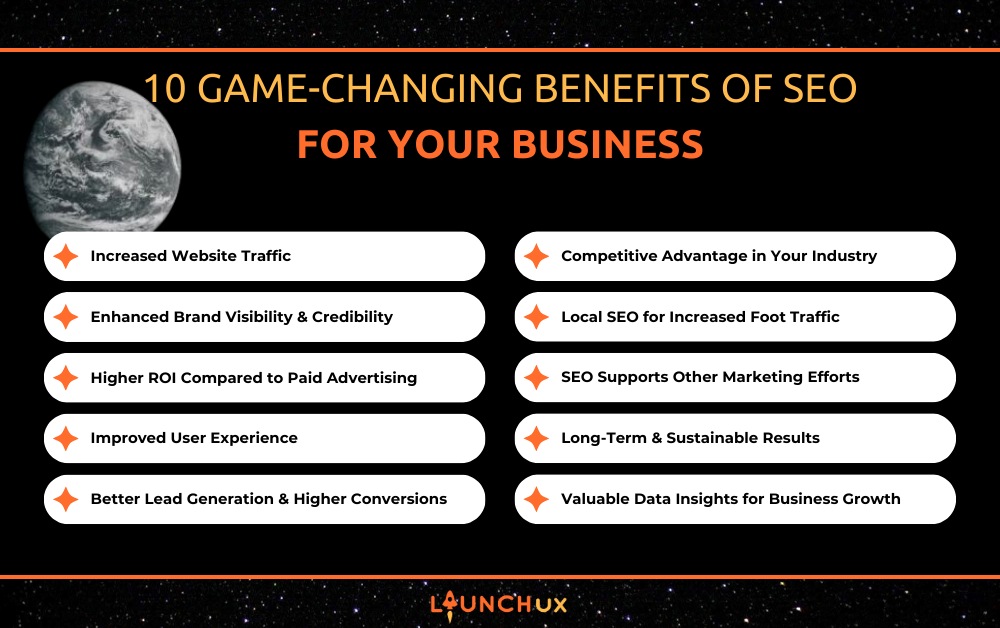
10 Game-Changing Benefits of SEO for Your Business

Search Engine Optimization (SEO) plays a vital role in helping businesses get discovered by potential customers through organic search. Whether you’re a small local business or a large corporation, the benefits of SEO make it a powerful tool that can drive website traffic, boost brand credibility, and increase conversions.

Unlike paid advertising, which stops working as soon as you stop paying, SEO delivers long-term results by optimizing your website for search engines and user experience. It’s not just about ranking high on Google—it’s about attracting the right audience, improving engagement, and growing your business sustainably.

In this blog, we’ll explore 10 game-changing benefits of SEO and why investing in a solid SEO strategy is essential for long-term growth.

1. Increased Website Traffic

One of the most significant benefits of SEO is its ability to drive organic traffic to your website. Unlike paid advertising, where traffic stops as soon as your budget runs out, organic search traffic continues to flow as long as your site remains optimized.

Organic traffic is highly valuable because it comes from people actively searching for products or services like yours. By optimizing your website with relevant keywords, high-quality content, and a strong technical foundation, SEO helps increase your rankings on search engine results pages (SERPs)—and higher rankings mean more visibility and more clicks.

Studies show that 75% of users never scroll past the first page of Google search results. That means if your business isn’t ranking in the top 10, you’re missing out on valuable traffic and potential customers. SEO helps you secure those coveted first-page rankings and connect with your audience at the right moment in their buyer’s journey.

2. Enhanced Brand Visibility and Credibility

Higher search rankings don’t just bring in traffic—they also boost your brand’s credibility. When users see your website at the top of Google, they perceive your business as trustworthy and authoritative in your industry.

SEO helps establish credibility in several ways:

  • Authoritative Content: Well-researched, informative content positions your brand as an industry expert.
  • High-Quality Backlinks: Links from reputable sites signal to Google that your website is trustworthy.
  • Consistent Online Presence: Regular updates and strong social proof reinforce your brand’s reputation.

The more visible and authoritative your brand appears online, the more likely customers will choose you over competitors.

3. Higher ROI Compared to Paid Advertising

SEO is often more cost-effective than pay-per-click (PPC) advertising. While PPC campaigns require ongoing funding to maintain visibility, SEO provides long-term, sustainable results.

Some key advantages of SEO over paid ads include:

  • No continuous ad spend – Organic traffic is free once you rank.
  • Higher trust levels – Users are more likely to click organic results over paid ads.
  • Better long-term returns – SEO efforts compound over time, reducing the need for constant ad spend.

With a well-executed SEO strategy, businesses can generate consistent traffic and conversions without relying solely on paid campaigns.

4. Improved User Experience (UX)

Google prioritizes websites that offer an exceptional user experience. That means SEO is not just about keywords—it’s about making your site faster, easier to navigate, and mobile-friendly.

SEO improves UX by focusing on:

  • Mobile Optimization – Google uses mobile-first indexing, so a mobile-friendly site ranks better.
  • Page Speed – Faster websites provide a better experience and reduce bounce rates.
  • Clear Navigation – Well-structured menus and internal linking keep users engaged.

A seamless user experience not only improves rankings but also keeps visitors on your site longer, increasing engagement and conversions.

5. Better Lead Generation and Higher Conversion Rates

SEO doesn’t just bring traffic—it brings high-quality traffic. By optimizing for the right keywords, businesses can attract users who are actively looking for their products or services.

Why SEO improves lead generation:

  • Targeting high-intent users – People searching for specific solutions are more likely to convert.
  • Local SEO strategies – Businesses can capture customers near them who need immediate services.
  • Optimized content and CTAs – Well-placed calls-to-action (CTAs) guide users toward conversions.

When done right, SEO leads to higher conversion rates than traditional marketing methods.

6. Competitive Advantage in Your Industry

SEO gives you a competitive edge by helping your business rank above competitors. Companies that invest in SEO:

  • Gain more visibility – The higher you rank, the more customers you attract.
  • Build stronger brand authority – More backlinks and content establish credibility.
  • Stay ahead of industry trends – SEO requires constant adaptation, keeping you one step ahead.

If your competitors are investing in SEO and you’re not, you risk falling behind. By maintaining a strong SEO presence, your business can dominate search rankings and outperform the competition.

7. Local SEO for Increased Foot Traffic

For brick-and-mortar businesses, Local SEO is a huge benefit. Optimizing for local searches means appearing in “near me” search results and Google’s Local Pack, which significantly increases foot traffic.

How Local SEO boosts business:

  • Optimizing Google Business Profile (GBP) – A complete GBP listing increases local search visibility.
  • Encouraging customer reviews – Positive reviews boost credibility and local rankings.
  • Using localized content – Targeting city and neighborhood-specific keywords improves rankings.

With 46% of all Google searches being local, investing in Local SEO helps businesses attract nearby customers actively searching for their services.

8. SEO Supports Other Marketing Efforts

SEO is not a standalone strategy—it enhances other digital marketing efforts, including:

  • Content Marketing – Optimized blog posts drive long-term traffic.
  • Social Media Marketing – SEO-driven content gets more shares and engagement.
  • PPC Campaigns – SEO reduces reliance on paid ads, improving ROI.
  • Email Marketing – SEO insights help create targeted email campaigns.

By integrating SEO into your overall marketing plan, you create a cohesive strategy that maximizes reach and results.

9. Long-Term and Sustainable Results

One of the biggest advantages of SEO is its long-term impact. Unlike paid ads, which stop working the moment you stop paying, SEO continues delivering traffic even months or years after optimization.

Why SEO provides sustainable growth:

  • Organic rankings last longer – Once you rank, it’s easier to maintain position.
  • SEO compounds over time – Continuous optimizations lead to greater gains.
  • Less dependency on ad spend – Organic traffic remains steady even without paid efforts.

With consistent SEO efforts, businesses can achieve sustainable growth that compounds over time.

10. Valuable Data Insights for Business Growth

SEO isn’t just about rankings—it provides valuable data that businesses can use to refine their strategies.

SEO analytics tools like Google Search Console and Google Analytics provide insights on:

  • User behavior – What visitors are searching for and how they navigate your site.
  • Keyword performance – Which search terms are driving the most traffic.
  • Conversion tracking – Understanding what pages generate leads and sales.

By leveraging this data, businesses can make smarter marketing decisions and optimize their strategies for even better results.

Why SEO is the Smartest Investment for Your Business

SEO is more than just a marketing strategy—it’s a long-term investment that delivers consistent growth, brand authority, and sustainable results. By optimizing your website for search engines, you’re not just improving your rankings—you’re attracting the right audience, increasing conversions, and staying ahead of the competition.

From driving organic traffic and enhancing user experience to boosting lead generation and maximizing ROI, the benefits of SEO are undeniable. Unlike paid advertising, which stops working the moment you stop paying, SEO continues delivering value over time, making it one of the smartest business investments you can make.

Ready to unlock the benefits of SEO? Contact LaunchUX today and let our team help you achieve higher rankings, more traffic, and long-term success!

Why Your Business Needs Professional Ad Management

Running ads for your business isn’t just about clicking a “boost” button and hoping for the best. Ad management is the process of making sure your ads are well-crafted, targeted to the right audience, and actually working to bring in customers. It’s about being strategic—choosing the best platforms, setting budgets wisely, and constantly tweaking things to get the best results.

If you’ve ever felt like your ads aren’t really doing much or that you’re spending money without seeing results, you’re not alone. That’s where ad management makes all the difference. Instead of guessing, you use data and strategy to make sure your ads are reaching people who are actually interested in what you offer.

At LaunchUX, we take the stress out of ad management. We create ads that don’t just look good but also match your brand’s voice and values. Plus, we handle the scheduling and performance tracking, so you don’t have to dig through reports or wonder if your ads are really working.

What Is Ad Management?

When you hear the term ad management, it might sound like just keeping track of your ads—but it’s so much more than that. Ad management is the process of creating, running, and optimizing paid advertisements across digital platforms like Google, Facebook, Instagram, and LinkedIn. It’s about making sure your ads reach the right people, at the right time, with the right message. Instead of wasting money on ads that don’t perform, businesses can use ad management strategies to maximize their budget and improve results.

Creating Eye-Catching Ads

An ad is only as good as the first impression it makes. If it doesn’t grab attention, it won’t perform well—no matter how much money is behind it. Good ad management ensures that every ad reflects your brand’s identity and speaks directly to your audience. Whether it’s a well-crafted Google Search ad, a visually stunning Instagram post, or an engaging Facebook video, ads need to tell a story that resonates. Professional ad management focuses on making sure the design, copy, and messaging all work together to drive engagement and conversions.

Choosing the Right Audience

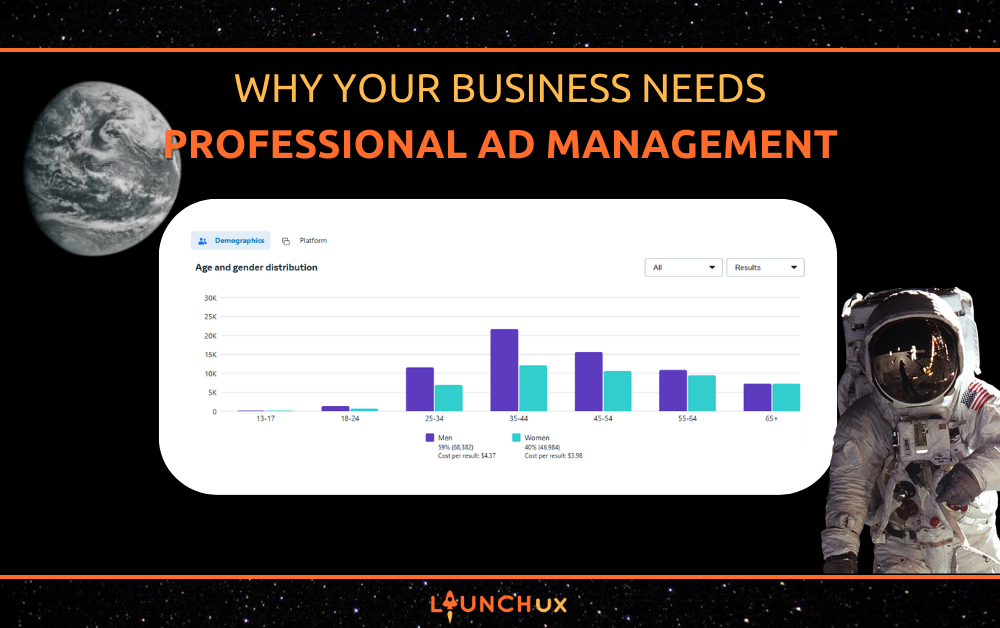
Even the best ads won’t work if the wrong people are seeing them. Ad management involves precise audience targeting to ensure your message reaches the customers who are most likely to take action. This includes narrowing down audiences by demographics, location, interests, and behaviors. Retargeting strategies can also be used to re-engage people who have previously interacted with your brand. With proper ad management, businesses don’t just reach a large audience—they reach the right audience.

Setting Budgets & Bids

Ad budgets can disappear fast if they aren’t managed properly. That’s why ad management focuses on strategically setting and adjusting budgets. Whether you’re running Google Ads, Facebook Ads, or LinkedIn campaigns, each platform has its own bidding system. Some businesses prefer manual bidding to control costs, while others rely on automated bidding to let algorithms do the work. A strong ad management strategy ensures that your budget is allocated effectively—so you’re not overspending but also not limiting your ad’s reach.

Tracking & Adjusting Campaigns

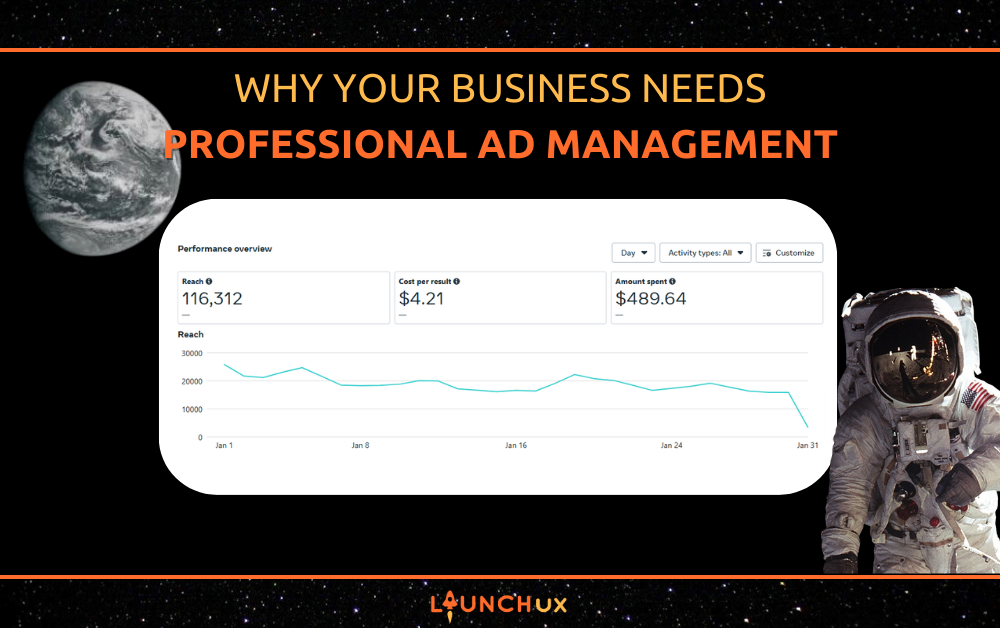
Running ads is just the first step. The real power of ad management comes from continuously tracking performance and making adjustments. Metrics like click-through rates, conversions, and cost per acquisition help determine which ads are working and which need improvement. A well-managed campaign doesn’t just launch and sit—it evolves. If an ad isn’t performing well, adjustments are made to improve targeting, messaging, or budget allocation. This ongoing process ensures businesses get the highest return on investment from their ad spend.

Why Does Your Business Need Ad Management?

If you’ve ever tried running ads on your own, you know it’s not as simple as it looks. From selecting the right audience to managing your budget, there’s a lot that goes into making an ad campaign successful. Without proper ad management, businesses often waste money on ineffective ads, struggle to reach the right customers and miss out on valuable growth opportunities.

Saves Time & Resources

Managing ads is a full-time job. Between writing ad copy, selecting visuals, setting budgets, and analyzing performance, it takes time—time that most business owners don’t have. Ad management takes this responsibility off your plate, allowing you to focus on running your business while professionals handle your campaigns. Instead of trying to figure out ad platforms yourself, you can trust experts to create, optimize, and monitor your ads for the best results.

Maximizes Your Ad Budget

One of the biggest mistakes businesses make is spending money on ads that don’t perform. Without a clear strategy, it’s easy to waste budget on the wrong audience, ineffective messaging, or poorly placed ads. Proper ad management ensures that every dollar is spent wisely. By tracking performance and making real-time adjustments, ad managers can lower costs while increasing results, giving you the highest return on investment (ROI) possible.

Increases Conversions & Sales

At the end of the day, ads should do more than just get clicks—they should bring in real customers. With expert ad management, your campaigns are designed to drive action, whether that means increasing sales, generating leads, or getting more website traffic. By continuously optimizing targeting, ad creatives, and messaging, businesses see higher conversion rates and more meaningful engagement.

Provides Data-Driven Insights

One of the biggest advantages of professional ad management is access to valuable data. Instead of guessing what works, businesses can use detailed analytics to see exactly how their ads are performing. What’s driving the most clicks? Which audience is engaging the most? Where should the budget be shifted? These insights allow businesses to make informed marketing decisions and refine their overall advertising strategy.

Ensures Multi-Platform Success

Different platforms require different strategies. What works on Facebook may not work on Google, and LinkedIn ads have a different approach altogether. Ad management helps businesses navigate multiple ad platforms effectively, ensuring that each campaign is optimized for the specific platform it’s running on. This means more consistency in branding and better overall results.

Basic Ad Management Tips for Success

Effective ad management is all about strategy. Whether you’re new to online advertising or looking to improve your results, having a structured approach can make all the difference. Below are some essential tips to help businesses get the most out of their advertising efforts.

Define Clear Objectives

Before launching any ad campaign, you need to know exactly what you’re trying to achieve. Are you looking to drive more website traffic, generate leads, or boost sales? A well-defined goal helps shape your entire ad strategy.

  • Set measurable objectives, such as “Increase website traffic by 20% in three months.”
  • Choose campaign types that align with your goals (brand awareness, conversions, lead generation).
  • Track key performance indicators (KPIs) like click-through rate (CTR), conversion rate, and return on ad spend (ROAS).

Know Your Audience

Reaching the right audience is key to ad success. Instead of marketing to everyone, focus on targeting the people most likely to engage with your business.

  • Use audience insights to understand demographics, interests, and behaviors.
  • Take advantage of platform-specific targeting options (Facebook’s interest-based targeting, Google’s keyword targeting, LinkedIn’s job title filters).
  • Set up retargeting ads to re-engage past visitors who didn’t convert the first time.

Create Engaging Ads

Your ad needs to stand out in a crowded digital space. High-quality visuals, compelling copy, and a clear call to action (CTA) are crucial to capturing attention and driving engagement.

  • Use strong headlines that immediately communicate value.
  • Include eye-catching images or videos that align with your brand.
  • Test different CTA phrases like “Shop Now,” “Get a Free Quote,” or “Sign Up Today.”

A/B Test Your Campaigns

Not all ads perform the same, which is why A/B testing is so important. Testing different elements of an ad campaign helps identify what resonates most with your audience.

  • Experiment with different headlines, images, and ad formats.
  • Test various audience segments to see which group converts better.
  • Compare different bidding strategies to optimize cost per conversion.

Monitor Performance & Adjust as Needed

Ad campaigns require constant monitoring and adjustments to maximize results. Ignoring ad performance can lead to wasted budget and missed opportunities.

  • Check ad metrics regularly to see which campaigns are performing best.
  • Shift budget towards high-performing ads and pause underperforming ones.
  • Use analytics tools like Facebook Ads Manager or Google Analytics to track progress.

How LaunchUX Can Handle Your Ad Management

Managing ads can be time-consuming and overwhelming, but you don’t have to do it alone. At LaunchUX, we take the guesswork out of ad management by handling everything from ad creation to performance tracking. Our team ensures that every campaign aligns with your brand’s voice, values, and business goals—so you get the best results without the stress.

Customized Ad Creation

Every business is unique, and your ads should reflect that. At LaunchUX, we create ads that don’t just look good but also speak directly to your target audience. Whether it’s a Google Search ad, a Facebook carousel, or a LinkedIn sponsored post, we make sure your messaging is clear, engaging, and designed to drive conversions. We also ensure that your ads match your brand identity, so they feel authentic and consistent across all platforms.

Optimized Scheduling for Maximum Impact

Timing is everything when it comes to advertising. Running ads at the right time can mean the difference between high engagement and wasted budget. LaunchUX strategically schedules your ads based on when your audience is most active. We analyze data trends to determine peak times, ensuring your ads get maximum visibility without unnecessary spending.

Comprehensive Performance Reporting

Ad management isn’t just about launching campaigns—it’s about tracking performance and making improvements. At LaunchUX, we provide detailed reports that break down how your ads are performing. From click-through rates to conversion tracking, we monitor every metric that matters. Our reports help you see where your ad budget is going and how your campaigns are contributing to your business growth.

Multi-Platform Expertise & Continuous Optimization

Advertising isn’t one-size-fits-all. What works on Facebook may not work on Google, and LinkedIn requires a different approach altogether. Our team at LaunchUX has expertise across multiple platforms, ensuring that each ad campaign is optimized for its specific audience and goals. We also continuously adjust campaigns based on real-time performance data, making improvements to increase engagement, lower costs, and boost conversions.

Let LaunchUX Take Your Ads to the Next Level

Effective ad management is key to getting the most out of your advertising budget. From targeting the right audience to optimizing campaigns for better results, professional ad management ensures that your business gets more leads, higher conversions, and greater brand visibility.

At LaunchUX, we take care of everything—from ad creation to scheduling and reporting—so you don’t have to worry about the details. Whether you’re looking to grow your online presence, drive sales, or generate leads, our expert team is here to help.

Ready to see real results from your ads? Let’s talk! Contact LaunchUX today to get started.

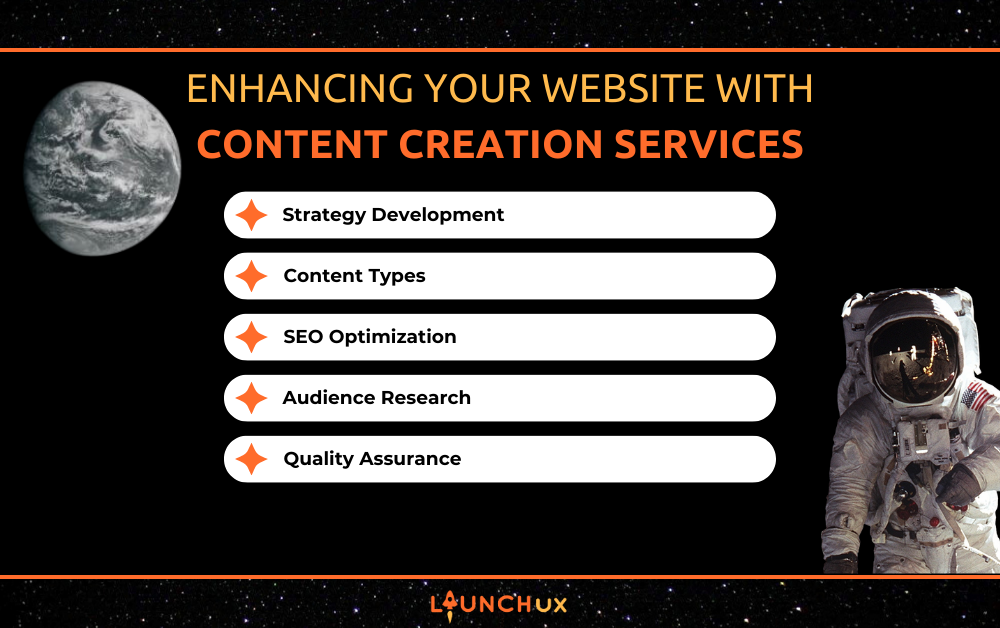
Enhancing Your Website with Content Creation Services

Content creation services cannot be overstated in today’s digital atmosphere. A website serves as the online face of your business, and compelling content is crucial for engaging visitors and driving conversions. Content creation services can significantly enhance your website by delivering customized content that resonates with your audience’s interests. This blog explores how these services, including those offered by LaunchUX, can improve your online presence through various key components.

Strategy Development

Aligning Goals with Content

Content creation services begin with strategy development, where professionals outline a comprehensive plan tailored to your business goals. This strategic framework considers your unique selling propositions, competitive landscape, and industry trends. By understanding your position in the market, content creators can craft messages that effectively differentiate you from competitors. This foundational step sets the stage for all subsequent content efforts.

Crafting a Content Calendar

Establishing a content calendar is a crucial element of the strategy development phase. This calendar details the types of content to be created and their publication schedule, promoting consistency and punctuality. By planning, businesses can more effectively distribute their resources and synchronize their messaging with marketing campaigns. This structured approach also helps keep the content relevant and engaging.

Long-term Planning

This strategic approach facilitates long-term planning, allowing you to anticipate future content needs. A long-term vision helps build a library of valuable resources that can attract and engage visitors over time. By strategizing early, you can confirm that your website maintains a consistent online presence that resonates with your audience.

Content Types

Diverse Formats

Diverse content types are vital in engaging visitors and keeping them on your site longer. Content creation services encompass various formats, such as blog entries, articles, videos, infographics, and social media content. Each category serves a particular purpose and appeals to diverse audience preferences, making your website more dynamic and engaging. This variety helps maintain visitor interest and encourages exploration.

Tailored Content for Different Audiences

By developing tailored content, you can effectively reach different segments of your audience. For instance, infographics may appeal to visual learners, while in-depth articles can attract those seeking detailed information. This targeted approach enhances user experience and encourages visitors to interact with your website in multiple ways. A diverse content strategy can also lead to increased social sharing and visibility.

Keeping Content Fresh

Regularly updating your content types keeps your website engaging and timely, attracting a wider audience. Fresh content can also improve your site’s search engine ranking, drawing in new visitors. New formats can encourage social sharing and word-of-mouth promotion, further expanding your reach. Keeping content fresh is essential for retaining audience interest and engagement.

SEO Optimization

Importance of SEO

Effective SEO is fundamental for increasing your website’s visibility in search engine results. Without proper SEO, even the best content may remain hidden from potential visitors. Content creation services employ various SEO techniques to ensure your content ranks well for relevant keywords. This optimization is key to driving organic traffic and attracting the right audience.

Technical SEO Considerations

This includes strategically placing keywords, crafting compelling meta descriptions, and creating SEO-friendly headlines. Additionally, content creators focus on optimizing images, improving site speed, and ensuring mobile friendliness. These technical considerations enhance user experience and search engine rankings. By focusing on SEO, you increase the likelihood of your content reaching those who need it most.

Monitoring SEO Performance

Ongoing monitoring of SEO performance allows for adjustments that can further enhance visibility and reach. By regularly reviewing analytics, businesses can identify trends and shifts in audience behavior. This data-driven method will enable you to refine your SEO strategy and make informed decisions. Consistently tracking performance ensures that your website stays relevant and competitive.

Audience Research

Identifying Target Demographics

Awareness of your audience is essential for successful content development. Content creation services invest time in audience research to identify preferences, interests, and pain points. This research helps ensure your content is relevant and compelling to your target demographic, allowing for more meaningful engagement.

Creating Personas

Businesses can connect with their audience by crafting detailed audience personas. These personas guide their content’s tone, style, and topics, making it easier to resonate with readers. The more aligned their content is with their audience’s needs, the more likely it is to drive engagement. This targeted approach is essential for building lasting relationships.

Adapting to Audience Feedback

Regularly adapting content based on audience feedback ensures that your messaging remains relevant. Responses from surveys, user comments, and social media engagement deliver critical information about what your audience values. Listening to your audience can adjust your strategies and improve overall engagement. This flexibility strengthens your connection with visitors.

Quality Assurance

Ensuring High Standards

Quality assurance is a cornerstone of effective content creation services. High-quality content is well-researched, accurately written, and error-free, positively impacting your brand. Poor-quality content can damage your reputation and deter potential customers. Therefore, maintaining high standards is essential for building trust with your audience.

Implementing Review Processes

Content creators implement rigorous quality checks to ensure each piece meets high standards. These checks include fact-checking, verifying sources, and adhering to style guidelines. This commitment to quality builds credibility and fosters trust among your audience. Consistently delivering well-crafted content enhances your brand’s reputation.

Continuous Improvement

Emphasizing quality involves a commitment to continuous improvement. Regularly reviewing past content helps identify areas for improvement, ensuring that future pieces are even more effective in meeting audience needs. By focusing on improvement, you can continually refine your content strategy.

Editing and Proofreading

Enhancing Clarity

Effective editing and proofreading are crucial in the content creation process. Even the most compelling ideas can fall flat if not presented clearly. Skilled editors refine the content’s structure, ensuring each point is articulated effectively. This clarity is essential for maintaining reader engagement.

Professional Review

Content creation services include thorough editing to enhance coherence and readability. This stage often involves revisiting the content from the audience’s perspective and identifying confusing sections. Professional review helps ensure your message resonates with readers and meets their expectations. High-quality editing reflects well on your brand.

Final Quality Check

This final quality check is essential for maintaining a high standard of content. Ensuring grammatical accuracy and proper formatting enhances professionalism. A polished final product increases reader trust and encourages engagement. This attention to detail sets your content apart from competitors.

Performance Tracking

Importance of Metrics

It is vital to monitor the performance of your content to understand its impact. Content creation services often incorporate performance tracking to monitor key metrics such as engagement and conversion rates. This data delivers an understanding of how well your content resounds with your audience. Knowing what works allows you to refine future efforts.

Analyzing Data for Insights

By analyzing this data, businesses can identify what works and what doesn’t. Insights gained from performance tracking enable data-driven adjustments to content strategies. This adaptability maximizes the return on investment for your content efforts. Understanding audience behavior is crucial for future success.

Iterative Process

This iterative process helps optimize content for better results over time. Adjusting strategies based on real-time data ensures that your website stays relevant. Continuous improvement leads to enhanced engagement and conversions. By consistently refining your approach, you create a more effective content strategy.

Brand Consistency

Maintaining a Cohesive Identity

Maintaining brand consistency across all content is crucial for establishing a strong identity. Content creation services ensure that your brand voice, tone, and messaging remain uniform across all platforms. A cohesive presence helps reinforce brand recognition and builds trust with your audience. Consistency fosters familiarity, encouraging more profound connections.

Building Trust

This consistency reinforces brand recognition and builds trust with your audience. Visitors who see a cohesive brand presence are likelier to engage and positively associate with your business. Trust is essential for long-term customer relationships, driving repeat visits and engagement.

Strengthening Brand Loyalty

Ultimately, consistent branding helps strengthen customer loyalty. A recognizable and trustworthy brand encourages visitors to return and engage with your content. Committed customers are more apt to refer your brand to friends and family, expanding your reach. This loyalty is invaluable for sustained business growth.

Collaboration

Importance of Client Input

Collaboration between content creators and clients is key to producing tailored content. Content creation services often involve close communication to gather client insights and feedback. This interaction helps ensure that the final product aligns with the client’s vision and goals. A teamwork-oriented approach enhances comprehension of client requirements.

Building a Partnership

This teamwork-oriented method guarantees that the content connects effectively with the target audience. By working together, both parties can create content that meets business objectives. This partnership often leads to more prosperous and compelling content that reflects expertise and client vision.

Leveraging Expertise

Collaboration also allows clients to leverage the expertise of content creators. Combining industry knowledge with creative skills can yield high-quality, stand-out content. Effective partnerships lead to innovative solutions and more impactful messaging. A collaborative spirit enhances the content creation process.

Adaptability

Staying Current

Adaptability is key in a constantly transforming online landscape. Content creation services are equipped to respond to changing trends, audience needs, and client feedback. This ability to pivot ensures that your content remains relevant and engaging. Staying current helps maintain your competitive edge.

Flexibility in Strategy

This adaptability enables businesses to remain pertinent and competitive in a fast-paced environment. Companies can ensure their websites cater to their audience’s requirements by continually adjusting strategies and content types. An adaptable approach can also help them seize new opportunities as they arise.

Embracing Innovation

Adaptability means embracing new tools and technologies that enhance content creation and distribution. Maintaining a competitive edge is essential, whether integrating new social media platforms or adopting advanced analytics tools. This willingness to embrace innovation can result in more effective content strategies.

Conclusion

Incorporating content creation services into your digital strategy can dramatically improve your website’s effectiveness. From strategy development to performance tracking, these services offer a comprehensive approach to engaging your audience. Consider investing in professional content creation services from LaunchUX if you’re ready to elevate your website with high-quality, targeted content. Your website deserves it, and so does your audience. This step can significantly enhance your online presence and foster lasting connections with your visitors. 

Don’t wait any longer—reach out to LaunchUX today for a consultation! Let us help you craft compelling content that captivates your audience and drives meaningful engagement. Your digital success is just a click away!

Elevate Your Brand with Visual Storytelling

Virtual storytelling is essential in social media, where capturing attention is more crucial than ever. Effective communication is key to standing out with the overwhelming volume of content shared daily. LaunchUX harnesses this dynamic approach, allowing brands and individuals to convey compelling messages that resonate with audiences. By combining the power of imagery, video, and design, virtual storytelling creates narratives that engage and inform. Crafting stories visually fosters a deeper connection with your audience, increasing the likelihood of engagement with your content. In this blog, we’ll explore the significance of visual storytelling and how it can significantly contribute to your social media growth, especially through the innovative strategies LaunchUX offers.

What is Visual Storytelling?

Visual storytelling combines images, videos, and graphics to narrate a story or convey a message. Unlike traditional text-heavy posts, visual storytelling immerses the audience more profoundly, allowing them to connect emotionally and cognitively with the content. Using visuals, creators can simplify complex ideas, making them more accessible and memorable. This approach not only attracts attention but also helps convey messages more effectively. People often process visuals much faster than text, allowing your audience to seize your message quickly. The influence of visual storytelling lies in its ability to create a narrative that captures interest and encourages retention.

The Power of Visuals

Research shows that people are more likely to remember information when it’s presented visually. Studies suggest that our brains process visuals 60,000 times faster than text, highlighting visual storytelling’s effectiveness in communication. In social media, where users scroll rapidly through their feeds, compelling visuals can capture attention within seconds. You can enhance your message’s reach by integrating strong imagery and design elements. This ability to evoke emotions and create lasting impressions makes visuals invaluable for engaging your audience. Ultimately, leveraging visual storytelling can set you apart in a crowded digital space.

Enhancing Comprehension

Visual storytelling aids comprehension by breaking down complex information into digestible visual elements. Infographics and diagrams can present data quickly, allowing viewers to grasp key points without feeling overwhelmed. By presenting information in a structured visual format, you help your audience process and retain critical details. This is particularly important for brands that need to communicate detailed concepts clearly and concisely. Simplifying content through visuals not only improves understanding but also encourages audience engagement. By making information more accessible, you increase the likelihood of your audience interacting with and sharing your content.

Benefits of Visual Storytelling in Social Media

Enhanced Engagement

Visual storytelling is inherently more engaging than text alone. Visual posts attract 94% more attention than those without, and platforms like Instagram and TikTok thrive on visual content. Eye-catching graphics, infographics, and videos encourage users to interact by liking, sharing, or commenting. This increased interaction boosts your content’s visibility in social media algorithms, enabling it to reach a broader audience. Heightened engagement rates can lead to more followers and an expanded online community. Ultimately, leveraging visual storytelling helps you create a more vibrant and interactive social media presence.

Emotional Connection

Images and videos can evoke powerful emotions that resonate with viewers. By telling stories through visual storytelling, you create a substantial emotional connection with your audience, making them feel invested in your brand. This emotional resonance is essential for building brand loyalty and trust over time. When followers relate to your visuals, they are more likely to engage with your content and advocate for your brand within their networks. Moreover, storytelling creates a narrative that followers can connect with, making your brand feel more human and approachable. Fostering this emotional connection can significantly enhance your overall brand perception.

Building Community

Visual storytellingcan encourage a sense of community among your audience. By sharing stories that reflect shared values and experiences, you create a space where followers feel connected to your brand and each other. This sense of belonging encourages users to engage more deeply with your content and participate in discussions. Community-building enhances brand loyalty, as followers are likelier to stick around when they feel part of something larger. By cultivating an inclusive environment, you invite your audience to share their stories and experiences, further enriching the community. Ultimately, a strong community can amplify your brand’s reach and impact.

Strategies for Effective Visual Storytelling

Know Your Audience

Knowing your audience is vital for developing visuals that genuinely engage them. Researching their preferences, interests, and pain points helps you produce content that directly expresses their needs. Consider using surveys, social media insights, and engagement analytics to gather data about what visual storytelling content performs best with your audience. Tailoring your visuals to meet their expectations will result in higher engagement and stronger community ties. Additionally, understanding your audience qualifies you to create visuals that reflect their values and lifestyle, further enhancing connection. This tailored approach can make a more substantial impact on your storytelling.

Use High-Quality Images and Videos

Exceptional visuals play a key role in making a significant impression on viewers.  Low-quality pictures can detract from your message and harm your credibility as a brand. Utilizing professional photography, high-resolution graphics, and well-edited videos guarantees your content stands out in a packed space. Tools like Canva, Adobe Spark, and Figma offer user-friendly options for creating stunning visuals, even if you’re not a graphic designer. Consistently high-quality visuals signal professionalism and can significantly enhance your brand’s reputation. Ultimately, your commitment to quality in visual storytelling reflects your brand’s values and dedication to your audience.

Incorporate Story Arcs

Every great story follows a narrative structure, which can be applied to your visual storytelling content. Incorporating elements like conflict, resolution, and a call to action in your visuals can captivate your audience and encourage them to take action. For example, showcasing a customer’s journey using your product allows you to illustrate their initial problem, how they discovered your solution, and their positive experience afterward. This storytelling approach encourages users to relate to the content personally. By framing your visuals within a narrative context, you create a more compelling experience for your audience. This approach is likely to result in increased participation and better conversion outcomes.

Social media trends evolve rapidly; incorporating them into visual storytelling can enhance relevance. Whether it’s a viral challenge, a popular meme format, or a trending design aesthetic, aligning your content with current trends can capture audience interest. You can create fresh and engaging visuals by being adaptable and responsive to what’s popular. This responsiveness attracts new followers and excites your current audience about your content. Staying current with trends enables you to position your brand as relevant and in touch with cultural conversations. Ultimately, this can enhance your brand’s visibility and influence.

Experimenting with Formats

Exploring various visual formats can keep your content dynamic and engaging. Each format offers unique storytelling opportunities, from Instagram Stories and Reels to TikTok videos and infographics. Experimenting with different formats lets you discover what resonates best with your audience. This variety keeps your content exciting and allows you to present information in multiple ways, catering to different preferences. Engaging with diverse formats can also encourage experimentation among your audience, leading to increased interaction and sharing. By diversifying your visual storytelling approach, you create a richer narrative landscape for your brand.

Learning from Competitors

Observing how competitors utilize visual storytelling can provide valuable insights into effective strategies. Analyzing their content, engagement rates, and the types of visuals that resonate with their audience can help you identify best practices. While it’s essential to maintain your unique brand voice, learning from others can inspire fresh ideas and help you avoid potential pitfalls. Incorporating successful elements from competitors can enhance your visual storytelling efforts while ensuring you stay true to your brand identity. You can constantly adapt and improve your strategies by watching the competition. This approach cultivates a culture of creation and growth within your brand.

Measuring Success

Track Engagement Metrics

To understand the significance of your visual storytelling, tracking engagement metrics such as click-through rates,  likes, shares, and comments is vital. Assessing these metrics will provide insights into which forms of visual content appeal most to your audience. Tools like Google Analytics, social media insights, and specialized analytics platforms offer valuable data on how your visuals perform. Regularly reviewing this information lets you refine your strategy and focus on what works best. By understanding your metrics, you can continuously adapt your visual storytelling to better meet your audience’s needs. This ongoing evaluation is key to achieving long-term success.

A/B Testing Visuals

A different effective technique for refining your visual storytelling is to implement A/B testing. Creating two variations of the same visual content—such as other images, colors, or messaging—lets you see which performs better. This process helps you to gain insights into your audience’s preferences and fine-tune your approach for future content. You can identify what resonates most by testing various elements, ultimately leading to more effective storytelling. This iterative process optimizes your visuals and encourages a data-driven mindset that can result in greater audience engagement. Regularly implementing A/B testing ensures that your content remains relevant and impactful.

Setting Clear Goals

Establishing clear goals for your visual storytelling efforts is essential for measuring success. Whether you seek to build brand recognition, drive more traffic, or maximize conversions, establishing clear objectives enables you to produce tailored content. By aligning your visuals with your goals, you can more effectively measure their success and adjust your strategy accordingly. Clear goals guide your storytelling, making it easier to evaluate what works and what doesn’t. This clarity encourages you to make informed decisions about future content and investments. Ultimately, setting measurable goals can improve outcomes and more significant brand impact.

Conclusion

Visual storytelling is an indispensable tool for social media growth. By leveraging the power of images and videos, you can enhance engagement, forge emotional connections, and establish a strong brand identity. LaunchUX can help you adopt effective visual storytelling techniques to set you apart and drive your social media success as the landscape evolves.

Using LaunchUX’s expertise, you can seamlessly integrate visual storytelling into your strategy today and watch your social media presence flourish! Embracing this dynamic storytelling method will ultimately lay the groundwork for long-lasting engagement and growth in the digital landscape. Start using visual storytelling today to elevate your brand’s social media presence. Contact LaunchUX to learn how we can help you engage your audience effectively!

Why Is SWOT Analysis Essential for Your Business?

Running a business comes with its fair share of challenges and opportunities, and navigating them successfully requires a clear plan. That’s where a SWOT Analysis comes in. This straightforward tool helps you take a step back and really look at your business—what you’re doing well, where you can improve, and what’s happening in the world around you that could help or hurt your progress.

Whether you’re a small business owner trying to grow or a seasoned professional looking to refine your strategy, a SWOT Analysis can give you the clarity you need to make better decisions. In this blog, we’ll break down what a SWOT Analysis is, explain why it’s so valuable, and show you why it should be a regular part of your business toolkit.

What Is a SWOT Analysis? Breaking Down the Basics

At its core, a SWOT Analysis is a strategic planning tool designed to help businesses understand their current position and plan for the future. It provides a framework for identifying and evaluating four key areas that influence your success: Strengths, Weaknesses, Opportunities, and Threats. By looking at these areas, you can create strategies that play to your strengths, address your weaknesses, capitalize on opportunities, and defend against threats.

The Four Components of a SWOT Analysis

  1. Strengths (Internal):
    • These are the things your business does well. Strengths might include unique skills, strong customer loyalty, or access to valuable resources.
    • Example: “We have a highly skilled team that excels at delivering projects on time.”
  2. Weaknesses (Internal):
    • Weaknesses are the areas where your business could improve. They could be resource gaps, outdated systems, or areas where competitors outperform you.
    • Example: “We rely on a single supplier, which leaves us vulnerable to delays.”
  3. Opportunities (External):
    • Opportunities are external factors that could benefit your business. These might be emerging trends, new markets, or gaps your competitors haven’t filled.
    • Example: “There’s a growing demand for eco-friendly products in our market.”
  4. Threats (External):
    • Threats are challenges or risks that could negatively impact your business. These might include new competitors, regulatory changes, or shifts in consumer behavior.
    • Example: “A major competitor is expanding into our territory.”

The Power of the SWOT Matrix

A great way to organize this information is by using a SWOT matrix. It’s a simple grid that puts everything in one place, making it easier to spot connections and prioritize actions. For example, you might find that your strengths align perfectly with an emerging opportunity, or that a weakness could make you vulnerable to a specific threat.

Why Is SWOT Analysis Useful for Businesses?

A SWOT Analysis isn’t just a planning exercise—it’s a powerful tool that can unlock new insights and opportunities for your business. By taking the time to evaluate your internal strengths and weaknesses alongside external opportunities and threats, you can create actionable strategies that lead to meaningful results. Here’s why it’s so valuable for businesses of all sizes.

Helps Identify Strategic Goals

A SWOT Analysis gives you clarity about what matters most. By understanding your strengths, you can focus on what sets your business apart. At the same time, acknowledging weaknesses allows you to set realistic goals for improvement. This balance ensures that your strategies are both ambitious and achievable.

Example: A business might discover its strength in customer service and use that insight to launch a loyalty program, fostering deeper connections with existing customers.

Facilitates Informed Decision-Making

When you have a clear picture of your business’s current position, making decisions becomes easier and more effective. A SWOT Analysis equips you with the knowledge to allocate resources wisely, invest in the right opportunities, and avoid potential pitfalls.

Example: If a competitor is expanding into your market (a threat), you can prepare by leveraging your strengths to solidify your customer base.

Encourages Collaboration

The process of conducting a SWOT Analysis often involves input from different departments or team members. This collaboration can uncover insights that might otherwise be overlooked and fosters a sense of shared ownership over the business’s direction.

Example: The marketing team might highlight new trends (opportunities), while the operations team identifies bottlenecks (weaknesses) to address.

Adapts to Changing Environments

Markets, technologies, and consumer preferences are always evolving. A SWOT Analysis allows your business to adapt by keeping an eye on external opportunities and threats while refining internal processes. It’s a tool that grows with you.

Example: Spotting a trend in sustainable products (opportunity) could prompt a company to develop eco-friendly offerings, giving them a competitive edge.

Why Your Business Should Conduct Regular SWOT Analyses

A single SWOT Analysis is a great starting point, but making it a regular part of your business strategy can keep you ahead of the game. The business world changes constantly, and staying competitive requires a clear understanding of where you stand and how you can improve. Here’s why you should make SWOT Analyses a habit.

1. Stay Competitive in Your Industry

Conducting a regular SWOT Analysis helps you understand how you stack up against competitors. By continuously evaluating your strengths and weaknesses, you can identify areas where you have a competitive edge or where you need to catch up.

Example: A local business might find that their exceptional customer service (strength) is a major differentiator compared to competitors with poor online reviews (opportunity).

2. Discover New Growth Opportunities

Markets are dynamic, and opportunities can arise when you least expect them. A regular SWOT Analysis ensures you’re always on the lookout for trends, new customer needs, or gaps in the market that you can fill.

Example: Identifying a growing demand for online services (opportunity) could inspire a traditional business to develop an e-commerce platform.

3. Mitigate Risks Before They Become Problems

Threats like new competitors, shifting regulations, or economic downturns can have a significant impact on your business. Regular SWOT Analyses help you stay ahead of these challenges by preparing for them in advance.

Example: A retail business might spot a potential threat in rising material costs and proactively adjust its pricing strategy.

4. Promote Continuous Improvement

A SWOT Analysis encourages your team to think critically about how to improve processes, products, or services. By consistently evaluating weaknesses, you can implement small changes that lead to big results over time.

Example: If outdated technology is a recurring weakness, addressing it could lead to improved efficiency and cost savings.

How to Conduct a SWOT Analysis for Your Business

Conducting a SWOT Analysis doesn’t have to be complicated. With the right approach, it can be an insightful and even collaborative process that helps your business thrive. Follow these steps to get started.

Step 1: Gather a Team of Stakeholders

Start by assembling a diverse group of team members. Include individuals from different departments or areas of expertise to ensure you get a well-rounded perspective. A collaborative approach often uncovers insights you might miss on your own.

Tip: Encourage brainstorming and honest feedback. The more open the discussion, the more valuable your analysis will be.

Step 2: Analyze Your Strengths

Ask yourself: What are we doing well? What gives us an advantage over competitors? Strengths could include anything from superior customer service and strong branding to innovative products or a loyal customer base.

Example Questions:

  • What resources do we have that others don’t?
  • What do customers compliment us on?

Step 3: Identify Your Weaknesses

Be honest about areas where your business struggles. Weaknesses could include inefficient processes, outdated technology, or gaps in expertise. Identifying these is the first step toward improvement.

Example Questions:

  • What do customers or employees often complain about?
  • Where are we losing to competitors?

Step 4: Explore Opportunities

Look outside your organization to spot opportunities. These might include market trends, emerging technologies, or areas where competitors are falling short.

Example Questions:

  • Are there unmet needs in the market we can address?
  • Are there upcoming trends we can leverage?

Step 5: Identify Threats

Evaluate external factors that could pose risks to your business. Threats could come from economic shifts, new competitors, or changes in customer behavior.

Example Questions:

  • What could disrupt our industry?
  • Are there competitors making moves into our market?

Step 6: Create a SWOT Matrix

Organize your findings into a simple grid:

  • Strengths in one box.
  • Weaknesses in another.
  • Opportunities in a third.
  • Threats in the last.

This visual representation makes it easy to spot patterns and prioritize actions.

Step 7: Turn Insights into Action

A SWOT Analysis is only as useful as the actions you take afterward. Use your findings to develop specific strategies. For example:

  • Leverage strengths to take advantage of opportunities.
  • Address weaknesses to reduce vulnerability to threats.

Take Charge of Your Business Strategy with SWOT Analysis

A SWOT Analysis is more than just a planning exercise—it’s a way to gain clarity, stay competitive, and drive your business forward. By taking a structured look at your Strengths, Weaknesses, Opportunities, and Threats, you can make smarter decisions, capitalize on emerging trends, and prepare for challenges before they arise.

Whether you’re planning a new initiative, evaluating your market position, or simply looking to improve, a SWOT Analysis provides the insights you need to take action with confidence. The best part? It’s simple, effective, and adaptable to any business size or industry.

Don’t wait for opportunities to pass you by or threats to catch you off guard. Make SWOT Analysis a regular part of your business strategy and stay one step ahead of the competition.

Let LaunchUX Help You Stay Ahead

At LaunchUX, we know that building a strong business strategy takes more than just planning—it takes action. Our team specializes in social media management and branding strategies that help you turn your business strengths into market wins.

Ready to take the next step? Contact us today and see how we can help your business thrive.

Writing Techniques for Effective Website SEO

Effective writing techniques are crucial for making your site more straightforward to find on search engines like Bing or Google. A sufficiently-optimized website can significantly increase your traffic, attracting more potential customers. This guide will help you learn writing techniques that can boost your website’s visibility and attract more visitors. Enhancing your online presence significantly is possible by grasping SEO (Search Engine Optimization) and its connection to writing techniques. If you seek expert help with SEO and web design, consider contacting LaunchUX to take your online strategy to the next level. Let’s explore the key parts of SEO and some effective writing techniques!

Understanding SEO and Its Importance

What Is SEO?

SEO captures the essence of Search Engine Optimization in the digital universe; in other words, it refers to optimizing your website for a higher ranking in search engines. It involves various strategies that help search engines understand your site’s content. Good SEO practices include employing effective writing techniques that can obtain more traffic to your site, increase brand visibility, and lead to more sales. It’s not just about using the right keywords; it’s about offering valuable information to your readers through well-thought-out writing techniques. If your website is easy to find, it can grow faster and reach more people, enhancing your brand’s credibility.

Why SEO Matters

SEO is necessary to guarantee that the right people see your website in a bursting online area. When your site achieves a top ranking in search results, it gets more visibility and credibility, leading to more clicks and visitors. This improved visibility can result in higher conversion rates, as more people are likely to explore your offerings. High-ranking sites are often trusted more by users, which is essential for building credibility. Additionally, good SEO practices that include effective writing techniques improve how users experience your site, making navigating and interacting easier.

The Evolution of SEO

SEO techniques have changed immensely because search engines regularly update their algorithms. What worked well in the past might not be effective today, making it essential to stay updated on effective writing techniques. Comprehending these differences allows you to adapt your writing strategies and optimize your content for current trends. Nowadays, quality content is far more important than just using keywords; search engines prioritize user experience, which means good writing techniques matter more than ever. Adapting to these shifts can give you a competitive edge and help maintain your site’s relevance.

The Role of Content in SEO

Types of Content That Work

Many types of content can effectively engage users. Blog posts, articles, infographics, and videos serve different purposes and can cater to various audience preferences. Mixing up your content types keeps your audience interested and can help you rank for other search terms, expanding your reach. Different writing techniques can enhance these formats, making them even more appealing. This variety encourages sharing and interaction and increases your website’s visibility.

How Content Affects SEO

Search engines prioritize high-quality, relevant content. Quality content, produced using effective writing techniques, not only meets the needs of your readers but also aligns with what search engines look for, making it more likely to get noticed. Increased user engagement with high-quality content on your site sends a message to search engines about its value. Additionally, updating your content regularly using strong writing techniques shows search engines that your site is operational, which can enhance your rankings over time. Therefore, consistently producing high-quality content is key to maintaining and boosting your SEO efforts.

The Importance of Fresh Content

Keeping your content original is key to maintaining a strong online presence. Regular updates show search engines that your website is dynamic and pertinent, enhancing your rankings. However, creating new content is not always necessary; refreshing existing articles can also improve your site’s relevance. Incorporating new information or revising outdated content through strong writing techniques can re-engage your audience and provide more value. This approach ensures that your audience consistently finds relevant and timely information.

Key Writing Techniques for SEO

Keyword Research

  • The Importance of Keywords: Identifying the right keywords helps you understand what people are searching for online. Launching your content into orbit with these keywords can create valuable resources that answer users’ questions. This process improves the likelihood of attracting organic traffic to your site.
  • Focus on Long-Tail Keywords: Target long-tail keywords to attract more specific visitors, often those closer to making a purchase decision. These keywords typically have lower competition, making ranking higher in search results more manageable. This targeted approach drives traffic and can lead to higher conversion rates.

Tools for Keyword Research

Tools like Ahrefs and Google Keyword Planner can help you find popular search terms and their search volume. These tools supply insights into user behavior and preferences, allowing for more informed content creation. Additionally, monitoring keyword trends can help adjust your content strategy proactively, ensuring you stay relevant.

Long-Tail Keywords

Long-tail keywords often have less competition, increasing your chances of ranking for specific queries. They help connect you with your target audience and enhance your emerging possibilities in voice search results; for example, rather than just “shoes,” use “best running shoes for beginners” to connect with targeted readers, which can lead to more engaged visitors.

Optimizing Content Structure

  • Organization: A well-structured article improves readability and guides readers through your writing. Organizing your content logically helps maintain reader interest and reduces bounce rates. Effective structure also allows search engines to crawl your content more efficiently, boosting your SEO.
  • Visual Aids: Using bullet points and numbered lists to appeal to skimming readers. These visual elements help highlight key points and make your content more digestible. A clear content structure enhances the overall user experience, inspiring guests to spend more time on your page.

Importance of Headings

Headings help organize your content and make it user-friendly. They allow readers to scan for relevant sections, improving the overall experience quickly. Include primary keywords in your H1 tag for better SEO performance, as search engines prioritize headings when indexing content.

Using Short Paragraphs

Short paragraphs enhance readability and keep users engaged. They also help readers absorb information without feeling overwhelmed. Aim for 3-5 sentences per paragraph to create a more inviting reading environment, focusing on one idea at a time.

Tips for High-Quality Content

Address common questions or issues to position yourself as a helpful resource. Providing clear answers fosters trust and encourages repeat visits. Express your ideas using clear, simple language, and incorporate visuals to enhance engagement. Break up large blocks of text for better flow.

Crafting High-Quality Content

  • Audience Understanding: Tailor content to meet your audience’s needs by understanding their interests. Communicating with your audience through surveys or feedback provides clarity on their tastes. This expertise equips you to generate content that resonates deeply and enhances trust.
  • Content Quality: To encourage sharing, ensure your content is informative, engaging, and original. High-quality content improves SEO and establishes your authority in your niche. Additionally, regularly updating your content keeps it fresh and relevant.

Importance of Tone and Voice

A consistent tone reflects your brand’s friendly, professional, or casual personality. This consistency helps readers feel more connected to your content and more likely to engage with it. Use a relatable voice to foster deeper connections with readers, enhancing engagement and loyalty over time.

Utilizing Meta Tags

Meta tags are fundamental to achieving success in SEO. They provide search engines with information about your page’s content, helping to improve indexing and ranking. You should include your primary keyword in the meta title and summarize your content in the meta description to entice clicks. Well-crafted meta tags can increase your visibility in search results and improve click-through rates. Understanding how to use meta tags effectively can give you an edge in the competitive online landscape, enhancing your writing techniques.

Essential Meta Tags

Title tags and meta descriptions are paramount to boosting SEO performance. The title tag serves as the clickable headline for your page, while the meta description summarizes your content to inspire visitors to click through. Effective meta tags can improve visibility and engagement rates, ultimately pushing more traffic to your site. Reviewing and updating these tags helps maintain their effectiveness over time. Creating compelling meta tags and applying effective writing techniques can enhance your site’s SEO and attract more visitors.

The Impact of Title Tags

Title tags inform search engines and users about your page’s content, which is key in SEO. A well-optimized title should include your primary keyword and convey the subject matter. Implementing this will enhance your SEO and create a vibrant user experience, letting users know what treasures lie within your content. A strong title can make your content more shareable on social media platforms. Investing time in crafting impactful title tags is essential for maximizing your content’s reach and effectiveness, emphasizing your writing techniques.

Linking to other relevant content enhances user experience and boosts SEO. Internal links bridge different pages within your website, helping users discover more of your content and making your writing techniques more effective. External links to authoritative sources can also improve your credibility, as they demonstrate your connection to other valuable information. Using links strategically improves SEO and creates a better user experience. Incorporating effective linking strategies into your writing techniques can increase your site’s traffic and attention.

The Value of Internal Linking

Internal linking is an effective technique for improving SEO and keeping visitors on your site. You guide readers to explore more of what you offer by linking to relevant content. This boosts engagement and improves your site’s overall structure, making it easier for search engines to crawl. Effective writing techniques incorporating internal links can enhance your content’s discoverability and user experience. This approach encourages visitors to stay longer and explore multiple pages.

External Linking Strategies

External links to high-quality, authoritative websites can significantly enhance your content’s credibility. By citing reputable sources, you demonstrate your commitment to providing accurate information, which can improve user trust and engagement. This strategy also signals to search engines that you are connected to valuable resources. Effective writing techniques should include external links when appropriate, as they enrich your content and provide additional context. Adopting this approach can enhance the overall quality of your writing and SEO efforts.

Conclusion

Writing techniques are essential for creating effective website SEO strategies that improve your online presence. By understanding SEO, incorporating various writing techniques, and focusing on content quality, you can attract and engage more visitors. Regularly updating your content, optimizing for keywords, and utilizing meta tags can significantly enhance your site’s visibility. 

For those seeking expert guidance in this area, LaunchUX can provide the assistance you need to take your online strategy to the next level. Applying these techniques can build a strong foundation for your website’s success and reach a wider audience. Contact LaunchUX today!

The Importance and Benefits of Competitor Monitoring

In a competitive business landscape, competitor monitoring is essential. Understanding your rivals can improve your marketing strategies, make better decisions, and foster innovation. Embracing this practice will help your business navigate challenges and seize opportunities. Regular monitoring lets you stay ahead of market changes and keep your business relevant. At LaunchUX, we specialize in helping companies like yours implement effective competitor monitoring strategies.

In the upcoming topics, we’ll explore practical techniques for monitoring competitors, tools that can simplify the process, and how to analyze the data you collect. We’ll also explore real-life examples of successful competitor monitoring in action. Start monitoring today to unlock your potential for growth and success! Dedicating time and resources to learn about your competitors paves the way for lasting success for your business. Let’s work together to elevate your business!

What is Competitor Monitoring?

Competitor monitoring is all about tracking what your competitors are doing. This includes their marketing strategies, products, prices, and how they treat their customers. By paying attention to these details, you can spot trends and find opportunities to help your business. Think of it like being a detective who gathers clues about what works and what doesn’t in your industry. This knowledge can give you an edge over others and help you succeed.

Competitor monitoring isn’t just about collecting information; it’s about using that information to improve your business. For example, if a competitor has a new popular product, you can consider how your products might need to change. You can also look at customer reviews of their products to see what people love or dislike. Ultimately, competitor monitoring helps you stay ready for changes in the market.

Why is Competitor Monitoring Important?

A significant advantage of watching competitors is that it helps you track and adapt to market trends. Trends in what customers like can change quickly, and businesses that adapt are more likely to succeed. Observing your competitors allows you to discover emerging trends and shifts in customer behavior. If you notice a competitor gaining popularity with eco-friendly products, consider offering similar items.

If you ignore market trends, you might miss out on significant opportunities. Being proactive means you can capture more customers. By regularly monitoring your competitors, you can stay informed and make smart decisions that keep your business competitive.

Identifying Strengths and Weaknesses

Another vital reason for competitor monitoring is to determine what your competitors do well and where they struggle. Knowing their strengths lets you improve your products or services to stand out. For instance, if a competitor is known for excellent customer service, you should enhance your support to compete effectively. On the other hand, if you see they have weaknesses, like slow shipping, you can capitalize on that by offering faster delivery.

This information helps you create a unique selling point that attracts customers. Understanding where your competitors shine and where they fall short can position your business for success.

Enhancing Your Marketing Strategy

Competitor monitoring can also improve your marketing strategy. By checking out your rivals’ campaigns, you can discover what works for them and what doesn’t. If you see that a competitor’s ads are getting a lot of engagement, you can analyze the type of content they’re using and apply similar tactics to your marketing.

This knowledge helps you create messages that resonate with your audience and improve engagement. Learning from your competitors allows you to optimize your marketing efforts and achieve better results.

Benefits of Competitor Monitoring

Improved Decision-Making

One significant benefit of competitor monitoring is better decision-making. With data about your competitors, you can make informed choices about your products, pricing, and marketing strategies. This lessens potential risks and improves your chances of reaching your goals. Knowing your competitors’ actions allows you to anticipate challenges and plan accordingly.

Access to reliable information helps you make decisions based on facts rather than guesses. This way, you can navigate the complexities of running a business more effectively. Good decision-making can lead to growth and success for your business.

Benchmarking Performance

Benchmarking performance is another critical advantage of competitor monitoring. This means comparing how well your business is doing against your competitors. You can see where you stand by looking at key numbers like sales and customer feedback. For example, you should invest in better online marketing strategies if a competitor has more website traffic.

This assessment allows you to create practical objectives and recognize where improvements are needed. It also encourages you to strive for better performance. Measuring yourself against your competitors motivates you to improve and achieve growth.

Enhanced Customer Understanding

Competitor monitoring can improve your understanding of customers. You can learn what people like and dislike by watching how competitors interact with their customers. For example, if a competitor gets many positive reviews for their customer service, you can analyze what they’re doing right. This helps you shape your customer service strategies and improve your products.

Understanding what customers want can help you meet their needs more effectively. For example, if you find out what people dislike about a competitor’s product, you can ensure that your offerings address those issues. This will build stronger customer relationships, leading to more loyal fans of your business.

Fostering Innovation

Competitor monitoring can also spark new ideas in your business. By analyzing what competitors are doing, you can discover trends and technologies that inspire fresh concepts. For example, if a competitor uses new technology in their products, consider adopting similar innovations to improve your offerings.

Understanding your competitors can also help you find gaps in the market. If you notice a trend competitors aren’t addressing, you can develop a product or service to fill that need. Being innovative helps your business stand out and attract more customers.

Strategies for Effective Competitor Monitoring

Set Clear Objectives

To start with competitor monitoring, it’s essential to set clear objectives. Decide what specific things you want to track, such as marketing strategies, product features, or customer feedback. Establishing clear targets helps you channel your energy and gather meaningful insights. This targeted approach makes it easier to evaluate your progress over time.

When you know what you want to achieve, it’s simpler to measure your results and make improvements. Clear objectives give you direction and help you stay on track with your monitoring efforts.

Create a Monitoring Schedule

Creating a regular monitoring schedule is crucial. Decide how often you will check on competitors—weekly, monthly, or quarterly—and stick to it. Regular monitoring keeps you updated on significant changes in the market, such as new products or marketing strategies.

Staying consistent allows you to understand your competitive landscape better. Observing changes over time lets you detect trends and patterns that may impact your business. A monitoring schedule makes the process manageable and ensures competitor analysis becomes a regular part of your business strategy.

Leverage Social Media Insights

Social media is an excellent tool for competitor monitoring. By checking out competitors’ social media accounts, you can see how they engage with customers and what types of content get the most likes or shares. This helps you understand what resonates with audiences and informs your social media strategy.

Keeping track of what works and what doesn’t on social media can enhance your marketing efforts. Analyzing your rivals allows you to adopt their successful strategies and avoid their shortcomings. Clever use of social media can amplify your brand visibility and help you engage more meaningfully with your audience.

How to Implement Competitor Monitoring

Identify Key Competitors

To start with competitor monitoring, first identify your key competitors. Focus on businesses that operate in your niche and target similar customers. Knowing who your main rivals are helps you tailor your monitoring efforts effectively.

This focused approach ensures that you analyze relevant data. If you run a local coffee shop, for example, you should pay attention to other nearby coffee shops rather than businesses in different industries. By understanding your competitors’ strategies, you can make informed decisions about your business.

Utilize Tools and Resources

Effective competitor monitoring requires using tools and resources. Manyols, like SEMrush and SimilarWeb, provide vast insights into competitors’ online activities. These tools can help you gather essential data about your competitors’ traffic, keywords, and marketing strategies.

Combining this information can create a well-rounded view of the competitive landscape. This knowledge helps you navigate your business decisions with confidence. Many of these tools offer easy-to-read reports that show trends over time, making it easier to spot changes.

Regularly Review and Analyze Data

Finally, regularly reviewing and analyzing data is key to successful competitor monitoring. Set aside time to review your collected information and identify patterns. This ongoing analysis allows you to stay flexible and responsive to market changes.

Spotting trends early can help you adjust your strategies quickly. For example, if a competitor starts gaining popularity with a new product, you can assess whether you need to enhance your offerings. Regular reviews ensure your competitor monitoring efforts remain relevant and impactful.

Conclusion

In a competitive business landscape, competitor monitoring is essential. Understanding your rivals can improve your marketing strategies, make better decisions, and foster innovation. Embracing this practice will help your business navigate challenges and seize opportunities. Regular monitoring lets you stay ahead of market changes and keep your business relevant. At LaunchUX, we specialize in helping companies like yours implement effective competitor monitoring strategies.

Ready to take your competitor monitoring to the next level? At LaunchUX, we can help you gain valuable insights into your market and refine your strategies for success. Don’t wait—start leveraging the power of candidate monitoring today! Visit our website to learn more about our services and how we can support your business growth. Let’s unlock your potential together!