
rocketfuel, Author at LaunchUX - Page 18 of 28

Author: rocketfuel

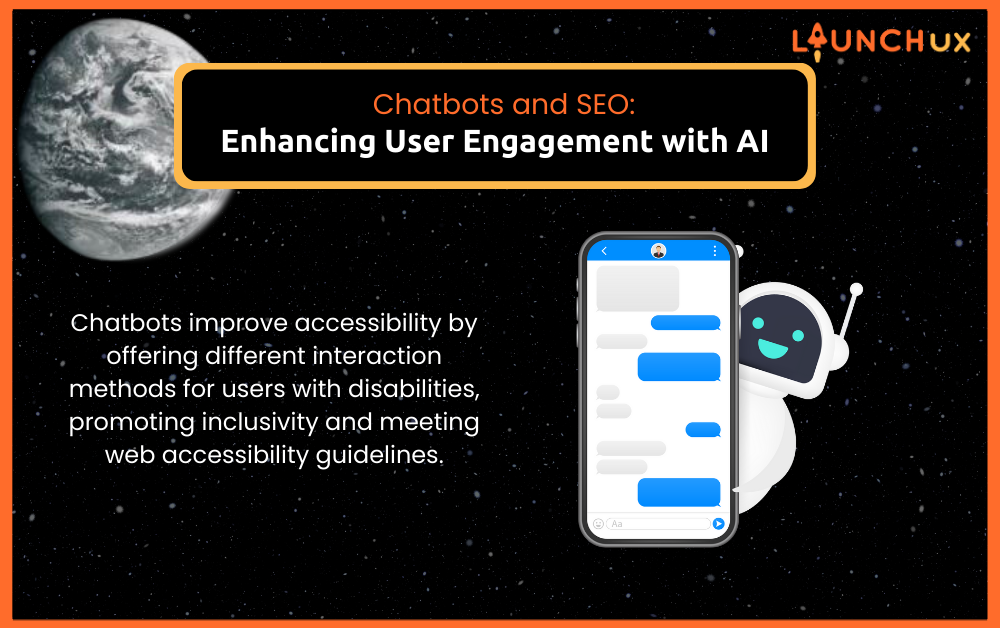
Chatbots and SEO: Enhancing User Engagement with AI

Ever had a conversation with a website? No, you’re not dreaming—it’s the magic of chatbots! In today’s digital landscape, AI-powered chatbots are revolutionizing user engagement and turbocharging SEO strategies. Buckle up as we dive into the realm of chatbots and discover how these virtual assistants are not just answering questions but also driving traffic and boosting conversions.

The Power of AI Chatbots in Enhancing User Engagement

Chatbots: Your 24/7 Digital Concierge

In an era where instant gratification is the norm, waiting for assistance is simply not an option. This is where AI-powered chatbots step in as your reliable digital concierge, available round the clock to cater to your every need. Whether you’re seeking product information, directions, or guidance, a chatbot provides instant support and solutions. Unlike traditional customer support channels that operate within limited hours, chatbots never clock out. They tirelessly serve users day and night, across different time zones, ensuring that no query goes unanswered and no opportunity for engagement is missed. This level of availability enhances user satisfaction. It also instills trust and confidence in your brand, positioning you as a dependable ally in the digital realm.

Personalized Interactions for Tailored Experiences

Imagine walking into a store where the salesperson knows exactly what you need. That’s the level of personalization AI chatbots bring to online interactions. By analyzing user behavior and preferences in real-time, a chatbot delivers personalized recommendations and content, fostering deeper connections and keeping users engaged.

Leveraging Chatbots for SEO Optimization

Keyword-Rich Conversations for Enhanced Visibility

Forget traditional keyword stuffing—chatbots are the new SEO superheroes! By naturally integrating keywords into conversational interactions, a chatbot optimizes content for search engines without compromising user experience. Every chat becomes an opportunity to organically weave in relevant keywords, improving website visibility and driving organic traffic.

Improved User Experience Equals Higher Rankings

User experience (UX) has emerged as a pivotal factor in determining search engine rankings, and AI-powered chatbots play a crucial role in elevating UX to new heights. By delivering instant responses, personalized recommendations, and streamlined interactions, chatbots ensure that users find what they need quickly and effortlessly. This seamless navigation not only reduces bounce rates and increases dwell times but also signals to search engines that your website offers valuable and relevant content. Furthermore, chatbots enhance accessibility by providing alternative means of interaction for users with disabilities. This ensures inclusivity and compliance with web accessibility standards. Additionally, chatbots facilitate smoother transactions, guiding users through the purchase process with ease and minimizing cart abandonment rates. Integrating chatbots into your website enhances UX. It also boosts your chances of ranking higher in search engine results pages (SERPs), driving more organic traffic to your site.
Best Practices for Integrating Chatbots into Websites

Seamless Integration with Human Touch

Seamless Integration with Human Touch is crucial for ensuring that the interaction between users and a chatbot feels natural and personalized. While AI-powered chatbots excel in efficiency and scalability, it’s essential to maintain a human touch to foster genuine connections. Incorporating personality into the chatbot’s responses, using conversational language, and offering options for human assistance when needed are key strategies for achieving this integration. Chatbots create a more relatable and engaging experience for users by mimicking human conversation patterns. This includes using colloquial language and expressing empathy. Additionally, providing opportunities for users to seamlessly transition from chatbot interactions to human support ensures that complex queries or situations can be handled with the appropriate level of care and expertise. A well-executed integration of human touch into chatbot interactions enhances user trust, satisfaction, and loyalty. This contributes significantly to the overall success of the digital experience.

Continuous Learning and Optimization

Continuous Learning and Optimization are the twin engines that drive the effectiveness of AI-powered chatbots. These virtual assistants are not static entities; they evolve and improve over time through ongoing analysis and refinement. By leveraging data analytics and user feedback, businesses can gain valuable insights into chatbot performance, identifying strengths to capitalize on and areas for improvement. This iterative process enables chatbots to adapt to changing user needs, refine conversational flows, and expand their knowledge base, ensuring that interactions remain relevant, engaging, and effective. Moreover, staying abreast of advancements in AI technology allows businesses to incorporate new features and capabilities into their chatbots, keeping them at the forefront of innovation. By prioritizing continuous learning and optimization, organizations can maximize the value of their chatbot investments, delivering ever-improving user experiences and driving tangible business outcomes.

Conclusion:

In conclusion, AI-powered chatbots are transforming user engagement and SEO strategies. By serving as 24/7 digital concierges, facilitating personalized interactions, and continuously learning and optimizing, A chatbot elevates website experiences to new heights. Seamlessly blending the human touch with technological innovation, businesses can create engaging and efficient interactions that drive organic traffic and foster long-term customer relationships. Embrace the power of a chatbot to stay ahead in the digital landscape and unlock new opportunities for growth and success.

Elevate Your Website with AI-powered Chatbots from LaunchUX Today!

Ready to elevate your website with AI chatbots? Reach out to us today to explore how chatbot integration can transform your online presence and supercharge your SEO strategy. Let’s embark on this exciting journey together!
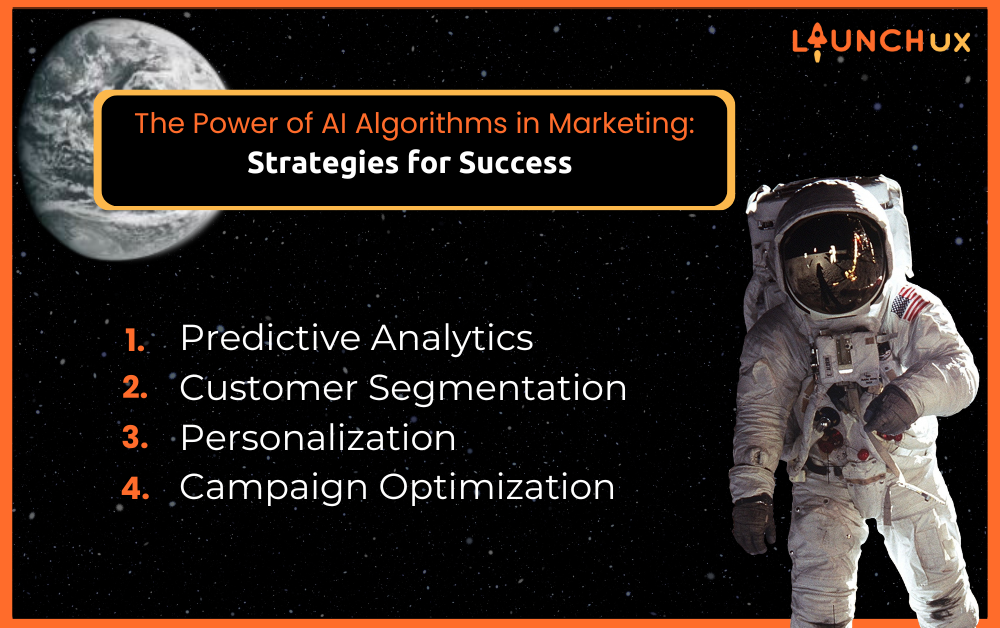
The Power of AI Algorithms in Marketing: Strategies for Success

The role of Artificial Intelligence (AI) algorithms in marketing cannot be overstated. As businesses aim to stay competitive, leveraging AI is vital for growth, engagement, and strategy optimization. In this comprehensive guide, we’ll explore the transformative potential of AI algorithms in marketing, offering insights and strategies for leveraging this cutting-edge technology to achieve success.

Understanding AI Algorithms

What are AI algorithms?

At AI’s core are algorithms, enabling machines to learn, analyze data, and make autonomous decisions. AI algorithms serve as the foundation for a wide range of applications, from predictive analytics to personalized marketing campaigns. By analyzing data and spotting patterns, these algorithms empower marketers to make informed decisions.

How do AI algorithms work?

AI algorithms function by ingesting and analyzing data, learning from past experiences, and continuously improving their performance over time. Using techniques like machine learning and deep learning, these algorithms adapt and optimize marketing strategies in real time. Whether it’s predicting customer behavior, segmenting audiences, or optimizing ad campaigns, they enable marketers to achieve unprecedented levels of efficiency and effectiveness.

Types of AI Algorithms

  1. Supervised Learning Algorithms: Supervised learning algorithms learn from labeled datasets, where each data point is associated with a corresponding outcome. These algorithms are particularly well-suited for tasks such as classification and regression, making them invaluable for predictive analytics and customer segmentation. By training on historical data and evaluating their performance against known outcomes, supervised learning algorithms enable marketers to make accurate predictions and drive targeted marketing efforts.
  2. Unsupervised Learning Algorithms: Unsupervised learning algorithms operate on unlabeled data, identifying hidden patterns and structures within the data without explicit guidance. These algorithms excel in tasks such as clustering and anomaly detection, enabling marketers to uncover valuable insights and discover new opportunities. Whether it’s identifying market trends or segmenting customers based on their preferences, unsupervised learning algorithms provide marketers with a powerful tool for data exploration and analysis.
  3. Reinforcement Learning Algorithms: Reinforcement learning algorithms learn through trial and error, receiving feedback from the environment in the form of rewards or penalties. These algorithms are well-suited for tasks such as optimization and decision-making, enabling marketers to adapt their strategies based on real-time feedback. Whether it’s optimizing ad placements or refining messaging strategies, reinforcement learning algorithms empower marketers to maximize the effectiveness of their campaigns and achieve their business objectives.

Applications in Marketing

Predictive Analytics

Predictive analytics leverages AI algorithms to forecast future trends and outcomes based on historical data. By analyzing past behavior and identifying patterns, marketers can anticipate customer needs, optimize resource allocation, and capitalize on emerging opportunities. Predictive analytics helps marketers anticipate trends and stay ahead by predicting purchase intent and market demand.

Customer Segmentation

Customer segmentation is essential for tailoring marketing strategies to the unique needs and preferences of different audience segments. AI algorithms enable marketers to segment customers based on various criteria, such as demographics, behavior, and purchase history. Understanding each segment enables marketers to deliver personalized experiences, driving engagement and loyalty.

Personalization

Personalization is key to delivering relevant and engaging experiences to consumers across various touchpoints. AI algorithms enable marketers to analyze customer data in real time, allowing them to deliver personalized recommendations, offers, and content. Whether it’s recommending products based on past purchases or tailoring email campaigns to individual preferences, personalization enables marketers to create meaningful connections with their audience and drive conversion rates.

Campaign Optimization

Campaign optimization is essential for maximizing the effectiveness of marketing initiatives and achieving desired outcomes. AI algorithms enable marketers to continuously monitor campaign performance, identify areas for improvement, and optimize key metrics such as click-through rates and conversion rates. AI-powered campaign optimization refines strategies, driving better results through A/B testing and targeting adjustments.

Choosing the Right AI Algorithm

When choosing AI algorithms for marketing, consider data, goals, and resources. Whether it’s supervised learning for predictive analytics, unsupervised learning for data exploration, or reinforcement learning for campaign optimization, choosing the right algorithm is critical for success. By aligning the choice of algorithms with specific business objectives and requirements, marketers can maximize the impact of AI on their marketing strategies and drive meaningful results.

Unlocking Success with LaunchUX

At LaunchUX, we specialize in using AI algorithms to help businesses meet their marketing goals and grow. Our experts blend technology and strategy to provide tailored solutions for our clients. Whether it’s predictive analytics, customer segmentation, or personalized marketing campaigns, we empower businesses to unlock their full potential and achieve success in today’s digital landscape.

Take the Next Step

Ready to harness the transformative power of AI algorithms for marketing success? Contact LaunchUX today to learn more about our innovative solutions and how we can help you achieve your business objectives. We’ll craft strategies, from predictive analytics to personalized campaigns, driving your business forward in today’s competitive market. Don’t miss out – contact LaunchUX today to leverage AI algorithms for marketing success and achieve your goals.

The Difference Between On-Page and Technical SEO Explained

Welcome to the world of SEO, where every little tweak to your website can make a monumental difference in your online visibility. If you’ve dipped your toes into the vast sea of search engine optimization, you’ve likely come across the terms “On-Page SEO” and “Technical SEO.” But what exactly do they entail, and how do they differ? Let’s dive in and unravel the mysteries behind these essential aspects of digital marketing.

Understanding On-Page SEO

When it comes to On-Page SEO, the focus is squarely on the content that lives and breathes on your website. From compelling blog posts to captivating product descriptions, every word plays a crucial role in attracting both users and search engine crawlers. Here’s how you can optimize your on-page elements to maximize your visibility:

Keyword Research and Optimization

At the heart of On-Page SEO lies the art of keyword research and optimization. It’s not just about stuffing your content with keywords but rather strategically integrating them in a way that feels natural and seamless. By understanding your audience and using tools like Google Keyword Planner, you can gain valuable insights for your content strategy.

Content Quality and Relevance

Content is the backbone of any successful website, serving as the linchpin of your SEO strategy. To ensure your content stands out amidst the digital noise, it must offer genuine value to your audience. This begins with value-driven content creation, where you prioritize unique insights, actionable advice, or compelling storytelling over generic information. Thorough research and expertise bolster the credibility of your content, establishing you as a trusted authority in your field. Tailoring your content to align with user intent is crucial for capturing the attention of search engines and users alike while engaging multimedia elements enhance the overall user experience. Consistency in content production and optimization for readability and accessibility further solidifies your position as a reliable source of information. Adhering to these principles enables you to create content that resonates with your audience. This, in turn, drives tangible results in terms of search engine rankings and user engagement.

User Experience and Engagement

In the digital landscape, user experience is non-negotiable. From lightning-fast page load times to mobile responsiveness, every aspect of your website’s usability contributes to its On-Page SEO performance. By optimizing your site’s navigation, layout, and overall user experience, you can keep visitors engaged and coming back for more.

Unveiling the Mysteries of Technical SEO

While On-Page SEO focuses on the content itself, Technical SEO delves into the intricate inner workings of your website. From site speed to crawlability, technical optimizations lay the foundation for your online presence. Here’s how you can fine-tune the technical aspects of your site to ensure peak performance:

Site Structure and Navigation

A well-organized site structure not only makes it easier for users to navigate your website but also enhances its crawlability by search engine bots. By categorizing your content into logical hierarchies, you make navigation easier for both users and search engines. Implementing clear navigation menus ensures smooth navigation throughout your website.

Page Speed and Performance

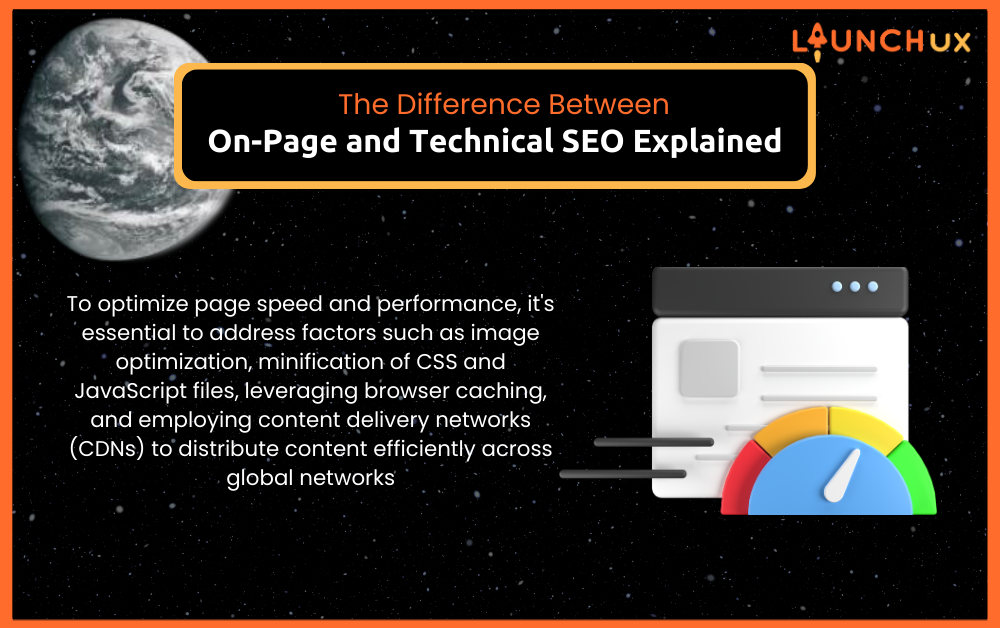
Page speed and performance play a pivotal role in shaping the user experience and determining your website’s success in the competitive landscape of search engine optimization. In today’s fast-paced digital world, attention spans are fleeting, and users demand instant gratification. A slow-loading website can spell disaster for your online presence. Beyond frustrating users, sluggish page load times can also have detrimental effects on your search engine rankings, with search engines like Google prioritizing fast-loading websites in their algorithms. To optimize page speed and performance, it’s essential to address factors such as image optimization. Minification of CSS and JavaScript files is also crucial. Additionally, leveraging browser caching and employing content delivery networks (CDNs) can efficiently distribute content across global networks. By prioritizing these optimizations, you can ensure that your website loads quickly and seamlessly across all devices and platforms, delivering a superior user experience while bolstering your search engine visibility and driving organic traffic to your site.

Bringing it All Together: The Importance of Comprehensive SEO Strategy

Achieving success in the realm of SEO requires more than just mastering On-Page and Technical SEO individually. It’s about integrating these two pillars into a cohesive strategy that addresses all facets of your online presence. Here’s how you can bring it all together:

Data Analysis and Continuous Improvement

Data analysis and continuous improvement are indispensable components of a successful SEO strategy. Beyond the initial implementation of on-page and technical optimizations, ongoing analysis of website performance metrics is essential for identifying areas of improvement and capitalizing on growth opportunities. Leveraging tools like Google Analytics and Search Console allows you to gain valuable insights into key performance indicators such as organic traffic, bounce rates, and conversion rates. By meticulously tracking these metrics and monitoring trends over time, you can pinpoint patterns, identify areas of underperformance, and fine-tune your SEO strategy accordingly. Additionally, A/B testing various elements of your website, from headline copy to call-to-action buttons, enables you to gather actionable data on user behavior and preferences, facilitating iterative improvements that drive tangible results. By adopting a data-driven approach to SEO and embracing a culture of continuous improvement, you can stay agile in the face of evolving search engine algorithms and user preferences, positioning your website for sustained success in the competitive digital landscape.

Adaptability and Future-Proofing

The digital landscape is constantly evolving, and SEO is no exception. To stay ahead of the curve, it’s essential to remain agile and adaptable in the face of changing algorithms and industry trends. By staying informed and proactive, you can future-proof your website and ensure its continued success in the ever-changing world of search engine optimization.

Conclusion:

In the ever-evolving landscape of digital marketing, mastering the intricacies of On-Page SEO and Technical SEO is essential for staying ahead of the curve. By understanding the nuances of content optimization and website infrastructure, you can unlock the full potential of your online presence and achieve lasting success in the competitive world of search engine optimization.

Take Your SEO to the Next Level

Ready to take your SEO game to the next level? Whether you’re a seasoned veteran or a fledgling newcomer, mastering the art of On-Page SEO and Technical SEO is key to unlocking the full potential of your online presence. Dive deep, experiment boldly, and watch as your website climbs the ranks of search engine results pages. The journey may be challenging, but the rewards are well worth the effort.

Predictive Analytics: AI’s Gift to SEO Strategists

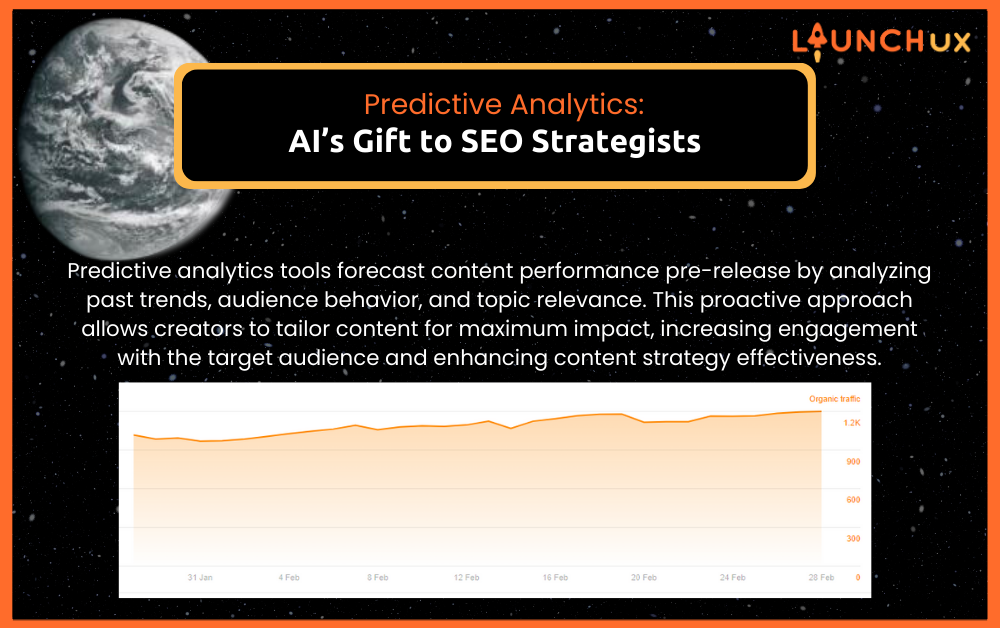
In the ever-evolving world of digital marketing, staying ahead of the curve is essential. Predictive analytics—a revolutionary technology leveraging artificial intelligence (AI)—is redefining SEO strategies by analyzing extensive data sets encompassing historical trends, user behaviors, and market dynamics In this post, we’ll discuss how AI-driven chatbots and predictive algorithms are transforming SEO by predicting trends and content performance. We’ll demonstrate how predictive analytics can uncover hidden opportunities and optimize keyword strategies. This will propel your SEO efforts to new heights, ensuring your business remains competitive in the digital arena.

Unveiling the Potential of Predictive Analytics

Harnessing the Power of AI

In the ever-evolving world of SEO, AI-driven chatbots equipped with predictive analytics capabilities are becoming indispensable tools. These intelligent bots can analyze vast amounts of data, including search trends, user behavior, and historical performance metrics, to uncover valuable insights that inform strategic decision-making. These chatbots leverage advanced machine learning algorithms to identify patterns in data. They also learn and adapt over time, continuously improving their ability to provide actionable insights and recommendations. Additionally, AI-powered chatbots can automate repetitive tasks, freeing up valuable time for SEO professionals to focus on high-level strategy and creative initiatives. With AI as their ally, SEO strategists can gain a deeper understanding of their audience and identify untapped opportunities. This helps them stay ahead of the competition in today’s competitive digital landscape.

Gone are the days of relying solely on historical data to guide SEO strategies. Predictive analytics algorithms utilize machine learning techniques to identify patterns and predict future trends in search behavior. By analyzing a combination of factors such as keyword popularity, user intent, and market dynamics, these algorithms can provide SEO strategists with actionable insights into upcoming trends, enabling them to stay ahead of the competition.

Integrating Predictive Analytics into Your SEO Strategy

Content Performance Prediction

One of the most significant challenges for SEO professionals is predicting how well their content will perform once it’s live. Predictive analytics tools can provide valuable insights into the potential impact of your content before you hit the publish button. By analyzing factors such as keyword competitiveness, content relevance, and user engagement metrics, these tools can forecast the likely performance of a piece of content, allowing SEO strategists to optimize it for maximum visibility and engagement.

Optimizing Keyword Strategy

Keywords are pivotal in SEO, bridging user intent with content. Yet, in today’s competitive landscape, targeting popular keywords alone isn’t sufficient. Predictive analytics dives deeper into keyword research, revealing emerging trends and user intent nuances. It enables prioritization of keywords aligned with audience needs, while also unveiling competitive gaps for content optimization. Understanding keyword context is paramount; predictive analytics aids in crafting content tailored not only to specific terms but also broader themes, driving enhanced engagement and conversions. Ultimately, it allows SEO professionals to anticipate shifts in search behavior, ensuring businesses stay ahead in the digital race.

Leveraging Chatbots for Real-Time Insights

Instant Feedback Loop

Chatbots equipped with predictive analytics capabilities can interact with users in real-time, gathering valuable data about their preferences, interests, and search queries. This real-time feedback loop enables SEO strategists to stay nimble and responsive. They can fine-tune their strategies on the fly based on evolving user needs. By analyzing user interactions and behavior patterns, chatbots can provide valuable insights into emerging trends and help identify areas for optimization. Moreover, this instant feedback loop empowers businesses to address customer concerns promptly, enhance user experience, and build stronger relationships with their audience. Chatbots serve as invaluable tools for engaging with users, whether it’s resolving queries, addressing complaints, or soliciting feedback. They play a crucial role in driving meaningful interactions

Personalized Recommendations

In addition to gathering real-time insights, chatbots can also deliver personalized recommendations to users based on their past behavior and preferences. Chatbots leverage predictive analytics to analyze user data and identify relevant content or products. They then deliver targeted recommendations, enhancing the user experience and driving engagement. Chatbots powered by predictive analytics can suggest related articles. They can also recommend products based on previous purchases. Additionally, they can provide personalized offers, helping businesses connect with their audience on a deeper level and drive meaningful results.

Conclusion

In the ever-evolving landscape of SEO, predictive analytics is proving to be a game-changer. By harnessing the power of AI-driven chatbots and predictive algorithms, SEO strategists can gain invaluable insights into future trends and content performance, enabling them to stay one step ahead of the competition. From forecasting SEO trends to optimizing content performance and delivering personalized recommendations, predictive analytics offers a wealth of opportunities for businesses looking to elevate their SEO strategy and drive meaningful results.

Unlock the Power of Predictive Analytics for Your SEO Strategy Today!

Ready to supercharge your SEO strategy with predictive analytics? Get in touch with us today to learn how our AI-powered solutions can help you stay ahead of the curve and drive meaningful results for your business.

Choosing the Best Web Designers

In the digital era, a website is more than just a part of your business; it’s often the first point of interaction between your brand and potential customers. A well-designed website can elevate your brand, enhance user engagement, and increase conversions, making it a critical component of your business strategy. Understanding the role of professional web designers and their impact on your online success is crucial. Web designers do more than just craft attractive layouts. They ensure your site is functional and user-friendly. Additionally, they optimize your website for search engines, establishing a strong digital presence. This introduction highlights the need for expert web design to maintain competitiveness. It ensures relevance in the constantly changing online market.

Essential Elements of Professional Web Design

Understanding Web Designers’ Roles

In the realm of digital marketing and online presence, web designers hold a pivotal role that extends far beyond mere aesthetics. They are tasked with the responsibility of creating a cohesive user experience, ensuring that a website is not only attractive but also functional and accessible across various platforms and devices. This process involves a detailed combination of elements. Graphic design, user interface planning, and SEO optimization are key. These elements ensure the site engages the audience effectively. They also make the website a powerful tool for storytelling and converting customers. Through their expertise, web designers help establish a company’s online identity, enhancing its visibility and engagement with potential clients.

Why Professional Design Matters for Your Business

Professional design is crucial for any business as it directly influences customer perceptions and decision-making processes. A well-crafted website signals professionalism and reliability, encouraging trust from potential customers. It also ensures that the user experience is seamless, guiding visitors effortlessly through the buying journey or toward contact points. In a crowded digital landscape, a professional design differentiates your brand, providing a competitive edge that captures and retains customer interest. This investment in quality design translates into tangible business results, from increased engagement to higher conversion rates.

Choosing the Right Web Designer

Evaluating Design Portfolios

When evaluating web designers their portfolio is the first thing to look at. It’s crucial to look beyond aesthetics to gauge their ability to solve real-world problems. A diverse portfolio that showcases a variety of styles, industries, and website functionalities speaks to a designer’s adaptability and experience. It’s also important to note how their designs enhance user experience and fulfill business objectives. Assessing this can give you insights into their approach to user-centered design and their understanding of how to convert visitors into customers through effective layouts and navigation.

Client Testimonials and Pricing

Assessing client testimonials provides insights into a web designer’s reliability, communication, and project management skills, directly from those who have experienced their service. Meanwhile, understanding pricing involves more than comparing rates; it’s about evaluating the value delivered relative to cost. This includes considering the designer’s expertise, the complexity of your project, and the potential return on investment a well-designed website can bring to your business. Balancing testimonials with pricing helps ensure you choose a designer who offers the best value and alignment with your goals.

Why LaunchUX is Your Ideal Web Design Partner

Customized Solutions and Proven Processes

Customized solutions signify that a web design service tailors its approach to meet your specific business needs, ensuring the final product aligns with your brand and objectives. Proven processes in web design follow a systematic approach. They typically involve research, design, development, and testing stages. Each stage is crucial for the project’s success. This combination ensures that the service is not only tailored to your needs but also methodically executed to deliver the best results.

Exceptional Service and Client Satisfaction

Exceptional service and client satisfaction revolve around delivering beyond the client’s expectations, with a focus on clear communication, timely delivery, and responsive support. It starts with understanding the client’s vision. Then, it involves providing expert guidance throughout. Finally, adapting to feedback ensures the product surpasses business goals. A commitment to client satisfaction translates into a collaborative relationship, fostering trust and resulting in a more effective and satisfying web design experience.

Conclusion: The Value of Investing in Professional Web Design

In conclusion, understanding the role of web designers is crucial. Recognizing professional design’s value is also key. Finally, evaluating portfolios and assessing testimonials and pricing is vital for finding the right partner. LaunchUX embodies these ideals with customized solutions, proven processes, and an unwavering commitment to exceptional service and client satisfaction. Investing in the right web design service, like LaunchUX, is not just about getting a quality website; it’s about ensuring your business’s future success in the digital landscape.

Empower Your Online Presence with LaunchUX

Ready to take your online presence to the next level? Partner with LaunchUX for a website that stands out from the competition and aligns with your business objectives. Contact us today to begin your journey to success.

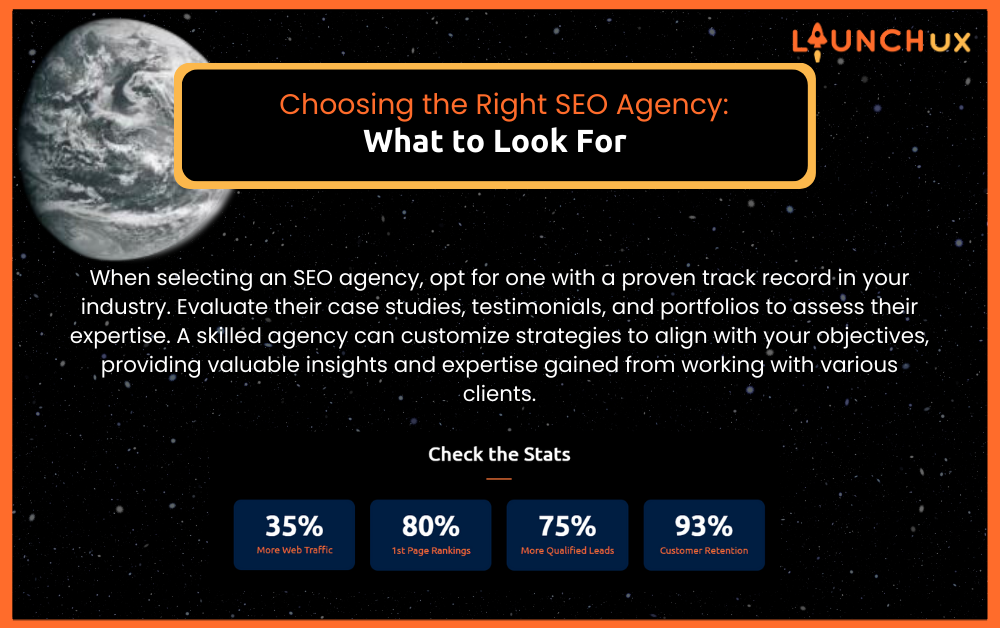
Choosing the Right SEO Agency: What to Look For

In the bustling digital landscape, where visibility is paramount, finding the right SEO agency can mean the difference between blending into the background and standing out as a beacon of online success. Partnering with an experienced SEO agency becomes a necessity as businesses navigate search engine algorithms and online competition. In today’s digital landscape, it’s more than a choice—it’s crucial for success. A trustworthy SEO agency serves as a guiding light, illuminating the path to improved search rankings, increased organic traffic, and ultimately, greater online visibility and success.

Transparency – Shedding Light on the Process

Building Trust

In the digital age where information is abundant yet trust is scarce, transparency emerges as a beacon of integrity in the realm of SEO agencies. A reputable SEO agency prioritizes transparency, revealing its methodologies and practices openly. Transparent agencies prioritize open communication, providing clients with regular updates and detailed reports from the initial consultation to strategy execution. They offer candid insights into progress every step of the way. These agencies empower clients by fostering transparency, enabling informed decisions about digital strategy, and building trust in the partnership. This transparency instills confidence, driving collaboration towards shared goals. Clients can rest assured knowing that every action taken by the agency is guided by a commitment to honesty, integrity, and accountability, laying the foundation for a fruitful and enduring collaboration.

Honesty in Communication

Effective communication isn’t just about exchanging messages; it’s about fostering a relationship built on trust and transparency. When evaluating potential SEO agencies, prioritize firms that prioritize honesty in their communication practices. A trustworthy agency will not sugarcoat the realities of SEO; instead, they’ll provide you with a realistic assessment of what to expect and the challenges that may arise along the way. Honest communication ensures you’re informed about strategy adjustments, setbacks, and successes, empowering you to make informed decisions. It keeps you in the loop, fostering a collaborative environment for effective digital strategy management. By fostering a culture of transparency, an SEO agency can establish a strong foundation for collaboration, where mutual trust and understanding pave the way for meaningful results.

Experience – The Proof is in the Portfolio

Proven Track Record

Experience is the compass guiding your SEO journey. Look for agencies boasting a proven track record of success in your industry. Dive into case studies, testimonials, and portfolios to gauge their expertise and adaptability. An experienced agency will navigate the labyrinth of SEO intricacies with finesse, tailoring strategies to suit your unique needs and aspirations. By partnering with a seasoned agency, you tap into a wealth of knowledge and insights accumulated over years of working with diverse clients and industries.

Industry Expertise

Experience isn’t just about the number of years; it’s about a deep understanding of the intricacies within your industry. When selecting an SEO agency, prioritize firms with a proven track record of success in your specific sector. An agency with industry expertise brings valuable insights into the unique challenges, trends, and consumer behaviors that shape your market landscape. Their intimate knowledge allows them to craft tailored strategies that resonate with your target audience, outmaneuver competitors, and capitalize on emerging opportunities. By leveraging their industry-specific insights, you gain a competitive edge, positioning your website as a dominant force within your niche. Partnering with an SEO agency familiar with your industry is vital for long-term success. Whether in healthcare, e-commerce, finance, or any sector, their tailored strategies resonate with your audience and outperform competitors. Leveraging this expertise positions your business for success in the digital landscape.

Communication – Building a Strong Partnership

Open Channels for Dialogue

Effective communication lies at the heart of a fruitful collaboration with your chosen SEO agency. It’s imperative to seek an agency that prioritizes open channels for dialogue, creating an environment where ideas are freely exchanged, questions are encouraged, and feedback is valued. Beyond mere periodic updates, the agency should foster accessibility and responsiveness, ensuring you feel comfortable reaching out with queries, concerns, or innovative suggestions at any time. This entails not only scheduled meetings but also a willingness to engage through various mediums such as email, phone calls, video conferences, or in-person discussions. Transparent communication extends to explaining the rationale behind strategies, elucidating the impacts of algorithmic shifts, and exploring potential optimization avenues. By nurturing a culture of transparency and dialogue, both parties can collaborate more effectively, address challenges promptly, and ensure the SEO strategy remains finely tuned to your evolving objectives, ultimately leading to more impactful results.

Collaborative Approach

Look for agencies that view your collaboration as a partnership, not just a client-provider relationship. A collaborative approach ensures that your goals and vision are understood and integrated into every aspect of the SEO strategy. Together, you can leverage each other’s expertise to achieve remarkable results. Working closely with your SEO agency allows you to share valuable insights about your industry, target audience, and business goals. This collaboration empowers the agency to customize strategies that yield tangible results and offer a significant return on investment. By leveraging your expertise and skills, you create a synergy that maximizes the effectiveness of your digital marketing efforts.

Conclusion:

Choosing the right SEO agency isn’t just a preference—it’s a strategic necessity. Transparency, honed expertise, and open communication form the pillars of a successful partnership. With transparency, clients gain insight into methodologies, fostering trust and informed decision-making. Expertise ensures tailored strategies that resonate with target audiences and outshine competitors. Open communication fosters collaboration, enabling ideas to flourish and feedback to be valued. By prioritizing these qualities, businesses can forge powerful alliances that illuminate the path to enhanced online visibility and sustained success in the dynamic digital realm.

Unlock Your Digital Potential Today!

Ready to transform your online presence with a seasoned SEO partner? Reach out to LaunchUX and let us guide you to the summit of digital success. Together, we’ll unlock the full potential of your website and chart a course toward sustained growth and prosperity.

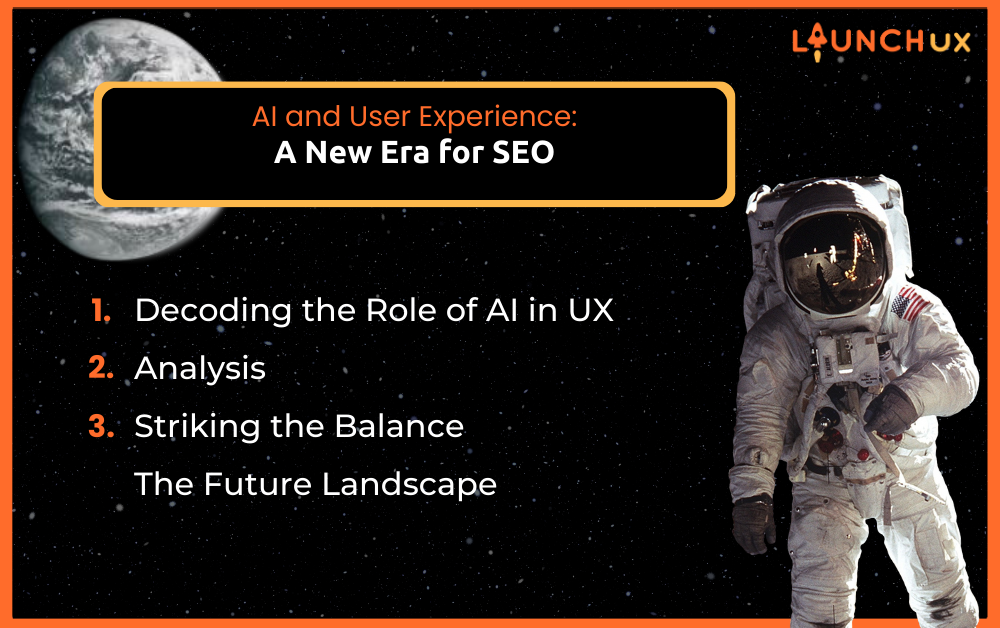
AI and User Experience: A New Era for SEO

Welcome to the digital age, where the marriage of artificial intelligence (AI) and user experience (UX) heralds a new era for SEO. In this blog post, we delve into the transformative potential of AI in analyzing and enhancing user experience on websites. As we navigate this landscape, we’ll explore how AI-driven UX improvements intersect with human-centric design principles, emphasizing the delicate balance between technological innovation and the human touch.

Decoding the Role of AI in UX Analysis

Data-Driven Insights: Tracking User Interactions with Precision

In today’s digital ecosystem, every click, scroll, and hover leaves a digital footprint. AI-powered analytics sift through vast amounts of data, uncovering actionable insights into user behavior. From analyzing heatmaps to tracking session durations, AI enables us to decipher user intent, preferences, and pain points with unparalleled accuracy.

Predictive Analytics: Anticipating User Needs and Preferences

Predictive analytics, a cornerstone of AI-driven UX design, offers a profound glimpse into the future of user interaction. The predictive analytics enables websites to transcend reactive responses. Instead, it proactively anticipates user needs and preferences by leveraging machine learning algorithms and vast datasets. Through comprehensive analysis of historical user behavior, such as search queries, navigation patterns, and content consumption habits, AI models can discern underlying intent and predict future actions with remarkable precision. This predictive prowess empowers websites to deliver hyper-personalized recommendations and dynamically adapt content presentation. It also enables proactive customer service, enhancing the overall user experience. As businesses continue to harness the power of predictive analytics, the landscape of user experience is poised for continual evolution, offering boundless opportunities for innovation and engagement.

Personalization Redefined: AI-Powered Recommendations and Customizations

Tailored Content Experiences: The Magic of AI-Driven Recommendations

Gone are the days of one-size-fits-all content. AI-driven recommendation engines leverage user data to curate personalized content experiences. Whether it’s suggesting articles, products, or multimedia content, AI tailors recommendations based on user interests, browsing history, and demographic information. By serving relevant content at the right time, businesses enhance user engagement and foster deeper connections with their audience.

Dynamic Interfaces: Customizing User Experiences in Real-Time

Dynamic interfaces adapt and evolve based on user interactions, creating fluid and responsive experiences. Through AI, websites can dynamically adjust layout, content, and navigation elements to suit individual preferences and device capabilities. From resizing images to optimizing typography, dynamic interfaces ensure that every user enjoys a seamless and intuitive browsing experience, regardless of their device or screen size.

Striking the Balance: AI-Driven Enhancements and Human-Centric Design

Integrating Human-Centric Design Principles: Infusing Empathy into AI-Driven Solutions

While AI offers powerful insights and capabilities, it’s essential to infuse human-centric design principles into the development process. Empathy, understanding, and user advocacy form the bedrock of exceptional user experiences. By empathizing with users’ needs, emotions, and challenges, designers can create interfaces that resonate on a deeper level, fostering trust and loyalty.

User-Centric Iteration: Fine-Tuning AI Models Based on Human Feedback

User feedback is invaluable in refining AI-driven UX solutions. By soliciting feedback, observing user interactions, and conducting usability tests, businesses gain valuable insights into the effectiveness of AI-driven enhancements. Iterative refinement ensures that AI models continuously adapt and improve, aligning more closely with user expectations and preferences over time.

Ethical Considerations in AI-Driven UX Design

Ensuring User Privacy: Upholding Ethical Standards in Data Handling

Ensuring user privacy and upholding ethical standards in data handling are fundamental pillars of responsible digital practices. Transparent communication of data collection policies builds trust and clarity, while robust security measures safeguard sensitive information from unauthorized access and breaches. Employing anonymization techniques preserves user anonymity and confidentiality, enabling data analysis without compromising individual privacy. Empowering users with control over their data through explicit consent mechanisms and granular preferences respects their autonomy and fosters trust. Compliance with regulatory standards, such as GDPR and CCPA, ensures legal adherence and reinforces ethical data-handling practices. Moreover, ethical considerations extend to the use of AI, where efforts to mitigate bias and discrimination promote fairness and accountability in decision-making processes. Businesses demonstrate their commitment to respecting user privacy by integrating these practices into data handling protocols. This fosters trust in the digital ecosystem.

Mitigating Bias: Addressing Algorithmic Fairness and Inclusivity

Algorithmic biases pose significant challenges in AI-driven user experience (UX) design. Biased data sets, flawed algorithms, and unconscious biases can lead to discriminatory outcomes and perpetuate existing inequalities. By actively identifying and mitigating biases, businesses can ensure that AI-driven solutions promote fairness, inclusivity, and diversity, creating user experiences that serve all users equitably.

The Future Landscape: Evolution and Innovation

Predictive UX Design: Anticipating User Behavior in a Dynamic Digital Landscape

The future of UX design is predictive, with AI anticipating user needs and preferences before they even arise. Predictive UX design leverages machine learning algorithms to forecast user behavior, enabling websites to dynamically adapt and personalize experiences in real-time. From predictive search suggestions to context-aware interfaces, the possibilities are limitless in shaping the future of digital experiences.

AI-Driven Innovation: Exploring New Frontiers in Digital Experience Enhancement

As AI technologies continue to evolve, they are opening up new frontiers in digital experience enhancement that were once unimaginable. From emotion recognition systems that understand user sentiment to natural language processing algorithms that enable seamless human-like interactions, AI is revolutionizing how users engage with digital content. Immersive technologies like augmented reality and virtual reality are transforming static web experiences into interactive journeys, while context-aware interfaces deliver personalized content tailored to users’ surroundings. Hyper-personalization powered by AI ensures that every touchpoint in the user journey is uniquely tailored to individual preferences and behaviors. As we embrace these AI-driven innovations, businesses have the opportunity to create deeply immersive, engaging, and personalized experiences. These experiences not only meet but exceed user expectations, fostering brand loyalty. This, in turn, drives business success in the ever-evolving digital landscape.

Conclusion:

In the ever-evolving realm of digital experiences, AI emerges as a powerful ally in optimizing user experiences and driving SEO success. By harnessing the analytical prowess of AI while preserving the human touch of empathetic design, businesses can unlock new dimensions of user engagement and loyalty. As we navigate this new era, let’s embrace the transformative potential of AI while never losing sight of the ultimate goal: crafting meaningful experiences that leave a lasting impression on every user.

Ready to elevate your website’s user experience with AI-driven insights?

Get in touch with us today to explore how our expert team can help transform your digital presence. Let’s embark on a journey towards seamless, intuitive experiences that resonate with your audience and drive tangible results.

Content that Converts: The Key to Successful Lead Generation

Effective lead generation is the cornerstone of any successful business strategy. As competition continues to intensify, the ability to capture and convert leads into loyal customers becomes increasingly vital. Central to this endeavor is the creation of compelling and engaging content that resonates with your targeted audience.

Within the realm of content marketing, the significance of lead generation content cannot be overstated. Every piece of content, be it written articles, interactive videos, or social media engagement, can lead to new leads.

By understanding the principles behind effective content and implementing strategic approaches tailored to your audience, you can unlock new opportunities for growth and establish your brand as a leader in your industry.

Written Content for Lead Generation

The Significance of Written Content

Written content remains the cornerstone of effective lead-generation strategies. From blog posts to comprehensive guides, written content offers a unique opportunity to engage audiences, build authority, and drive conversions. Despite alternative formats like video and interactive media, the written word remains pivotal in capturing potential customers’ attention.

Exploring Various Types of Written Content

  1. Blog Posts: Blogging remains one of the most accessible and effective ways to generate leads online. Consistently producing high-quality blog content addressing audience needs attracts organic traffic, builds credibility, and nurtures customer relationships.
  2. Guides: Long-form guides provide an opportunity to delve deep into specific topics, offering valuable insights and solutions to your audiences, you can attract organic traffic, establish credibility, and nurture relationships with potential customers.
  3. Case Studies: Case studies offer a compelling way to demonstrate the real-world impact of your products or services. Showcasing success stories and client results provides social proof, builds trust, and drives leads and conversions.
  4. Email Marketing: Email marketing delivers targeted content directly to your audience’s inbox, a powerful lead generation tool. Providing valuable resources, exclusive offers, and personalized recommendations nurtures leads through the sales funnel, driving conversions and revenue

Interactive Content for Lead Generation

Understanding the Importance of Interactive Content

In an era where user engagement is paramount, interactive content has emerged as a powerful tool for driving lead generation. Unlike traditional static content, interactive media encourages active participation and fosters meaningful interactions with your audience. By leveraging interactive elements such as quizzes, videos, and polls, businesses can captivate attention, gather valuable insights, and guide prospects through the sales funnel with greater precision and effectiveness.

Exploring Various Types of Interactive Content

  1. Video: Video content has skyrocketed in popularity, becoming one of the most engaging forms of interactive media available to marketers. Whether it is product demonstrations, customer testimonials, or behind-the-scenes footage, videos offer a dynamic and immersive experience that resonates with audiences and drives conversions.
  2. Social Media: Social media platforms provide a fertile ground for interactive lead-generation content. From interactive polls and quizzes to live streaming and interactive stories, social media offers a diverse array of tools and formats for engaging with your audience and nurturing relationships with potential customers.
  3. Polls, Quizzes, and Surveys: Polls, quizzes, and surveys offer a fun and interactive way to gather valuable feedback from your audience while simultaneously driving lead generation. By inviting participation and encouraging users to share their opinions, businesses can gain valuable insights into customer preferences and behavior, ultimately informing their marketing strategies and driving conversions.
  4. Infographics: Infographics offer a visually engaging way to present complex information and data in a digestible format. Infographics combine visuals and text to capture attention, drive engagement, and generate leads.

Building a Lead Generation Marketing Strategy

Overview of Key Steps

Crafting a successful lead-generation marketing strategy requires careful planning and execution. By following a systematic approach and focusing on key objectives, businesses can maximize their efforts and achieve meaningful results. The following steps outline the foundational elements of an effective lead-generation strategy:

  1. Identify Your Target Audience: Understanding your audience is essential for creating targeted and relevant content that resonates with potential leads. Research the market, analyze demographics, and tailor messaging to needs.
  2. Determine Preferred Types of Content: Different audiences may respond differently to various types of content. Evaluate your target audience’s preferences, behaviors, and communication channels to determine the most effective content formats for engaging with them and driving lead generation.
  3. Develop Keyword Strategies: Keyword research plays a crucial role in optimizing your content for search engine visibility and attracting organic traffic. Identify relevant keywords and phrases related to your industry, products, and services, and integrate them strategically into your content to improve your chances of ranking higher in search engine results pages (SERPs) and driving qualified leads to your website.
  4. Create Targeted Content Across Digital Platforms: Identify audience, create, and distribute targeted content. Whether it’s blog posts, videos, social media posts, or email campaigns, tailor your messaging and offerings to align with the interests and needs of your audience, and leverage each platform’s unique features and capabilities to maximize engagement and drive lead generation.

Measurable Goals and Objectives

Setting measurable goals is crucial for evaluating lead generation effectiveness and ROI. By establishing clear benchmarks and performance indicators, businesses can track their progress, identify areas for improvement, and make data-driven decisions to optimize their lead-generation strategies.

By aligning your lead generation goals with your broader business objectives and regularly monitoring your performance against these metrics, you can measure the success of your marketing efforts and make informed adjustments to optimize your results.

Importance of Monitoring and Making Adjustments

Effective lead generation is an ongoing process that requires continuous monitoring and optimization. By regularly analyzing your performance data, identifying trends and patterns, and making adjustments based on insights gained, businesses can refine their strategies, enhance their targeting, and maximize their lead generation potential. Whether it’s tweaking your content strategy, adjusting your messaging, or optimizing your conversion funnels, staying agile and responsive to changing market dynamics is key to sustaining long-term success in lead generation.

The Importance of Lead Generation Content

Throughout this guide, we’ve explored the fundamental principles of creating engaging and effective lead-generation content. From articles to interactive media, each content type attracts, engages, and converts leads. By understanding the significance of lead generation content and implementing strategic approaches tailored to your audience, you can unlock new opportunities for growth and establish your brand as a leader in your industry.

Are you ready to elevate your lead generation efforts and unlock new opportunities for growth? Partner with LaunchUX, an acclaimed firm specializing in boosting revenue for businesses like yours.

Our team of experts is dedicated to crafting compelling strategies tailored to your unique needs and objectives. Whether enhancing content marketing, optimizing digital presence, or driving conversions, we have the expertise to help you succeed.

Don’t wait any longer to maximize your potential. Contact us today to explore our services and see how we can empower your business to thrive. Let’s embark on this journey together and unlock the full potential of your brand.

Spying on Competitors’ SEO Strategies: Ethical Ways to Stay Ahead

Navigating the competitive landscape of SEO requires more than just an inward look at your strategies; it demands a clear, ethical understanding of what your competitors are doing right. But how do you differentiate between healthy competitive analysis and unethical spying? This guide will walk you through the process of ethically analyzing your competitors’ SEO strategies. We’ll leverage industry-standard tools like SEMrush and Ahrefs to gather insights that can boost your rankings without compromising your principles.

Understanding the Ethical Boundaries

The Fine Line between Inspiration and Imitation

In the intricate dance of SEO, the line between drawing inspiration from competitors and outright imitation can be subtle yet significant. It’s about acknowledging the difference between learning from the best practices of others and duplicating their content or strategies. Inspiration should serve as a catalyst for innovation within your SEO practices, pushing you to adapt and improve upon what exists rather than replicating it. Ethical competitive analysis should lead to unique, creative approaches that reflect your brand’s values and identity. It’s about transforming observed strategies into unique approaches that distinguish your brand, impacting both search rankings and audience perception. Remember, the goal is to use insights gained from competitors as a springboard for originality, not as a template for duplication.

Respecting privacy, copyright laws, and SEO best practices are non-negotiable. Unethical behaviors like hacking into private data or duplicating content can lead to legal issues and damage your reputation. Stick to analyzing publicly available information such as rankings, keyword presence, and content themes. Remember, ethical SEO practices not only enhance your brand’s reputation but also contribute to a fair and competitive online ecosystem.

Identifying Your Competitors

Tools for Identifying Competitors

Identifying your true SEO competitors can sometimes be surprising, as they may not always be your direct business competitors. Tools like SEMrush and Ahrefs offer features to identify which domains compete for similar keywords. Use these insights to compile a list of SEO competitors and start analyzing their strategies.

Analyzing Competitors’ SEO Performance

Thoroughly scrutinizing your competitors’ SEO performance is a multifaceted endeavor that extends beyond mere keyword rankings. Assess their website’s structure and user experience—elements like navigation ease, content organization, and mobile responsiveness directly influence search visibility and user engagement. Investigate their on-page optimization, noting how they employ meta tags, headers, and keyword integration to enhance their pages. Additionally, evaluate their site speed and mobile usability with tools like Google’s PageSpeed Insights, as these factors critically impact ranking and user satisfaction. Don’t overlook their content marketing tactics and social media engagement. These areas can reveal insights into their broader digital strategy and audience interaction, providing clues to refine your SEO approach.

Analyzing Competitors’ SEO Strategies

Keyword Analysis

Diving deeper into keyword analysis involves more than just seeing which terms your competitors rank for; it’s about understanding the context behind the rankings and how they align with user intent. It’s crucial to evaluate not just the volume of a keyword but its relevance to your brand and its potential for conversion. Consider the user journey and how each keyword fits into different stages—from awareness to decision-making. Use tools to uncover long-tail keywords that competitors might leverage to capture niche audiences. Then, assess your content to identify gaps or opportunities for optimization. Effective keyword analysis should inform a strategy that addresses unmet needs in your audience and distinguishes your brand, not just mirrors what others are doing. By thoroughly analyzing and understanding the nuances behind competitors’ keyword success, you can craft a more targeted and effective SEO strategy that speaks directly to the needs and questions of your prospective customers.

Content Strategy Evaluation

Evaluating your competitors’ content strategy involves more than just a cursory glance at their blog or social media pages. It’s about digging deeper into the substance and structure of their content to discern what attracts and retains their audience. Analyze not just the variety and quality of their content but also their engagement levels, publishing cadence, and keyword integration. This deep dive should reveal not only their strengths but also areas they may have overlooked or underutilized. Armed with this knowledge, you can craft a content strategy that addresses these gaps, outshines your competitors, and resonates more deeply with your target audience. By identifying unaddressed topics, untapped formats, and new storytelling angles, you can position your brand as a unique voice in a crowded marketplace, driving more organic traffic to your site and increasing engagement with your content.

The quality and quantity of backlinks are crucial for SEO success. Analyze your competitors’ backlink profiles to understand where their authority comes from. Tools like Ahrefs’ Backlink Checker can help you identify new backlink opportunities and understand the strategies your competitors are using to acquire them.

Conclusion

Ethical analysis of your competitors’ SEO strategies is a powerful tool in your digital marketing arsenal. By understanding the landscape, respecting boundaries, and applying the insights to your strategy, you can enhance your SEO performance significantly. Remember, the goal is not to copy, but to learn, adapt, and ultimately outperform your competition on the ethical high ground.

Start Your Ethical SEO Analysis Today

Embark on your journey to SEO excellence with integrity. Utilize the tools and strategies discussed to ethically analyze your competitors and refine your SEO approach. Remember, in digital marketing, knowledge is power—but only when used wisely and ethically. Start your ethical SEO analysis today and pave your way to the top of the search results!

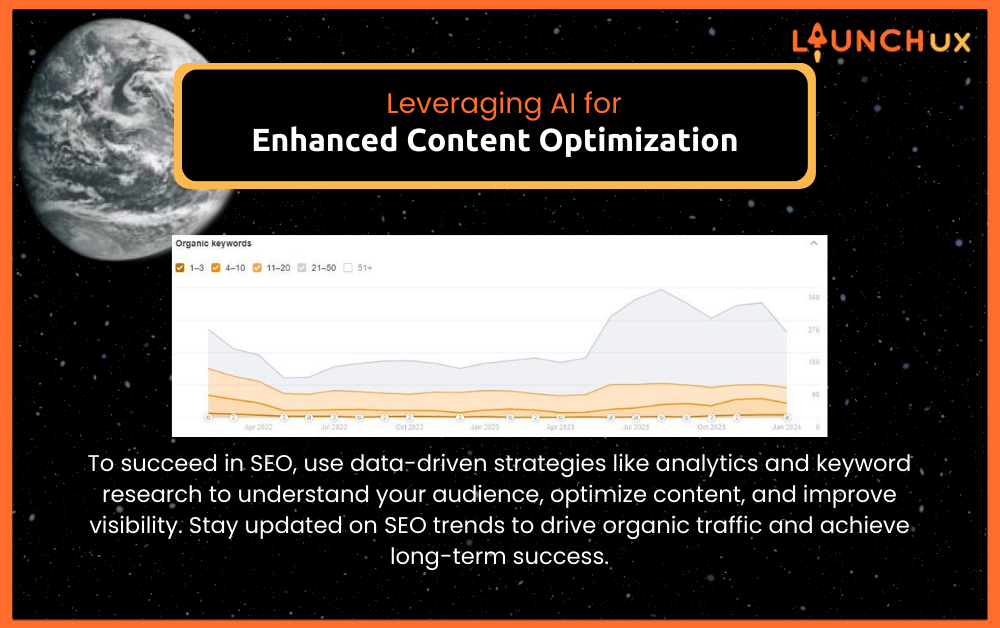
Leveraging AI for Enhanced Content Optimization

In the vast expanse of digital content, standing out requires not just creativity but precision-engineered strategies. Enter the era of AI-powered content optimization—a dynamic where artificial intelligence becomes the compass guiding your content to its ideal audience. This blog explores leveraging AI for content optimization. It blends technology with human creativity for impactful results.

AI and the Art of Content Creation

The Role of AI Writing Assistants

AI writing assistants are transforming the landscape of content creation by offering unparalleled support in drafting, editing, and refining written material. These sophisticated tools leverage natural language processing (NLP) and machine learning algorithms to understand context, generate ideas, and provide suggestions that enhance the writer’s original work. Far from being a replacement for human creativity, they act as a collaborative partner that streamlines the writing process. By handling the more tedious aspects of writing—such as grammar checks, style suggestions, and even research on topical relevance—these assistants free up content creators to focus on injecting creativity, emotion, and personal insight into their work. Human ingenuity and artificial intelligence work together to produce high-quality content at scale. This ensures each piece is optimized for search engines and deeply engaging for readers.

Enhancing Readability and Engagement

Beyond generating text, AI tools play a pivotal role in optimizing content for readability and engagement. By analyzing large datasets on reader preferences and behaviors, AI can suggest tweaks in language, tone, and structure to make articles more engaging for specific audiences. This data-driven approach to readability ensures that content is not only found but also enjoyed and shared.

Mastering SEO with AI

Keyword Optimization and SEO Strategies

Navigating the SEO landscape requires more than just intuition; it demands precise, data-driven strategies. AI-powered SEO tools like SEMrush and Ahrefs provide deep insights into keyword trends, competitor content, and search engine algorithms. By leveraging these tools, content creators can craft strategies that align closely with what audiences are searching for, ensuring higher visibility and engagement.

Content Performance Analysis

In the realm of digital content, creation is only the beginning. The true measure of a content’s success lies in its performance analysis, an area where AI tools excel remarkably. Platforms like BuzzSumo and Google Analytics use AI to understand content impact. They provide insights on engagement, shareability, and audience behavior. This analysis not only sheds light on what topics and formats capture the audience’s interest but also identifies areas for improvement. By leveraging these insights, content creators can fine-tune their strategies, ensuring that each piece of content is not just seen but genuinely impactful. This continuous loop of feedback and optimization is crucial for staying ahead in content marketing. AI becomes an invaluable partner in the quest for digital relevance and resonance.

Balancing AI Insights with Human Creativity

Infusing AI Insights into Creative Processes

Integrating AI insights into the creative process is akin to having a high-powered microscope that reveals the intricacies of audience preferences and behaviors. This integration enables content creators to tailor narratives with precision. It ensures every story, article, or post reaches and deeply resonates with its audience. By analyzing patterns in engagement and feedback across various platforms, AI tools offer a roadmap for crafting content that speaks directly to the reader’s interests, challenges, and desires. The process evolves from mere creation to a dialogue. Each piece of content becomes a response to the audience’s unspoken questions, crafted with human creativity and insight. This approach not only elevates the relevance of the content but also strengthens the bond between the brand and its audience, turning casual readers into loyal followers.

Ethical Considerations and Authenticity

As we embrace AI in content optimization, navigating ethical considerations and maintaining authenticity becomes paramount. This part discusses the importance of using AI responsibly, ensuring that content remains genuine and true to the brand’s voice. It’s about leveraging AI to amplify human creativity, not overshadow it.

Conclusion: The Symbiosis of AI and Human Creativity

The future of content creation lies in a symbiotic relationship between AI and human creativity. By leveraging AI for the heavy lifting of data analysis and optimization, content creators can focus on what they do best—telling stories that engage, inform, and inspire. This blog post explores the practical use of AI in content optimization. The clear underlying message: compelling content arises at the intersection of technology and human insight.

Embrace the Future with LaunchUX

As we navigate the vast and evolving digital landscape, the question isn’t just about integrating AI into your content strategy; it’s about doing so with precision and insight. Embrace a new era of content creation with LaunchUX. AI tools serve as navigators and catalysts for unlocking your creative potential. Let’s partner with LaunchUX to refine your approach, ensuring that every piece of content not only achieves its SEO goals but resonates deeply with your audience, building lasting connections. Are you ready to take your content to the next level with LaunchUX? Technology meets creativity, amplifying your brand’s voice in your audience’s hearts. The future of content creation is here, and with LaunchUX, you’re poised to lead the charge.