
rocketfuel, Author at LaunchUX - Page 6 of 28

Author: rocketfuel

What Are SEO Leads and How Do I Get Them?

As a business owner, you care about one thing when it comes to marketing: results. You want leads that turn into customers — not empty traffic or vanity metrics. That’s exactly what SEO leads provide. These leads come from people who are actively searching on Google for the services or products you offer. They aren’t random clicks. They aren’t passive scrollers. They’re motivated buyers.

This guide breaks down what SEO leads are, where they come from, and what your business needs to do to turn Google into a steady, predictable source of revenue.

What Are SEO Leads?

A Simple Definition

SEO leads are potential customers who find your business through an unpaid Google search. A person types in a problem, question, or service they need, discovers your business, and takes the next step toward becoming a customer.

What Counts as an SEO Lead?

For business owners, an SEO lead is any action that could turn into revenue — as long as it began from an organic search. This includes:

  • Phone calls
  • Contact form submissions
  • Quote or estimate requests
  • Appointment bookings
  • Online purchases
  • Newsletter or guide downloads

If Google search brought them to you, it’s an SEO lead.

Why SEO Leads Matter for Businesses

SEO leads are worth more because they come from high-intent prospects. These people are already looking for solutions. They need a service. They want answers. They’re in buying mode. And unlike paid ads, SEO leads compound over time — meaning your cost per lead drops as your rankings improve.

Examples of SEO Lead Journeys

  • A homeowner searches “tree removal near me,” sees your page, and calls for an estimate.
  • A business owner looks up “IT support Chicago,” reads your services, and fills out a consultation form.
  • A customer searches “best filters for allergies,” reads your blog, and buys a product.

These aren’t cold leads — they’re prospects with intent.

Where Do SEO Leads Come From?

Organic Search Results

Ranking well in Google’s standard search results is the most common source of SEO leads. When someone searches for your service and your website appears, you get direct exposure to ready buyers.

Local SEO and Google Business Profile

For service-area and brick-and-mortar businesses, your Google Business Profile is a lead-generation powerhouse. Showing up in the Map Pack leads to calls, website visits, quote requests, and direction clicks.

Blog Content and Educational Searches

People often start with questions before making a purchase. Blogs let you show up early in their decision-making process, giving your business authority. When they’re ready to buy, they already trust your brand.

Long-Tail Keyword Searches

These longer, more specific searches (like “affordable office IT support for small businesses”) usually indicate someone who knows exactly what they want — which often leads to a higher-quality lead.

High-Value Service and Location Pages

Your service pages and city pages match the highest-intent searches. When someone searches for what you do in the area you serve, these pages turn searchers into leads quickly.

Branded Organic Searches

Once your SEO begins working, more people search for your business by name — a strong sign of trust and demand. These searches convert at a rate that paid ads simply can’t match.

How Do I Get SEO Leads?

1. Target the Right Keywords

Your SEO strategy should focus on keywords that real customers use. When your content speaks their language, Google rewards you with better visibility — and you get higher-quality leads.

2. Build High-Converting Service Pages

Business owners need service pages that clearly explain what you offer, include trust elements like reviews, and give visitors a reason to contact you. These pages are often the single biggest driver of leads.

3. Create Local SEO Location Pages

If you serve multiple towns or regions, dedicated location pages help you rank in each area. This increases visibility and gives customers confidence you actually serve their neighborhood.

4. Optimize Your Google Business Profile

A polished, active Google Business Profile drives phone calls and messages directly — often without the user even visiting your website. Keep your info accurate, add photos, and encourage reviews.

5. Publish High-Intent Blogs

Blogs answer questions your customers are already asking. When your business becomes the educator, people trust you — and trust turns into revenue.

6. Improve Technical SEO

If your website is slow or hard to navigate, customers leave. Search engines won’t rank you, and buyers won’t convert. A technically sound website boosts both visibility and trust.

When reputable websites link to you, it signals authority. Google sees you as a trusted business, and your rankings improve — putting you in front of more potential leads.

8. Use Strong Calls-to-Action

Business owners need clear, compelling CTAs that tell visitors exactly what to do next: call, schedule, request a quote, or buy. If people have to guess, they won’t convert.

9. Track Conversions and Performance

Data tells you what’s working and what isn’t. By monitoring calls, form submissions, page performance, and top keywords, you can refine your strategy and increase lead volume.

Why SEO Leads Are the Most Valuable Leads You Can Get

SEO Leads Have Higher Intent

These prospects are actively searching for your service. They’re motivated, ready, and they’re far more qualified than cold outbound leads.

SEO Leads Cost Less Over Time

SEO becomes cheaper the longer you invest. Ads stop the moment you stop paying. SEO keeps generating leads even when you’re not actively spending.

SEO Leads Produce Higher Conversion Rates

Organic search brings in people who already want what you offer, making them much easier to convert.

SEO Builds Trust and Brand Authority

Showing up consistently at the top of Google makes your brand look strong, established, and reliable — exactly what business owners want their customers to think.

Turn Searchers Into Customers

SEO isn’t just about ranking higher on Google — it’s about connecting your business with people who are already looking for the services you provide. When your website, content, and Google presence work together, SEO becomes a dependable engine that brings in qualified leads day and night.

As a business owner, you want marketing that produces real results. SEO offers long-term stability, lower lead costs, and a steady flow of customers who are ready to work with you. It builds credibility, strengthens your brand, and creates a lead-generation system you can rely on.

If you’re ready to turn organic search into your strongest source of new business, LaunchUX is here to help. We build SEO strategies that are clear, measurable, and designed to drive growth — not just traffic.

Visit launchux.webdraft.dev or contact us today to start building an SEO plan that delivers real results.
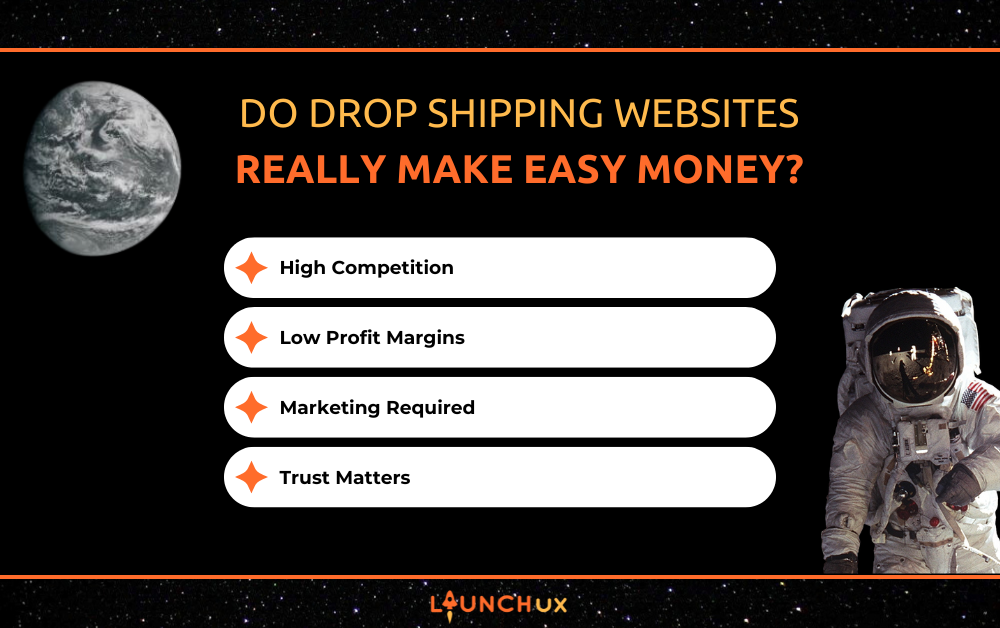
Do Drop Shipping Websites Really Make Easy Money?

For years, YouTube gurus, TikTok influencers, and paid ads have sold the dream that drop shipping websites are an instant path to passive income. The promise is simple: build a site, list products, and watch the money roll in.

But if you’ve launched a drop shipping store—or even researched it—you’ve probably discovered something the “get rich quick” videos never mention:

Drop shipping websites don’t make easy money.
In fact, most never make money at all.

This blog breaks down the reality behind drop shipping websites, why so many fail, and what it actually takes to succeed online. If you’re thinking about building a drop shipping website—or you’ve already tried and are frustrated—this is for you.

Why So Many People Believe Drop Shipping Websites Make Easy Money

Influencer Success Stories Create Unrealistic Expectations

Social media is flooded with people claiming they made thousands overnight. What they don’t tell you?

  • Many made their money selling courses, not products.
  • Their screenshots exclude refunds, product costs, and ad spend.
  • Their success is rarely typical.

These stories create a false impression that launching a store is all it takes.

The Appeal of Low Startup Costs

Drop shipping seems low risk:

  • No inventory
  • No warehouse
  • No shipping
  • Low upfront investment

But “low cost” doesn’t mean “no effort.” And that’s where beginners get blindsided.

Misleading Ads and Tutorials

Search “how to start drop shipping” on YouTube and you’ll see endless videos promising:

  • “$100 a day with no experience!”
  • “$10,000 per month in 30 days!”
  • “Easy passive income!”

Most leave out essential steps: branding, SEO, customer service, ad optimization, return management, and logistics.

The Hard Truth About Drop Shipping Websites

High Competition in Every Popular Niche

If you’re selling a trending product, thousands of other stores are selling the exact same thing—often from the same supplier.

Without branding, SEO, or a differentiator, blending in is guaranteed.

Low Profit Margins Make Scaling Difficult

Let’s break it down:

  • Supplier takes a big cut
  • Ads take an even bigger cut
  • Shipping costs vary
  • Returns eat your profits
  • Refunds hurt your trust

Many drop shipping websites end up working for minimal margins.

Ranking Drop Shipping Websites Is Tough

Search engines penalize:

  • Duplicate product descriptions
  • Thin content
  • No original photos
  • No brand authority

Since most beginners use the supplier descriptions, their content loses to bigger, established stores.

Quality Control Problems Hurt Trust

Since you never see the product before it ships:

  • Shipping takes weeks
  • Quality is inconsistent
  • Products arrive damaged
  • Customers get frustrated

Bad reviews pile up fast and kill sales even faster.

Why Most Drop Shipping Websites Fail Within the First Year

No Long-Term Marketing Plan

The biggest misconception?
That websites automatically make money because they exist.

But drop shipping websites need:

  • SEO
  • Social media
  • Paid ads
  • Email marketing
  • Product photos
  • Customer service

The website is just the storefront. The traffic and marketing drive the sales.

No Established Audience or Brand Loyalty

Influencers succeed because they already have:

  • Followers
  • Trust
  • Built-in demand

A new store with zero brand recognition must pay heavily for visibility.

Dependency on Paid Ads

Most drop shipping websites depend on Facebook Ads or TikTok Ads to survive.
But ad costs rise every year, and profits fall unless:

  • The brand is strong
  • Organic traffic grows
  • Repeat customers return

Without SEO or content, the business becomes dependent on ads and unprofitable.

Lack of a Unique Value Proposition

If 800 stores sell the same pet hair remover tool, why would someone buy from yours?

Without:

  • a unique offer
  • branding
  • messaging
  • custom content
  • fast shipping

…customers simply buy from Amazon.

What Actually Makes Drop Shipping Websites Successful

There are successful drop shipping websites, but they follow a completely different playbook.

Strong Niche Selection and Research

Winning stores focus on:

  • underserved niches
  • products competitors ignore
  • unique variations
  • specific, passionate audiences

Not “trending” items.

Custom Product Descriptions and Branding

Successful stores rewrite EVERYTHING:

  • product descriptions
  • photos
  • videos
  • wording
  • packaging
  • branding

They build a legitimate brand, not a template clone.

Investing in SEO (Not Just Ads)

SEO is long-term money:

  • blog posts
  • FAQs
  • category descriptions
  • keyword targeting

This reduces dependence on paid ads and creates sustainable traffic.

Fast, Professional, Trust-Focused Website Design

People judge websites in seconds.
If your drop shipping site looks:

  • slow
  • untrustworthy
  • cluttered
  • generic

…customers leave immediately.

A professional website dramatically increases conversions by building trust.

What Most People Don’t Realize About Building Any Website

A Website Is NOT a Business — It’s a Tool

Buying a website doesn’t equal business success.
Just like buying gym equipment doesn’t make you fit.

Websites require:

  • traffic
  • marketing
  • brand building
  • customer relationships

The website is the platform, not the engine.

Marketing Is the Engine Behind Every Successful Website

Marketing is where the actual growth happens:

  • SEO brings organic traffic
  • Ads bring paid traffic
  • Social media builds awareness
  • Email builds repeat sales
  • Content builds trust

Without marketing, websites sit untouched.

Launching a Website Without Promotion Is Like Printing Brochures and Never Handing Them Out

This analogy hits home for small businesses.
A website ignored is a website that fails.

Should You Build a Drop Shipping Website? Honest Advice

Drop Shipping Might Work If You Have:

  • A niche audience
  • A strong brand
  • An existing following
  • A solid marketing budget
  • Patience to experiment

Drop Shipping Probably Won’t Work If You Expect:

  • Fast money
  • Passive income
  • Overnight success
  • Profits without traffic
  • No marketing costs

It’s a real business model… not a lottery ticket.

How LaunchUX Helps You Create a Website That Actually Works

Custom Website Development That Converts

LaunchUX builds websites designed around:

  • trust
  • speed
  • conversion
  • user experience
  • mobile responsiveness

Not templates. Not shortcuts.

SEO & Marketing Guidance

We help with:

  • keyword planning
  • content strategy
  • on-page SEO
  • long-term traffic methods

So your website can grow instead of sit untouched.

Honest Consulting About Drop Shipping (and Better Models)

We’ll give you straight answers:

  • Is drop shipping right for you?
  • Do you have the budget?
  • Are there better business models for your goals?

Our job is to guide.

Drop Shipping Websites Don’t Make Easy Money — But They Can Make Real Money With the Right Strategy

Drop shipping websites aren’t automatic cash machines.
They require branding, traffic, content, and consistent marketing to work.

But with the right strategy—and a website built for conversions—drop shipping can be profitable for the right person.

If you want honest guidance and a high-performing website that gives you a real chance of success, LaunchUX can help.

Ready to build a website that doesn’t rely on luck? Let’s talk.

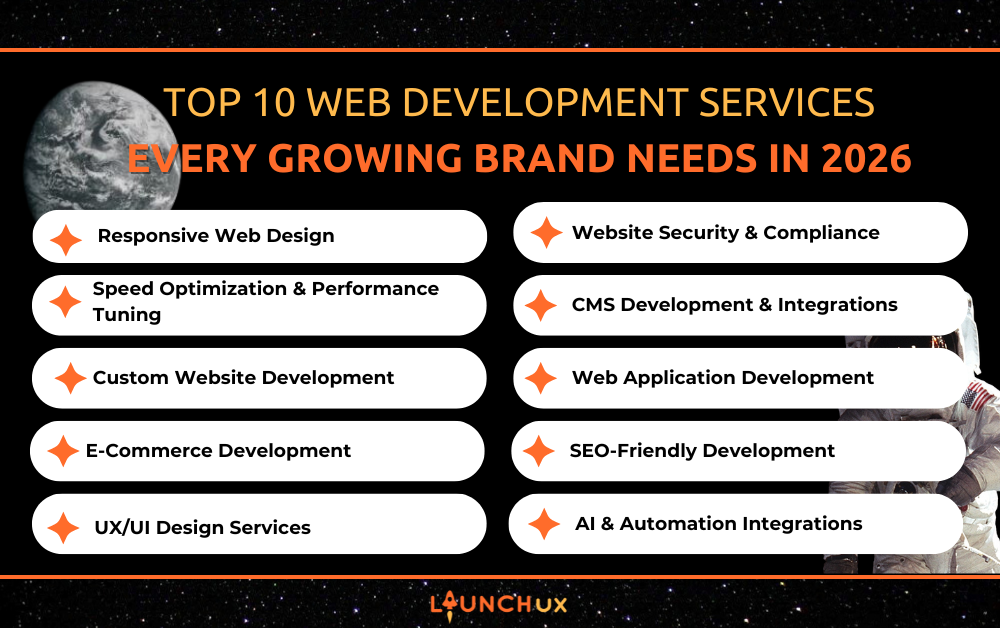
Top 10 Web Development Services Brands Needs in 2026

In 2026, the brands that thrive are those investing in modern, strategic, and performance-driven web development services. With customer expectations rising and technology evolving at a rapid pace, having a high-quality online presence is no longer optional. LaunchUX continues to support businesses in navigating this digital shift by offering solutions that enhance visibility, performance, and long-term growth, helping brands rise above their competitors.

Responsive Web Design

Adaptive Layouts for Every Device

Responsive web development services ensures your website transitions smoothly across phones, tablets, desktops, and emerging screen formats. Consumers frequently switch between devices, expecting the same experience regardless of screen size. When your layout adapts naturally, you build credibility and stimulate users to engage more fully with your content.

Improved User Satisfaction Through Seamless Interaction

A site that loads and functions correctly on any screen reduces user frustration and increases engagement. Visitors want instant clarity, easy navigation, and elements that respond smoothly to their touch or click. When these expectations are met, overall user satisfaction rises, and conversions often follow.

Bounce Rate Reduction Through Flexible Design

When a website appears broken or cluttered on specific devices, users leave immediately. Flexible design eliminates issues like overlapping text, misplaced images, or unclickable buttons. As a result, your site retains more visitors and encourages them to explore additional pages.

Speed Optimization & Performance Tuning

Faster Load Times That Shape the User Experience

Speed is one of the most critical factors influencing user perceptions of your brand. A slow site can appear unreliable and unprofessional, driving visitors away within seconds. Optimizing load times ensures your audience can engage with your content instantly and without frustration.

Core Web Vitals as a Ranking and Conversion Tool

Google’s Core Web Vitals carry even more weight in 2026 as search engines demand fast, stable, and visually responsive websites. Meeting these performance standards directly impacts your ranking potential and helps improve credibility in search results. This dual benefit strengthens both visibility and the user experience.

Technical Enhancements for Superior Performance

Techniques like image compression, code minification, caching, and server optimization are vital for enhancing site performance. These web development services reduce the workload on your servers while speeding up content delivery. When your site performs efficiently, users enjoy smoother interactions and longer browsing sessions.

Custom Website Development

Unique Digital Experiences That Stand Out

Custom development allows your brand to break free from generic templates and create a truly your own digital experience. This individuality helps your business stand out in a crowded online marketplace. With a distinctive design and structure, you make a stronger impression on your audience.

Scalable Frameworks That Grow With Your Business

Custom-built websites are designed to grow alongside your company. As your company changes, your website can transform to meet new needs through new features, integrations, or system upgrades. This scalability prevents the limitations often seen in rigid, template-based platforms.

Deeper Integration Options for Advanced Functionality

Custom development supports complex integrations with CRMs, inventory systems, and third-party tools. These web development services improve operational efficiency and enable your team to work more efficiently. When everything connects seamlessly, your business benefits from better workflows and enhanced customer experiences.

E-Commerce Development

Conversion-Driven Storefronts Built for Modern Shoppers

Today’s consumers demand an effortless and visually appealing shopping experience. Thoughtful e-commerce development ensures product browsing is intuitive and checkout steps are streamlined. When your storefront supports easy decision-making, conversions naturally increase.

Secure Payment and Fulfillment Processes

Security is the backbone of customer trust in online shopping environments. With secure payment systems, encryption, and fraud protection, customers feel confident submitting sensitive information. As confidence grows, brand loyalty and recurring purchases follow.

Advanced Tools for Inventory and Product Management

Efficient product management is essential for maintaining accurate listings and preventing overselling. Tools that automate inventory updates and sync data across platforms help reduce operational stress. Web development services allow your team to stay organized and responsive to customer needs.

UX/UI Design Services

Thoughtful Layouts That Improve User Flow

A successful website guides visitors toward the correct information without confusion. UX/UI design uses structure, spacing, and visual hierarchy to create this smooth path. When users can find what they need quickly, their overall experience improves dramatically.

Visual Design That Supports Brand Identity

A visually cohesive website reflects a brand’s professionalism and voice. Color palettes, typography, and imagery are chosen intentionally to reinforce recognition and trust. Over time, this consistency builds strong emotional connections with your audience.

Accessibility Features That Invite All Users

Inclusive design ensures everyone can use your website, including those with disabilities. Features such as proper contrast, keyboard navigation, and screen reader compatibility help meet accessibility standards. This not only broadens your audience but also aligns your brand with modern compliance requirements.

Website Security & Compliance

Advanced Protection Against Evolving Threats

Cyberattacks are becoming more sophisticated, making proactive security essential. Strong web development services include firewalls, malware scanning, and real-time monitoring to safeguard data. Protecting your site keeps both your business and your customers safe.

Compliance With Privacy and Data Regulations

Regulations like GDPR and CCPA require strict handling of personal information. Staying compliant prevents legal consequences and reassures customers that their data is respected. This responsible approach enhances your brand’s reputation and builds long-term trust.

Integrated Backup and Recovery Systems

Unexpected outages, hacks, or server failures can disrupt your entire operation. Backup and recovery systems ensure you can restore your site quickly and minimize downtime. These protective measures keep your business running smoothly even during unforeseen events.

CMS Development & Integrations

Effortless Content Management for Busy Teams

A reliable CMS empowers your team to update content without needing technical expertise. This capability keeps your website fresh, relevant, and engaging. When content is easy to manage, marketing and communication efforts become more efficient.

Seamless Platform Integrations for Efficiency

Modern websites rely on numerous tools—from email platforms to analytics systems. CMS integrations allow these tools to communicate, helping you track performance and manage data effectively. When everything works together, your team saves time and gains valuable insights.

Customizable Structures for Better Organization

A well-structured CMS is easier to maintain and scale. It organizes content logically, making future updates and expansions more straightforward. This structure ensures your website remains manageable no matter how much your business grows.

Web Application Development

Interactive Tools That Enhance Customer Experience

Web applications offer users personalized and interactive experiences that deepen engagement. Features such as dashboards, booking systems, and customer portals improve convenience and accessibility. When customers have control over their interactions, satisfaction rises significantly.

Operational Automation for Internal Efficiency

Internal processes can be streamlined through custom web apps that automate repetitive tasks. Automating workflows reduces human error and frees your team to focus on strategic responsibilities. Web development services improve accuracy, productivity, and overall performance.

Scalable Features for Expanding Customer Needs

As your audience grows, so do their expectations. Web applications provide the flexibility to add new tools and features without rebuilding the entire system. This adaptability keeps your brand relevant and responsive to user demands.

SEO-Friendly Development

Clean Code That Supports Search Visibility

SEO begins in the development phase with clean, structured code that search engines can understand. When your website is technically sound, indexing becomes more efficient and accurate. This strengthens your visibility and ranking potential.

Mobile-First Standards That Improve Ranking

Search engines prioritize websites that perform exceptionally on mobile devices. Mobile-first development ensures your site delivers a fast, stable, and intuitive experience across all screens. This standard supports better rankings and enhances user engagement.

Site Structures Designed for Better Crawling

Organizing your site with logical navigation, optimized URLs, and proper hierarchy helps search engines crawl more effectively. Better crawling means more pages are indexed and understood. This foundation directly contributes to stronger long-term SEO performance.

AI & Automation Integrations

AI Tools That Personalize Customer Interactions

AI-powered features help create personalized experiences tailored to user behavior. Chatbots, recommendations, and predictive actions guide visitors through their journey. This personalization increases engagement and strengthens brand-consumer relationships.

Automated Workflows That Save Time

Automation takes over repetitive tasks such as emails, reminders, and data sorting. These tools not only reduce manual labor but also improve consistency and timing. With automation in place, teams can focus on creative and high-level planning.

Predictive Analytics That Guide Strategic Decisions

AI-driven insights help brands understand what their customers want before they ask for it. Predictive analytics analyzes patterns and trends that inform more intelligent decisions. Businesses that use this data effectively can adapt quickly and outperform competitors.

Conclusion

As 2026 approaches, brands must invest in high-quality web development services that support efficiency, security, performance, and long-term growth. From responsive design and e-commerce solutions to AI-driven automation, each service plays a critical role in establishing a powerful digital presence. LaunchUX remains committed to helping growing businesses thrive by delivering the strategies and technology needed to stay ahead.Ready to strengthen your online presence? Contact LaunchUX today and take the next step toward digital success.

Top Features Your Website Needs for a Successful Creative Community

Building a thriving creative community online requires more than just a platform—it demands the right features to engage, inspire, and connect members. At LaunchUX, we specialize in helping websites integrate tools and functionality that foster meaningful interactions among creators. A strategically designed website encourages new users to become committed contributors while creating a space where ideas are shared, collaborations are born, and creativity flourishes. From forums and user profiles to galleries and gamification, the right features ensure your community is active, dynamic, and engaged. Each feature plays a unique role in keeping members involved, motivated, and inspired. By implementing these core functionalities, your website moves beyond a traditional platform, becoming a hub where creativity and collaboration thrive.

Interactive Forums

Central Hub for Discussion

Forums provide a structured space for members to start conversations, ask questions, and share ideas. They act as the central hub of a creative community, encouraging users to engage with each other regularly. Well-organized forums allow topics to be categorized by projects, skills, or interests, making navigation intuitive and efficient. Members can browse threads to find discussions that match their expertise or curiosity. This structure ensures that both new and experienced participants can contribute effectively and stay involved. Forums create a consistent point of interaction, which keeps the community active and vibrant.

Fostering Engagement and Belonging

A properly managed forum fosters a sense of belonging and collaboration among members. When users participate in discussions and exchange ideas, they feel like an integral part of the community. This engagement motivates them to return frequently and actively contribute to ongoing conversations. Forums also help establish the tone and culture of your community, setting clear expectations for collaboration and participation. Over time, consistent engagement strengthens members’ loyalty and attachment to the platform. Forums transform your website into a space where meaningful interactions flourish.

Showcasing Expertise

Forums give members a platform to demonstrate their skills, share insights, and showcase knowledge. By contributing valuable advice or presenting innovative ideas, users gain recognition and credibility within the community. This recognition encourages continued participation and fosters peer-to-peer learning. Members feel motivated to contribute when their expertise is acknowledged and appreciated. Forums also help users network with others who share similar interests or complementary skills. Ultimately, they turn your website into an interactive, knowledge-sharing hub that adds value to all participants.

Personalized User Profiles

Creating Identity and Connection

User profiles provide members with an identity within the creative community, making interactions more personal and meaningful. Profiles can highlight portfolios, skills, bios, and social links, giving depth to each participant’s presence. When users showcase their interests and achievements, others can connect more easily, fostering collaboration and networking. A well-developed profile helps members feel recognized and valued within the community. This personal connection encourages active participation and strengthens engagement. Customizable profiles transform anonymous users into identifiable contributors, enhancing community cohesion.

Encouraging Accountability and Participation

Profiles promote engagement by giving members ownership of their contributions and activities. Users are more likely to participate when their work is visible and recognized by peers. Tracking achievements, completed projects, or shared content motivates continued involvement and investment in the community. Profiles provide a sense of accountability, encouraging members to maintain a positive and active presence. This consistency contributes to a thriving, dynamic creative community. Engaged members are essential for maintaining a vibrant and sustainable online network.

Facilitating Networking and Collaboration

Robust profiles allow members to find peers with complementary skills and shared interests. This capability encourages collaborative projects, partnerships, and mentorship opportunities. When users can easily identify potential collaborators, it accelerates idea sharing and creativity. Profiles also enhance communication by providing context about each member’s experience and expertise. By establishing identity and purpose, profiles strengthen the bonds that make a creative community successful. They transform individual members into connected, collaborative participants.

Real-Time Chat Tools

Instant Communication

Real-time chat tools allow members to communicate quickly and efficiently, enhancing collaboration within your creative community. One-on-one messaging, group discussions, and project-specific channels ensure ideas flow without delay. This immediacy keeps members engaged and facilitates dynamic brainstorming sessions. Quick communication helps solve problems faster and allows teams to respond to opportunities in real-time. Members feel more connected when they can interact instantly with peers. Chat tools make the platform feel alive, responsive, and inclusive for all participants.

Enhancing Collaboration and Brainstorming

Chat tools are ideal for dynamic discussions, collaborative problem-solving, and project development. Members can exchange ideas, provide feedback, and contribute to projects seamlessly. This instant collaboration encourages creativity and keeps members actively involved in community activities. Active chat interactions also strengthen social bonds, creating a sense of camaraderie and belonging. By integrating chat tools, your website becomes a space where creativity is shared in real-time. Collaboration thrives when communication is immediate and engaging.

Organized and Connected Conversations

Features like message threading, notifications, and topic channels help maintain organized and relevant discussions. Members can easily follow conversations and participate without feeling overwhelmed. Organized communication ensures meaningful discussions are not lost and that users remain engaged. It also allows for long-term reference and knowledge sharing across the community. When members can communicate clearly and efficiently, they are more inclined to participate consistently and maintain connections. Chat tools turn your website into a responsive, interactive hub for your creative community.

Galleries and Portfolios

Showcasing Creative Work

Galleries allow members to display their work visually, making your creative community both inspiring and interactive. Portfolios highlight skills, projects, and achievements, offering context to members’ contributions. Visual showcases encourage engagement and motivate members to share their own creations. By viewing peers’ work, members gain ideas, learn new techniques, and find inspiration. Galleries make the community visually dynamic and professionally appealing. A platform that highlights creativity attracts and retains active participants.

Encouraging Feedback and Collaboration

Galleries provide opportunities for constructive feedback, critique, and collaborative learning. Members can comment, suggest improvements, and exchange ideas about projects. This interaction promotes knowledge sharing and fosters growth among participants. By encouraging feedback, galleries help members feel their work is valued and recognized. Active engagement through galleries enhances collaboration and strengthens community ties. Creative contributions become more meaningful when shared and discussed within the platform.

Motivating Participation

Seeing peers’ creations motivates members to share their own projects actively. Recognition through galleries inspires members to contribute consistently and showcase their best work. This cycle of inspiration and engagement keeps the creative community thriving. Galleries also celebrate achievements, reinforcing members’ pride in their contributions. The visual and interactive nature of galleries ensures ongoing participation and community growth. A well-curated gallery strengthens both creativity and connection across the platform.

Event and Workshop Integration

Boosting Engagement Through Learning

Integrating events and workshops on your website provides members with learning opportunities that drive engagement. Webinars, tutorials, and live Q&A sessions allow participants to interact with experts and peers in real-time. These experiences promote skill development, knowledge sharing, and collaboration within the creative community. Events keep users returning to your platform and encourage active involvement in ongoing discussions. By participating in events, members feel more connected and invested. Learning-based engagement ensures a vibrant and dynamic community environment.

Facilitating Networking Opportunities

Events create shared experiences that help members network and form meaningful connections. Participants can meet potential collaborators, mentors, or like-minded peers through structured interactions. Networking during workshops and webinars strengthens the bonds within your community and encourages future collaboration. These interactions also foster a sense of trust and belonging among members. By incorporating events, your website becomes a hub for learning, networking, and creative exchange. Networking opportunities enhance both engagement and the community’s overall value.

Encouraging Active Participation

Event features like RSVPs, discussion boards, and collaborative projects ensure members are active participants. Engaging in events motivates users to contribute, share ideas, and collaborate on projects. Consistent involvement through workshops and webinars strengthens community loyalty and encourages long-term engagement. Events also provide a platform for members to showcase their skills and gain recognition. Integrating these activities into your website keeps the creative community dynamic and responsive. Participation-driven features foster an active, thriving environment.

Gamification and Rewards

Motivating Participation

Gamification adds an element of fun while encouraging consistent engagement in your creative community. Badges, points, and challenges reward members for their contributions and interactions. Recognition through gamification makes users feel valued and appreciated, increasing participation. Members are more likely to return when they see progress and tangible rewards for their activity. Gamification turns passive users into active contributors. It also reinforces positive behavior and community engagement over time.

Fostering Friendly Competition

Leaderboards, rankings, and achievement tracking create a sense of friendly competition among members. Healthy competition encourages members to contribute more frequently and strive for excellence. Highlighting top contributors motivates others to participate actively and engage with the community. Competition also enhances visibility for skilled members, encouraging collaboration and mentorship. Gamification strengthens engagement by making contributions both rewarding and enjoyable. This playful element adds energy and excitement to the platform.

Strengthening Long-Term Involvement

Reward systems foster ongoing involvement by giving members goals to achieve and recognition for their efforts. Active participation is reinforced through challenges, points, and milestones. Members feel more invested in the community’s growth when their contributions are acknowledged. Gamification ensures sustained engagement and loyalty within the creative community. By combining fun, recognition, and reward, your website cultivates committed, long-term members. It transforms the community from a passive audience into an active, thriving network.

Build a Thriving Creative Community with LaunchUX

A thriving creative community relies on features that foster engagement, collaboration, and inspiration among members. At LaunchUX, we help websites implement forums, profiles, chat tools, galleries, events, and gamification to create dynamic, interactive platforms. By integrating these features, your website becomes more than a space for content—it evolves into a hub for collaboration, skill sharing, and creativity. Engaged members are more likely to participate, contribute, and remain loyal over time. Investing in these tools ensures your online community thrives and continues growing in meaningful ways. A thoughtfully designed platform transforms casual users into committed, active contributors.

Ready to elevate your website and cultivate a thriving creative community? Contact LaunchUX today to discover how our expertise can help you build an engaging, interactive, and inspiring platform for creators.

What’s the Difference Between Paid Social and Organic Social?

Social media can be one of the most profitable marketing tools for your business — but only if you understand how to use it. Many business owners hear about paid social without realizing how different they are from organic socials, or how much more powerful they become when used together. This blog will break down what each one means, how they work, and why having both in your strategy leads to stronger visibility, engagement, and business growth.

What is Organic Social?

The Definition — Marketing Without a Budget

Organic socials include all unpaid content like posts, stories, and community interactions that build your presence naturally. These posts create a foundation for your online reputation and allow your business to show authenticity without the need for paid promotion. A consistent presence through organic posting builds familiarity and trust, helping potential customers understand your values and personality over time.

The Purpose — Building Relationships and Authority

Organic socials help you connect authentically with your audience while establishing authority in your industry. By regularly sharing educational tips, customer success stories, and insights, businesses cultivate a loyal following that feels connected to the brand. While results grow more slowly than with paid efforts, organic engagement strengthens brand equity and supports long-term retention.

What is Paid Social?

The Definition — Advertising with Precision

Paid social involves paying platforms like Meta, LinkedIn, TikTok, or X to distribute your content to specific, targeted audiences. This strategy helps businesses reach people who are most likely to be interested in their products or services, even if those users have never interacted with the brand before. Paid campaigns use advanced targeting options to segment audiences by age, location, interests, or behavior.

The Advantage — Reach and Results at Scale

Paid social gives your brand immediate visibility. With clear targeting and measurable results, businesses can see exactly how much engagement, traffic, and conversions they get for every dollar spent. This approach accelerates awareness campaigns and product promotions while complementing ongoing organic posting efforts. The real power of paid social lies in scalability — you can start small, measure performance, and increase investment as results improve.

Paid vs. Organic — Understanding the Difference

Core Distinctions and Strategic Use

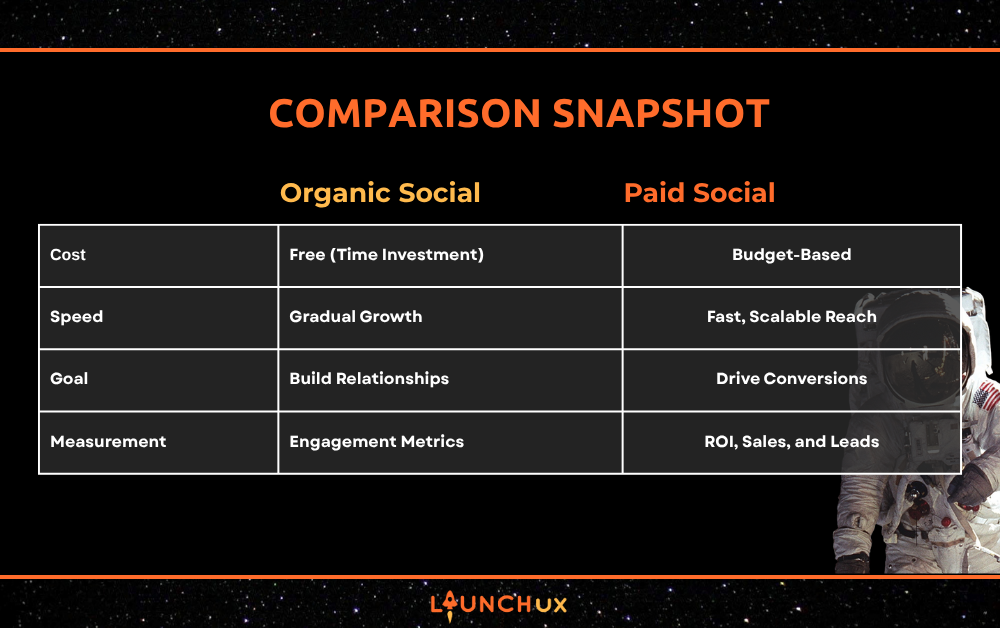
Organic socials cost time and creativity, while paid social costs money but delivers fast exposure. Both have unique purposes: organic posting builds relationships and credibility; paid social amplifies messages to reach new audiences. Ideally, businesses use both simultaneously — organic content for community trust and paid social for targeted reach and conversion growth.

Comparison Snapshot

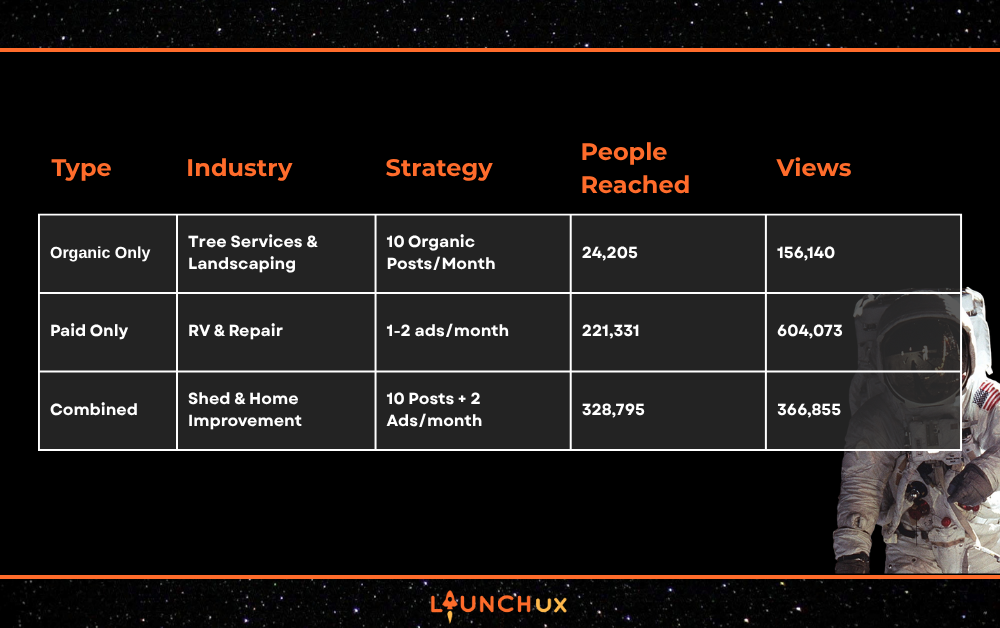
Real Data — How Paid Social and Organic Social Perform in the Real World

What the Numbers Show

Recent campaign data from LaunchUX clients across multiple industries reveal how paid social and organic content perform separately — and how much stronger they become when used together.

The Takeaway — Complementary Strengths

Organic Socials build authority and community engagement that lasts long-term. Paid social quickly expands brand visibility and generates measurable ROI. When used together, they create a complete marketing system — organic content nurtures existing audiences, while paid social captures new ones and funnels them into loyal customers.

How Paid Social and Organic Social Work Together

Building a Unified Strategy

Your organic content gives your paid social campaigns authenticity and credibility. When users see ads that lead to active, engaging social feeds, they trust your brand more. The same content themes should carry across both, maintaining a cohesive voice, consistent visuals, and aligned calls to action.

Retargeting and Amplification

Paid social allows you to retarget users who’ve already engaged organically or visited your website. This keeps your brand top of mind and encourages conversions. Similarly, top-performing organic posts can be boosted as ads, helping them reach wider audiences that share your ideal customer profile.

Why Your Website Still Matters

Every Click Has a Destination

Even the most effective paid social campaign can fail if users land on a slow or outdated website. Social media sparks interest, but your website seals the deal. A modern, fast-loading, and mobile-friendly site ensures your paid traffic doesn’t bounce away before converting.

Turning Traffic into Trust

Your website acts as the proof point of your brand promise. When visitors click through from paid social or organic posts and find clear navigation, professional visuals, and easy-to-use contact forms, they’re far more likely to take action. Keeping your site optimized maximizes every social dollar spent.

Conclusion

Paid social is one of the fastest ways to grow your business — but it’s most effective when paired with consistent organic content and a professional, up-to-date website. Organic socials build trust; paid social amplifies it. Together, they form a balanced strategy that turns awareness into action and clicks into customers. And remember — even the best paid social campaign should lead to an updated, fast-loading website. If your business needs expert help managing your socials, running paid social campaigns, or aligning everything with your website, LaunchUX can create a cohesive plan that delivers real results.
What Is Consistent Branding and Why Does It Matter?

Branding is more than a pretty logo or a polished color palette. It’s the full identity of your business—how you show up, how you sound, and how you make people feel. And when that identity is consistent, your brand becomes something customers can trust, connect with, and remember. Whether you’re just getting started or looking to elevate your presence, consistent branding creates the foundation for lasting growth.

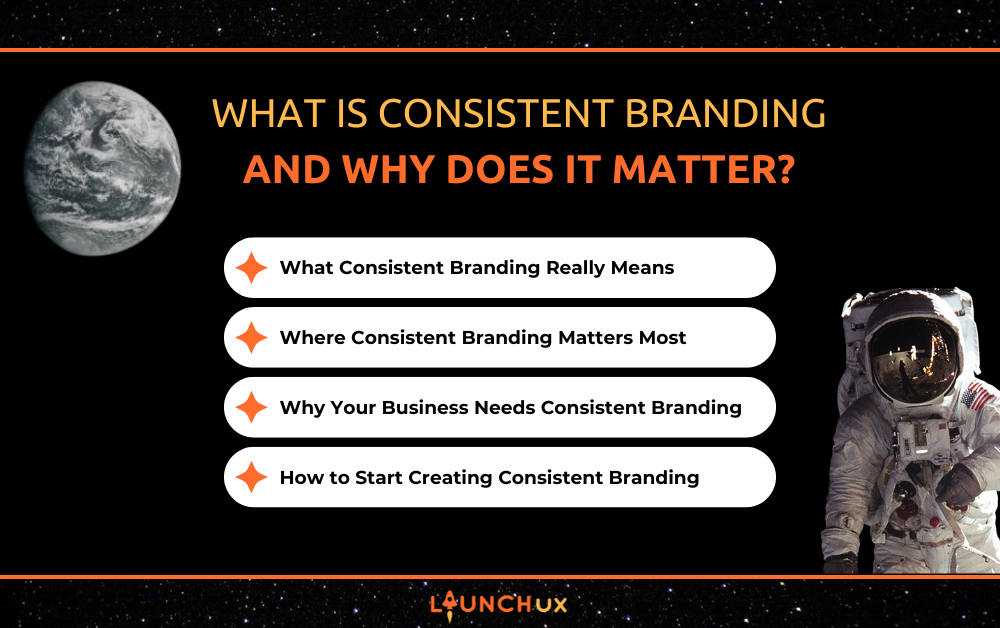
What Consistent Branding Really Means

More Than Logos and Colors

Consistent branding isn’t simply matching fonts or reusing your logo—it’s the intentional harmony across every part of your business. It’s the visuals you choose, the way you speak, and the experience customers have each time they engage with you. When these elements work together, your brand becomes recognizable in a way that feels natural and effortless to your audience. Consistency eliminates confusion and replaces it with clarity, confidence, and connection.

  • Visual style (colors, fonts, photography, layout)
  • Messaging and tone of voice
  • Customer experience
  • Online and offline presence

Creating a Unified Brand Identity

A unified identity means that whenever someone sees, hears, or interacts with your business, it feels aligned and intentional. Your messaging supports your visuals, and your visuals support your mission. Brand guidelines help create this unity by giving your team a roadmap for bringing your business to life in a consistent way. When your identity feels cohesive, your audience knows exactly who you are—and that familiarity builds trust.

The Psychological Impact of Consistency

People crave familiarity. When customers repeatedly see the same tone, colors, and messaging from your business, it becomes comforting. This familiarity builds trust, reduces hesitation, and encourages loyalty. Consistency also shapes your reputation—when your brand shows up the same way every time, customers know they can rely on you. That emotional reassurance is a powerful driver of long-term relationships.

Where Consistent Branding Matters Most

On Your Website

Your website is often the first meaningful interaction someone has with your business. Consistent design, colors, fonts, and messaging help create a smooth, confident introduction. When your website feels cohesive, visitors instantly understand your professionalism and personality. A scattered or inconsistent site can leave people unsure or disconnected, but a unified one builds trust from the very first click.

On Social Media

Social media is where your brand shows up daily—sometimes hourly—and consistency helps you stand out. Using the same color themes, templates, and voice helps your audience recognize you instantly. Even before they read a caption, they begin to associate the look and feel of your content with your brand. A steady tone and visual approach also create comfort and relatability, making it easier for people to engage with you.

In Advertising and Marketing Materials

From social ads to brochures, consistent branding reinforces your message and strengthens recognition. When your ads look and feel like your business, people connect with them faster. Mismatched branding can weaken trust, but cohesive visuals and messaging make your marketing more effective—and more memorable. Over time, this consistency boosts conversions and stretches your marketing dollars further.

In Customer Interactions

Branding also includes how you speak to people. Whether it’s a customer service email, a sales message, or an onboarding sequence, the tone should feel unmistakably like your brand. When your communication style stays consistent, customers feel seen and supported. This creates a positive experience that reflects your values and strengthens the emotional connection people have with your business.

In Your Physical Presence

For businesses with storefronts, packaging, signage, or branded materials, consistency is just as important offline as it is online. When your physical presence matches what people see digitally, it reinforces trust and signals professionalism. Every detail—from packaging to print—reminds customers that you care about quality and want their experience to feel seamless.

Why Your Business Needs Consistent Branding

It Builds Trust and Credibility

Consistency makes your business feel reliable. When customers see the same visuals, tone, and experience every time, they begin to trust that you’ll deliver on your promises. Inconsistency can feel disorganized or uncertain—but consistency communicates confidence, care, and commitment.

It Makes Your Business More Recognizable

Recognition grows when your branding stays steady. The more familiar your brand becomes, the easier it is for people to remember you when they’re ready to take action. This helps you stand out, even in crowded markets, and keeps your brand top of mind.

It Improves Marketing ROI

Your marketing works harder when your branding is aligned. A consistent look and voice help people instantly connect your ads and content to your business. This increases engagement, boosts conversions, and makes every marketing effort more efficient.

It Creates a Professional, Polished Image

Businesses that present themselves consistently appear more established and trustworthy. Even small companies can look elevated and refined when their branding is cohesive. This polished image sets you apart and gives customers confidence in your quality.

It Aligns Your Team and Streamlines Operations

When your team knows the standards for your brand, everything becomes easier. Messaging stays aligned, designs stay on-brand, and communication stays clear. This saves time, reduces confusion, and ensures your brand is represented beautifully across all channels.

It Enhances Customer Loyalty

Consistency builds emotional comfort—customers feel more connected to brands that show up the same way every time. When people trust your tone, your visuals, and your experience, they’re far more likely to return. Over time, consistent branding nurtures deep, lasting loyalty.

How to Start Creating Consistent Branding

Establish Clear Brand Guidelines

Brand guidelines give your business the structure it needs to maintain consistency. They outline your colors, fonts, tone of voice, logo rules, imagery style, and overall brand personality. These guidelines protect your brand as you grow and help ensure everything created in your name reflects who you truly are.

Train Your Team and Partners

Everyone who speaks for your business should understand your brand. Whether they’re designing, writing, selling, or supporting customers, they should know how to represent your identity. Educating team members and partners ensures your brand stays cohesive, no matter who is creating content or connecting with customers.

Review Every Touchpoint for Consistency

Take time to audit your website, social channels, ads, packaging, emails, and print materials. Look for inconsistencies that could cause confusion or weaken your identity. Updating these touchpoints reinforces your message and strengthens the experience your customers have with your brand.

Update Outdated or Mismatched Assets

As your brand evolves, it’s important to refresh older materials so everything stays aligned. Updating graphics, rewriting off-brand messages, and refining outdated designs helps your business stay fresh and intentional. A brand that grows with purpose creates a stronger, more confident presence.

Final Thoughts: Consistency Is the Backbone of a Strong Brand

Consistent branding isn’t about being perfect—it’s about creating a familiar and trustworthy experience that customers can count on. When your brand feels aligned, intentional, and recognizable, people connect with it more deeply. Over time, that connection turns into loyalty, confidence, and long-term growth. Every step you take toward consistency strengthens the heart of your brand—and the relationship you have with the people you serve.

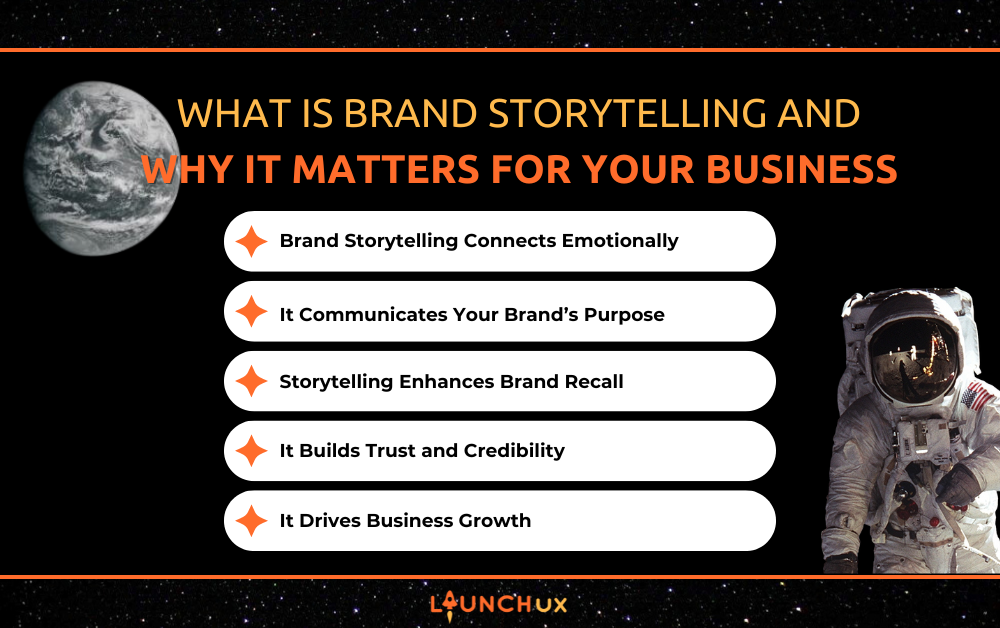
What Is Brand Storytelling and Why It Matters for Your Business

Brand storytelling allows companies to establish meaningful relationships with customers on a deeper, more meaningful level. At LaunchUX, we specialize in helping businesses craft narratives that communicate their values, mission, and unique identity while building lasting relationships with their audience. Stories are powerful tools that evoke emotion, establish credibility, and create memorable experiences that resonate long after the first interaction. They allow brands to differentiate themselves and foster loyalty that goes beyond simple transactions. Understanding the power of storytelling is essential for any business aiming to thrive in a competitive landscape.

Brand Storytelling Connects Emotionally

Engaging Customers on a Deeper Level

Unlike traditional marketing, which often emphasizes features or promotions, brand storytelling focuses on building an emotional connection with your audience. Stories tap into feelings like trust, nostalgia, or inspiration, making your brand more relatable and memorable. Emotional resonance with your brand increases the likelihood that customers will engage repeatedly and develop loyalty over time. Emotional engagement transforms passive viewers into active participants in your brand journey. Brands that master this connection often enjoy higher retention and advocacy rates. Ultimately, stories create a human connection that pure product descriptions cannot replicate.

Creating Relatable Narratives

Compelling brand storytelling uses characters, scenarios, and challenges that mirror the audience’s own experiences. By proving that your brand comprehends their challenges and aspirations, you create a sense of familiarity and trust. Relatable narratives humanize your brand and provide context for your products or services. This approach helps your messaging resonate on a personal level, making it meaningful rather than purely promotional. When customers see themselves reflected in your story, your brand becomes relevant and approachable. Relatability builds a foundation for long-term engagement and customer loyalty.

Turning Emotion Into Action

Emotional engagement encourages audiences to act, whether that means making a purchase, sharing content, or recommending your brand to others. Stories that resonate inspire customers to become part of your brand journey, creating advocates who actively promote your business. By connecting emotionally, storytelling moves beyond awareness and drives measurable outcomes. This approach makes marketing not just memorable, but actionable. Brands that successfully harness emotion often see increased conversion rates and deeper customer relationships. The human element is what turns a story into a strategic business tool.

It Communicates Your Brand’s Purpose

Defining Why Your Business Exists

A well-crafted brand story explains your business’s reason for being beyond selling products or services. It communicates your mission, vision, and the meaningful contributions your brand makes to their daily lives. Purpose-driven messaging helps audiences understand your values and provides a reason for them to connect with your brand. Businesses that clearly articulate their purpose attract customers who not only buy but also champion the brand. Stories of purpose make your brand memorable and meaningful by expressing your “why.” You foster a framework that encourages confidence and continued engagement.

Differentiating Your Brand in the Market

In competitive industries, having a clear purpose can distinguish your brand from others. Companies that communicate their mission effectively stand out and create a community around shared values. Purpose-driven stories appeal to customers who prioritize alignment with their personal values. This differentiation fosters loyalty and sets your brand apart in ways that pricing or features cannot. By showing why your business exists, you create an emotional connection that strengthens your market position. Customers begin to identify with your mission, not just your products.

Fostering Long-Term Relationships

A story grounded in purpose encourages customers to engage with your brand over the long term. When audiences understand and trust your intentions, they are more apt to sustain loyalty and return for future purchases. Purpose-driven storytelling turns casual customers into advocates who actively promote your brand. This relational approach creates a sustainable and supportive customer base. By consistently communicating purpose, brands nurture trust, loyalty, and emotional engagement simultaneously. Long-term relationships are built when customers believe in the story behind the brand.

Storytelling Enhances Brand Recall

Making Your Brand Memorable

People remember stories far more easily than facts, statistics, or feature lists. By embedding your brand’s message within a compelling narrative, you increase the likelihood that customers will recall your brand when making decisions. Stories with relatable characters and challenges provide a mental framework that sticks in the audience’s memory. This approach transforms simple messaging into memorable experiences that differentiate your brand. Effective recall strengthens brand recognition and fosters lasting impressions. Brands that utilize storytelling strategically benefit from higher visibility and awareness.

Using Characters and Challenges

Memorable stories often include characters, challenges, and resolutions that mirror the audience’s own experiences. This approach allows customers to see themselves in your narrative and relate to your message on a personal level. Characters create empathy and engagement, which make your story more impactful. By demonstrating real-world challenges and solutions, your brand shows value beyond products alone. Relatable narratives improve the likelihood that audiences will remember and recommend your brand. Customers are more likely to connect with storytelling that feels authentic and personal.

Turning Marketing Into Memory

Storytelling transforms standard marketing messages into experiences that stick with audiences. Instead of fleeting advertisements, your brand becomes a narrative that consumers carry with them. This cognitive engagement strengthens brand recognition and recall over time. The more memorable your story, the more likely customers are to choose your brand when considering options. Strong brand recall also increases word-of-mouth promotion, amplifying marketing efforts organically. Ultimately, memorable stories create lasting value for both the brand and its audience.

It Builds Trust and Credibility

Providing Context and Authenticity

Stories give context to your brand’s actions, making it appear authentic and human. Sharing real experiences, challenges, or successes demonstrates transparency and honesty. Consumers feel confident supporting brands that communicate openly and consistently. Storytelling allows brands to show their values in action rather than just stating them. Authentic narratives provide reassurance that your brand is reliable and trustworthy. This basis of trust is fundamental for building long-term customer relationships.

Consistency Strengthens Credibility

Consistent storytelling reinforces credibility by showing that your brand’s values and actions are aligned. When messaging matches behavior, audiences feel confident in choosing your products or services. Over time, repeated narratives build a reliable perception of your brand. Consistency in storytelling ensures that customers understand your principles and mission. Credibility is earned gradually, and authentic stories accelerate this process. Trust becomes a tangible asset that drives loyalty and advocacy.

Creating Long-Term Loyalty

Trust built through storytelling leads directly to customer loyalty. Consumers who feel a genuine connection with your brand are more prone to make subsequent purchases over time. Long-term loyalty is established when audiences perceive authenticity and consistency in messaging. Storytelling allows brands to nurture relationships beyond transactions. Customers who believe in your brand story often advocate for it voluntarily. Loyalty developed through narrative becomes a sustainable and valuable competitive advantage.

It Drives Business Growth

Turning Stories Into Results

Brand storytelling isn’t just about engagement; it also drives tangible business outcomes. Compelling narratives improve customer retention, increase advocacy, and boost sales by creating stronger emotional connections. Audiences who relate to your story are more likely to take action and support your brand repeatedly. Storytelling transforms passive engagement into measurable results that affect revenue and growth. It turns marketing campaigns from simple promotion into strategic business drivers.

Enhancing Marketing Effectiveness

Stories enhance marketing campaigns across channels, including social media, video, email, and advertising. They create memorable experiences that capture attention and encourage audience participation. By embedding your message in a narrative, your brand becomes easier to remember and recommend. Storytelling elevates ordinary campaigns into compelling experiences that resonate long-term. Marketing that tells a story engages both the mind and emotions of your audience. This combination strengthens brand presence and drives meaningful results.

Creating Loyal Brand Advocates

Integrating storytelling into your overall brand strategy converts audiences into loyal customers and promoters. When a story resonates, customers become invested in your brand journey. They not only purchase but also actively share their experiences with others, amplifying your reach. Strong storytelling establishes trust, emotional connection, and advocacy simultaneously. This approach ensures sustained growth and a loyal, engaged audience. The correct narrative transforms casual customers into brand champions who support your business long-term.

Harness the Power of Brand Storytelling with LaunchUX

Understanding and leveraging brand storytelling is fundamental for brands looking to foster meaningful engagement with customers. At LaunchUX, we help companies craft narratives that convey purpose, build trust, and create memorable experiences. By combining emotion, authenticity, and strategic messaging, storytelling becomes a tool for engagement, loyalty, and business growth. Whether your goal is to increase brand awareness, customer advocacy, or sales, a well-crafted story elevates your business above competitors. Stories are not just marketing—they are the bridge between your brand and your audience.


Ready to elevate your business with powerful, purpose-driven brand storytelling? Contact LaunchUX today to discover how we can help craft your unique narrative and create meaningful connections with your audience.

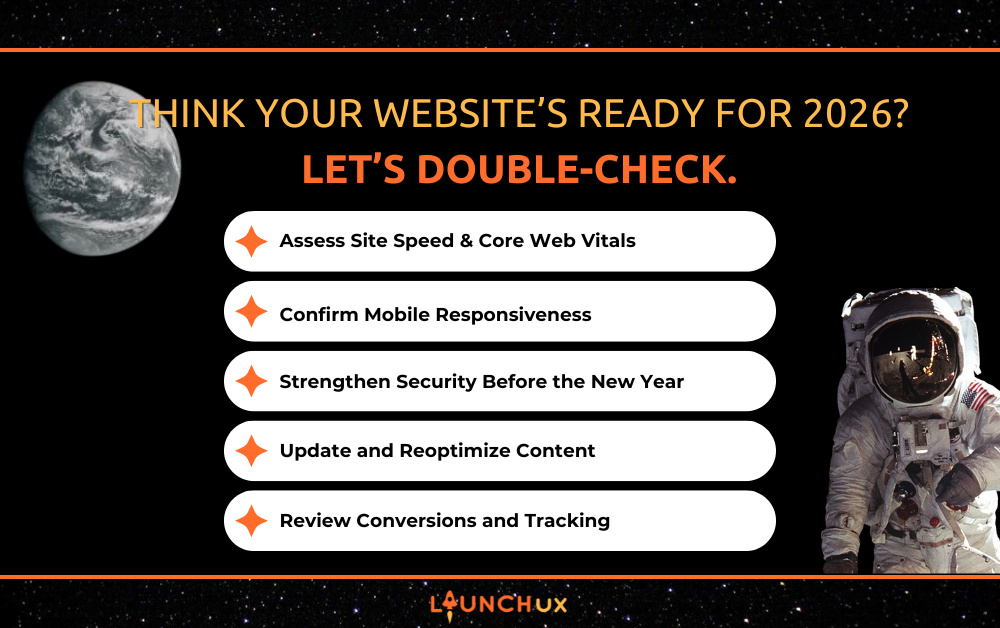
Think Your Website’s Ready for 2026? Let’s Double-Check.

A new year isn’t just a fresh start for your goals, it’s a checkpoint for your digital presence. Many businesses review budgets, renew software, and launch new campaigns before January 1, but overlook the most important foundation of all: their website.

Your website is your digital storefront. It’s how customers find you, learn about you, and decide if they trust you enough to buy or reach out. If it’s slow, outdated, or unsecure, it can quietly undermine everything else you’ve built.

That’s where website readiness for 2026 comes in. It’s not just about fixing what’s broken; it’s about optimizing performance, tightening security, and preparing for the next wave of online expectations. This guide will walk you through everything your business website should review before the new year and how LaunchUX can help make sure you’re ready for what’s next.

Why Website Readiness Matters Before 2026 Begins

The Digital First Impression Test

In 2026, your website will matter more than ever. A visitor’s first interaction with your business usually happens online, often within seconds of a Google search. If your homepage takes too long to load or your navigation is confusing, users move on.

Consumers don’t just expect functional sites; they expect fast, seamless, and visually consistent experiences across every device. Preparing for 2026 means ensuring your site performs flawlessly, looks professional, and communicates trust from the moment it loads.

The Cost of Complacency

The phrase “if it isn’t broken, don’t fix it” doesn’t apply to the web. Even if your site looks fine on the surface, hidden issues — outdated plugins, expired SSL certificates, or slow servers — can cause big problems later.

These silent failures often surface at the worst possible time: during busy sales periods, ad campaigns, or product launches. Proactive maintenance today prevents costly downtime tomorrow.

Search engines evolve constantly. User expectations shift. Security standards tighten. By focusing on website readiness 2026, your business gets ahead of these changes instead of scrambling to adapt mid-year.

Early preparation ensures your site continues to rank well, convert visitors, and handle technical updates smoothly.

The Ultimate Website Readiness 2026 Checklist

1. Assess Site Speed & Core Web Vitals

Your website’s speed affects everything – SEO, user experience, and conversions. Studies show that even a one-second delay in load time can reduce conversions by 7%.

Run diagnostics using tools like Google PageSpeed Insights. Optimize large images, remove unused scripts, and enable caching. For consistent performance, consider switching to managed hosting through LaunchUX, where your site is monitored, optimized, and supported for peak speed year-round.

2. Confirm Mobile & Cross-Browser Responsiveness

More than half of online traffic now comes from mobile devices. Google uses mobile versions of websites for ranking, which means mobile readiness isn’t optional.

Test your site on multiple devices and browsers to ensure menus, forms, and content display correctly. A strong, responsive design not only improves usability but also enhances trust. LaunchUX’s design team can help ensure your website looks and functions perfectly on every screen.

3. Strengthen Security Before the New Year

The holidays are prime time for cyberattacks. E-commerce sites, in particular, face higher risks from DDoS attacks and data theft attempts.

Check that your SSL certificate is active, all plugins and themes are updated, and security patches are current. Outdated software is one of the easiest ways hackers gain access. LaunchUX provides proactive monitoring and maintenance to keep your site secure, patched, and protected through every season.

4. Update and Reoptimize Content

Your website content should evolve with your business. Outdated blog posts, expired promotions, and missing CTAs send the wrong message.

Audit your top pages to make sure they align with your brand’s 2026 direction. Update meta titles, descriptions, and internal links. Add fresh, keyword-rich blog posts to boost organic visibility.

LaunchUX can assist with SEO content refreshes to help your site stay relevant and competitive in search results.

5. Review Conversions and Tracking

A sleek design means nothing if conversions aren’t tracking correctly. Test every form, pop-up, and call-to-action. Make sure contact submissions route to the right inbox and that e-commerce checkout flows are friction-free.

Verify your GA4 setup and ensure all conversion events are firing properly. Understanding which channels performed best in 2025 gives you a roadmap for smarter ad spending and campaign focus in 2026.

6. Audit for Accessibility & Usability

Accessibility isn’t just a legal requirement, it’s a mark of professionalism. Make sure your website meets WCAG 2.1 standards, including readable fonts, sufficient color contrast, alt text for images, and keyboard-friendly navigation.

Accessible design improves usability for everyone, enhancing both engagement and SEO. LaunchUX helps clients ensure their websites are inclusive and compliant, opening their business to every visitor.

7. Evaluate SEO & Indexing Health

Your content can’t perform if search engines can’t find it. Use Google Search Console to check for crawl errors, broken links, or missing pages. Make sure your XML sitemap is updated and submitted.

Review your internal linking strategy to help users — and search engines — navigate key pages easily. LaunchUX’s SEO team can perform a website readiness audit to uncover hidden issues and position your site for 2026’s algorithm updates.

How LaunchUX Helps You Prepare for 2026

Full Website Readiness Audits

LaunchUX offers in-depth audits that go beyond basic checklists. From speed and security to SEO and usability, our team provides a complete overview of your site’s health — plus an actionable plan to fix weak points.

Managed Hosting & Maintenance

Website readiness isn’t a one-time project. It’s ongoing protection and performance improvement. LaunchUX provides managed hosting with active monitoring, daily backups, and continuous optimization. When traffic spikes or technology shifts, your site stays stable and secure.

Strategic SEO & Content Planning for 2026

Our team helps you plan for the future, not just the next algorithm. Through keyword research, content calendars, and technical optimization, LaunchUX positions your brand for long-term growth.

Whether you’re preparing for a rebrand, an expansion, or simply want to improve your online visibility, we’ll ensure your digital foundation is strong.

Make Website Readiness Your First Win of 2026

Your website is more than a marketing tool — it’s the heartbeat of your business online. Entering the new year with an outdated, untested, or insecure site can limit growth before the year even begins.

By prioritizing website readiness 2026, you’re not just fixing problems — you’re building resilience, credibility, and a better user experience.

At LaunchUX, we help businesses prepare their websites for what’s ahead, from technical performance and hosting to SEO and design.

Start 2026 strong. Schedule your year-end website readiness audit with LaunchUX today.

Personalization Strategies to Improve Your Brand Loyalty

Today, cultivating brand loyalty is more important than ever. LaunchUX has worked with numerous companies to implement strategies that make customers feel seen, understood, and valued. Personalization is a key approach to achieving this goal by allowing brands to tailor experiences to individual customer preferences and behaviors. When customers encounter a brand that anticipates their needs, they form a stronger emotional connection. This bond not only encourages repeat purchases but also turns customers into advocates. Understanding and implementing personalization strategies can transform casual buyers into devoted, long-term supporters of your brand.

Personalized Recommendations

Anticipating Customer Needs

Recommending products or services according to a customer’s previous behavior is a powerful way to foster brand loyalty. By analyzing purchase history and browsing habits, brands can present recommendations that feel relevant and intuitive. This personalized approach makes the shopping experience smoother, reducing the effort customers must expend to find what they want. When customers see that a brand anticipates their interests, it signals that the company understands them personally. Over time, this builds trust and strengthens their emotional attachment to the brand. Well-implemented recommendations can drive higher conversion rates while reinforcing loyalty.

Enhancing the Shopping Experience

Tailored recommendations improve not only purchase likelihood but also the overall customer experience. When suggestions match interests, customers feel understood and engaged. A seamless, personalized experience encourages exploration of products the customer might not have found on their own. This added value contributes to a sense of satisfaction and appreciation for the brand. The more enjoyable and efficient the experience, the more likely customers are to return. Personalized recommendations are a subtle yet impactful way to enhance brand loyalty through user-centered design.

Reinforcing Connection and Trust

Each interaction with personalized recommendations reinforces the connection between brand and customer. Customers begin to rely on the brand’s understanding of their preferences, which fosters trust and satisfaction. This trust strengthens long-term loyalty, as buyers are more likely to return to a brand that consistently meets their expectations. The cumulative effect of these recommendations builds a reputation for attentiveness and reliability. By consistently delivering relevant suggestions, brands nurture meaningful relationships that drive repeat engagement. In essence, recommendations become a tool for both utility and emotional connection.

Customized Offers and Promotions

Showing Individual Appreciation

Providing personalized discounts, deals, or loyalty rewards communicates that the brand values each customer individually. Exclusive offers targeted to specific segments make customers feel seen and recognized. This personalized attention fosters a sense of belonging, reinforcing the emotional bonds that support brand loyalty. Consumers are more inclined to engage when promotions feel tailored rather than generic. Over time, these small gestures accumulate, creating a lasting impression of care and attentiveness. Customized offers demonstrate that the brand invests in nurturing its relationships.

Encouraging Repeat Engagement

Tailored promotions actively encourage repeat interaction with the brand. Customers who receive relevant deals are more likely to return, increasing purchase frequency. The perception that the brand understands their preferences also drives higher engagement with other marketing initiatives. When customers feel rewarded for their loyalty, they are more motivated to continue choosing that brand over competitors. Each personalized promotion reinforces positive behavior and strengthens emotional attachment. This strategy turns transactional interactions into ongoing loyalty-building experiences.

Reinforcing Emotional Connection

Beyond driving sales, personalized promotions deepen the emotional relationship between brand and customer. By recognizing individual preferences, brands show that they value the customer beyond a single transaction. This validation strengthens trust and encourages ongoing commitment. Emotional engagement is a core driver of brand loyalty, and personalized promotions are an effective tool to achieve it. Customers come to associate positive experiences with the brand, making them more committed than to competing options. In this way, offers and promotions function as both incentives and relationship-builders.

Tailored Content and Messaging

Relevance Builds Engagement

Delivering content that aligns with a customer’s interests, location, or stage in the buyer journey improves engagement and drives brand loyalty. Personalized emails, newsletters, and website experiences create relevance that generic messaging cannot achieve. Customers are more likely to read, interact, and respond when content speaks directly to them. Tailored messaging demonstrates attentiveness and makes the brand feel more approachable. This relevance strengthens trust and fosters repeat engagement. Effective content personalization can transform routine communication into meaningful brand interactions.

Maintaining Consistency

Consistency in personalized messaging is critical for reinforcing brand loyalty. Customers who experience predictable, relevant communication develop a sense of reliability and trust. Each touchpoint becomes an opportunity to deepen understanding and meet expectations. By maintaining a consistent voice and personalization strategy, brands ensure their message resonates across channels. Customers begin to anticipate and rely on the brand for relevant content. Over time, this consistency reinforces recognition and strengthens loyalty.

Enhancing Emotional Connection

Tailored content also strengthens the emotional bond between customer and brand. Personalized messaging communicates that the brand understands and values the customer as an individual. This emotional connection encourages long-term engagement and repeat purchases. Brands that invest in relevant, well-crafted content create memorable experiences. Each interaction reinforces trust and builds a more profound attachment. Ultimately, personalized messaging converts everyday communication into a loyalty-building tool.

Responsive Customer Support

Addressing Individual Concerns

Personalized customer support is essential for building brand loyalty. By tracking past interactions and preferences, support teams can provide faster, more precise solutions. Customers appreciate proactive responses that show the brand knows their history and needs. This individualized attention enhances satisfaction and reduces frustration. Personalized support transforms routine problem-solving into a relationship-strengthening experience. Over time, customers develop trust and confidence in the brand’s ability to care for them.

Enhancing the Customer Experience

Responsive, personalized support improves the overall experience and encourages repeat engagement. Customers feel valued when their concerns are handled efficiently and thoughtfully. This attention to detail increases the likelihood of positive reviews and referrals. By prioritizing personalized assistance, brands can turn potentially harmful experiences into loyalty-building opportunities. EAdequatesupport not only resolves problems but also strengthens emotional connections. The result is a more resilient and loyal customer base.

Building Long-Term Loyalty

Positive interactions with responsive, personalized support directly contribute to long-term brand loyalty. Customers who feel heard and supported are more likely to continue engaging with the brand. Consistently excellent support creates a reputation for reliability and trustworthiness. This credibility reinforces emotional attachment and encourages repeat purchases. Over time, personalized support becomes a cornerstone of the brand’s loyalty strategy. Strong support systems convert satisfaction into advocacy and ongoing engagement.

Loyalty Programs Based on Individual Behavior

Rewarding Meaningful Actions

Designing loyalty programs that respond to specific customer behaviors strengthens brand loyalty. Points, perks, or special access based on purchase history or engagement show that the brand recognizes individual contributions. Customers feel appreciated when rewards reflect their unique patterns and preferences. This thoughtful approach encourages continued participation and reinforces positive behavior. Over time, behavior-based loyalty programs foster deeper engagement. They transform routine interactions into meaningful, loyalty-building experiences.

Encouraging Repeat Engagement

Personalized loyalty programs motivate customers to return more frequently. By tailoring incentives to individual activity, brands make repeat purchases more appealing. Customers maintain interest when rewards feel relevant and attainable. This approach strengthens both transactional and emotional loyalty. Each interaction reinforces the customer’s connection to the brand. Behavior-based loyalty programs convert routine purchases into opportunities to deepen trust and commitment.

Deepening Emotional Connection

Rewarding individual behavior also strengthens the emotional bond between brand and customer. When customers feel recognized for their unique contributions, they develop a sense of belonging. This validation encourages ongoing engagement and repeat business. Personalized loyalty programs create memorable experiences that extend beyond standard rewards. Over time, these programs become a key factor in sustaining brand loyalty. By combining incentives with personalization, brands cultivate long-term relationships.

Conclusion

Personalization is a critical driver of brand loyalty, guiding new customers toward repeat purchases and enthusiastic endorsements. Strategies such as personalized recommendations, tailored promotions, customized content, responsive support, and behavior-based loyalty programs all contribute to a stronger connection between brand and customer. LaunchUX helps companies design and implement these strategies effectively, ensuring that personalization creates measurable loyalty outcomes. By making each customer feel seen, valued, and understood, brands foster trust, satisfaction, and lasting engagement. Investing in personalization is not just a marketing tactic—it is a long-term strategy for building enduring brand loyalty.

Contact LaunchUX today to implement personalized strategies that reinforce brand allegiance and promote enduring bonds with clients

How Low Search Rankings Drive Sales to Your Competition

Most people never scroll past the first page of Google. If your business isn’t showing up there, your competitors are getting the clicks that could have been yours. Website Search Rankings aren’t just about visibility; they directly affect your bottom line. In this blog, we’ll break down how low Website Search Rankings drive customers—and sales—straight to your competition, and what you can do about it.

What Search Rankings Really Mean

Defining Website Search Rankings

Website Search Rankings are your site’s position in search engine results for specific keywords. When someone searches for a service or product you offer, where you rank decides whether they find you or your competitor. If you appear on the first page, your chances of being noticed go up dramatically. But if your site is buried on page two or beyond, most people will never see it. In practice, that means your site isn’t working for you. Rankings are like digital storefronts; if you’re not visible, you might as well be closed.

Why Rankings Matter to Behavior

Website Search Rankings directly shape how customers behave online. Research shows that the top three results on Google attract the majority of clicks. That means if your business is sitting lower, you’re only getting scraps of traffic. Customers rarely take the time to dig through multiple pages of results. They want quick, trusted answers and will click what they see first. Your competitors with higher rankings are getting the attention you should be capturing. This behavior proves that search rankings aren’t just a vanity metric—they’re a real driver of business success.

The Business Impact of Placement

Being on page one is a requirement for most businesses today. If your Website Search Rankings are low, you’re essentially invisible to customers who need your services. Placement impacts more than traffic; it influences trust and brand perception. When people see you at the top, they assume you’re credible and reliable. When they don’t see you at all, they assume you don’t exist or aren’t relevant. Low rankings don’t just limit visibility—they limit your potential for growth. This is why placement is one of the most important factors for long-term success.

Why Low Search Rankings Push Customers Toward Competitors

Customer Trust in Higher Rankings

Customers naturally trust businesses that rank higher. A top spot in Website Search Rankings signals authority and credibility. Even if your business offers a better service, people are more likely to trust what they see first. Think of it as social proof delivered by search engines. Rankings give customers the confidence that they’re making the right choice. Low rankings, on the other hand, make your business easy to overlook. This simple trust factor is why competitors with better rankings often win business you could have earned.

Competitors Gain by Default

When your site is buried, competitors don’t just benefit—they dominate. Customers searching for services rarely compare dozens of options. They click the top results and often stick with what they find. That means your competitors with higher Website Search Rankings are gaining leads, sales, and loyal customers without extra effort. You’re not just losing visibility—you’re handing your competition opportunities on a silver platter. The default winner is whoever appears first, regardless of quality. If you’re not visible, you’re invisible, and that’s how competitors win.

Perception of Value

High Website Search Rankings create the impression of value and quality. Customers often believe that Google’s ranking reflects who is the best in the market. If you’re not near the top, it creates doubt about your reliability. People assume your competitors are more experienced or more trustworthy. Even if that perception is false, it still drives sales away from you. Perception is powerful in business, and rankings shape it every day. Ignoring this reality only ensures your competitors continue to look stronger.

The Real-World Impact of Lost Visibility

Missed Opportunities in Everyday Searches

Every search is a chance to win a new customer. Low Website Search Rankings mean those chances slip away. Think about the number of people searching for your service daily. If your site isn’t showing up, you’re missing phone calls, emails, and foot traffic. Local businesses, in particular, feel this loss. Restaurants, law firms, and contractors all depend heavily on online visibility. Each missed search is a missed opportunity, and those add up quickly over time.

Competitors Reap the Rewards

Your lost traffic doesn’t just disappear—it goes to your competitors. When customers can’t find you, they find someone else. That someone else is usually a competitor with higher Website Search Rankings. Over weeks and months, those missed clicks become new customers for your rivals. It’s not just a matter of being ignored; it’s a matter of fueling another business’s growth. Every time you lose a search, they gain ground. The math is simple, and it always works against you when your rankings are low.

Long-Term Market Share Loss

Low Website Search Rankings don’t just hurt today—they hurt tomorrow. Over time, competitors with better rankings build stronger customer bases. Customers who find and trust them are less likely to switch later. That means your market share slowly shrinks while theirs grows. Even if you improve rankings later, winning those customers back is tough. They’ve already built loyalty somewhere else. This long-term erosion makes ignoring rankings one of the costliest mistakes a business can make.

What You Can Do to Climb the Rankings

Focus on SEO Basics

Improving Website Search Rankings starts with fundamentals. Use keywords that match what your customers are actually searching for. Write high-quality content that answers their questions and solves their problems. Make sure your site loads quickly and is mobile-friendly. These basics create a strong foundation for higher rankings. Without them, your SEO strategy won’t stick. Think of it like building a house—you can’t add floors if the foundation is weak.

Search engines look for signals of trust. One of the strongest signals is backlinks from credible sites. These links show that others trust your business and your content. The more quality backlinks you earn, the higher your Website Search Rankings can climb. Building authority takes time, but the payoff is worth it. Backlinks are like votes of confidence that separate you from competitors. If you want long-term ranking power, authority building is key.

Optimize for Mobile and Local

Most searches now happen on mobile devices, and local intent is higher than ever. If your site isn’t mobile-friendly, you’re losing half your audience. Mobile optimization ensures customers can use your site easily on their phones. Local SEO, like optimizing your Google Business Profile, makes you visible in neighborhood searches. Together, these efforts push your Website Search Rankings higher and put you in front of customers who are ready to buy. Ignoring mobile and local is no longer an option—it’s essential.

Consistency is Key

Climbing search rankings doesn’t happen overnight. It requires consistent effort, testing, and refining. Regularly monitor your Website Search Rankings to see what’s working and what isn’t. Keep publishing new content, updating old pages, and earning backlinks. Over time, these efforts stack up and produce measurable results. The businesses that stay consistent are the ones that win in the long run. Consistency is the secret ingredient for sustainable growth.

Conclusion

Low Website Search Rankings don’t just hurt your visibility—they help your competitors thrive. Every day you don’t prioritize search optimization, you’re losing leads, credibility, and sales to businesses who do. The takeaway is clear: investing in improving your Website Search Rankings isn’t just about climbing Google; it’s about keeping customers and revenue in your corner. Don’t let competitors win by default—start focusing on your rankings today and take back control of your online presence.

At LaunchUX, we specialize in helping businesses improve their Website Search Rankings through smart SEO strategies, technical improvements, and content development. Our team can help you climb higher, attract more customers, and stop losing ground to the competition.