
rocketfuel, Author at LaunchUX - Page 7 of 28

Author: rocketfuel

Understanding Visual Identity: Building a Cohesive Brand Presence

A strong visual identity is essential for brands seeking recognition and connection with their audience. LaunchUX has long emphasized the importance of consistent and thoughtful visual presentation, helping businesses craft identities that resonate. Visual identity encompasses every visual element a brand uses to communicate its personality, values, and story. From logos and color palettes to typography and imagery, each component contributes to a cohesive perception of the brand. A well-executed visual identity creates a memorable impression and ensures the brand stands out in its industry. Understanding how visual identity works and why it matters can transform the way a brand engages with customers.

Definition and Purpose

What Visual Identity Encompasses

Visual identity integrates various design elements to convey a brand’s personality, which represents the brand to the public. It includes logos, typography, color schemes, patterns, and imagery across digital and physical touchpoints. Each element is chosen to reflect the brand’s unique personality and create an immediate, recognizable impression. Maintaining cohesion across all visual components strengthens the brand’s credibility and communicates professionalism. Every touchpoint, from social media to packaging, should align with the established visual language. Cohesive visual elements help build recognition and foster audience trust over time.

Communicating Brand Personality

The purpose of visual identity is to articulate a brand’s essence to its audience visually. It acts as a silent messenger of values, tone, and positioning, translating abstract ideas into tangible design language. Whether the brand is playful, sophisticated, bold, or minimalist, visual identity communicates these qualities instantly. Thoughtful design evokes the intended emotional and cognitive response in the audience, reinforcing the brand’s personality. When executed correctly, visual identity provides clarity and consistency in every interaction. Audiences begin to associate specific visual cues with the brand, enhancing recognition and loyalty.

Building Recognition and Loyalty

A strong visual identity fosters recognition and loyalty by presenting a unified, memorable image. Repeated exposure to cohesive visual elements across platforms reinforces trust and encourages engagement. Customers develop a sense of familiarity when interacting with consistent branding, which enhances emotional connection. Over time, these repeated experiences strengthen brand recall and influence purchasing decisions. A carefully curated visual identity ensures that audiences perceive the brand as reliable and professional. By maintaining consistency, brands create lasting impressions that encourage long-term loyalty.

Consistency Across Platforms

Maintaining Cohesion Across Touchpoints

Consistency in visual identity ensures that the brand appears unified across all media, from websites and social media to print and packaging. A cohesive presentation reduces confusion and communicates professionalism. When design elements are applied consistently, audiences can recognize the brand instantly, regardless of the context. This familiarity fosters a sense of reliability that enhances the audience’s overall perception of the brand. Consistent visuals also strengthen brand messaging and help reinforce its personality. Cohesion across touchpoints is a critical component of long-term brand success.

Enhancing Brand Perception

A consistent visual identity elevates the perception of a brand by communicating attention to detail and intentionality. Well-aligned visuals demonstrate competence and professionalism to potential customers. Customers develop trust more quickly with a brand that presents itself consistently across multiple channels. This trust translates into loyalty, repeat engagement, and positive word-of-mouth referrals. Thoughtful use of visual identity also differentiates a brand from competitors in subtle but powerful ways. Over time, consistent branding becomes an invisible ambassador for the business, strengthening recognition and credibility.

Supporting Long-Term Recognition

A strong, consistent visual identity plays a key role in long-term brand recognition. Repeated exposure to unified visual elements helps audiences recall the brand easily, even in crowded markets. Familiarity encourages emotional attachment and fosters ongoing engagement with products or services. Cohesive branding also allows the company to evolve while maintaining recognition, providing flexibility without losing identity. Long-term recognition is built through careful attention to visual consistency across all touchpoints. By investing in strong brand cohesion, companies create lasting impressions that drive loyalty and trust.

Emotional and Psychological Impact

Evoking the Right Emotions

Colors, fonts, and imagery are more than decorative—they shape audience perception and emotion. Visual identity leverages these elements to evoke feelings that align with the brand’s core values. Bold colors may convey energy and innovation, while muted tones can communicate sophistication and reliability. Typography and imagery choices reinforce these perceptions, creating an immediate emotional response. By carefully curating design elements, brands guide audience impressions before any interaction occurs. Effective visual identity connects audiences to the brand emotionally, enhancing engagement and loyalty.

Influencing Perception and Decision-Making

The psychology behind visual identity influences how consumers evaluate a brand and make decisions. Audiences often form opinions about professionalism, quality, and trustworthiness based on visual cues alone. Thoughtful design ensures that every visual element communicates the desired brand message. Strong visual identity not only supports recognition but also affects perception of value and reliability. Consistent and intentional visuals guide the audience toward trust and positive associations. This influence is crucial in competitive markets where first impressions are often visual.

Creating Lasting Connections

A well-crafted your identity fosters long-term connections between a brand and its audience. Memorable design elements and consistent visual language build familiarity and trust over time. When customers can recognize and relate to a brand visually, loyalty naturally follows. Emotional engagement strengthens as audiences begin to associate specific visuals with positive experiences. Consistency and strategic design ensure these connections remain strong across channels and over time. Visual identity becomes a bridge between aesthetics, functionality, and emotional resonance.

Differentiation from Competitors

Standing Out in a Crowded Market

A unique visual identity enables a brand to gain visibility among numerous market players. Distinctive logos, color palettes, and typography communicate the brand’s individuality. Differentiation is critical for brands seeking to be memorable and influential in their sector. Strong visual brand identity signals uniqueness and helps audiences identify the brand quickly. By leveraging distinctive design, companies can attract attention and leave lasting impressions. Creating separation from competitors builds recognition and enhances perceived value.

Communicating Unique Value

Visual identity communicates what makes a brand special beyond its products or services. Striking imagery, cohesive typography, and intentional design convey a clear sense of brand purpose. These elements highlight the brand’s personality and core offerings in a way words alone cannot. A thoughtfully executed visual identity ensures audiences immediately understand the brand’s unique value. Distinctive visuals also reinforce messaging, making the brand more memorable. Consistent presentation across all channels amplifies this effect and strengthens the brand’s position in the market.

Reinforcing Brand Recall

Distinctive visual identity elements improve brand recall by creating strong visual cues in the audience’s mind. Recognizable colors, patterns, and imagery make it easy for the brand to stay memorable and recognizable to clients. Strong recall drives repeat engagement and influences decision-making positively. Over time, the audience develops a sense of familiarity, reinforcing loyalty and preference. Memorable visual identity supports competitive advantage by keeping the brand top-of-mind. Effective branding ensures audiences retain a lasting impression long after their first interaction.

Guidelines and Brand Standards

Defining Usage Rules

Effective visual identity relies on clear brand guidelines that define proper use of visual elements. These standards cover logo placement, color codes, font usage, and imagery style to ensure consistency. Guidelines prevent misrepresentation and maintain the integrity of the brand across channels. By clearly outlining how elements should be used, brands create predictable and professional visual experiences. Employees and partners can follow the rules easily, maintaining the brand’s presentation. Clear usage rules make it easier to scale visual identity as the brand grows.

Ensuring Consistency

Brand standards guarantee that visual identity remains consistent across every touchpoint, from marketing campaigns to product packaging. Consistency builds trust, reinforces recognition, and improves overall brand perception. Following guidelines ensures that design elements always align with the intended visual strategy. Even as brands adapt to new trends or platforms, core elements remain consistent. This cohesion strengthens recognition and helps audiences develop a sense of familiarity. Adhering to brand standards ensures every interaction communicates the brand’s identity accurately.

Supporting Growth and Adaptation

Well-defined guidelines allow a visual identity to evolve while preserving its core essence. Brands can adapt to new markets, audiences, or technologies without losing recognition. Maintaining a balance between consistency and flexibility ensures the identity remains relevant over time. Clear standards make it easier to introduce new elements or refresh existing ones strategically. Audiences continue to recognize the brand even as it evolves visually. This adaptability supports long-term growth while protecting brand integrity.

Conclusion

A strong visual identity is the cornerstone of effective branding, connecting audiences with a brand’s personality, values, and story. From definition and purpose to consistency, emotional impact, differentiation, and standards, every aspect of your brand identity contributes to recognition, trust, and long-term success. LaunchUX helps businesses create and maintain visual identities that resonate with audiences and support differentiation in competitive markets. By investing in a cohesive, memorable visual identity, brands communicate effectively, foster loyalty, and leave lasting impressions. Thoughtful design ensures that every touchpoint reinforces the brand’s personality and builds meaningful connections with audiences.

Contact LaunchUX today to develop a visual identity that elevates your brand and ensures a consistent, engaging presence across all platforms.
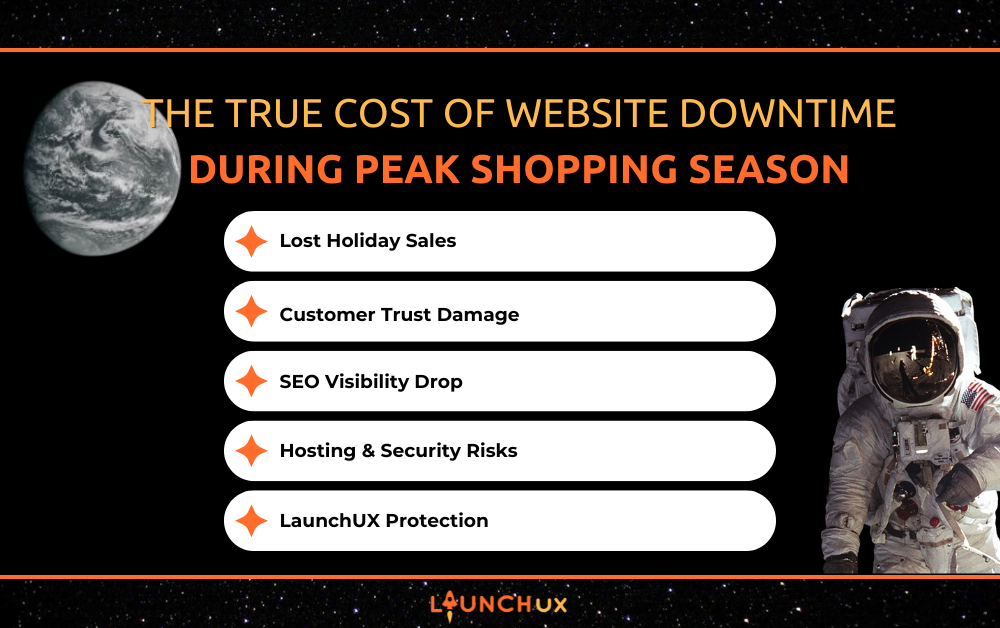
The True Cost of Website Downtime During Peak Shopping Season

Imagine this: it’s Black Friday. Your e-commerce store is buzzing with visitors, carts are filling up, and then suddenly the site goes down. In just a few minutes, potential customers scatter, sales vanish, and frustrated shoppers head straight to your competitors. This isn’t a rare nightmare. During the peak shopping season of November and December, website downtime can be devastating. It’s more than an inconvenience; it’s lost revenue, damaged reputation, and missed opportunities to turn seasonal shoppers into lifelong customers.

The good news? With the right preparation and support, you can avoid this costly pitfall. Let’s break down the true cost of website downtime during the holiday shopping season—and how LaunchUX can keep your business running smoothly.

Why Downtime During Peak Season Hurts More

The Holiday Traffic Surge

The November–December window brings more online shoppers than any other time of year. In fact, by the end of Cyber Monday 2024, consumers had spent $13.3 billion.

This surge isn’t just for big-box retailers. Small and mid-sized e-commerce businesses also see a dramatic spike in website visitors. While this is a golden opportunity for growth, it’s also when websites are most likely to buckle under pressure.

Lost Sales in Real Numbers

Downtime isn’t measured in hours anymore—it’s measured in dollars per second. For large retailers, downtime during Black Friday can mean hundreds of thousands of dollars lost in a single hour. Even smaller e-commerce shops can lose thousands, wiping out profit margins that took all year to build.

Customer Frustration & Abandonment

Shoppers today have options. If your site doesn’t load, they’ll leave within seconds. Worse, most of them won’t return. Research shows that 79% of customers who experience poor website performance won’t give a site a second chance. That means downtime during the holidays doesn’t just cost you one sale—it can cost you an entire lifetime customer.

The Hidden Costs Beyond Lost Revenue

Brand Reputation

Website downtime during peak shopping season doesn’t just stop sales—it creates negative publicity. Frustrated customers are quick to post screenshots, complaints, or negative reviews online. In the digital age, brand trust can erode faster than it’s built.

SEO Penalties

Search engines track site reliability. Frequent downtime or slow response times can hurt your rankings. If your store crashes during peak season, you might also take a hit in organic search visibility—making it harder for future customers to find you.

Customer Lifetime Value (CLV) Impact

A holiday shopper isn’t just a one-time buyer—they could become a repeat customer for years. Downtime interrupts this cycle. Losing even a handful of these potential long-term buyers has ripple effects far beyond November and December.

Common Causes of Peak Season Downtime

Hosting Limitations

Many e-commerce businesses rely on shared hosting, which is cost-effective but risky. When traffic surges, shared servers often slow down or crash. Without scalable hosting, your store could go offline at the worst possible moment.

Poor Site Maintenance

Outdated plugins, neglected updates, and unoptimized code can all contribute to instability. During normal traffic, you may not notice. But under holiday strain, these issues often lead to crashes.

Cyber Attacks & Security Issues

Hackers know that November and December are prime time for targeting online retailers. DDoS attacks, brute-force attempts, and payment fraud spike during this period. Without strong security, downtime may not be accidental—it could be the result of a successful cyber attack.

How LaunchUX Prevents & Fixes Downtime

Scalable Hosting Solutions

At LaunchUX, we provide hosting that scales with your business. Whether your holiday traffic doubles, triples, or explodes tenfold, our managed hosting ensures your site stays live and responsive. Faster load times mean happier customers and more completed checkouts.

Proactive Monitoring & Maintenance

We don’t just wait for things to break. Our team monitors site uptime 24/7, performing updates and patches before they become problems. During the holiday rush, this proactive approach keeps your business running smoothly.

Rapid Emergency Response

Even the best-prepared sites can encounter unexpected downtime. When that happens, LaunchUX jumps in fast. Our emergency response ensures minimal disruption, restoring your site and protecting your revenue when every second counts.

Illustrative Scenario

Imagine a mid-sized online retailer—we’ll call them “ShopSmart Apparel.” During a Black Friday rush, their website went down for just 15 minutes. In that short time, they “lost” nearly $20,000 in potential sales. Shoppers voiced frustration on social media, and several abandoned carts never converted.

Now, this is only a made-up example, but it illustrates the real risks many e-commerce businesses face during peak shopping seasons. If a company like “ShopSmart Apparel” were to partner with LaunchUX, we could migrate to managed hosting, implement proactive monitoring, and prepare with a responsive emergency plan. The result? A stress-free shopping season and the ability to capture more revenue instead of losing it.

Don’t Let Downtime Steal Your Holidays

Website downtime during the holidays costs more than money. It damages your brand, hurts your SEO, and pushes customers into your competitors’ arms.

The good news? You don’t have to face it alone. With scalable hosting, proactive monitoring, and rapid response, LaunchUX ensures your store stays open when shoppers are ready to buy.

Talk to LaunchUX today about hosting and maintenance packages that keep your store live, secure, and profitable this holiday season.

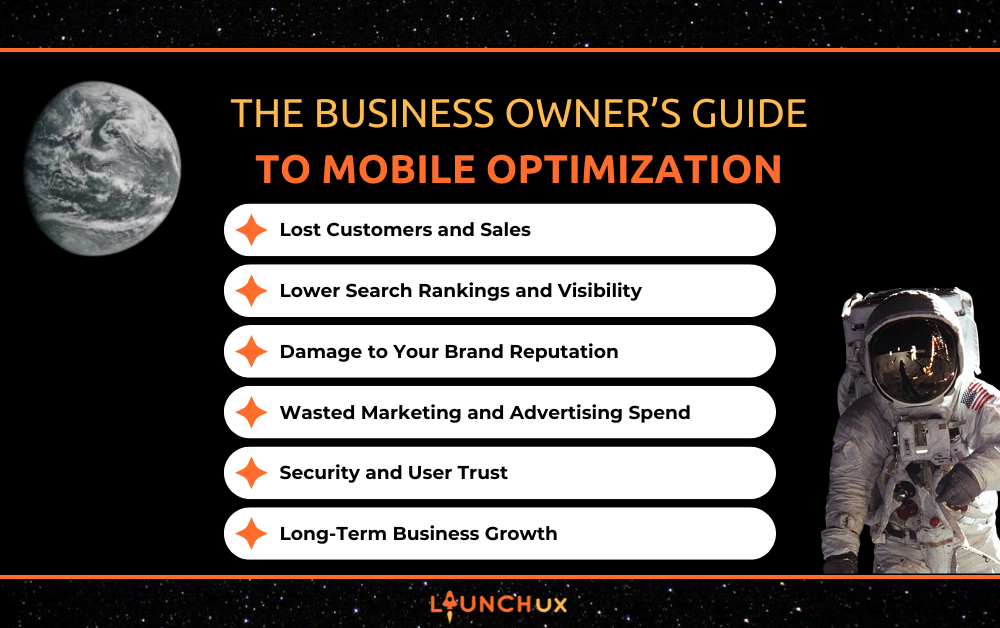
The Business Owner’s Guide to Mobile Optimization

Let’s be real—mobile optimization isn’t a “nice to have” anymore, it’s a must. These days, most people are pulling out their phones to check out businesses, shop, and make decisions on the go. If your site isn’t built for mobile, you’re losing money and customers, plain and simple. A clunky mobile site can wreck the user experience and drag down your search rankings. Here’s the real cost of ignoring mobile optimization and why it’s time to step up.

Lost Customers and Sales

Why Bad Mobile Experiences Chase People Off

Picture this: a customer clicks your site from their phone, and it takes forever to load. When it finally does, the text is tiny, the buttons are too small, and the whole thing feels like a mess. What do they do? They back out and head straight to a competitor’s site. Without mobile optimization, you’re practically telling people to go somewhere else. The end result? Higher bounce rates and a lot of lost opportunities.

Conversions Drop Without Mobile Optimization

Sales don’t just happen—they happen when it’s easy. If your forms don’t fit the screen, or your checkout is clunky, people walk away. Even a one-second delay in load time can tank conversions. Ignoring mobile optimization means you’re leaving cash on the table. A mobile-friendly site smooths out the customer’s journey, keeps them engaged, and helps you close the deal.

Lower Search Rankings and Visibility

Google’s Mobile-First Approach

Google has made it clear: if your site doesn’t work well on mobile, you’re in trouble. With mobile-first indexing, Google looks at the mobile version of your site first when deciding where you land in search results. If your mobile site is outdated or awkward to use, your rankings will take a hit—even on desktop searches. Mobile optimization is the difference between being found and being invisible.

Less Traffic Means Fewer Leads

When your site isn’t optimized, your competitors’ sites get the spotlight. People search on their phones every day, and if you’re not mobile-friendly, you won’t show up. That means fewer visitors, fewer leads, and fewer chances to grow. Ignoring mobile optimization is like locking the front door of your shop during business hours—you’re just shutting people out.

Damage to Your Brand Reputation

First Impressions Happen on Mobile

Your website is your storefront. If it looks old-school and broken on a phone, people assume your business is behind the times too. Bad navigation, messy layouts, and hard-to-read content make you look unprofessional. On the other hand, mobile optimization gives customers confidence that you’re modern, trustworthy, and ready to serve them.

Handing Customers to the Competition

Let’s face it—if your site doesn’t work, people won’t fight with it. They’ll just go somewhere else. Businesses that invest in mobile optimization win over customers because they deliver a smoother experience. Over time, those competitors build loyalty and take market share that could have been yours. Skipping mobile optimization is basically giving your competition free wins.

Wasted Marketing and Advertising Spend

Ads That Don’t Pay Off

You can spend thousands on Google Ads or Facebook campaigns, but if your mobile site stinks, all that money is wasted. People click, they land on your site, and then they bail because it’s too slow or confusing. Without mobile optimization, your ad budget is going up in smoke. A mobile-ready site makes sure that when you pay for a click, it actually has a shot at converting.

Missing Out During Peak Seasons

Think about the holidays or Black Friday—mobile traffic goes through the roof. If your site can’t handle it, you’re not just losing sales, you’re losing them when they matter most. People won’t wait around for a bad checkout experience. Investing in mobile optimization means you’re ready when the rush hits, instead of watching your competitors cash in while you sit empty-handed.

Security and User Trust

Keeping Customer Data Safe

Customers share sensitive info on mobile—credit cards, addresses, personal details. If your site isn’t locked down with proper security, you’re putting that data at risk. Mobile optimization isn’t just about looks, it’s about making sure your site uses HTTPS, safe payment gateways, and reliable forms. Drop the ball here, and you’ll lose trust fast.

A Reliable Site Builds Confidence

Glitches, broken links, or forms that won’t submit make your business look careless. A smooth mobile experience shows customers you take them seriously. Mobile optimization creates reliability that builds trust and keeps people coming back. When your site works every time, people are more likely to recommend you to others.

Long-Term Business Growth

Staying Ahead of the Pack

Business is competitive, and falling behind on mobile is a quick way to get left in the dust. With mobile optimization, you’re not just keeping up—you’re staying ahead. Optimized sites pull in more leads and keep customers engaged. Over time, that competitive edge adds up to real growth.

Getting Ready for the Future

The digital world keeps evolving—voice search, mobile payments, location-based marketing—it’s all built on mobile. If your site is already optimized, you’re ready to adapt. Businesses that embrace mobile optimization now will be in a much stronger position as new tech trends hit. That’s how you build a future-proof business.

Conclusion

Here’s the bottom line: ignoring mobile optimization costs you money, customers, and credibility. You risk lower search rankings, wasted ad spend, and a reputation hit that’s hard to recover from. But the fix is simple—make your site mobile-friendly and give people the smooth experience they expect. Don’t wait until you’ve lost ground to your competition. Test your site today and make mobile optimization a top priority.

At LaunchUX, we specialize in helping businesses like yours become fully mobile-friendly. From site design to performance improvements, we can give your business the edge it needs online.

Why Social Media Services Matter for Business Growth in 2025

Social media has become the backbone of how businesses connect with their audiences. It is no longer just a place for casual posts or company updates; it is now a competitive space where visibility, trust, and engagement determine success. In this fast-paced environment, relying on ad-hoc or DIY posting is not enough. Businesses in 2025 need professional social media services that combine strategy, analytics, and reputation management. The right approach ensures growth, protects brand image, and positions companies ahead of competitors.

The Changing Role of Social Media in 2025

Algorithm Shifts Favor Professional Strategy

Social media algorithms continue to evolve, prioritizing content that is consistent, engaging, and highly relevant to users. For businesses, this means that random posts or inconsistent activity won’t gain meaningful traction. Professional social media services are essential because they develop strategies aligned with how algorithms reward quality content. This ensures brands remain visible in competitive feeds.

Rising Competition for Audience Attention

Every business is vying for the same attention on platforms like Facebook, Instagram, LinkedIn, and TikTok. As a result, it has become harder for small or mid-sized companies to stand out without professional guidance. Social media services help businesses differentiate themselves through targeted strategies, polished branding, and content that resonates. In a crowded digital world, standing out requires expertise.

Customers Expect Consistency and Quality

Audiences today expect consistent posting and professional-quality content. If a brand is inactive or posts sporadically, it may appear unreliable. Social media services ensure businesses maintain a steady flow of professional, on-brand messaging. This consistency builds trust with followers, increases engagement, and enhances overall reputation.

The Growth Benefits of Social Media Services

Building Brand Awareness and Authority

One of the biggest benefits of social media services is establishing a strong brand presence. Consistent, engaging posts make businesses recognizable to their target audience. By positioning a company as an authority in its industry, social media services help transform followers into long-term supporters. This visibility also builds credibility and trust.

Turning Engagement into Customers

Likes and comments are only valuable if they lead to action. Social media services design campaigns that include calls-to-action, landing pages, and offers that convert engagement into real business opportunities. With the right strategy, social media transforms from a branding tool into a direct driver of sales and client acquisition.

Data-Driven Insights and Measurable ROI

Social media services provide analytics that track performance across every post and campaign. These insights allow businesses to understand what works, what doesn’t, and how to optimize for better results. By relying on data, businesses avoid guesswork and make informed decisions that maximize return on investment. Professional management ensures time and budget are spent wisely.

Expanding Reach Through Paid Campaigns

Organic posting alone rarely delivers the reach businesses need. Social media services incorporate paid campaigns to expand visibility to new audiences. Through precise targeting, these campaigns connect businesses with customers most likely to engage and convert. Combining organic and paid strategies creates a well-rounded growth plan.

The Reputation Power of Social Media Services

Monitoring Mentions and Conversations Online

Reputation can be built or broken based on how businesses respond to what is said about them. Social media services include monitoring tools that track brand mentions, comments, and feedback. By identifying both positive and negative conversations quickly, businesses can stay in control of their image and respond appropriately.

Responding Quickly and Professionally to Feedback

Customers expect timely responses when they reach out on social media. Delayed replies can damage trust, while professional, prompt responses build confidence. Social media services ensure businesses have a consistent, respectful, and brand-appropriate tone when addressing customer inquiries, reviews, or complaints.

Amplifying Positive Reviews and Testimonials

Positive stories and testimonials are powerful forms of marketing. Social media services help businesses highlight and share these authentic experiences. By amplifying satisfied customer voices, businesses strengthen trust with prospective clients. This proactive approach helps balance out any negative comments that may appear.

Preventing Negative Narratives from Spreading

Even small complaints can escalate into larger reputation issues if ignored. Social media services monitor and address concerns before they spiral. This proactive management prevents misinformation from spreading and keeps a company’s reputation strong. Protecting brand image is as important as growing reach.

Long-Term Business Impact

Safeguarding Reputation While Driving Growth

The dual purpose of social media services is both growth and protection. While strategies are designed to attract and engage new audiences, they also safeguard against reputational harm. Businesses that balance these two priorities enjoy steady and sustainable growth.

Building Lasting Customer Loyalty

Reputation management and engagement build loyalty over time. When customers see a brand actively listening and engaging, they are more likely to stick around. Social media services nurture these relationships by keeping communication open and positive. Loyal customers bring repeat business and referrals.

Strengthening Competitive Advantage

Businesses using professional social media services consistently outperform competitors who rely on DIY approaches. With strategy, analytics, and consistent execution, they create stronger customer relationships and better visibility. The result is a competitive edge in a crowded market.

Social media evolves quickly, with new features and platforms emerging regularly. Professional services ensure businesses stay ahead of these changes. By adapting strategies to the latest trends, companies can remain relevant and competitive well into the future.

LaunchUX and Their Social Media Services

The REACH Package Explained

LaunchUX offers social media services through its REACH package, designed for businesses that want measurable growth. This package includes management for two platforms, 10 strategic posts per month, and full ad spend oversight. It provides everything a business needs to grow and manage its reputation online.

Key Features That Set LaunchUX Apart

Unlike generic posting services, LaunchUX combines strategy, analytics, and optimization into every campaign. Their team delivers brand reputation analysis, competitive reviews, and ongoing audits. Each client also has a dedicated account manager with an 8-hour response time. This personalized approach ensures businesses receive top-tier service.

Why Businesses Choose LaunchUX for Social Media Services

Businesses partner with LaunchUX because the company focuses on results, not just posting. By aligning campaigns with business goals, LaunchUX helps turn followers into paying customers. Their social media services are built on transparency, collaboration, and proven success. Clients know they’re getting more than content—they’re getting a growth strategy.

Awards and Recognition as Proof of Excellence

LaunchUX has earned national recognition for excellence, including awards for digital marketing and business growth. These honors reflect the quality of their social media services and overall approach to client success. Their track record positions them as a trusted partner for businesses ready to elevate their online presence.

Conclusion

In 2025, social media services are not optional—they are essential. They drive growth, protect reputations, and give businesses the edge they need to compete. From strategy and analytics to reputation management, professional services ensure results that DIY efforts cannot match. For businesses ready to grow and safeguard their reputation, LaunchUX offers award-winning social media services designed to deliver measurable success.

The Power of Using a Blog Template: Why Structure Matters

At LaunchUX, we understand that publishing content consistently isn’t just about writing—it’s also about presentation. A clean, professional design may be the deciding factor between engaging readers or losing them entirely. That’s where the blog template becomes an essential part of your content strategy. Templates streamline your workflow, maintain brand consistency, and ensure your message is delivered clearly. Whether you’re a solo blogger or managing a whole content team, having a reliable structure makes the entire process more efficient. Let’s explore why blog templates are such a game-changer for modern digital content.

They Provide a Consistent Layout

Structure That Supports Readability

A well-designed blog template gives every post a familiar structure. This typically includes areas for the title, featured image, subheadings, body content, and author bio. When each post follows the same pattern, readers know what to expect and can navigate your content more easily. That consistency builds trust and makes your blog feel cohesive. Instead of guessing where to find information, users are guided smoothly through each article. Clear structure encourages them to stay longer and return more often.

Professional Appearance Across Posts

Using a blog template ensures that even if multiple people contribute to your blog, the visual style remains uniform. Fonts, spacing, image formatting, and color schemes all stay aligned with your brand. This not only improves aesthetic appeal but also reinforces credibility. Visitors associate consistency with professionalism, which increases the likelihood of them engaging further. A unified presentation enhances your site’s overall brand impression. First impressions matter, and a template ensures yours is always strong.

Reduces Design Errors

Manually formatting each post leaves room for mistakes like inconsistent font sizes, awkward spacing, or missing elements. A template prevents these issues by standardizing the layout. This means fewer errors, faster publishing, and better content quality overall. A blog that looks polished from post to post creates a positive user experience. The layout becomes something you no longer have to worry about. That frees you up to focus on creating valuable, engaging content.

They Save Time

Faster Publishing Process

A blog template streamlines the entire content workflow. Instead of building every post from scratch, writers and editors can plug content into a ready-made layout. This dramatically reduces formatting time and eliminates repetitive tasks. It’s beneficial for teams producing content on a tight schedule. When the format is already decided, more energy can be spent on refining the message. The result is faster turnaround and more consistent output.

More Focus on Content Quality

When you’re not distracted by design choices, you can focus more deeply on the content itself. A blog template removes the guesswork from layout and frees your mind to concentrate on storytelling, research, and clarity. Better writing naturally follows when the technical pieces are already in place. This focus on content can significantly improve the value your blog offers to readers. Over time, consistent quality builds authority and audience loyalty. A streamlined process means better posts, faster.

Great for Scaling Content

As your blog grows, so does the demand for efficiency. A template makes scaling your content operations much more manageable. Whether you’re publishing once a week or multiple times a day, templates help maintain quality at any volume. Even as your team expands, everyone can follow the same structure, ensuring consistency. The more scalable your system is, the more sustainable your content efforts become. Blog templates are an essential part of growing without sacrificing quality.

They Help With Branding

Visual Consistency Across Posts

Your blog is an extension of your brand, and visual consistency reinforces that identity. A well-designed blog template integrates your brand colors, typography, and logo into every post layout. This creates a seamless connection between your blog and the rest of your website. Readers begin to associate the look and feel of your posts with your business. That kind of recognition strengthens your brand’s presence online. Over time, visual consistency turns casual visitors into loyal followers.

Reinforcing Brand Voice and Tone

Templates don’t just affect how things look—they also influence how your content feels. A consistent layout can support the tone and rhythm of your brand voice. For example, a formal business blog might use structured subheadings and uniform paragraph lengths. In contrast, a lifestyle blog could use more playful formatting and visual breaks. Whatever your tone, the blog template helps express it consistently. This harmony between form and voice deepens audience connection.

Supporting Visual Branding Elements

Beyond fonts and colors, your blog template can house reusable visual elements like custom dividers, quote blocks, or CTA buttons. These features make your posts feel on-brand without needing to reinvent the wheel each time. You’re not just creating a post—you’re creating a branded experience. These details may seem small, but they add up to a more professional presentation. Over time, even your blog’s visual elements become recognizable. Branding isn’t just what you say—it’s how you show up.

Built to Evolve with Your Content and Audience

Flexible Design Options

No two blogs are precisely alike, and your blog template shouldn’t be one-size-fits-all. Modern templates are designed to be adaptable, letting you tailor layouts to suit your content strategy. You can move sections, swap out widgets, or adjust styling as your needs evolve. This means your blog stays fresh without needing a complete redesign. Flexibility makes templates a long-term solution, not just a temporary fix. Your content may change—but your structure can evolve with it.

Easy Plugin and Tool Integration

Today’s blog templates often come ready to integrate with tools like SEO plugins, social sharing buttons, and comment systems. This allows you to extend functionality without breaking the design. You can optimize posts for search engines, encourage sharing, or track performance—all within the template. It saves time while giving you more power over your content’s reach. A good template doesn’t limit you; it empowers you to grow—the right tools plus the proper layout equal long-term success.

Scalable and Future-Proof

As your blog expands, your needs will change. Templates that can scale with your goals help you avoid future headaches. You might start with a basic layout and eventually add features like category pages, author bios, or embedded videos. A flexible template grows with your brand instead of holding it back. With customization, your blog can reflect your evolution without losing consistency. It’s a wise investment in both your present and your future.

They Help Maintain Visual Hierarchy

Clear Information Flow

A well-structured blog template organizes content in a way that’s easy to follow. Proper use of headers, paragraph spacing, and section dividers guides the reader’s eye naturally through the post. This hierarchy helps users scan quickly and decide what to read. It’s essential for mobile readers who rely on visual flow to stay engaged. When information is organized clearly, it’s more likely to be retained. The layout becomes a silent partner in effective communication.

Emphasis Where It Matters

Templates help highlight key points through bold text, quotes, bullet sections, or images. This visual emphasis ensures readers don’t miss the most important takeaways. When used correctly, hierarchy leads the user from curiosity to clarity without overwhelming them. The reader doesn’t have to work hard to understand your message. These visual cues are subtle but powerful. They make reading effortless and intuitive.

Supports Better Accessibility

Maintaining a clear visual hierarchy isn’t just good design—it also supports accessibility. Screen readers rely on heading tags and logical layout to interpret content. A thoughtful blog template ensures your posts are designed to accommodate diverse user needs, including accessibility considerations. Accessibility enhances user experience and can also support SEO performance. When your content is easy to access and understand, more people can engage with it. That inclusivity strengthens your reach and reputation.

Conclusion

A well-designed blog template does far more than make your posts look good. It saves time, supports branding, improves readability, and scales effortlessly with your content needs. At LaunchUX, we build websites and content systems that combine great design with smart strategy—because we know a blog is only as effective as its structure. Whether you’re starting from scratch or looking to improve your current setup, using a strong template can elevate your entire content operation. With the right tools in place, your attention can stay where it’s most impactful: engaging and serving your audience.

Ready to build a better blog? Let LaunchUX help you find or create the perfect blog template—contact us today.

Search Psychology: Why Users Click One Result Over Another

When you type a query into Google, Bing, or any other search engine, you’re met with dozens of potential answers. Yet, in a matter of seconds—sometimes less than a single heartbeat—you choose one. Why?

The decision isn’t random. Search psychology shows us that people click results based not only on ranking, but also on trust, emotions, familiarity, and subtle visual cues. Ranking first helps, but the real key is understanding why users click one result over another.

Let’s dive into the hidden search psychology that shapes user behavior—and how businesses can use it to their advantage.

How Fast Users Decide

Studies reveal that people form impressions of a website in about 50 milliseconds. That same speed applies to search. The brain processes snippets, titles, and brand names almost instantly, often making a decision before the conscious mind fully weighs options.

This means that every element of your search listing—title, meta description, star ratings, and even your favicon—contributes to whether someone clicks.

The Role of Cognitive Bias

Human psychology is full of shortcuts, and those shortcuts guide our clicks:

  • Anchoring bias: We assume the first results are the best, simply because they appear first.
  • Familiarity bias: If we recognize a brand name in search, we’re more likely to trust it and click.
  • Authority bias: Search listings with reviews, awards, or signals of expertise feel safer to choose.

Search engines aren’t just machines—they’re mirrors of human psychology at work.

Titles and Headlines That Trigger Action

Emotional vs. Informational Triggers

A headline that sparks curiosity (“You Won’t Believe How Simple This Trick Is”) works differently than one that provides a straightforward answer (“How to Change a Furnace Filter in 3 Steps”). Both approaches can be effective, depending on user intent.

  • Emotional triggers capture attention and push urgency.
  • Informational triggers satisfy users who want fast, practical solutions.

Understanding when to use each is key to improving click-through rates (CTR).

Power Words and Their Effect on CTR

Certain words consistently influence behavior:

  • “Proven” implies authority.
  • “Best” suggests trust.
  • “Free” lowers risk.
  • “2025 Update” shows freshness.

These “power words” signal value before a user ever visits the page.

Length and Clarity Matter

Long, vague titles get skipped. Concise, clear ones get clicks. The sweet spot? Around 55–60 characters—long enough for context, short enough to scan instantly.

The Role of Meta Descriptions in Search Psychology

Why Descriptions Influence Clicks More Than Rankings

Google doesn’t directly use meta descriptions as a ranking factor, but users do. When search terms appear bolded within the description, people subconsciously feel “this is exactly what I was looking for.”

Even if your page ranks #3 or #4, a sharp, persuasive description can pull more clicks than the result above you.

Crafting Descriptions That Connect

Effective descriptions focus on benefits, not just features:

  • “Discover the fastest way to improve your site speed.”
  • “Learn how to save money with smarter digital strategies.”
  • “Start ranking higher today with proven SEO tactics.”

Each one nudges action by offering a clear outcome.

Trust Factors That Drive Search Behavior

Domain Authority & Brand Recognition

People are naturally drawn to names they recognize. A small local bakery may be just as skilled as Panera, but if both appear in search results, brand familiarity tips the scale.

For small businesses, the key is building niche authority—owning a corner of the market so completely that people remember your name.

Visual Trust Cues

Search isn’t just text anymore. Rich snippets, star ratings, and favicons all send subconscious signals of credibility. A result with 4.9 stars and 300 reviews feels safer than one with no reviews at all, even if both rank the same.

Security and HTTPS

We’ve all seen it: “Not Secure” warnings in the browser bar. Most users won’t even click a result flagged as insecure. Security signals aren’t just about data—they’re about peace of mind in the decision-making process.

How Position Still Shapes Behavior

The Power of the Top 3

Search results are heavily skewed toward the top spots. Studies show that over 70% of clicks happen on the first three results. Page 2? It’s practically invisible to most users.

This doesn’t mean ranking lower is useless, but it does mean businesses must fight harder to win attention when they aren’t at the very top.

When Lower Results Still Win Clicks

Surprisingly, being in position #5–#7 doesn’t automatically doom you. If your title and meta description are sharper, clearer, or more relevant than the results above you, people will scroll and click. A unique offer or irresistible hook can overcome placement.

Mobile vs. Desktop Search Behavior

Thumb-Scrolling Patterns

On mobile, people rely on their thumbs and scroll less. This means the top results matter even more on smaller screens. Eye-tracking studies confirm that mobile users spend less time evaluating—making strong, clear snippets essential.

Voice Search Psychology

With voice assistants, the psychology changes entirely. Instead of scanning a list, users are given one result. This “winner-takes-all” model makes authority and conversational keyword optimization critical for voice search success.

Applying Search Psychology to Your Business

How Businesses Can Optimize for Click Behavior

To influence clicks, businesses should:

  • Write titles that balance clarity with curiosity.
  • Use schema markup to add reviews, FAQs, or event data to listings.
  • Focus on benefit-driven meta descriptions.

Small adjustments in wording often make a big difference in CTR.

Measuring Success with CTR Metrics

Rankings alone don’t tell the full story. Google Search Console shows click-through data—insight into whether your listings are actually convincing users. Regularly reviewing and adjusting based on CTR metrics leads to continuous improvement.

Real-World Examples

Businesses that refine their search listings often see double-digit improvements in CTR. For example, rewriting a generic description like “Local HVAC services in Hagerstown” to “Stay Cool with 24/7 Emergency HVAC Service in Hagerstown” can dramatically increase engagement.

At LaunchUX, we’ve seen firsthand how psychological tweaks—changing a word, adding a star rating, or clarifying benefits—can turn passive impressions into active clicks.

Why Search Is More About People Than Algorithms

Search engines may rely on algorithms, but people rely on psychology. Users click results that feel familiar, trustworthy, and beneficial—often in a split second.

If you want to compete online, ranking high isn’t enough. You need to craft titles, descriptions, and listings that align with human behavior.

At LaunchUX, we specialize in optimizing for both algorithms and the human brain. If you’re ready to attract more clicks, more traffic, and more business, let’s talk.

Request an SEO audit today and discover how psychology-driven search optimization can transform your digital presence.

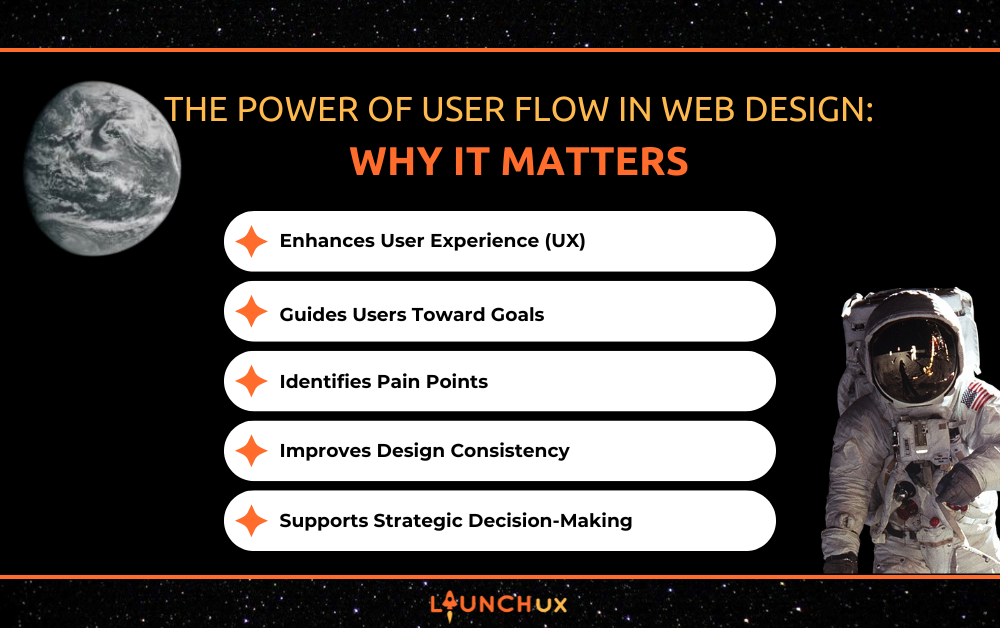
The Power of User Flow in Web Design: Why It Matters

At LaunchUX, great websites are built with the user in mind. Whether you’re operating an e-commerce store, running a service-based business, or sharing content through a blog, optimizing user flow is essential. It’s not just about aesthetics—it’s about how users move through your site to accomplish their goals. A well-planned user flow keeps visitors engaged and reduces frustration. Ultimately, this method enhances the user experience and drives better conversion rates. Understanding and designing for user flow can transform a decent website into an exceptional one.

Enhances User Experience (UX)

Creating Intuitive Navigation Paths

Designing intuitive navigation means structuring your website so users can find what they need without overthinking. When users can easily figure out where to click or scroll next, they feel in control of their experience. A solid user flow provides that guidance naturally, eliminating guesswork. Users don’t want to be challenged when browsing—they want clarity. Streamlined navigation keeps users on track and reduces the likelihood of abandonment. Over time, this ease of use builds loyalty and repeat visits.

Reducing Confusion and Frustration

Poor navigation and unclear structure can quickly drive users away. If visitors can’t find what they’re looking for, they may leave your site entirely, often without returning. A good user flow prevents this by ensuring every element serves a clear purpose and leads users forward. With fewer dead ends and distractions, users feel less overwhelmed. This level of clarity creates a smoother and more rewarding experience. A frustration-free environment helps build trust and keeps users coming back.

Encouraging Positive Interactions

If users find a site simple to navigate, they are more inclined to engage with it. This could mean reading more content, signing up for a newsletter, or making a purchase. These interactions are driven by how well the user flow is crafted. If every page and link contributes to a coherent journey, users will naturally take action. Their satisfaction comes from the feeling that everything works as expected. A positive experience often leads to brand loyalty and recommendations.

Guides Users Toward Goals

Aligning Flow with User Intent

Every visitor comes to a website with a goal in mind. Whether it’s to learn, buy, sign up, or contact you, your site should support that intent from the first click. A strong user flow identifies these goals and builds pathways that make them easy to achieve. This alignment means fewer obstacles and more completed actions. Instead of guessing, users feel like the site was made just for them. As a result, your conversion rates improve naturally.

Simplifying the Conversion Journey

The fewer steps it takes to complete a goal, the better the experience. A user flow that removes unnecessary elements keeps users focused and moving forward. Clear calls to action and logical page transitions reduce hesitation. When users don’t have to work hard to convert, they’re more likely to follow through. Every part of the journey should feel purposeful and streamlined. Simplicity often leads to more completed signups, sales, and contacts.

Leading Users to Key Actions

Your website should gently guide users toward necessary actions without being pushy. Whether it’s purchasing a product or filling out a form, these moments should feel natural within the user flow. Strategic placement of buttons and content plays a huge role here. If users feel confident and informed at the right time, they’re more likely to take action. Flow-driven design ensures that these touchpoints are precisely where they need to be. The result is a site that not only looks good but performs effectively.

Identifies Pain Points

Understanding User Behavior

Studying your user flow gives valuable insight into how visitors interact with your site. You can see where they enter, how long they stay, and where they go next. This behavior reveals what works well and what might be confusing. With this analysis, you’re equipped to make smarter, data-driven decisions that improve the experience. Instead of guessing, you’re responding to real usage patterns. This level of understanding is key to continuous improvement.

Spotting Drop-Off Zones

Drop-off points are parts of your site where users tend to leave. These could be due to slow-loading pages, unclear messaging, or poor layout. A precise user flow can highlight these trouble spots so you can fix them. Once identified, small changes can lead to significant improvements in engagement. Reducing friction keeps users on the site longer and increases conversions. Proactively addressing these issues helps maintain a positive user experience.

Improving Overall Site Usability

User flow analysis isn’t just for fixing problems—it also highlights opportunities for growth. You may find pages that perform well and use that success to improve other areas. This leads to a more cohesive and usable site. When users feel comfortable and confident, they’re more likely to stay, explore, and convert. Consistent usability across all pages builds trust with your audience. The more usable your site is, the stronger your brand becomes.

Improves Design Consistency

Creating a Logical Structure

Designing with user flow in mind forces you to think about how each page connects to the next. This creates a logical and seamless structure throughout your website. Users appreciate it when they don’t have to figure things out on their own. Instead, the site’s layout guides them from one section to the next without surprises. This consistency improves the overall flow and helps users stay focused. A logical structure also enhances accessibility for all types of visitors.

Enhancing Visual and Functional Harmony

User flow isn’t just about navigation—it influences the look and feel of your site too. A flow-focused design ensures that buttons, menus, and visuals are placed where users expect them. This creates a sense of harmony that makes the site more enjoyable to use. Functional consistency builds user confidence in your platform. When users know what to expect, they’re more likely to explore freely. This balance between design and usability leads to better outcomes.

Building Trust Through Predictability

Consistency across pages fosters predictability, which is key to user trust. When design elements and layout patterns repeat in a purposeful way, users feel more at ease. They learn how your site works quickly and are less likely to get confused. Predictability doesn’t mean boring—it means reliable and user-friendly. A predictable user flow reassures users that they’re in the right place. 

Supports Strategic Decision-Making

Informing Content Placement

Knowing how users move through your site helps determine where content should live. You can prioritize high-impact areas and remove or reposition underperforming elements. Content placement based on user flow improves readability and engagement. Visitors will see that well-timed communication significantly improves conversion outcomes. This strategic approach saves time and maximizes return on content. Clever placement is one of the most powerful outcomes of analyzing user flow.

Enabling Smarter Marketing Choices

Marketing efforts are far more effective when they’re informed by user behavior. When you understand the user flow, you can craft campaigns that match how visitors engage with your site. You’ll know which pages drive the most value and can invest accordingly. From landing pages to email funnels, user flow shapes every touchpoint. The result is a more aligned and effective marketing strategy. Knowing your users leads to better messaging and better ROI.

Aligning Teams on Goals

User flow clarity benefits more than just designers—it unites the entire team. Marketers, developers, and project managers can all rally around a collective insight into the user’s path through the website. This alignment leads to better communication and faster decision-making. Everyone knows what the goals are and how to achieve them through design and strategy. Collaboration improves because each team member sees how their role supports the user. A shared focus on flow leads to stronger, more cohesive results.

Building Better Websites with LaunchUX

At LaunchUX, we know that success starts with understanding your audience. That’s why we prioritize user flow in every web design project. A strong user flow improves experience, increases engagement, and helps turn visitors into loyal customers. It’s not just a design tactic—it’s a strategic tool for building high-performing websites. When your site works seamlessly, your brand stands out in a crowded digital space. If you’re ready to elevate your website’s performance, LaunchUX is here to guide the way.

Let’s map out your user flow and build a site that delivers—contact LaunchUX today.

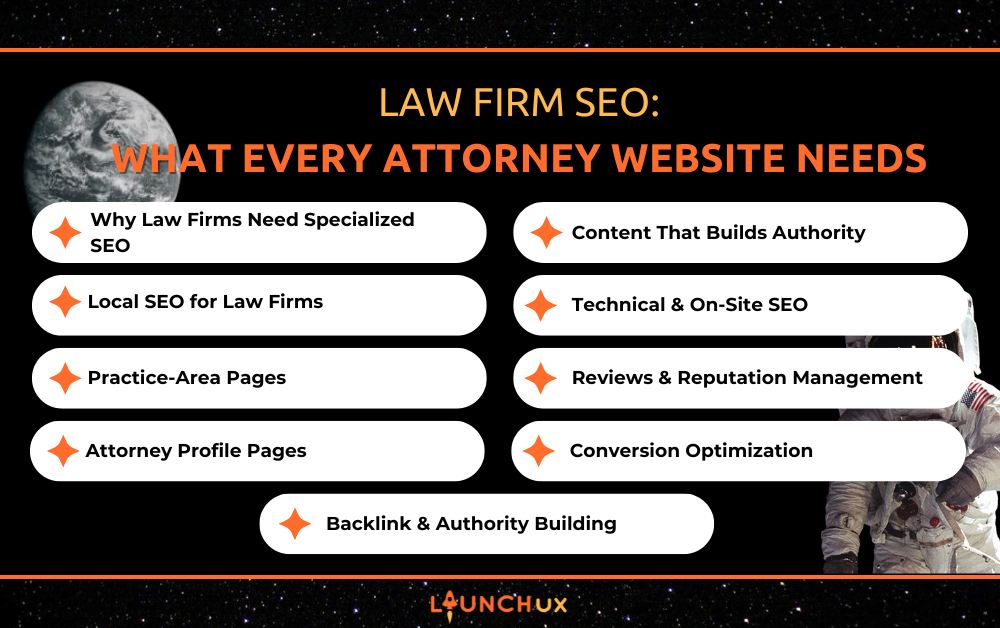
Law Firm SEO: What Every Attorney Website Needs

Law firms face one of the most competitive landscapes in online marketing. When people search for legal help, they typically turn to Google first, looking for attorneys who specialize in their case type and operate in their local area. Without a strong Law Firm SEO strategy, even skilled law firms risk being invisible to potential clients. Unlike other industries, Law Firm SEO requires a tailored approach that balances compliance with bar advertising rules, builds authority, and focuses on local visibility. The following elements outline exactly what a law firm website should include to succeed online.

Why Law Firms Need Specialized SEO

Legal services are among the toughest industries to rank in online. With dozens of competing firms often serving the same city, the level of competition is high. To stand out, law firms need specialized keyword targeting, clear differentiation, and strategies that align with user intent. Without this precision, websites risk being lost in search results, no matter how good the attorneys are. This is where Law Firm SEO becomes a critical advantage.

Location-Based Client Searches

Most people searching for legal help include a geographic term, such as “DUI lawyer near me” or “estate planning attorney in Harrisburg.” These local searches dominate the legal industry. Without a strong Law Firm SEO presence, a law firm may not even appear in front of qualified leads. Optimized content, local citations, and maps visibility are essential for capturing this type of client.

Ethical Marketing Challenges

Unlike many industries, law firms must adhere to advertising guidelines set by state bar associations. These rules prevent exaggerated claims or misleading statements. Law Firm SEO must therefore focus on providing helpful, fact-based content. The balance between visibility and compliance makes Law Firm SEO uniquely challenging compared to other fields.

Local SEO for Law Firms

Google Business Profile Optimization

An optimized Google Business Profile is a cornerstone of Law Firm SEO. This listing needs accurate business information, professional photos, and updated hours of operation. Reviews play a huge role in both visibility and trust, as prospective clients often read them before making a call. A strong GBP also improves placement in the local map pack, which is prime real estate in search results.

Legal directories like Avvo, FindLaw, and Justia provide high-value citations and backlinks. Having consistent information across these platforms builds credibility with both Google and users. These directories also send direct referral traffic from people actively searching for lawyers. Law firms that ignore these listings miss out on both authority signals and potential clients, making them a crucial part of Law Firm SEO.

Location Landing Pages

Creating separate landing pages for each office location or service area helps law firms rank for city-specific searches. These pages should include localized content, testimonials, and maps. They reassure users that the firm serves their area and provide signals to Google about local relevance. This tactic is especially useful for firms with multiple office locations and is a key component of Law Firm SEO.

Practice-Area Pages

Dedicated Service Pages

Law firms need individual pages for major practice areas, such as personal injury, criminal defense, or family law. Each page should clearly outline the scope of services, attorney experience, and next steps for contacting the firm. Optimized service pages act as landing pages for organic traffic and convert visitors into leads. Without them, law firms risk blending their services into vague website copy. Dedicated service pages are a best practice in Law Firm SEO.

Niche Case Pages

Subpages dedicated to specific case types, like “slip and fall lawyer” or “child custody attorney,” capture more precise searches. These long-tail keywords draw visitors who are closer to making a decision. Niche content shows depth of expertise and can help firms outrank competitors in narrow categories. By building out these targeted pages, firms increase their chances of capturing highly qualified clients and strengthen their overall Law Firm SEO.

Attorney Profile Pages

Detailed Professional Bios

Attorney bio pages give potential clients insight into the team’s experience and credibility. They should cover education, bar admissions, certifications, and notable cases when appropriate. Including a professional headshot and a personal touch can make attorneys more approachable. Bio pages also strengthen a site’s authority when optimized with relevant keywords. This makes them an important part of any Law Firm SEO strategy.

Schema Markup for Attorneys

Adding structured data (schema) for attorneys helps Google properly identify and display information about each lawyer. This can enhance search snippets and improve visibility. Schema also boosts trust signals by confirming the professional status of the individual. For law firms, it’s a straightforward technical step that yields strong SEO benefits and supports Law Firm SEO performance.

Content That Builds Authority

Creating content around frequently asked legal questions builds both authority and traffic. Articles such as “What happens after a car accident?” provide valuable, evergreen insights. This type of content shows expertise and can rank well in featured snippets. Over time, answering these questions positions a firm as a trusted source of information and strengthens Law Firm SEO.

Guides, checklists, and downloadable resources remain relevant over long periods. Evergreen content continues to attract traffic without constant updates. For law firms, this might include guides to the divorce process or estate planning steps. Such resources keep clients engaged and encourage them to contact the firm when they’re ready. They also build long-term value in Law Firm SEO.

Client-Centered Writing Style

Legal content should be written in plain, accessible language. Clients are often in stressful situations and need information that is easy to understand. Removing jargon builds trust and makes the firm seem approachable. A clear, client-first writing style improves both user experience and search performance, helping with overall Law Firm SEO results.

Technical & On-Site SEO

Mobile-Friendly Design

Most people searching for legal services do so on their smartphones. A mobile-friendly design ensures that pages load quickly and display correctly on all devices. Sites that are difficult to navigate on mobile risk losing clients instantly. Responsive, user-friendly design is essential for Law Firm SEO success.

Secure and Fast Websites

Clients expect law firm websites to be secure, especially when sharing personal details. HTTPS encryption protects data and builds user confidence. Page speed also affects both SEO rankings and user behavior. A slow site creates frustration and reduces conversions, making speed optimization a must for effective Law Firm SEO.

Structured Data & Schema

Schema markup helps search engines better understand a law firm’s content. Using schema for attorneys, FAQs, and reviews can generate enhanced listings in search. Rich results stand out visually and can increase click-through rates. Technical enhancements like these give firms an edge over less-optimized competitors and improve Law Firm SEO.

Reviews & Reputation Management

The Impact of Google Reviews

Google reviews influence both ranking and client decision-making. A steady stream of authentic, positive reviews improves placement in local search. Prospective clients often read reviews before contacting a firm, so they directly impact conversions. Asking satisfied clients to leave feedback should be part of every Law Firm SEO strategy.

Ethical Use of Testimonials

Law firms must carefully follow bar guidelines when using testimonials. Testimonials should be factual and free from exaggerated claims. When displayed correctly, they provide social proof and build trust with potential clients. Ethical reputation management balances compliance with the need for credibility and directly contributes to effective Law Firm SEO.

Conversion Optimization

Clear Calls to Action

Calls to action (CTAs) guide visitors toward contacting the firm. Phrases like “Schedule a Free Consultation” or “Call Today” encourage immediate engagement. CTAs should be visible and repeated throughout key pages. Strong CTAs increase the likelihood that site visitors become actual clients and play a central role in Law Firm SEO success.

Easy Contact Options

Reducing barriers to contact improves lead generation. Click-to-call buttons, streamlined contact forms, and live chat create multiple access points. Clients in urgent situations appreciate fast, simple communication methods. The easier it is to connect, the higher the conversion rate, which makes easy contact options vital for Law Firm SEO.

Tracking and Analytics

Analytics provide insight into which strategies generate leads. Tools like GA4 and call-tracking reveal whether clients come from organic search, ads, or referrals. This data allows firms to refine their approach and invest in what works best. Tracking is essential for maximizing the return on Law Firm SEO investment.

Links from legal directories provide authority and targeted referral traffic. Directories like Avvo and FindLaw are trusted by Google and potential clients alike. Securing listings on these platforms improves credibility and rankings. They also serve as an additional discovery point for potential clients, making them a powerful asset in Law Firm SEO.

Participating in local events, sponsoring organizations, or being featured in the news creates valuable backlinks. These local links strengthen both community presence and SEO authority. They also help clients recognize the firm as part of their region. Building these connections boosts both rankings and brand reputation, which is a major advantage for Law Firm SEO.

Thought Leadership Opportunities

Guest articles, podcasts, and news contributions showcase attorneys as industry leaders. Sharing legal insights outside the firm’s website expands reach and builds authority. Over time, these thought leadership efforts translate into more backlinks and stronger credibility. Law firms that invest in thought leadership distinguish themselves from competitors and enhance their Law Firm SEO.

Law Firm SEO is about more than just visibility—it’s about building trust, authority, and credibility in a highly competitive space. By investing in specialized strategies like local optimization, practice-area pages, attorney bios, and client-focused content, firms can consistently attract the right clients. The firms that treat Law Firm SEO as a long-term investment are the ones who dominate search results and earn lasting growth.

Conclusion

Law Firm SEO is about more than just visibility—it’s about building trust, authority, and credibility in a highly competitive space. By investing in specialized strategies like local optimization, practice-area pages, attorney bios, and client-focused content, firms can consistently attract the right clients. The firms that treat Law Firm SEO as a long-term investment are the ones who dominate search results and earn lasting growth. If your firm is ready to take the next step, LaunchUX offers tailored SEO services designed for law firms. Partner with us to strengthen your online presence, capture more leads, and grow your practice.

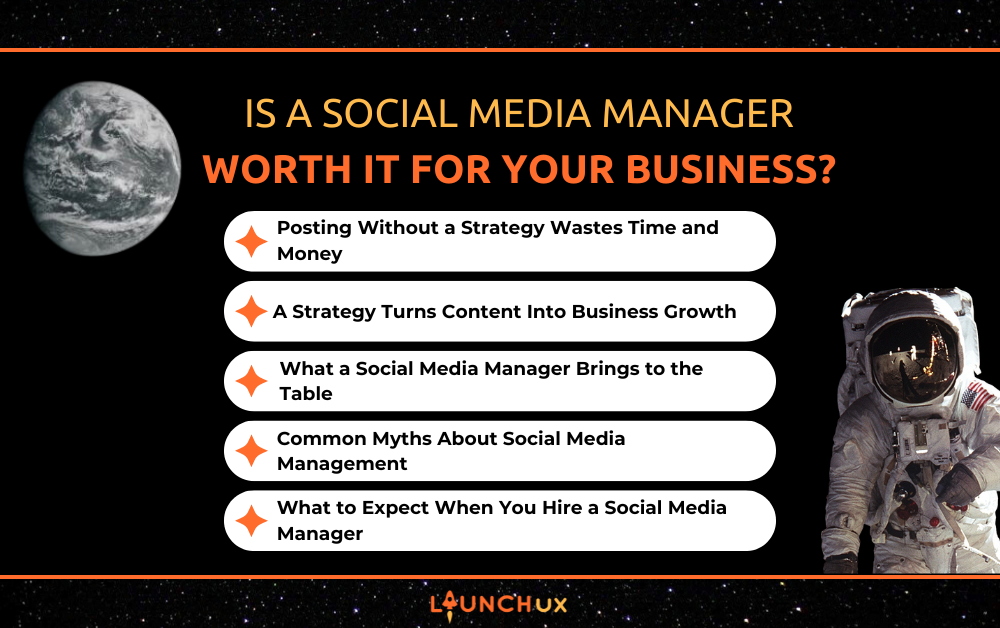
Is a Social Media Manager Worth It for Your Business?

If you’re a business owner trying to grow online, simply posting on social media isn’t enough. Without a clear plan behind your content, you’re more likely to waste time than gain traction. That’s where a social media manager comes in. They don’t just create posts—they build and execute a strategy that supports your business goals, engages your audience, and turns followers into customers. In this blog, we’ll explore why strategy matters more than frequency and how a social media manager helps bridge that gap.

Posting Without a Strategy Wastes Time and Money

As a business owner, your time is valuable—and so is your budget. Posting on social media without a clear direction often leads to poor engagement, inconsistent branding, and little to no return. Without a strategy, you’re just adding noise to already crowded platforms. That’s where a social media manager makes a difference—by replacing guesswork with a plan.

Random Posts Don’t Drive Results

Posting just to stay active on your feed might feel productive, but it rarely leads to meaningful engagement or growth. When content isn’t tied to specific goals, it’s unlikely to generate leads or conversions. A social media manager carefully selects content topics, formats, and timing based on audience behavior and platform trends. This turns your posts into tools that work toward actual business outcomes.

Inconsistent Messaging Hurts Your Brand

When your tone, visuals, or messaging change from post to post, your brand can start to feel unprofessional. Consistency is key to building recognition and trust with your audience. A social media manager ensures every post aligns with your brand’s identity and voice, helping to reinforce your message. Over time, this creates a more cohesive and credible online presence.

A Strategy Turns Content Into Business Growth

Posting consistently is important—but posting strategically is what drives real business results. A well-defined social media strategy helps you connect with the right audience, communicate your value, and guide people toward action. A social media manager turns your content from filler into fuel for your marketing engine.

Targeted Content Reaches the Right People

Not every social post needs to go viral—what matters is whether it reaches the people who are most likely to become customers. A social media manager researches your audience’s demographics, interests, and behaviors to tailor content that speaks directly to them. They know how to position your message for different platforms and user intent. This targeted approach leads to better engagement and higher conversion potential.

Consistency Builds Recognition and Trust

When your content consistently delivers value and stays true to your brand, people begin to trust and remember you. Consistent posting also tells social media algorithms that your account is active and relevant. A social media manager creates and maintains a content calendar to keep everything running smoothly. Over time, this builds a strong brand presence that people recognize and rely on.

What a Social Media Manager Brings to the Table

It’s one thing to understand that strategy matters—it’s another to execute it consistently. That’s why having a social media manager is so valuable. They bring the expertise, time, and structure needed to turn social media into a growth channel, not just a to-do list.

They Turn Business Goals Into a Plan

A social media manager doesn’t just post for the sake of it—they align your content with your actual business goals. Whether you want to drive traffic, increase brand awareness, or promote a new product, they develop a strategy to support that outcome. This kind of alignment ensures your social media is working toward something measurable. It’s marketing with purpose, not guesswork.

They Optimize Based on Real Results

Every post, story, or ad generates data—and a social media manager knows how to read it. They track performance metrics like engagement, reach, click-through rates, and conversions to understand what’s working and what needs improvement. Then they adjust your strategy accordingly. This ongoing optimization ensures your content evolves with your audience and your business.

Common Myths About Social Media Management (And Why They’re Wrong)

Many business owners hesitate to hire a social media manager because of assumptions that simply aren’t true. Let’s clear up some of the most common misconceptions—and explain why they could be holding your brand back.

“Anyone Can Run a Social Media Page”

Just because someone knows how to post on Facebook doesn’t mean they know how to manage a brand online. A professional social media manager understands platform algorithms, audience behavior, content strategy, and performance metrics. It’s a specialized skill—not just a side task.

“Posting Often Is All That Matters”

Posting every day won’t help if the content has no direction or relevance. Strategy, timing, and targeting are what make content effective. A social media manager focuses on quality and purpose, not just volume.

“Social Media Doesn’t Work for My Industry”

Whether you’re B2B, B2C, or somewhere in between, your audience is likely active on at least one platform. A social media manager knows how to tailor messaging to suit your industry and target the right people. Social media isn’t one-size-fits-all—it’s about smart customization.

What to Expect When You Hire a Social Media Manager

If you’ve never worked with a social media manager before, you might be unsure what the process looks like. Hiring a professional isn’t just about handing off your passwords—it’s about building a partnership that supports your brand’s growth.

Discovery and Goal Setting

A social media manager will start by learning about your business, target audience, and goals. Whether you want to increase local visibility, boost engagement, or drive sales, they’ll use that information to shape your social media strategy. This ensures every post supports a clear objective.

Content Planning and Scheduling

Once goals are defined, the manager creates a content calendar that outlines what will be posted and when. You’ll often review drafts and approve content in advance. This structured approach keeps your messaging consistent and frees up your time.

Performance Tracking and Reporting

Your social media manager will monitor how each post or campaign performs—looking at engagement, reach, clicks, and conversions. They’ll adjust the strategy as needed and provide regular reports so you can see the value their work brings. Transparency and adaptability are key to long-term success.

Conclusion: Strategy Is the Difference Between Noise and Impact

Posting on social media without a plan might keep your feed active, but it won’t move your business forward. A clear, consistent strategy is what transforms content into connection—and connection into conversions. That’s exactly what a social media manager delivers.

Instead of wasting time on guesswork, you get a focused approach rooted in your goals and backed by data. At LaunchUX, our team helps businesses go beyond basic posting with strategic social media management that drives real results. If you’re ready to turn your online presence into a powerful marketing tool, it’s time to bring in a social media manager who knows how to make it happen.

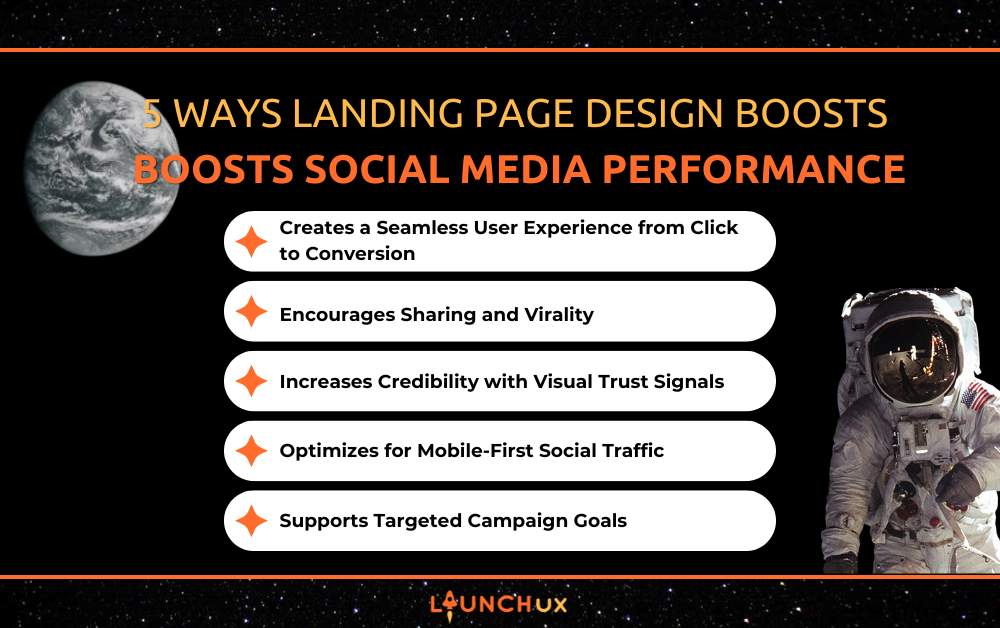
5 Ways Landing Page Design Boosts Social Media Performance

Your social media strategy is only as effective as the landing page it sends people to. At LaunchUX, we know that landing page design isn’t just about aesthetics—it’s the bridge between interest and action. Whether users are clicking on an ad, post, or link in your bio, what they see next has a massive impact on whether they stay or go. A well-crafted landing page builds trust, reinforces your brand, and guides users toward your goal. In this blog, we’ll explore five strategic ways a strong landing page design can enhance your social media performance and deliver better results across the board.

Creates a Seamless User Experience from Click to Conversion

Maintaining Visual Consistency

When your landing page mirrors the tone and visual identity of your social media content, it reassures users that they’re in the right place. This kind of visual consistency reduces confusion and bounce rates, keeping users engaged the moment they arrive. Branding elements like colors, fonts, and imagery should feel familiar, matching what users saw in the original post or ad. A jarring visual difference can create mistrust or even cause users to abandon the page. By designing a page that looks and feels like an extension of your social content, you set the tone for a smooth, confident experience.

Meeting Expectations

Social media content sets the expectation for what users will find after clicking. If your landing page delivers on that promise—whether it’s a discount, a download, or more information—users are more likely to convert. But if the message or offer doesn’t match, it creates friction that often results in a lost lead. The alignment between message and experience is key to building trust and driving action. Users want quick, explicit confirmation that they’re getting exactly what they clicked for, and innovative design helps deliver that.

Driving Action Through Familiarity

A landing page that feels familiar doesn’t just build trust—it guides users naturally toward taking action. Repeating phrases or visuals from the ad they clicked helps reinforce the message and keep them focused. This continuity removes uncertainty and creates a clear path toward your call to action. When users feel like they’re being led intentionally, they’re more likely to engage and convert. That’s why cohesive design is critical to building a landing page that actually works.

Encourages Sharing and Virality

Making Content Primed for Sharing

A visually engaging and informative landing page encourages users to share it with others. Strong design choices like high-quality images, catchy headlines, and thoughtful layout can make your page more memorable and social-media-friendly. If the page includes social share buttons and compelling copy, it becomes easy for visitors to promote it within their networks. People are far more likely to share content that looks credible and polished. A shareable landing page can help amplify your campaign reach without additional ad spend.

Extending Social Reach

Social sharing creates a ripple effect, allowing your landing page to reach audiences well beyond the original campaign. Design plays a significant role here—users are more likely to pass along content that’s visually impressive and easy to digest. A clean layout, engaging media, and purposeful structure help make your page attractive to a wide range of audiences. As it gets shared, your traffic and potential conversions grow organically. In this way, design directly influences how far and wide your content can travel.

Building Organic Momentum

When visitors share your landing page, it gains credibility and traction across platforms. Each share acts as it’s very own vote of confidence, signaling to others that the content is worth viewing. This momentum is hard to manufacture through paid ads alone and becomes a valuable byproduct of good design. A share-worthy page also improves your SEO if it earns backlinks from blogs or news outlets. In the long run, the right design helps your page become a lasting asset, not just a one-time campaign tool.

Increases Credibility with Visual Trust Signals

Establishing Instant Trust

First impressions matter, especially when users land on your page from fast-paced platforms like Instagram or TikTok. A clean, modern layout with professional visuals and clear messaging immediately builds trust. Including elements like customer reviews, recognizable brand logos, or awards helps validate your credibility. When visitors see these trust signals, they feel more secure in exploring your offer or taking the next step. Without them, even great products can suffer from low engagement.

Reducing Skepticism and Building Confidence

Today’s users are cautious about where they click and what they share. That’s why your landing page needs to reassure them right away that your brand is authentic and reliable. Design features like badges, testimonials, and clear contact information provide the kind of reassurance users are looking for. The more trust you build through design, the more confident users feel in giving personal info or making a purchase. A trustworthy landing page minimizes doubt and maximizes engagement.

Reinforcing a Professional Brand Image

Strong design reinforces the idea that your business is established and trustworthy. Everything from typography and layout to color choices contributes to how professional your brand feels. When visitors sense a high level of attention to detail, they associate that care with the quality of your products or services. This perception directly impacts their willingness to take the next step. A poorly designed landing page can cast doubt, while a polished one instills confidence.

Optimizes for Mobile-First Social Traffic

Serving Majority Mobile Users

Most social media traffic comes from smartphones, so your landing page is able to look and function perfectly on small screens. That means responsive layouts, quick load times, and buttons that are easy to tap. A clunky mobile experience will drive users away, no matter how compelling your offer is. By prioritizing mobile-first design, you reduce bounce rates and keep users engaged longer. This approach ensures you don’t miss out on the majority of your social media audience.

Eliminating Friction for Action

Mobile users expect instant, easy experiences. A good mobile landing page removes obstacles by offering streamlined navigation, short forms, and fast-loading content. Every extra second or confusing element increases the chance of losing a conversion. With thoughtful design, your page helps users move effortlessly from interest to action. This ease of use keeps engagement high and makes every click count.

Enhancing Cross-Platform Consistency

A well-designed landing page functions seamlessly across devices, from smartphones and tablets to desktops. This consistency reinforces your brand and reduces confusion, especially when users share your page or revisit it later on another device. Maintaining a unified experience also helps with analytics and campaign tracking. Design that adapts well across platforms improves both short-term conversions and long-term performance. It ensures every user interaction, no matter the device, reflects well on your brand.

Supports Targeted Campaign Goals

Tailoring Design for Specific Campaigns

Different social media campaigns have different objectives, and your landing page should reflect that. Whether you’re collecting leads, promoting a product, or offering a discount, a focused design helps deliver the message clearly. Removing distractions and aligning copy with campaign goals ensures users understand exactly what they’re being asked to do. A page built for one clear purpose typically performs better than a general one. Purposeful design turns interest into action more efficiently.

Improving Ad-to-Page Relevance

When a user clicks on a social ad, they expect the landing page to expand on the exact message they saw. If the page feels unrelated or vague, they may lose trust or interest quickly. Matching the design and language of the ad improves continuity and keeps users on track. This relevance also improves your ad quality scores, reducing costs and improving performance. The closer the match, the more possible users are to convert.

Strengthening ROI for Campaigns

Well-designed landing pages allow your social media ads to work smarter, not harder. Each element—from the headline to the call-to-action—is fine-tuned to drive results. This targeted approach improves conversion rates, lowers your cost-per-lead, and helps justify your ad spend. By tailoring landing pages to match campaign goals, you get more value from every visitor. In turn, your campaigns perform better across all key metrics.

At LaunchUX, we believe that a landing page is more than just a destination—it’s the engine that drives your digital marketing success. From seamless design to mobile-first responsiveness and goal-focused structure, the right landing page can dramatically increase your social media performance. Whether you’re launching a new campaign or optimizing an existing one, we’re here to help you turn traffic into action and attention into results.

Ready to unlock the full power of your social media campaigns? Contact LaunchUX today and let us design a high-performing landing page tailored to your goals.